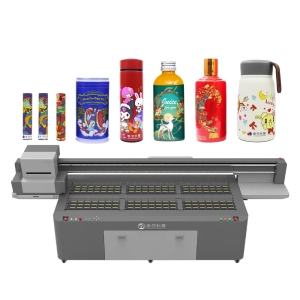
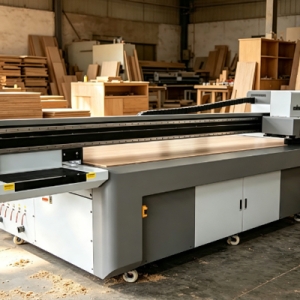
Wood is a widely used natural material with characteristics such as natural textures, warm visual appeal, and flexible processing capabilities. It is extensively applied in furniture manufacturing, interior decoration, handicraft production, packaging design, commercial displays, and other industries. Traditional surface decoration methods for wooden products usually include painting, veneer covering, engraving, and screen printing. However, these processes have certain limitations in pattern changes, color expression, and personalized customization. With the development of industrial UV printing technology, more and more wooden product manufacturers have started using UV printers to directly create patterns on wood surfaces. Industrial UV printers can achieve high-definition printing on various wooden products, including wood panels, wooden doors, furniture, wooden handicrafts, wooden boxes, decorative wall panels, and other applications. The equipment uses UV inkjet technology to directly print designed patterns onto wood surfaces and then quickly cures the ink through ultraviolet light, forming a stable printed layer.
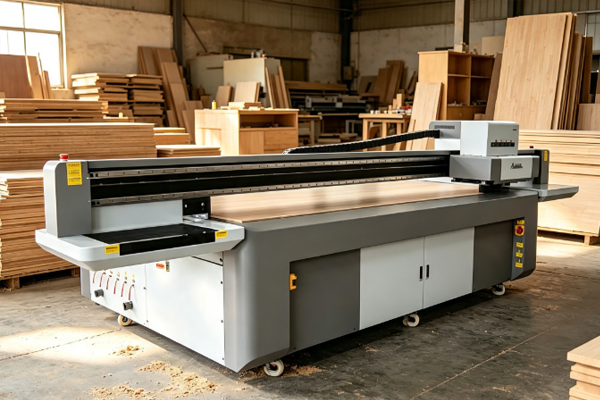
Compared with traditional printing methods, UV printing does not require plate-making processes, allowing designs to be changed quickly and making it more suitable for modern production needs involving small batches and diversified customization. Although wood surfaces have a certain level of ink absorption, different types of wood vary in texture, density, and surface treatment methods. Therefore, when selecting an industrial UV printer for wood, companies need to consider ink adhesion performance, equipment printing accuracy, and processing methods. For example, polished wood panels have smoother surfaces and are suitable for printing high-definition images, while natural wood materials with unique textures can be combined with UV embossed printing effects to enhance visual depth and product value.
What Wooden Furniture Products Are Suitable for Industrial UV Printing?
Wooden Doors, Cabinet Doors, and Other Large Wooden Products
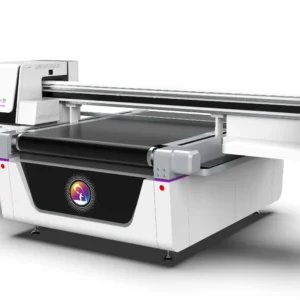
Wooden doors and cabinet doors are among the most common applications for industrial UV printers. These products usually have relatively large surface areas and require complete patterns and consistent colors. Traditional wooden door decoration mainly relies on painting or film covering, while UV printing can directly print various designs onto door surfaces, including wood grain, decorative patterns, landscape images, and abstract artwork. During production, large-format UV printers can meet the printing requirements of entire door panels, avoiding pattern alignment errors caused by splicing. At the same time, the equipment can combine white ink, color ink, and varnish printing to create different surface textures.
For example, using varnish printing on specific areas can create a raised texture similar to an embossed effect, giving ordinary wooden doors stronger decorative appeal. Compared with equipment mainly used for applications such as a UV printer for glass, a UV printer for wood requires stronger adaptation to uneven textures and different wood surface conditions.
Wooden Furniture Panels
Products in the furniture industry, such as tabletops, headboards, wardrobe panels, and decorative background boards, are also suitable for processing with industrial UV printing technology. As consumers increasingly demand personalized furniture designs, manufacturers need to quickly produce products with different styles. UV printing can effectively support this flexible production model. For example, an ordinary wooden tabletop can be transformed through UV printing to display marble textures, metallic effects, plant patterns, or artistic illustrations, giving the product a completely different appearance.
During the printing process, there is no need to replace production molds, which reduces the difficulty of customized furniture manufacturing and improves processing flexibility. Through advanced UV printing technology, furniture manufacturers can achieve more diverse design solutions while maintaining efficient production.
What Wooden Decorative Products Can Be Processed by Industrial UV Printers?
Wooden Background Walls and Decorative Panels
Wooden background walls and decorative panels are commonly used in homes, hotels, offices, and other spaces, where appearance design requirements are relatively high. Industrial UV printers can directly print high-definition patterns onto decorative panel surfaces, transforming wood into an artistic decorative material. In background wall production, UV printing can reproduce complex designs such as landscape paintings, geometric textures, and natural plant patterns. When combined with embossed printing functions, some textures can form raised effects, giving decorative panels a more realistic tactile experience. A UV printer for wood allows manufacturers to create customized decorative surfaces without complicated traditional processing methods, making it suitable for modern interior design projects.
Wooden Flooring and Parquet Materials
Some wooden flooring and parquet products can also use UV printing for surface decoration. Compared with traditional printing methods, UV printing provides more accurate color control, making wood grain and decorative patterns clearer and more detailed. For special design requirements, manufacturers can use UV printing to change the appearance of ordinary wood materials, such as creating antique textures, artistic patterns, or customized logos. This improves product differentiation and increases the added value of wooden flooring products.
What Small Wooden Products Are Suitable for Industrial UV Printing?
Wooden Boxes, Packaging Boxes, and Customized Products
Wooden packaging boxes are widely used in gifts, wine packaging, jewelry, collectibles, and other fields. Companies usually need to print brand names, decorative patterns, or product information on the surfaces of packaging boxes. Industrial UV printers can directly complete these printing tasks while maintaining high pattern accuracy. Compared with traditional screen printing, UV printing does not require screen plate production and can quickly complete different design solutions, making it highly suitable for small-batch orders in the gift packaging industry. For example, the same wooden box can be printed with different logos or patterns according to customer requirements, improving customization efficiency and reducing production preparation time. By using a professional UV printer for wood, manufacturers can achieve more flexible personalized packaging production while maintaining clear images, bright colors, and stable printing quality.
Wooden Crafts and Cultural Creative Products
Wooden decorations, carved products, souvenirs, and other cultural creative products usually have high requirements for design details and artistic expression. UV printing can add rich colors and creative patterns to these products, allowing wooden items to go beyond the limitations of natural wood grain appearance. For example, wooden photo frames, music boxes, decorative signs, and other products can be enhanced through UV printing with personal photos, artistic designs, or text content. Combined with fine inkjet technology, industrial UV printers can reproduce complex details accurately, making finished products more delicate and visually appealing. Through advanced UV printing technology, manufacturers of wooden crafts can achieve high-quality customized designs while maintaining the natural characteristics of wood materials.
Frequently Asked Questions
Can All Types of Wood Be Printed Directly?
Most wooden products can be processed using UV printers, but different wood materials require different preparation methods. Wood surfaces that are flat, dry, and clean usually provide better printing results. If the wood surface contains excessive dust, oil stains, or obvious uneven areas, ink adhesion may be affected. For wood materials with strong absorption properties, surface treatment can be applied according to production requirements to improve pattern stability and printing durability. When selecting a UV printer for wood, companies should consider the characteristics of their specific wood materials to ensure the best printing performance.
Do Wooden Products Need Protective Treatment After Printing?
The appropriate protection method depends on the application environment of the product. Ordinary indoor decorative products can usually be used directly after UV curing, while furniture surfaces that experience frequent contact and friction may require additional protective coatings to improve wear resistance. After being cured by ultraviolet light, UV ink forms a relatively stable ink layer with certain scratch resistance and water resistance, making it suitable for most wooden product applications. For products requiring higher durability, manufacturers should combine suitable UV inks, surface treatments, and protective processes to extend product service life.
Can UV Printing Create an Embossed Effect on Wood?
Yes. Industrial UV printers can create embossed effects on wood surfaces through multi-layer ink stacking technology. By controlling the thickness of varnish or white ink layers, manufacturers can produce three-dimensional textures, raised lettering, and special decorative effects.
This technology allows wooden products to achieve a carved-like appearance without complex mechanical engraving processes. Similar to embossed applications created by a UV printer for glass, UV printing creates surface height differences through controlled ink accumulation, providing more flexible design possibilities.
Application Scenarios of Wooden Embossed Printing with Industrial UV Printers
Hotel Decorative Wood Panel Printing
A hotel interior decoration project requires wooden panels with customized three-dimensional patterns. If traditional engraving methods are used, the production cycle may become longer, and modifying designs can be difficult. By using an industrial UV printer for wood, designers can directly print customized patterns onto wooden surfaces.
During production, the equipment can first print the base colors and then use multiple layers of varnish to increase the height of specific textures, creating a three-dimensional surface effect. The finished wooden panels not only provide decorative value but also offer a noticeable tactile experience, meeting the requirements of high-end interior decoration projects. With the support of modern UV printing technology, wooden decoration manufacturers can complete complex designs more efficiently while maintaining consistent quality.
Customized Furniture Product Applications
Furniture manufacturers often apply special textures and patterns to wooden tabletops, cabinet doors, decorative panels, and other products. Industrial UV printers can print designs such as wood grain, stone textures, floral patterns, and artistic graphics according to customer requirements. For example, when creating a stone-like texture on a wooden tabletop, the manufacturer can use varnish printing to add raised texture details, allowing the product to combine the warmth of wood with the visual effect of natural stone. This improves the appearance, uniqueness, and market competitiveness of furniture products.
Industrial UV printers can be applied to various wooden product processing scenarios, including large furniture, wooden doors, decorative panels, wooden boxes, handicrafts, and cultural creative products. Through direct printing technology, the equipment helps companies quickly achieve complex pattern production while reducing traditional plate-making processes and improving manufacturing flexibility. When selecting equipment, companies need to choose the appropriate UV printer model according to wooden product size, material type, and desired printing effect.
Large wooden doors and decorative panel production require attention to printing area size and platform stability, while small wooden boxes and handicraft production focus more on printing accuracy and fine detail performance. Industrial UV printing technology provides wooden product manufacturers with more design possibilities. It can not only reproduce high-definition color patterns but also combine white ink and varnish functions to create special textures and three-dimensional effects. For industries such as furniture manufacturing, decorative processing, and customized gift production, the reasonable application of industrial UV printers can improve product appearance quality and satisfy different customer customization requirements. Compared with other specialized applications such as a UV printer for glass, a UV printer for wood is designed to better adapt to the unique characteristics of wooden materials, including natural grain, surface absorption, and different processing conditions. By selecting suitable equipment configurations and printing processes, companies can maximize the advantages of UV printing and create higher-value wooden products.