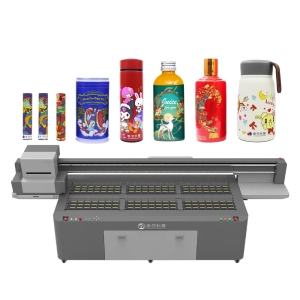
With the continuous growth of advertising display demands, the advertising production industry has placed higher requirements on printing equipment in terms of production efficiency, material adaptability, and finished product quality. Traditional advertising printing equipment is often limited by material types and can only process certain media, while UV printers have gradually become commonly used production equipment for advertising companies due to their advantages such as no plate-making requirements, support for printing on various materials, and rapid curing. Industrial-grade UV printers can not only produce products such as signage, display boards, advertising light boxes, and promotional materials but also improve continuous production efficiency through automated control systems. Under stable operating conditions, the equipment can complete repeated printing tasks for long periods, meeting the daily production needs of advertising factories, small processing companies, and customized manufacturers.
Compared with traditional advertising printing methods, UV printing technology reduces preparation work before printing and does not require complicated template production. It can directly output patterns according to digital design files. This feature allows advertising companies to quickly adjust production content when handling different customer orders and improve order response speed. At the same time, UV ink can be rapidly dried after exposure to UV light. Once printing is completed, the products can immediately proceed to subsequent processing steps, shortening the overall production cycle and improving production efficiency.
Why Can UV Printers Meet the Batch Production Needs of the Advertising Industry?
Supporting Printing on Various Advertising Materials and Expanding Production Range
The advertising industry uses a wide variety of materials, including acrylic sheets, PVC boards, glass, wooden boards, metal sheets, KT boards, and packaging materials. Traditional printing methods usually require different processing techniques according to each material, while UV printers can directly print on various flat materials, significantly reducing equipment conversion costs.
One Equipment Can Produce Various Advertising Products
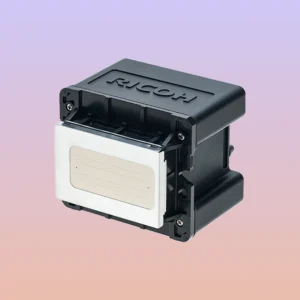
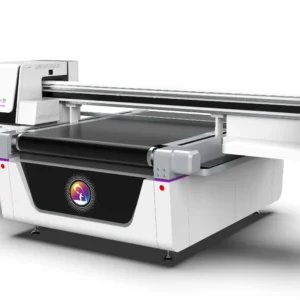
Industrial UV printers adopt a flatbed printing structure that can fix advertising materials of different sizes. Through precise print head control, UV ink is sprayed accurately onto the surface to achieve high-definition pattern output.
Companies can use the same equipment to complete:
- Commercial sign printing;
- Exhibition display board production;
- Store promotional material processing;
- Advertising signage manufacturing;
- Personalized decorative product printing.
This flexibility is extremely important for advertising processing companies because customer orders usually vary in size, material type, and design content. If equipment can only process a single material, production procedures become more complicated. UV printers can reduce the number of machines required and improve equipment utilization efficiency. Through advanced UV printing technology, advertising manufacturers can achieve more flexible production solutions while maintaining consistent printing quality.
Meeting Different Customers’ Customization Requirements
The advertising industry includes not only a large number of standardized products but also many personalized orders. For example, corporate logo displays, brand event background boards, and customized decorative walls often require fast production of small batches or even single pieces. UV printers do not require advance plate production. Operators only need to adjust digital design files on the computer before printing, making them highly suitable for the diversified order characteristics of the advertising industry.
How Efficient Is UV Printer Printing During Batch Production?
High-Efficiency Printing Modes Are Suitable for Continuous Production
The advertising industry has high requirements for production speed. Especially during promotional campaigns, exhibitions, and commercial marketing events, companies often need to complete large quantities of products within a short period. Industrial-grade UV printers optimize mechanical structures and printing control systems to achieve continuous processing and improve overall production efficiency. The application of UV printing technology allows advertising manufacturers to shorten production cycles while maintaining stable output quality.
Large Printing Platforms Increase the Number of Products Processed at One Time
Large UV printers are usually equipped with spacious printing platforms that can hold multiple small advertising products simultaneously. For example, multiple signs, decorative panels, or packaging samples can be printed at the same time, reducing repeated loading and unloading operations. During batch production, placing multiple products for printing in one setup improves equipment utilization and allows companies to complete more orders within the same working period. For advertising processing factories, this production method can reduce manual operation frequency and increase daily output capacity.
Automation Functions Reduce Manual Intervention
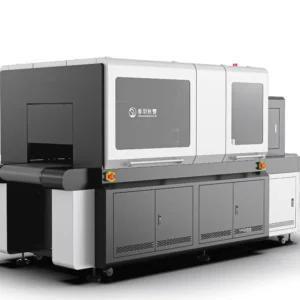
Some industrial UV printers are equipped with automatic positioning, intelligent detection, and continuous printing functions, which help operators quickly complete material alignment and printing settings. Workers only need to perform simple operations to maintain continuous production. Compared with traditional processing methods that require manual color matching, plate making, and repeated adjustments, the digital production process of UV printers is much simpler. This makes them especially suitable for the advertising industry, where fast delivery and flexible production are important requirements. Through UV printing technology, advertising companies can achieve a more efficient production workflow while reducing dependence on manual operations.
Is the Printing Effect of UV Printers Stable During Batch Production?
High-Definition Quality Meets Advertising Display Requirements
Advertising products not only need to be produced quickly but also require excellent visual performance. Image clarity, color reproduction ability, and surface texture all influence the final display effect. UV printers use high-precision print head technology to output detailed patterns and meet the visual requirements of commercial advertising applications. Whether producing promotional displays, brand signs, or decorative advertising materials, stable printing quality is essential. With the development of UV printing technology, industrial UV printers can provide both high production efficiency and reliable image quality for advertising manufacturers.
High-Precision Printing Ensures Pattern Details
Advertising designs often contain text, brand logos, and complex graphic elements. If printing accuracy is insufficient, problems such as blurred edges and color deviation may occur. UV printers can accurately control ink droplet size and spraying position, allowing small text and complex patterns to remain clear. For example, corporate promotional boards, product display panels, and high-end decorative advertisements require excellent image quality, and UV printing technology can effectively meet these application requirements. High-precision printing capabilities make industrial UV printers suitable for advertising products that require both detailed graphics and professional appearance.
UV Ink Improves Product Durability
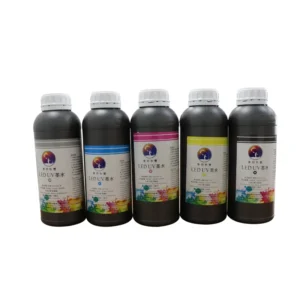
After being cured by ultraviolet light, UV ink forms a stable ink layer with strong adhesion properties. For advertising products displayed indoors or outdoors for long periods, UV printing can reduce problems such as pattern fading and surface wear. Different advertising applications can use different types of UV ink. For example, rigid materials can use inks with stronger adhesion performance, while flexible materials can use inks with certain stretching properties. Choosing the appropriate ink type helps improve finished product quality and service life.
What Should Advertising Companies Consider When Choosing UV Printers?
Select Equipment Configuration According to Production Requirements
Although UV printers are suitable for batch production in the advertising industry, different companies have different order types and production requirements. When selecting equipment, businesses need to consider their actual production conditions. If the main products are small advertising items, medium or small-sized UV printers can be selected. If the company needs to process large advertising boards, large-format industrial UV printing equipment should be considered. A suitable equipment configuration allows companies to balance production efficiency, investment costs, and application requirements.
Select Equipment According to Material Types
Different materials have different requirements for printing performance. For example:
- Glass advertising decoration requires attention to ink adhesion performance;
- Metal sheet printing requires strong surface processing capabilities;
- Wooden board printing requires good texture coverage performance;
- Acrylic printing requires excellent color expression on transparent materials.
Clarifying the main processing materials in advance helps companies select more suitable equipment configurations. For different applications, such as a UV printer for glass or a UV printer for wood, equipment selection should consider material characteristics and printing requirements to achieve better results.
Consider Production Capacity According to Order Volume
If a company receives a large number of daily orders, it needs to pay attention to printing speed, equipment stability, and maintenance convenience. Industrial-grade UV printers are more suitable for long-term continuous production, while ordinary desktop UV printers are more suitable for sample production and small-volume orders. When advertising businesses require stable batch manufacturing, selecting industrial equipment with reliable performance can help improve delivery efficiency and reduce production interruptions.
UV printers are highly suitable for batch printing production in the advertising industry due to their strong material adaptability, simple printing process, high production efficiency, and stable finished product quality. Whether producing advertising signs, display boards, commercial decorative materials, or personalized promotional products, companies can use UV printing technology to achieve fast and flexible processing. When choosing a UV printer, advertising companies need to make decisions based on their order volume, commonly used materials, and production requirements. A suitable equipment configuration can help businesses improve production efficiency while reducing labor costs, making advertising production processes simpler and more stable.
In practical applications, UV printers are not only suitable for large-scale production but can also meet small-batch customization requirements. This production model better matches the current characteristics of the advertising industry, where orders change quickly and product types are diverse. By using equipment properly and maintaining machines regularly, UV printers can become an important production tool for advertising companies to improve processing capabilities, enhance product quality, and respond more efficiently to changing market demands.