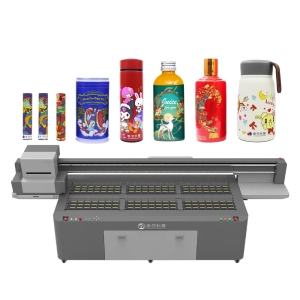
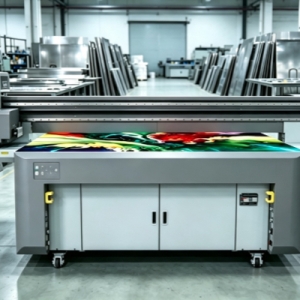
With the continuous development of advertising production, industrial decoration, product customization, and metal signage industries, more and more companies are paying attention to the application of UV printing technology on metal materials. Metal materials are significantly different from ordinary printing materials such as paper and fabric due to their smooth surfaces, high hardness, and low water absorption. Therefore, many companies previously relied on methods such as spraying, screen printing, and film application for processing. With the advancement of UV printing technology, industrial UV printers can now achieve high-quality pattern printing on metal surfaces through specialized inks and curing methods, providing a more convenient processing solution for metal product manufacturing. Modern industrial UV printers can directly print patterns on metal surfaces. Compared with traditional printing methods, UV printing uses ultraviolet curing technology. The print head accurately sprays UV ink onto the metal surface, and then UV lamps rapidly cure the ink to form a stable ink layer.
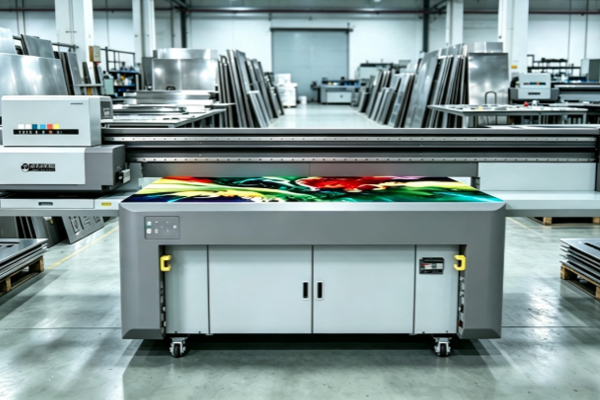
Therefore, materials such as metal sheets, stainless steel, aluminum plates, and iron plates can all be used as printing substrates. However, metal is a smooth material with weak ink absorption ability. During direct printing, the appropriate printing method needs to be selected according to the metal type, surface condition, and application environment. If there are oil stains, oxidation layers, or dust on the metal surface, ink adhesion may be affected. Therefore, in actual production processes, surface cleaning or adhesion treatment is usually required to ensure that printed patterns remain more stable. A professional UV printer for metal is designed to handle these characteristics of metal materials and provide reliable printing performance for different industrial applications.
Why Can UV Printers Print on Metal Surfaces?
UV Ink Curing Methods Improve Metal Adhesion Performance
The reason UV printers can print on metal mainly depends on UV ink and ultraviolet curing technology. Traditional printing methods usually require materials with certain ink absorption capabilities, while UV printing uses a surface film-forming process. The ink does not simply penetrate into the material. Instead, it forms a patterned coating layer on the surface of the material. UV printing technology changes the traditional printing method that relies on penetration and absorption. By combining specially formulated ink with ultraviolet light, patterns can be quickly fixed onto metal surfaces. Therefore, even when processing metal materials with high hardness and smooth surfaces, industrial UV printers can still achieve stable printing results.
UV Curing Allows Ink Layers to Form Quickly
During the UV printing process, the print head sprays ink onto the metal surface, and the UV LED lamps installed on the equipment immediately perform curing. Under ultraviolet radiation, photosensitive components in the ink quickly react, transforming liquid ink into a solid ink layer.
This rapid curing method has several advantages:
- No long drying waiting time is required after printing;
- Patterns are not blurred due to ink flow;
- Suitable for continuous batch production;
- Maintains high pattern accuracy.
In advertising production, time efficiency is extremely important. For example, when producing a batch of metal promotional boards, traditional methods require waiting for ink drying or completing multiple processing steps. After UV printing is completed, products can directly enter the next processing stage, greatly reducing waiting time. At the same time, the rapid curing characteristics of UV ink can reduce pollution risks during production. Printed products are less likely to suffer pattern damage caused by handling or touching.
Specialized UV Ink Enhances Printing Performance
Different metal materials have different requirements for ink adhesion, so industrial UV printers are usually equipped with UV inks suitable for rigid materials. Some equipment also supports combined printing with white ink, color ink, and varnish, creating richer visual effects. For example, when printing colorful patterns on black metal plates, white ink can be printed first as a base layer to improve color brightness and saturation. For high-end metal decorative products, varnish effects can be added to create a three-dimensional surface texture. If the printed content includes company logos, brand promotional graphics, or commercial display panels, clear color layers can significantly improve product appearance and quality.Through different ink combinations, a UV printer for metal can not only complete simple text printing but also produce complex images and gradient color effects.
Which Metal Materials Are Suitable for UV Printing?
Common Metal Products Can Be Processed with UV Printing
UV printing technology has good adaptability to metal materials. As long as the surface is flat and properly treated, high-quality printing results can be achieved. Different metal products have many applications in industrial manufacturing and commercial fields. With the increasing demand for personalized products, metal materials are no longer limited to industrial manufacturing but are increasingly used in advertising displays, home decoration, and customized gifts. Therefore, UV equipment capable of directly printing patterns on metal surfaces provides new processing solutions for many industries.
Aluminum Plates and Stainless Steel Plates Have Wide Applications
Aluminum plates and stainless steel plates are common metal printing materials in the advertising industry. Because these materials have smooth surfaces and stable dimensions, they are highly suitable for high-definition pattern printing.
Common applications include:
- Metal advertising boards in shopping malls;
- Corporate signage;
- Product information panels;
- Elevator decorative panels;
- Exhibition display materials.
Through UV printing, colorful text, images, and brand logos can be directly produced on metal sheets, improving product appearance. For example, some commercial stores use aluminum plates to create signs. Through UV printing, store names, brand graphics, and decorative textures can be directly printed onto the plate surface. Compared with traditional sticker application methods, UV printed patterns are more complete and less likely to experience edge lifting problems.
Metal Crafts and Industrial Parts Can Also Be Printed
In addition to advertising materials, UV printers are also widely used for decorating metal crafts and industrial products. Common applications include: Metal souvenirs; Hardware tool housings; Mechanical equipment panels; Metal packaging shells. These products usually require brand information display or enhanced decorative effects. UV printing can reduce the limitations brought by traditional stickers and screen printing methods, making product surfaces more refined and visually appealing.
For example, some mechanical equipment housings need to display model numbers, operation instructions, and company logos. Using a UV printer for metal allows these contents to be printed directly onto the product surface without requiring additional labels. Through advanced UV printing technology, manufacturers can achieve more flexible metal product customization while improving production efficiency and appearance quality.
What Should Be Considered When Using UV Printing on Metal Surfaces?
Surface Preparation Before Printing Affects the Final Result
Although UV printers can directly print on metal surfaces, proper surface preparation is very important for achieving better printing quality. The condition of the metal surface directly affects ink adhesion. If preparation is insufficient, problems such as ink peeling, cracking, or uneven colors may occur. Many printing quality issues in the market are not caused by the equipment itself but by inadequate material preparation. Therefore, before formal batch production, inspecting and testing metal materials can effectively prevent quality problems during later production. For companies using a UV printer for metal, establishing a proper pre-treatment process is an important step to ensure stable printing results.
Keep the Metal Surface Clean and Flat
Before printing, the metal surface should be checked for dust, oil stains, oxidation, or rust. Contaminants on the surface can reduce the bonding ability between UV ink and metal.
Common treatment methods include:
- Using cleaning agents to remove oil stains;
- Wiping away surface dust;
- Removing oxidation layers;
- Ensuring the material surface is dry.
After proper treatment, UV ink can adhere more evenly to the metal surface, improving finished product quality. Especially in batch production, if materials are not cleaned in advance, the same production batch may experience problems such as inconsistent color intensity or partial ink peeling.
Select Primer Treatment According to Application Requirements
Some metal materials have extremely smooth surfaces, such as mirror stainless steel and specially coated metals, making ink adhesion more difficult. In these situations, metal-specific primers can be applied to improve the bonding strength between ink and material. Although primer treatment adds an additional processing step, it can significantly improve wear resistance and printing stability. It is especially suitable for products requiring long-term use, such as outdoor advertising boards and industrial equipment identification plates. For metal products exposed to outdoor environments for extended periods, such as outdoor signs and architectural decorative panels, adding primer treatment can help maintain printed patterns for a longer time and reduce future maintenance costs.
How Is the Printing Effect of UV Printed Metal Products?
Printing Quality Meets Various Application Requirements
A UV printer can not only achieve simple text printing on metal surfaces but also produce high-definition images, gradient colors, and complex patterns. With continuous improvements in industrial UV printing precision, metal printing has become a common processing method in many industries. In practical applications, customers usually require more than just the ability to “print.” They also expect products to have excellent visual performance, stable color reproduction, and long service life. Therefore, UV printers need to meet multiple requirements, including: Image clarity; Ink adhesion; Color accuracy; Surface texture effects.
Compared with traditional methods such as spray coating and screen printing, UV printing offers greater flexibility. Design files can be directly transferred to the equipment, and patterns can be modified at any time according to customer requirements without creating new templates. This production method is particularly suitable for advertising industries, customization businesses, and small-batch manufacturing, as it reduces preparation time and improves production flexibility.
High-Definition Patterns Meet Commercial Display Requirements
The advertising industry usually has high requirements for metal printing products. Brand logos, promotional graphics, and decorative textures all need to maintain clear appearance. A UV printer for metal uses high-precision print heads to control ink droplet size, ensuring that fine details remain complete. For example, a stainless steel company sign may need to display a corporate logo, contact information, and decorative graphics at the same time. UV printing can complete all these elements in one process without additional film application or screen production. In commercial spaces, metal display panels often require detailed image effects, such as:
- Hotel decorative signs;
- Shopping mall guidance boards;
- Exhibition hall display walls.
These products require not only clear text but also natural colors and refined image edges. UV printers can precisely control ink volume, allowing small fonts, lines, and complex patterns to achieve excellent visual performance. At the same time, UV printing supports multiple color combinations, helping brands maintain consistent visual identity. Companies can adjust colors according to brand standards, making printed metal products better match overall design styles.
Multi-Layer Printing Creates Three-Dimensional Visual Effects
Industrial UV printers support multi-layer ink stacking and can create embossed effects through different printing modes. By combining white ink and varnish, metal products can achieve three-dimensional textures on the surface.
These effects are commonly used for:
- High-end metal packaging boxes;
- Personalized gifts;
- Decorative metal panels;
- Brand display products.
Compared with traditional spray coating methods, UV printing can achieve richer design effects. For example, when printing a company logo on a metal gift product, additional varnish layers can create a slightly raised effect, making the logo more noticeable through touch. In decorative metal panel processing, different ink layer combinations can also be used to create visual effects such as wood grain, stone texture, and metallic patterns. This processing method not only improves product appearance but also increases product added value.
Can a UV Printer Print Directly on Metal Surfaces?
From the perspective of practical applications in the advertising industry and industrial manufacturing, UV printers can directly print on metal surfaces and have already been widely used in advertising production, industrial identification, decorative processing, and product customization. However, different companies have different requirements for printing effects, production speed, and durability. Therefore, equipment selection needs to be based on actual product conditions. Although metal printing has high application value, choosing a UV printer is not simply about selecting the largest machine. Instead, companies need to match the equipment according to their actual production requirements. For example, a company mainly producing small metal nameplates and a company manufacturing large metal advertising boards will have significant differences in printing size, equipment structure, and production efficiency requirements. If the equipment configuration does not match production needs, problems such as insufficient efficiency, low material utilization, or wasted equipment functions may occur. Therefore, before purchasing a UV printer, companies need to clearly define their commonly used materials, product sizes, order quantities, and printing effect requirements.
Select Printing Equipment According to Product Size
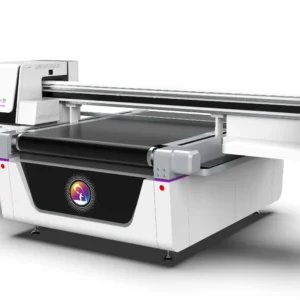
Different metal products vary greatly in size, so the printing platform size of a UV printer is very important. If a company mainly processes small metal nameplates, metal crafts, or electronic product housings, it can choose UV equipment suitable for small-size processing. If the company needs to print large metal materials, such as advertising boards, decorative wall panels, or exhibition display materials, a large-format industrial UV printer should be selected.
A large printing platform can reduce material splicing requirements, improve production efficiency, and ensure continuous and complete patterns. For example, if a large corporate promotional metal background panel is printed using a small-platform machine, multiple printing processes may be required, which can easily create pattern alignment problems. By using a large-format UV printer, the entire material can be processed in one printing operation, resulting in a more complete final appearance. A professional UV printer for metal should be selected according to the actual product dimensions to achieve better production efficiency and printing quality.
Consider Equipment Capacity According to Production Volume
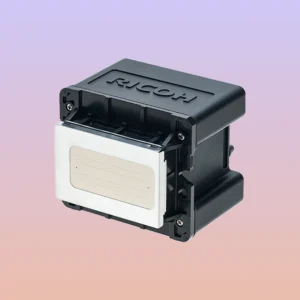
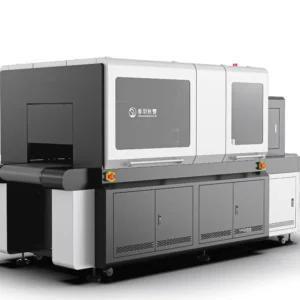
If a company receives a large number of daily orders, it needs to pay attention to equipment printing speed, operating stability, and maintenance convenience. Industrial-grade UV printers are more suitable for long-term continuous production, while ordinary desktop UV printers are more suitable for sample production and small-volume orders. In batch production environments, equipment stability is extremely important. A machine that prints quickly but frequently stops due to failures may affect the entire delivery schedule. Therefore, companies should not only focus on printing speed but also consider:
- Print head quality;
- Ink supply system;
- Equipment structure;
- After-sales service.
During production, equipment maintenance should not be ignored. Regularly checking print head conditions, cleaning residual ink, and maintaining a clean operating environment can reduce equipment failures and extend service life.
What Are the Advantages of UV Printing Metal Materials?
Metal UV printing not only provides high-quality pattern output but also offers simple production processes and flexible processing methods. For advertising production companies, customer requirements often change quickly. The same metal material may need to display different content, and UV printing can quickly adjust production plans. Compared with traditional processing methods that require template production and equipment adjustment, UV printing only requires modification of digital design files to complete new printing tasks. This production method reduces product switching difficulty and is more suitable for modern advertising production models.Through UV printing technology, companies can respond more quickly to changing market demands while maintaining efficient manufacturing.
Reduce Plate-Making Processes and Improve Order Processing Speed
Traditional screen printing requires the production of printing screens before manufacturing. If customers modify designs or require different patterns, new screens must be created, increasing production time and cost. UV printing uses digital output methods and can directly read design files for printing. Whether producing one sample or dozens or hundreds of products, UV printing can complete processing quickly.
This feature is especially suitable for:
- Customized corporate gifts;
- Exhibition promotional products;
- Commercial advertising display products;
- Personalized metal decorative components.
Companies can quickly adjust production according to customer requirements without preparing large amounts of production tools, improving order processing capabilities.
Support Personalized and Small-Batch Production
Modern markets have an increasing demand for personalized products. Many customers are no longer satisfied with standardized designs and prefer products with unique characteristics.
UV printers can meet these requirements.
For example, the same batch of metal souvenirs can be printed with different names, numbers, or patterns, allowing each product to have independent design content. Advertising companies and customized manufacturing businesses can use this production method to expand their service range while reducing inventory pressure. Companies do not need to produce large quantities of standard products in advance. Instead, they can flexibly process products according to customer orders.
UV printers can directly print on metal surfaces through rapid UV ink curing technology, achieving clear and stable pattern output. Whether it is stainless steel plates, aluminum sheets, iron products, or various metal decorative materials, good printing results can be achieved as long as proper surface preparation is completed. UV printing technology reduces the plate-making steps required in traditional printing processes while supporting rapid conversion between different designs, making it suitable for various product processing needs. UV printers are not only capable of printing simple text and identification marks but can also create complex images, brand graphics, and three-dimensional decorative effects.
Through different combinations of white ink, color ink, and varnish printing modes, metal products can achieve richer visual effects and higher overall value. When companies use a UV printer for metal, they should develop suitable production processes based on their product types and application requirements. Proper use of UV printing equipment can not only improve metal product processing efficiency but also help companies overcome limitations associated with traditional manufacturing methods. Whether for advertising sign production, industrial product decoration, or personalized metal customization, UV printing technology provides a more convenient, efficient, and flexible processing solution.