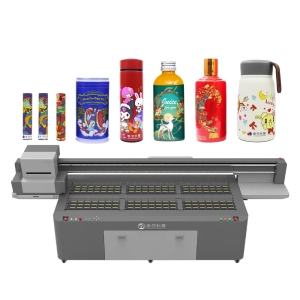
Glass, as a common decorative and processing material, has characteristics such as high transparency, smooth surfaces, and strong aesthetic appeal. It is widely used in architectural decoration, furniture, bathrooms, display cabinets, handicrafts, and other fields. In traditional glass processing, achieving embossed textures usually requires methods such as engraving, sandblasting, or frosting. These processes not only involve relatively complicated procedures but also have certain limitations in pattern modification and personalized customization. With the development of industrial UV printing technology, more and more companies have started using industrial UV printers to create three-dimensional embossed-like effects on glass surfaces. An industrial UV printer can achieve embossed effects on glass, but this effect is not created by physically changing the glass structure. Instead, it is produced through special printing processes that build up multiple layers of ink to create patterns with height differences. This method is one of the important applications of UV printing technology in glass decoration.
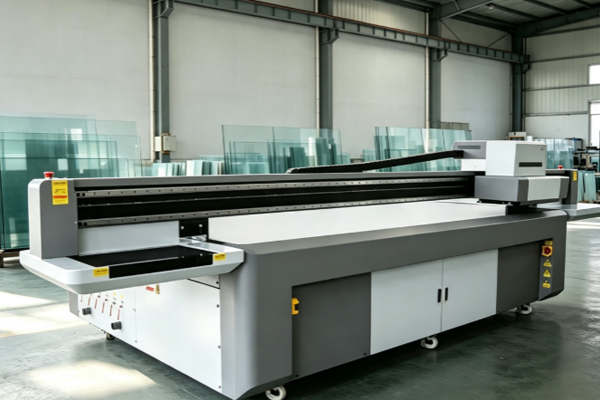
The equipment controls the thickness of different ink layers, including white ink, color ink, and varnish, allowing the printed surface to create noticeable raised and recessed textures. From both visual and tactile perspectives, the final result resembles a traditional embossed effect. This printing method reduces complicated traditional processing steps while enabling more diverse pattern designs. Although ordinary UV printing equipment can complete color pattern printing on glass, creating a three-dimensional embossed effect requires a machine that supports multi-layer printing functions and has stable control over ink layer thickness. Therefore, when selecting an industrial UV printer for glass, companies need to pay close attention to whether the equipment supports embossed printing modes and whether it can meet long-term stable production requirements.
UV Printers Create Embossed Effects Through Multi-Layer Ink Accumulation
Ink Layer Height Control Determines the Three-Dimensional Effect
Industrial UV printers create embossed effects on glass mainly by repeatedly printing with the print head, allowing UV ink to gradually accumulate and form height differences. During the printing process, the equipment sets different ink layer thicknesses according to the design pattern. For example, areas that require a raised effect receive more printing passes, while flat areas maintain thinner ink layers, creating obvious three-dimensional levels. This process is similar to adding a patterned structure with thickness onto the glass surface. After printing is completed, the UV lamp quickly cures the ink, forming a hard and stable surface. As a result, the pattern not only presents a three-dimensional visual effect but also allows users to feel texture variations through touch. With advanced UV printing technology, the printer can accurately control printing layers, making embossed patterns more detailed and stable. This makes industrial UV printers suitable for applications requiring decorative glass effects and customized designs.
Combining White Ink and Varnish Enhances the Embossed Appearance
In glass embossed printing, white ink and varnish play important roles. White ink is usually used as a base layer to improve color coverage and make patterns appear clearer. Especially when printing on transparent glass, without white ink support, colored patterns may be affected by the transparency of the glass, resulting in lighter colors and reduced visual impact. Varnish can be used to create transparent three-dimensional layers. By accumulating varnish with different thicknesses, the printer can achieve glossy, frosted, and textured effects. For example, some decorative glass products use transparent varnish printing to maintain the transparency of the glass while adding surface texture changes. When choosing a UV printer for glass, equipment with white ink and varnish printing functions can provide more possibilities for creating high-value decorative glass products.
What Equipment Conditions Are Required to Achieve Glass Embossed Effects?
High-Precision Print Heads Ensure Accurate Detail Reproduction
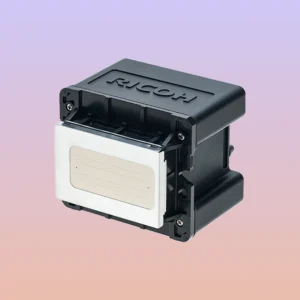
Glass embossed patterns usually contain fine textures, lines, and complex designs, so industrial UV printers need to provide high printing accuracy. Print head performance directly affects ink droplet control. If ink droplets are unstable, pattern edges may become unclear, reducing the final embossed effect. High-precision print heads can more accurately control ink spray positions, allowing different areas to form consistent ink layer heights. For example, when printing patterns, text, or artistic designs, precise inkjet performance can make embossed edges smoother and more natural, improving the decorative quality of glass products. In modern UV printing technology, advanced print head systems are one of the key factors determining the quality of three-dimensional glass printing.
A Stable Printing Platform Ensures Processing Quality
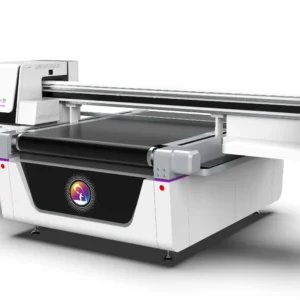
Glass materials have high hardness and significant weight, so stability is essential during printing. If the printing platform vibrates or lacks sufficient flatness, the distance between the print head and the glass surface may change, causing uneven ink accumulation. Industrial UV printers usually adopt strong machine frames and precision transmission systems to maintain stable operation during printing. At the same time, some equipment is equipped with automatic height measurement functions, which can automatically adjust the print head height according to glass thickness, reduce manual adjustment errors, and improve the success rate of embossed printing.
What Products Are Suitable for Glass UV Embossed Printing?
Decorative Glass Enhances Artistic Visual Effects
In the field of interior decoration, embossed effect glass has a wide range of applications. For example, background wall glass, partition glass, hotel decorative glass, and other products often require unique visual effects. By using an industrial UV printer for glass, patterns, landscape designs, and artistic textures can be directly printed onto glass surfaces while creating a three-dimensional tactile effect. Compared with traditional engraving methods, UV embossed printing can quickly change design content and is more suitable for personalized decoration projects. Customers can select different patterns according to the style of the space, increasing the design value and decorative appeal of glass products. Through advanced UV printing technology, decorative glass manufacturers can achieve complex artistic effects without complicated processing procedures, making customized glass production more flexible and efficient.
Art Glass Increases Product Added Value
Art glass products usually focus on details and artistic expression, such as gift glass, display glass, artistic ornaments, and other products. UV embossed printing can make ordinary glass achieve an engraving-like appearance, making products more refined and attractive. For example, when printing company logos on glass trophies or souvenirs, additional varnish ink layers can be applied to create a raised effect. This allows the text to appear three-dimensional while maintaining the original transparent texture of the glass. For manufacturers producing high-end glass products, selecting a suitable UV printer for glass can help improve product appearance, expand customization options, and increase market value.
Frequently Asked Questions
Is the embossed effect printed by a UV printer a real engraving?
No. The embossed effect created by a UV printer is mainly formed through ink accumulation and does not change the internal structure of the glass itself. It is a surface three-dimensional printing technology that increases the thickness of ink layers, allowing patterns to achieve a visual and tactile effect similar to engraving. Unlike traditional engraving methods, UV printing technology creates embossed effects by controlling ink thickness, providing a faster and more flexible solution for glass decoration.
Can All UV Printers Print Embossed Effects on Glass?
Not all equipment is suitable. Ordinary UV printers are mainly designed for flat color printing. If a company needs to achieve obvious three-dimensional embossed effects, the equipment must support multi-layer printing, white ink printing, and varnish printing functions. At the same time, print head control accuracy must also meet the required standards. When selecting a UV printer for glass, companies should confirm whether the machine supports special printing modes and whether it can provide stable performance for continuous production.
Will Glass Embossed Printing Easily Peel Off?
Under normal conditions, when glass-specific UV ink is used and proper surface preparation is completed, printed patterns can achieve good adhesion performance. However, glass surfaces are relatively smooth, so before production, the surface usually needs to be cleaned to remove dust, oil stains, and other contaminants, improving the bonding effect between the ink and glass. Proper ink selection, curing settings, and surface treatment are important factors that determine the durability of glass UV printing results.
Application Scenarios of Glass Embossed Printing with Industrial UV Printers
Hotel Decorative Glass Printing
A hotel renovation project requires glass partitions with three-dimensional patterns. If traditional engraving methods are used, the processing cycle would be longer, and modifying the design would be more difficult. By using an industrial UV printer for glass, the designed patterns can be directly printed onto the glass surface. During production, the equipment first prints the basic colors and then increases the pattern height through multiple layers of varnish printing, allowing the glass surface to form three-dimensional textures. After completion, the glass not only provides decorative effects but also offers noticeable raised and recessed sensations through touch, meeting the requirements of high-end interior decoration projects. With the support of modern UV printing technology, customized hotel glass decoration can be completed more efficiently while maintaining high-quality visual effects.
Furniture Glass Product Applications
Some furniture manufacturers create special textures on glass tabletops and cabinet doors. Industrial UV printers can print designs such as wood grain, stone textures, floral patterns, and other decorative effects according to customer requirements. By applying embossed printing techniques, the realistic appearance of these designs can be enhanced. For example, when printing stone textures on glass coffee tables, varnish layers can create raised surface patterns, allowing the product to combine the transparency of glass with the visual appearance of natural stone. This improves the overall competitiveness and decorative value of furniture products.
Industrial UV printers can achieve embossed effects on glass through multi-layer ink printing technology, allowing ordinary glass surfaces to form three-dimensional patterns with visual depth and tactile texture. This method does not require deep engraving of the glass itself. Instead, it uses the thickness changes created after UV ink curing to achieve an embossed appearance and touch effect similar to traditional relief processing. However, the final glass embossed printing performance is affected by equipment configuration, print head accuracy, UV ink quality, and processing techniques. If companies want to create clearly visible three-dimensional textures, they need to choose an industrial UV printer for glass that supports white ink, varnish printing, and multi-layer printing functions, while adjusting printing parameters according to product requirements.
For decorative glass, art glass, furniture glass, and other applications, UV embossed printing provides a more flexible processing solution. It can quickly complete complex pattern production while meeting both small-batch customization and large-scale manufacturing requirements. By applying industrial UV printing technology properly, glass products can achieve richer visual effects, stronger tactile experiences, and higher product value. This makes UV printing an increasingly practical solution for modern glass decoration and customized glass manufacturing industries.