Glass is a material with a smooth surface and weak adsorption ability. Traditional printing methods often face problems such as insufficient adhesion, pattern peeling, and unstable color performance when printing on glass surfaces. With the increasing application of decorative glass, architectural glass, furniture glass, art glass, and electronic product glass, UV printing technology has gradually become a commonly used processing method in the glass industry. An industrial UV printer combines UV ink with ultraviolet curing technology, allowing patterns to be printed directly onto glass surfaces without the need for traditional plate-making processes, reducing processing steps and improving production efficiency.
A suitable industrial UV printer not only needs to ensure strong ink adhesion on glass surfaces but also requires stable printing accuracy, reliable machine structure, and continuous working capability suitable for industrial production. Different glass processing companies handle different product types, such as small glass crafts, large decorative glass panels, glass doors and windows, and bathroom glass, which means their equipment requirements also vary. Glass printing usually requires delicate pattern effects, including gradient colors, high-definition images, and texture designs. Therefore, the performance of the print head, ink quality, and positioning accuracy of a UV printer for glass will directly affect the final product quality. When selecting equipment, companies need to choose according to their own processing requirements to avoid problems such as insufficient printing size, low production efficiency, or difficult maintenance after purchase.
Choose the Appropriate UV Printer Specifications According to Glass Size
Compact Equipment Is Suitable for Small-Sized Glass Products
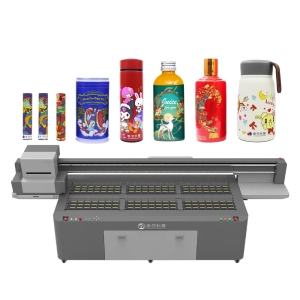
Different glass products have different size requirements for UV printer platforms. If the main processing products include glass cups, glass ornaments, small decorative panels, smartphone glass protectors, and other small items, a compact industrial UV printer with a smaller printing area can be selected. These machines require less installation space and offer more flexible operation, while also meeting the needs of personalized customization and small-batch production.
During small-size glass printing, positioning accuracy is an important factor that needs attention. Glass products usually require precise pattern placement, such as cup body graphics, logo printing, and decorative textures. If the positioning system is unstable, pattern deviation may occur, affecting product quality. Therefore, small glass processing companies should choose UV printing equipment with accurate positioning functions to improve processing stability and ensure consistent printing results.
Large-Format Equipment Is Required for Large Glass Processing
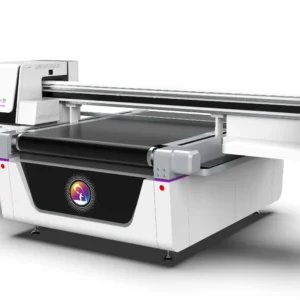
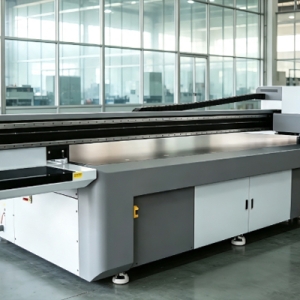
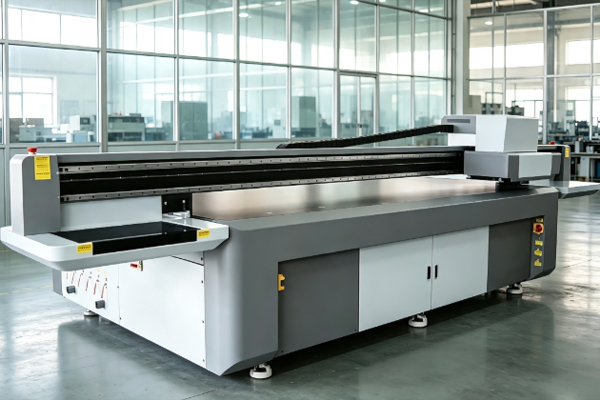
For large products such as glass curtain walls, sliding door glass, background wall glass, and kitchen partition glass, companies need to choose large-format UV flatbed printers. The printing platform size should cover common glass specifications to avoid dividing the printing area due to size limitations, which could affect the integrity of the design.
Large-format glass printing also requires consideration of equipment load capacity. Glass materials are relatively heavy, so the printing platform must have a strong supporting structure while maintaining excellent flatness. This ensures a stable distance between the print head and the glass surface, allowing ink to be sprayed evenly and improving overall printing quality.
Focus on UV Printer Print Heads and Printing Performance
High-Quality Print Heads Determine the Details of Glass Patterns
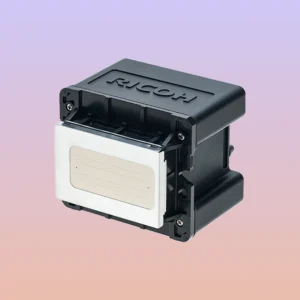
The print head is one of the most important components affecting the performance of an industrial UV printer. Since glass surfaces are usually used for visual display purposes, printed patterns need to achieve high resolution and excellent color reproduction. If the print head accuracy is insufficient, problems such as blurred lines, uneven colors, and missing details may occur. When selecting equipment, companies should pay attention to factors such as print head model, number of print heads, and printing accuracy specifications. In industrial production environments, multi-print-head configurations can improve printing speed while supporting different printing requirements, including white ink, color ink, and varnish printing. For example, in the glass decoration industry, white ink can enhance the background color effect of patterns, while varnish printing can create glossy, matte, or three-dimensional texture effects, increasing the added value of glass products.
UV Ink Performance Affects Glass Adhesion Results
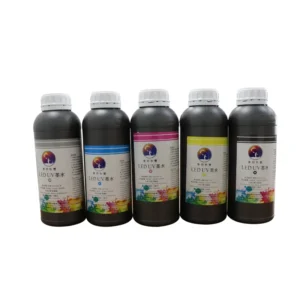
Ordinary ink cannot be directly applied to glass surfaces because glass is smooth and has low ink absorption, which may cause printed patterns to peel off easily. Glass processing requires UV-specific ink with strong adhesion properties. Through rapid curing under ultraviolet light, the patterns can firmly bond to the glass surface. When choosing a UV printer for glass, companies should confirm whether the ink system used by the equipment is suitable for glass materials. High-quality UV ink not only improves color expression but also enhances wear resistance, water resistance, and UV resistance, making it suitable for long-term display applications.
Equipment Stability and Production Efficiency Are Important Factors in Industrial Processing
Choose Equipment with Stable Structure and Reliable Operation
Industrial UV printers usually need to operate continuously for long periods, so equipment stability is extremely important. A stable machine frame design, precise guide rail system, and reliable control system can reduce printing errors and extend equipment service life. When selecting equipment, glass processing companies should evaluate machine operating stability, including continuous printing capability, failure rate, and after-sales maintenance support. Stable equipment can reduce downtime, improve production continuity, and make the overall manufacturing process smoother.
Automation Functions Improve Glass Processing Efficiency
Modern industrial UV printers are usually equipped with functions such as automatic height measurement, intelligent positioning, and automatic print head cleaning, which can reduce manual operation difficulty. Glass materials may vary in thickness, and automatic height measurement can adjust the print head distance to prevent collisions while maintaining consistent printing quality. For companies requiring mass production, automation functions can significantly improve processing efficiency. For example, when repeatedly printing glass products with the same specifications, an intelligent positioning system can quickly complete product alignment, reduce manual adjustment time, and improve overall production efficiency.
Frequently Asked Questions
Can Glass Be Printed Directly Using a UV Printer?
Yes. A UV printer uses specialized UV ink and ultraviolet curing technology to print directly onto glass surfaces. However, because glass has a smooth surface, some special applications may require additional surface preparation, such as cleaning, coating treatment, or applying glass-specific adhesion promoters to improve ink bonding strength.
Should a Glass UV Printer Have White Ink Function?
It is recommended to choose equipment with white ink capability. Glass has transparent characteristics, and if color ink is printed directly onto the surface, the final color may be affected by the glass background, resulting in lighter or less saturated colors. White ink can be used as a base layer to improve color saturation and make printed patterns clearer and more vivid.
Will UV Printed Glass Fade Easily?
Under normal conditions, when high-quality UV ink is used and properly cured, printed patterns on glass have good durability. However, the final performance also depends on the application environment. For outdoor glass applications, inks with stronger weather resistance should be selected to ensure long-term performance.
How to Choose a UV Printer According to Different Printing Requirements?
How Should Decorative Glass Companies Choose Equipment?
A company producing background wall glass and interior decorative glass usually needs to print large-size, high-definition patterns, such as landscape images, texture effects, and artistic designs. For this type of application, a large-format UV flatbed printer with white ink and varnish printing functions is more suitable. By printing a white ink base layer, the pattern colors can become brighter and more vivid. Through varnish printing, the glass surface can achieve a three-dimensional decorative effect, allowing ordinary glass products to gain higher aesthetic value and market competitiveness.
How Should Art Glass Manufacturers Choose Equipment?
Art glass products are usually smaller in size but require extremely high pattern precision. For example, glass ornaments, souvenirs, gift packaging glass, and other products often require the reproduction of complex designs and fine text. These production scenarios focus more on printing accuracy and color performance. Therefore, manufacturers can choose high-precision industrial UV printers. The equipment should not only support high-resolution printing but also provide stable small-batch production capabilities, allowing companies to meet different customer customization requirements.
Selecting the right UV printer for glass requires comprehensive consideration of product size, printing quality requirements, production volume, and equipment stability. Although glass provides excellent decorative effects, its special surface characteristics create higher requirements for printing equipment and ink performance. A suitable industrial UV printer can help companies improve production efficiency while enhancing the visual appeal and market competitiveness of glass products. During the actual purchasing process, companies should determine equipment specifications based on their product types. If the main production involves small glass products, printing accuracy and operational flexibility should receive greater attention. If processing large decorative glass, factors such as machine size, load capacity, and continuous production capability should be prioritized.
At the same time, print head quality, UV ink compatibility, automation functions, and after-sales service are also important factors when selecting equipment. A stable and reliable glass UV printer can not only meet daily printing requirements but also help companies expand more glass processing applications, including artistic glass, home decoration glass, and commercial display glass. Through reasonable equipment configuration selection, companies can reduce production problems, improve product quality, and allow UV printing technology to be better applied in the glass processing industry.