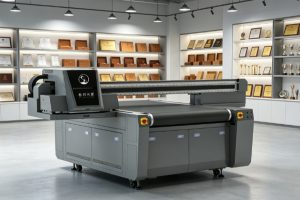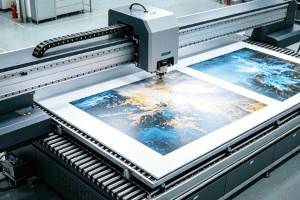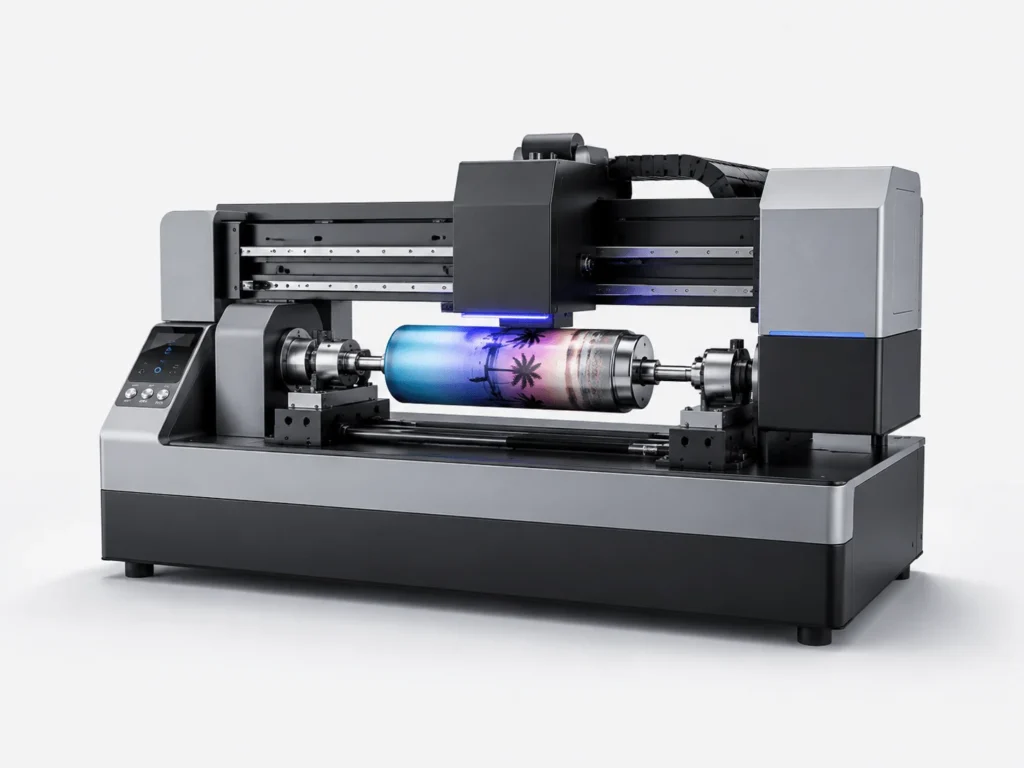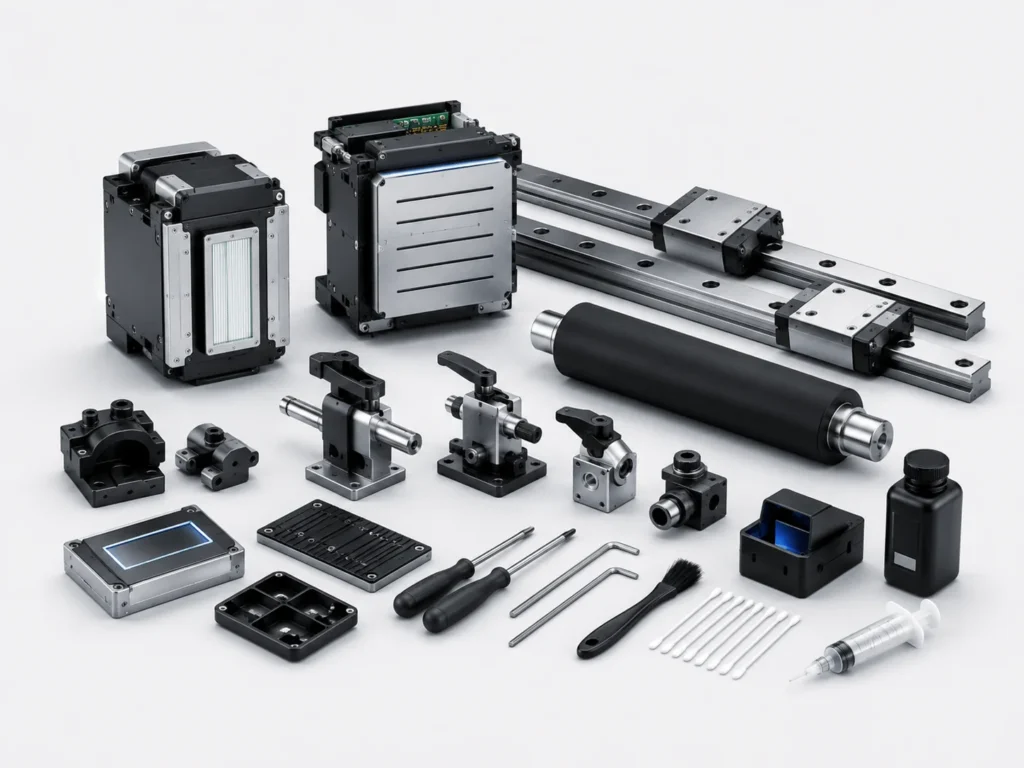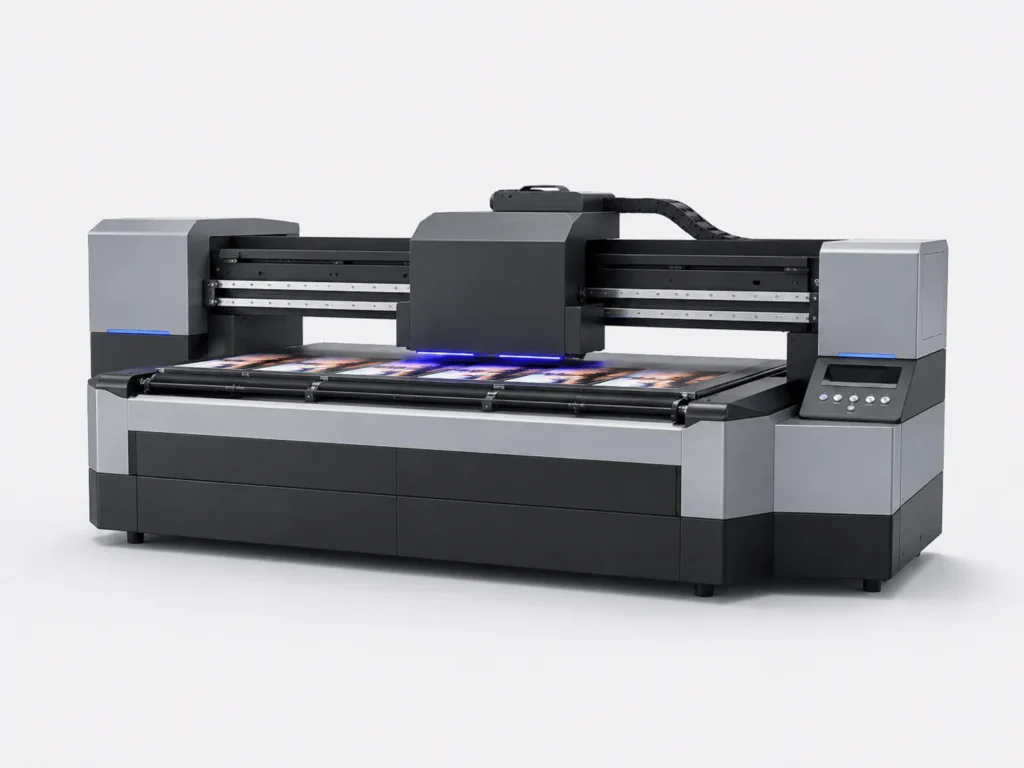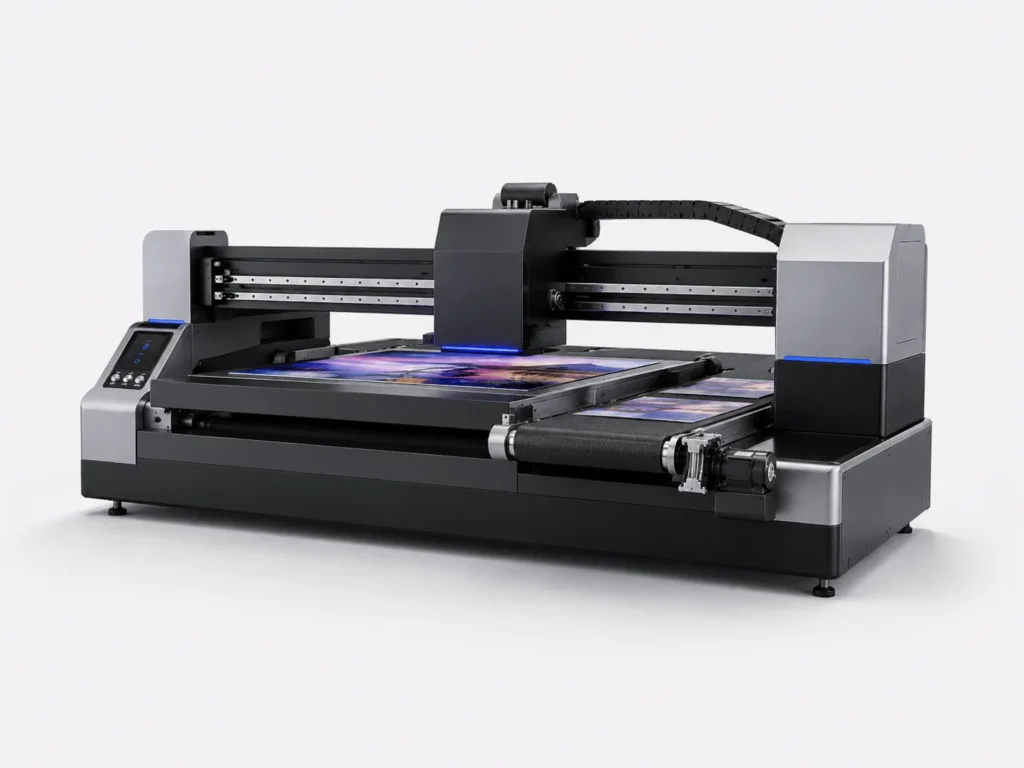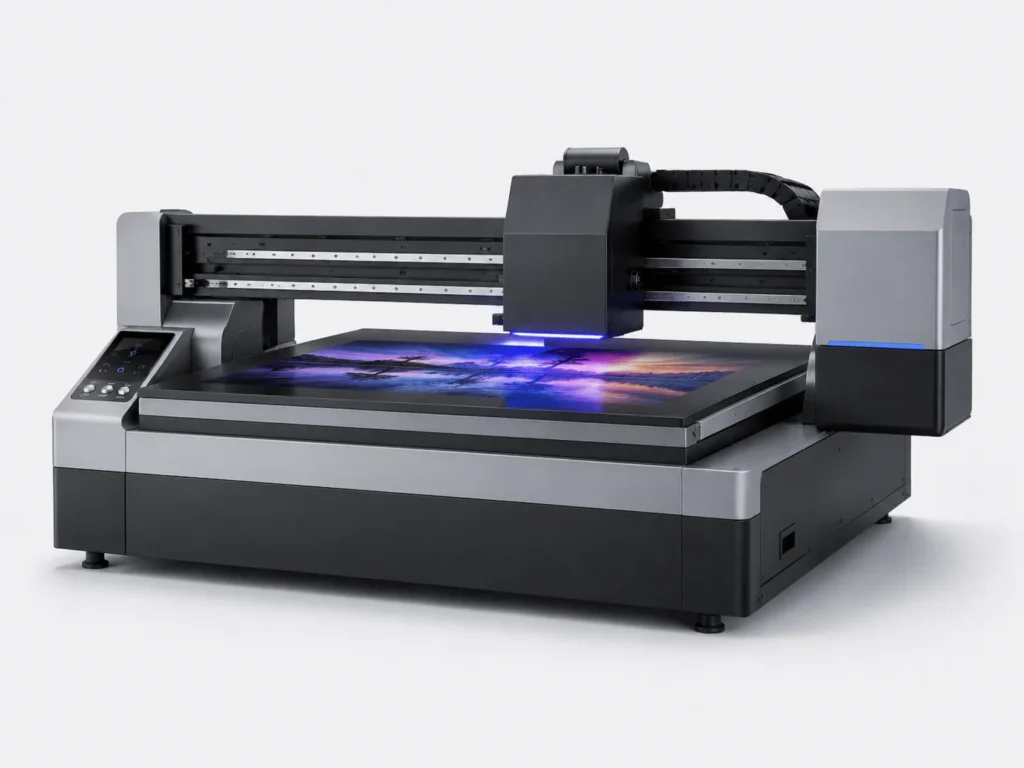
With industrial digital printing becoming increasingly widespread, UV flatbed conveyor printers are now widely used in packaging printing, appliance panels, advertising signage, and personalized custom production. Many users tend to overlook some key details during the initial purchasing stage, which later leads to unstable printing, excessively high consumable costs, insufficient equipment utilization, or excessive maintenance pressure. Understanding these easily overlooked points can not only help businesses avoid unnecessary detours, but also allow the equipment to deliver its intended production value more quickly.
Focusing Only on Price and Ignoring the Real Cost of Use
When choosing equipment, many beginners’ first reaction is to compare quotations. However, equipment procurement is not a one-time expense. Ongoing operating costs, maintenance costs, and downtime costs will also continue to affect company profits.
Low-Cost Equipment Is Not Necessarily More Economical
The equipment price is only part of the procurement cost. What truly determines return on investment is the overall performance of the equipment during long-term operation.
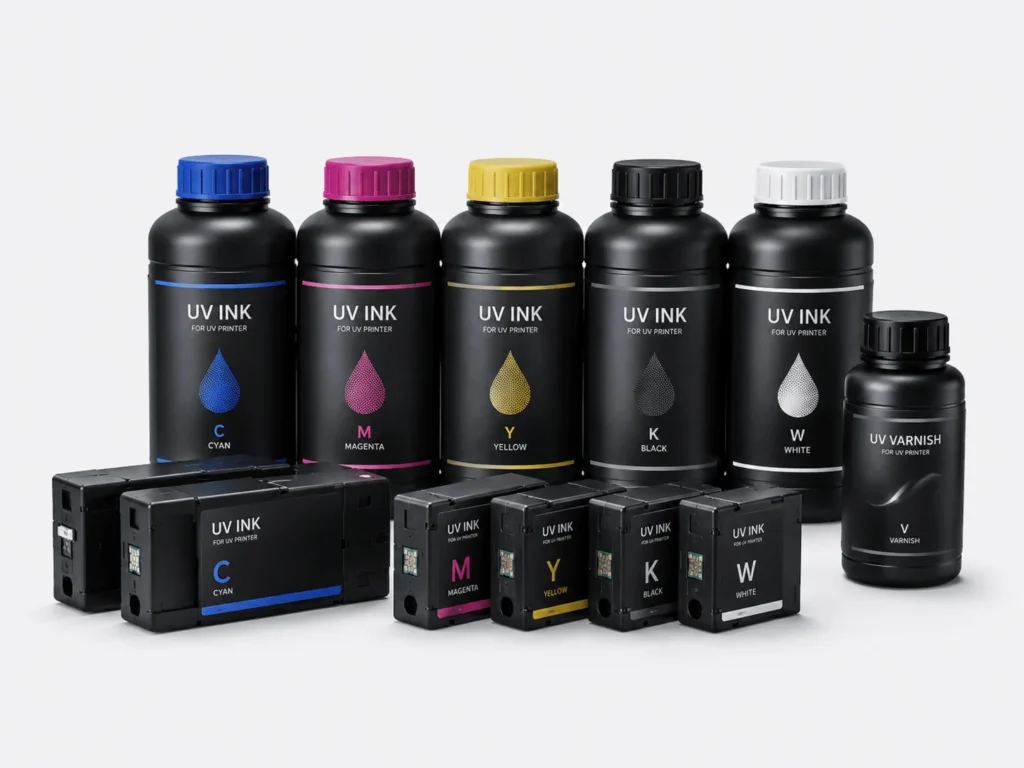
- UV ink creates a steady level of consumption during continuous production, and the accumulated cost over time is often considerable.
- If consumable parts such as printheads, filters, and wiper blades need to be replaced frequently, maintenance expenses will continue to rise.
- Daily cleaning, maintenance, and calibration may seem insignificant, but they actually consume labor and time costs.
- Power consumption, material waste, and operator input all jointly affect the total cost of the entire production line.
If you only focus on the initial quotation, it is easy to overlook the real long-term investment pressure of the equipment.
Production Efficiency Is Also an Invisible Cost
Whether equipment can generate profit steadily depends not only on whether it can print, but also on whether it can complete orders efficiently and continuously. Printing speed affects delivery cycles, equipment stability determines downtime losses, batch production capacity affects overall output, and the more complicated the operation, the higher the training and error costs. The lower the efficiency, the higher the overall cost for the business. Equipment may seem cheap, but in reality it may be more expensive.
Ignoring Core Configuration Can Easily Affect Print Quality
The core competitiveness of a UV flatbed conveyor printer is often reflected in the printheads, control system, and overall configuration, rather than simply in its appearance or promotional parameters. Many beginners are easily attracted by surface-level specifications while overlooking the key components that truly determine output quality.
Printhead Quantity Is Not the Only Standard
Many beginners assume that more printheads automatically mean better performance, but in reality, printhead quantity is only one factor affecting productivity and does not directly represent the overall quality of the machine.
- Different printhead brands vary greatly in precision, stability, and applicable scenarios, so quantity alone cannot be used to judge quality.
- Printhead stability directly affects image detail, color uniformity, and reliability during long continuous printing runs.
- The longer the printhead service life, the lower the later maintenance and replacement costs, and the higher the overall cost performance of the equipment.
- If the compatibility between the printheads, ink, and control system is poor, printing abnormalities may occur even if the configuration appears impressive.
What really matters is not how many printheads there are, but whether their performance truly matches your production needs.
Configuration Matching Matters More Than a Single Parameter
All parts of the equipment must work together. A strong single parameter does not necessarily mean the whole machine will perform well.
- Whether the ink supply system is stable affects continuous ink delivery and whether ink interruption is likely during printing.
- Whether the curing system is uniform affects ink adhesion and the wear resistance and weather resistance of the finished surface.
- Whether the control system responds promptly affects printing rhythm, positioning accuracy, and stability during batch production.
- Whether the conveyor mechanism matches the printing speed directly determines whether material feeding is smooth and whether deviation is likely.
If the core configurations are not coordinated, even an expensive machine will struggle to deliver ideal results and may expose more problems in actual production.
Ignoring Mechanical Structure and Software Experience Leads to Many Later Problems
Many beginners focus more on printed samples when evaluating equipment, while overlooking the mechanical structure and software system. Yet these two parts often determine whether the equipment can run stably over the long term and whether operators can get up to speed efficiently.
The Frame and Guide Rails Determine Equipment Accuracy
The mechanical structure is the foundation of printing stability, especially for applications that require continuous production and high-precision positioning.
- If the frame lacks rigidity, the machine may vibrate during high-speed operation, affecting print clarity and consistency.
- If the guide rail precision is not high enough, the printhead movement path may deviate, resulting in misalignment or blurred edges.
- After long-term operation, if the mechanical structure lacks sufficient stability, loosening, wear, or slight deformation may also occur.
- The poorer the overall stability of the equipment, the harder it is to ensure consistency between batch products, and the higher the rework rate will be.
If the mechanical part is not solid enough, print quality will be difficult to maintain consistently over time, and maintenance pressure will increase significantly.
The Software System Affects Operational Efficiency
Whether the equipment is easy to use depends heavily on the software experience, because it directly determines operator efficiency and the likelihood of mistakes. Whether the RIP software supports high-resolution image processing affects the output of complex patterns, gradients, and small text; whether color management is stable and accurate affects color consistency between different production batches and the uniformity of brand visuals; whether file import, parameter setting, and print job management are convenient also directly affects daily operation efficiency and training difficulty; if remote control, quick adjustments, and abnormal alerts are supported, the equipment will be more flexible in actual production. The more user-friendly the software is, the faster the production ramp-up, the fewer the operational mistakes, and the higher the overall efficiency.
Ignoring After-Sales Service and Long-Term Support Amplifies Risk
For industrial equipment, procurement is only the beginning. What truly tests the machine is the quality of follow-up service. Many beginners do not pay enough attention to after-sales support when purchasing, only to realize later that the impact of downtime is far greater than expected.
Response Speed Determines Downtime Losses
Once equipment fails, time becomes cost. Especially when orders are concentrated or delivery deadlines are tight, after-sales response speed directly affects business losses.
- Whether there is a professional technical team determines whether the problem can be identified and handled quickly.
- Whether remote troubleshooting can be provided in time affects whether some simple faults can be restored immediately.
- Whether on-site service can be arranged affects the efficiency of solving complex problems and the length of downtime.
- The efficiency of fault handling often directly determines whether customer orders can be delivered on time.
The slower the after-sales response, the greater the production loss, and the higher the operational risk for the business.
Spare Parts Supply and Upgrade Capability Are Equally Important
Equipment does not end with the purchase. In long-term use, spare parts supply and future upgrade capability are equally critical.
- Whether common spare parts are easy to purchase affects maintenance cycles and recovery speed.
- Whether printheads, ink, and other consumables can be supplied stably over the long term affects production continuity.
- Whether future upgrades are convenient determines whether the equipment can continue to adapt to new needs as the business grows.
- Whether there is a complete maintenance system and technical support process also affects the long-term user experience of the equipment.
Only with long-term support can the equipment truly serve business growth instead of becoming a burden when problems arise.
When beginners purchase a UV flatbed conveyor printer, what they most easily overlook is often not a single parameter, but the overall logic behind the equipment’s use. From procurement cost and core configuration to mechanical structure, software experience, and after-sales support, every factor affects production efficiency and profitability. Only by considering all of these together can you choose equipment that truly fits your business development needs. Springyprinter focuses on the R&D and manufacturing of industrial UV digital printing equipment and can provide customers with professional UV flatbed conveyor printer solutions and technical support services.