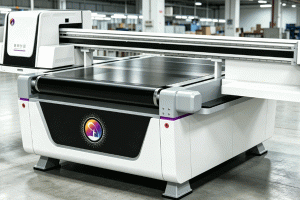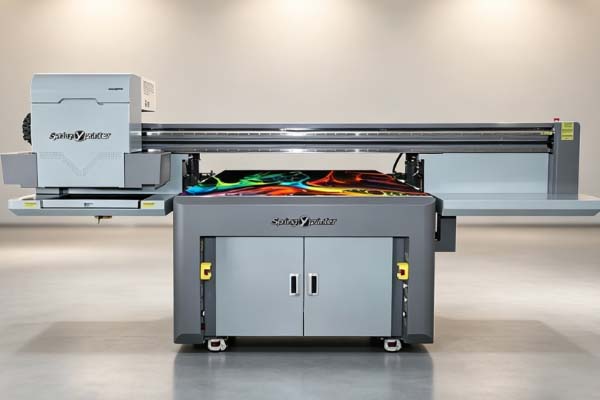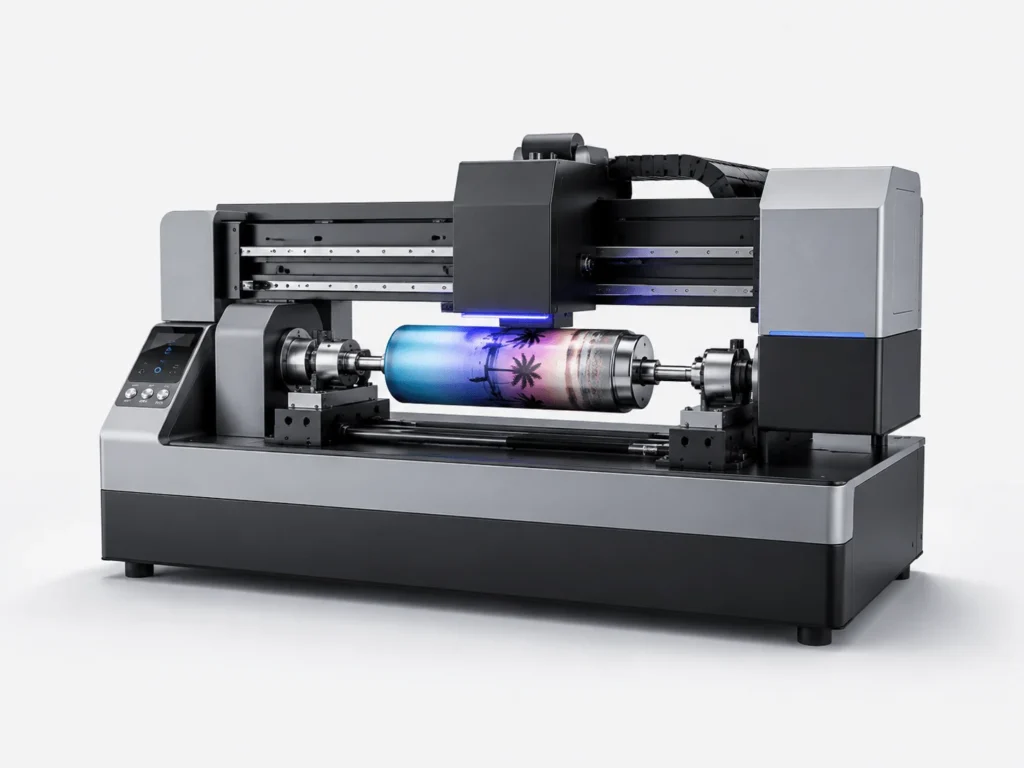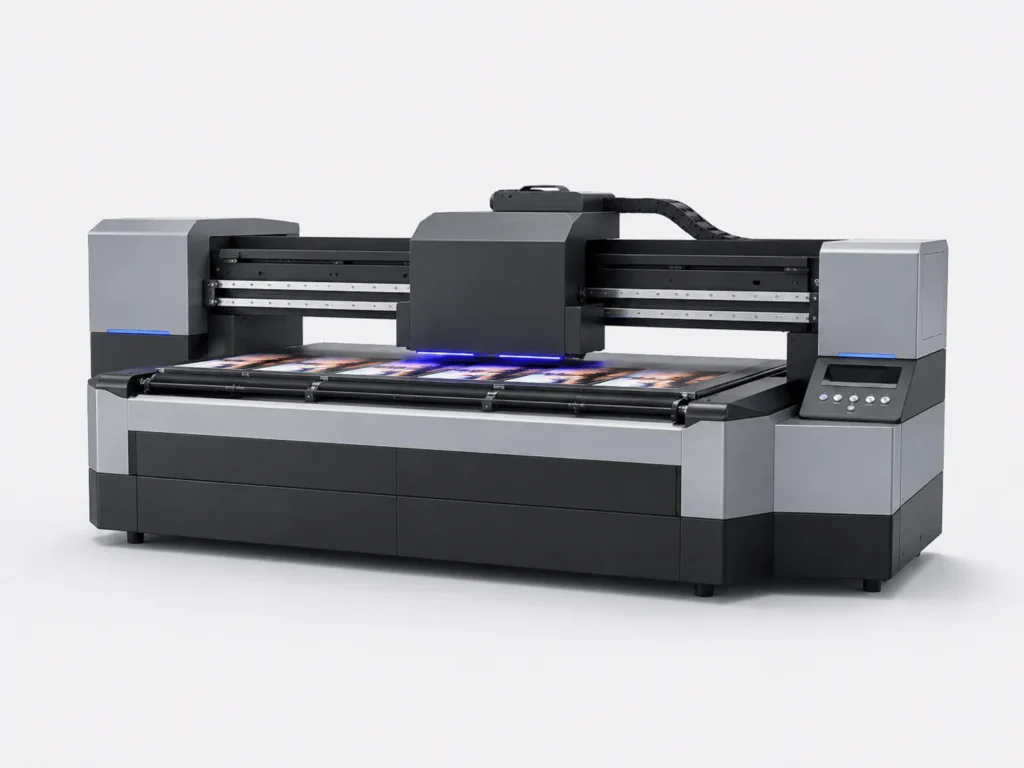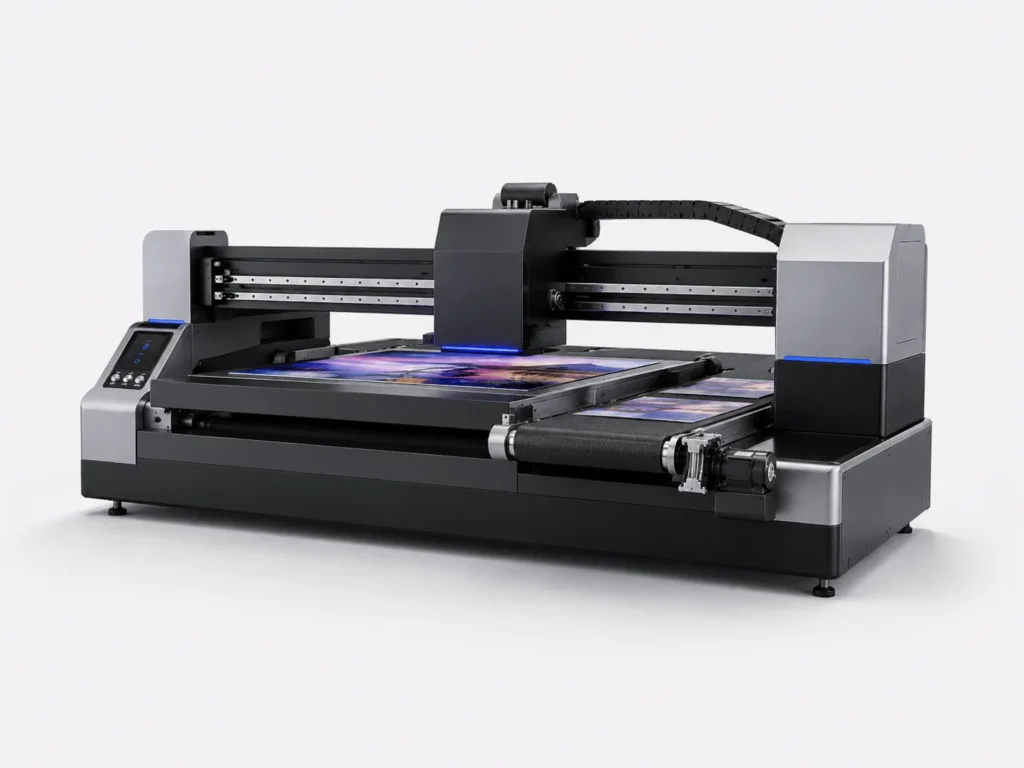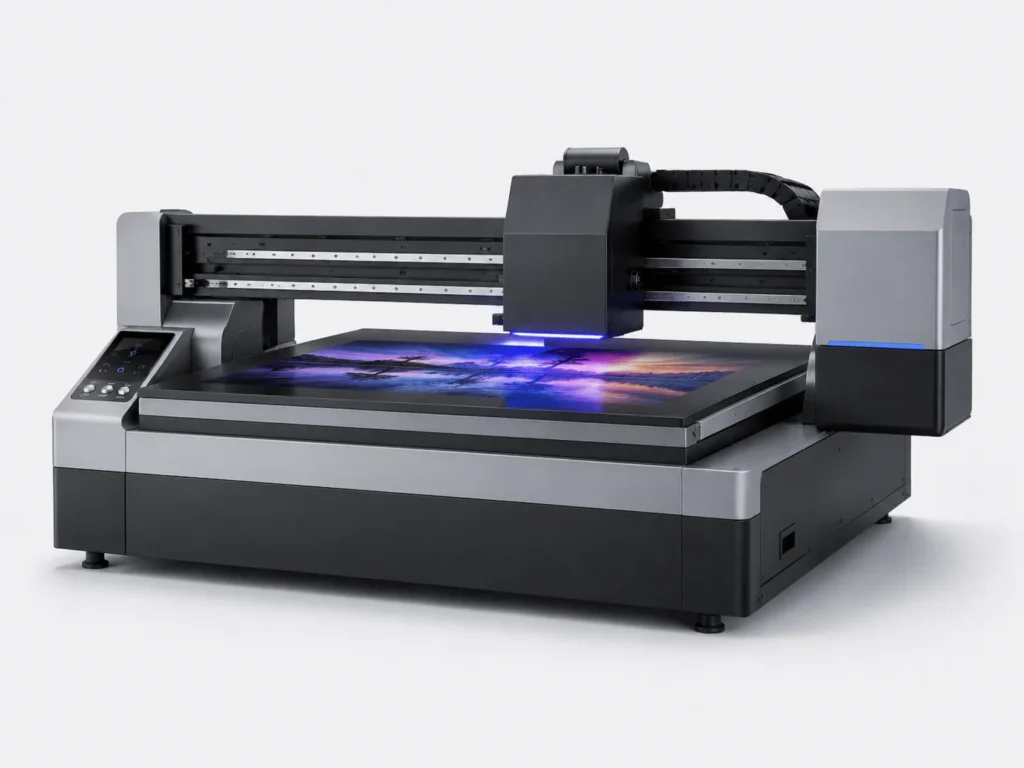
In the modern industrial digital printing field, UV flatbed conveyor printers, with the combined advantages of “flatbed printing + conveyor transport,” are being used by more and more companies in packaging, home appliances, advertising, gifts, and industrial customization. Compared with traditional equipment that can only adapt to a limited range of materials, UV printing uses LED curing and a high-adhesion ink system to directly achieve high-precision output on a variety of material surfaces, making it suitable for both small-batch customization and continuous production. One of the most common questions customers ask when choosing equipment is: what materials can this type of printer actually print on? In fact, the answer is broader than expected, and it mainly depends on the material type, surface condition, and application requirements.
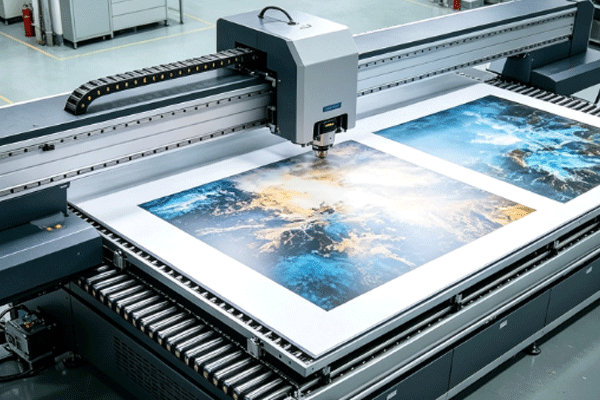
Hard Materials Are the Core Application of UV Flatbed Conveyor Printers
Hard materials usually require higher standards for image clarity, adhesion, and wear resistance, and they are also the most mature and stable application direction for UV equipment.
Glass, Acrylic, and Metal Sheets
These materials are very common in both industrial and decorative fields, and they often have high requirements for the visual effect and durability of the finished product.
- Glass can be used for home appliance panels, decorative panels, and display products, especially in application scenarios that require high gloss, premium texture, and strong brand presentation.
- Acrylic is suitable for advertising signs, light boxes, and display boards because of its good light transmission and smooth surface, allowing printed images to show very clear layers and details.
- Metal sheets are often used for nameplates, equipment panels, and industrial labels, and they perform more stably in environments that require long-term use, wear resistance, and scratch resistance.
- The surface usually needs a primer or pretreatment to improve adhesion, so that the ink layer can bond more firmly to the material and avoid peeling or fading later.
Because these materials have hard, flat surfaces, UV printing can reproduce details and color layers very well, making them especially suitable for high-end customized products.
Wood and Composite Boards
Wood-based materials are also important applications for UV printing, especially in furniture, display, and decoration industries.
- Solid wood surfaces can be directly printed with decorative patterns, adding more design appeal and brand recognition to materials that originally have a natural style.
- MDF boards are widely used in furniture, display cabinets, and packaging structures because of their uniform surface and easy processing, making them very suitable for batch decorative printing.
- Composite boards are suitable for display props and brand presentation pieces, enhancing the overall visual effect while maintaining structural stability.
- They can achieve imitation wood grain, artistic patterns, and brand visual designs, making products more personalized and commercially valuable.
Wood-based materials are not only suitable for decorative printing, but also help enhance the overall texture and added value of products, which is why they are very popular in custom furniture and commercial displays.
Soft Materials Expand the Customization Space of UV Printing
Although soft materials are more complex than hard materials, UV flatbed conveyor printers can still achieve stable output with proper process control.
Leather, PU, and Artificial Leather Materials
These materials are widely used in gifts, luggage, and fashion products, and they are especially suitable for branding and personalized customization.
- Genuine leather and artificial leather can be used for bags, footwear materials, and packaging boxes, adding pattern expression while preserving the material’s texture.
- PU materials are suitable for high-end gifts and custom shells, especially for products that require a luxury feel and refined appearance.
- Local patterns, brand logos, and personalized designs can be achieved, making products easier to differentiate visually.
- The printed result is more refined, making it suitable for high-value products and helping improve retail pricing and brand image.
For companies pursuing brand identity and differentiation, these materials are very suitable for small-batch customization.
PVC, PET, and Flexible Plastic Materials
Plastic materials are widely used in advertising and industrial fields, especially in production scenarios that require cost control and efficiency. PVC boards are commonly used in signage systems and display decoration, PET materials are suitable for packaging, labels, and transparent decorative parts, while flexible plastics are often seen in industrial shells and functional components. These materials are not only flexible in processing, but also capable of balancing appearance and performance. Overall, they offer strong adaptability and high production efficiency, making them ideal for multi-style, small-batch, and fast-delivery printing needs.
Packaging and Industrial Materials Are Important Scenarios for Batch Production
UV flatbed conveyor printers are not only suitable for single-piece customization, but also very suitable for continuous production of packaging and industrial products.
Paper Packaging and Color Box Materials
The packaging industry is one of the fastest-growing application areas for UV printing, especially in brand marketing and e-commerce customization.
- Gift boxes, color boxes, and corrugated cartons can all be printed directly, and different styles and themes can be switched quickly.
- Brand graphics, holiday packaging, and limited-edition designs can be supported, making the packaging itself part of brand communication.
- It is suitable for short-run orders and fast delivery requirements, especially for e-commerce, seasonal marketing, and new product launch scenarios.
- No plate-making is required for multi-style production, greatly reducing proofing costs and changeover time while improving overall production efficiency.
For e-commerce businesses, brands, and gift companies, this approach can significantly reduce proofing and changeover costs.
Industrial Parts and Functional Panels
Industrial manufacturing demands higher stability and consistency, and UV equipment is well suited to these requirements, which is why its application in the industrial field is becoming increasingly mature.
- Home appliance control panels can be printed directly with functional markings, making products clearer and more professional during use.
- Industrial shells can be enhanced with brand information and decorative patterns, giving products stronger recognition and consistency in appearance.
- Equipment labels, functional panels, and nameplates can all be applied to meet different industrial requirements for information display and durability.
- The printed result offers good scratch resistance and wear resistance, allowing stable performance in long-term use and complex environments.
These applications not only improve product appearance, but also help enhance product recognition and professionalism.
Special Materials and Multi-Material Combinations Further Expand the Application Boundary
With continuous upgrades in equipment structure and ink technology, UV flatbed conveyor printers are no longer limited to conventional materials, but are gradually extending to special materials and complex products.
Transparent Materials and Curved Materials
These materials require higher precision in ink control and curing, and they better demonstrate the performance and craftsmanship of the equipment. Transparent plastic parts are commonly used in display products, lighting, and decorative items, while curved materials are suitable for local graphics and irregular designs. They can create light-and-shadow layers and visual overlap effects, while also placing higher demands on printhead control and material positioning. These applications are especially suitable for high-end display products and creative product development, and they can also help companies quickly increase product value in small-batch customization.
Mixed Materials and Irregular Products
The conveyor structure gives the equipment a stronger advantage when handling complex products and gives companies greater flexibility in manufacturing.
- It supports mixed-material production, allowing companies to handle different types of orders within the same production system.
- Irregular products can be printed continuously during transport, reducing errors caused by manual handling and repeated positioning.
- It is suitable for small-batch, multi-category, and fast-switching order models, especially in market environments with high customization demand.
- It lowers the equipment threshold for customized production, enabling more small and medium-sized factories to enter high-value-added markets.
For companies that need flexible manufacturing, this capability is very important and can more easily create differentiated competitive advantages.
The reason UV flatbed conveyor printers are so popular in the market lies in their high material compatibility. From glass, metal, and acrylic to leather, plastic, paperboard, and industrial parts, they cover most of the common materials used in modern manufacturing. Because of this broad adaptability, companies can use one machine to produce multiple product types, improving efficiency and flexibility while providing stable support for personalized customization and flexible manufacturing. Springyprinter focuses on the R&D and manufacturing of industrial UV digital printing equipment and can provide customers with professional multi-material printing solutions and technical support services.