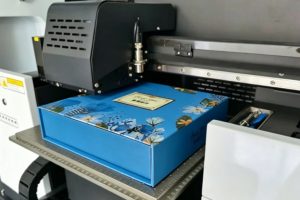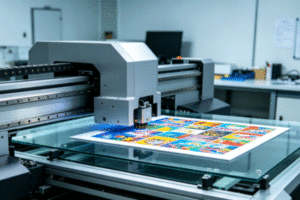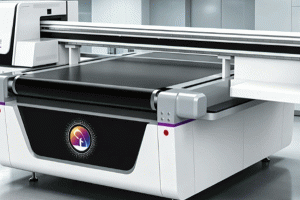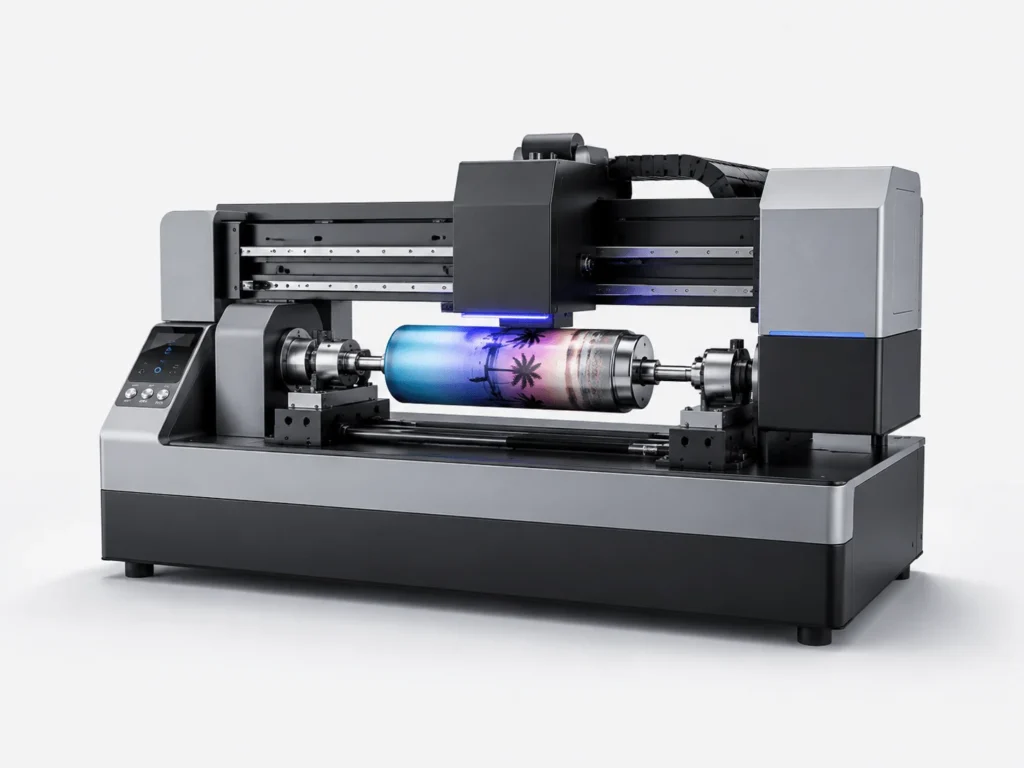
In the current environment where manufacturing and personalized customization demands continue to grow, small-batch production has become the norm for many businesses. Traditional printing equipment is often better suited for large-volume orders, but when facing production models with multiple product categories, short cycles, and fast delivery requirements, equipment flexibility, switching efficiency, and overall cost become especially important. With its hybrid “flatbed + conveyor belt” structure, the UV flatbed conveyor printer is gradually being applied in packaging, gifts, electronic panels, and industrial customization. So, for companies that mainly focus on small-batch production, is this type of equipment really suitable? The answer is not simply “yes” or “no,” but rather depends on a comprehensive evaluation of order structure, product type, delivery pace, and return on investment.
Core Requirements of Small-Batch Production for Equipment
Small-batch production does not mean lower equipment requirements. On the contrary, it places greater demands on equipment flexibility, response speed, and stable output capability. If a company wants to maintain profitability with small orders, the equipment must be able to switch quickly, minimize waste, and offer strong adaptability.
Fast Order and Design Switching Capability
The biggest feature of small-batch production is frequent order changes, which places high demands on equipment changeover efficiency.
- Each order may be small in quantity but diverse in styles and versions, so the equipment must be able to quickly adapt to different designs and file changes.
- Design switching happens frequently, and files are updated quickly. If the equipment responds slowly, the entire delivery schedule will be delayed.
- Production pace must be flexible; long downtime waiting is unacceptable, otherwise the profit from small orders can easily be eaten up by time costs.
- The same machine may need to handle multiple customers’ requirements within a single day, so the operation process must be as simple and stable as possible.
UV flatbed conveyor equipment uses a digital output method, allowing production to start quickly simply by importing the file, significantly shortening switching time. For businesses that need frequent order-taking, rapid sampling, and short-cycle delivery, this capability is crucial.
Low-Cost Startup and Flexible Scheduling Needs
Small-batch production companies usually care more about equipment flexibility and startup cost, so whether the machine supports a “light startup” model is especially important. UV flatbed conveyor printers do not require large investments in plate-making or molds, support one-piece minimum orders and multi-version parallel production, and can flexibly schedule jobs according to order priority, helping businesses respond faster to urgent orders and last-minute insertions. At the same time, they reduce inventory pressure and capital occupation, allowing companies to invest more resources into market expansion and customer maintenance. Compared with the traditional “produce first, sell later” model, this on-demand production approach is more suitable for small-batch orders, and its digital printing characteristics can effectively lower the threshold for trial orders, making even small orders operationally feasible and profitable.
Adaptability Advantages of UV Flatbed Conveyor Printers
If a company mainly handles multi-category, small-batch, and customized orders, the advantages of a UV flatbed conveyor printer become even more obvious. It can not only meet printing needs for different materials, but also balance efficiency and precision, making it a very practical machine for flexible production.
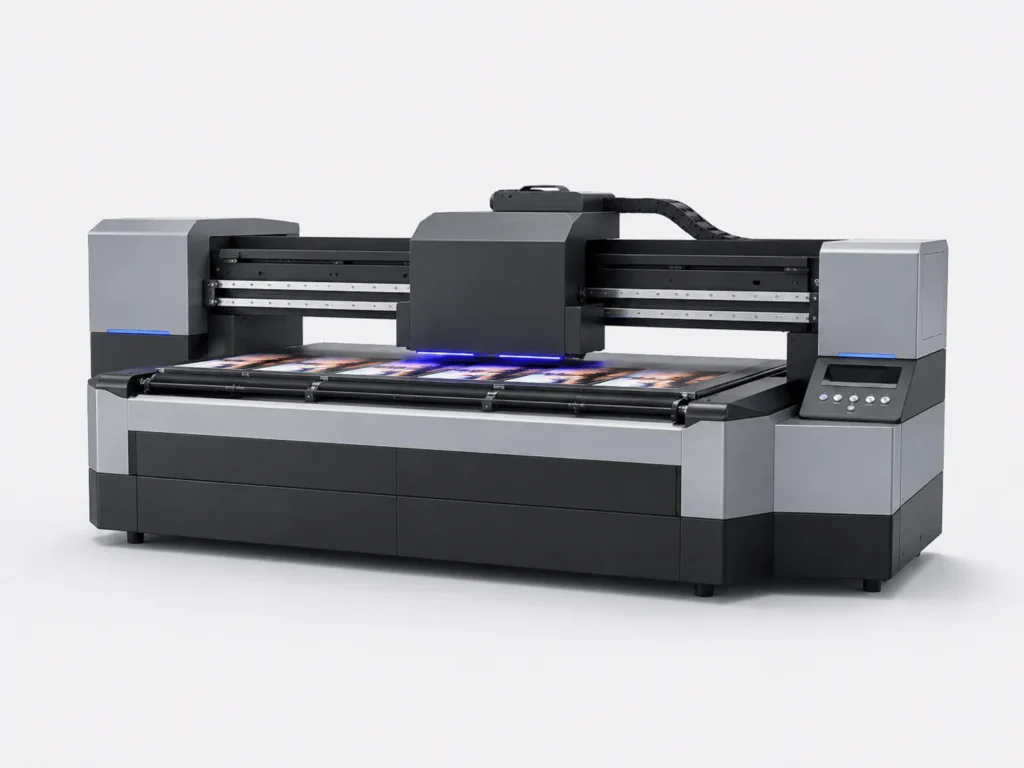
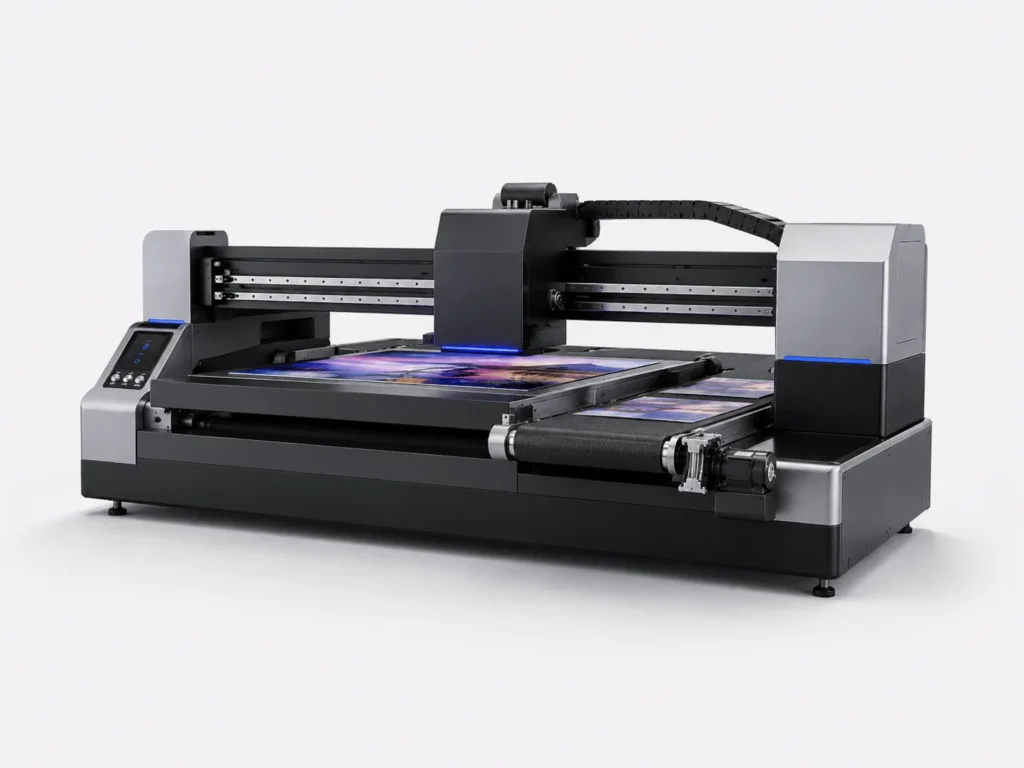
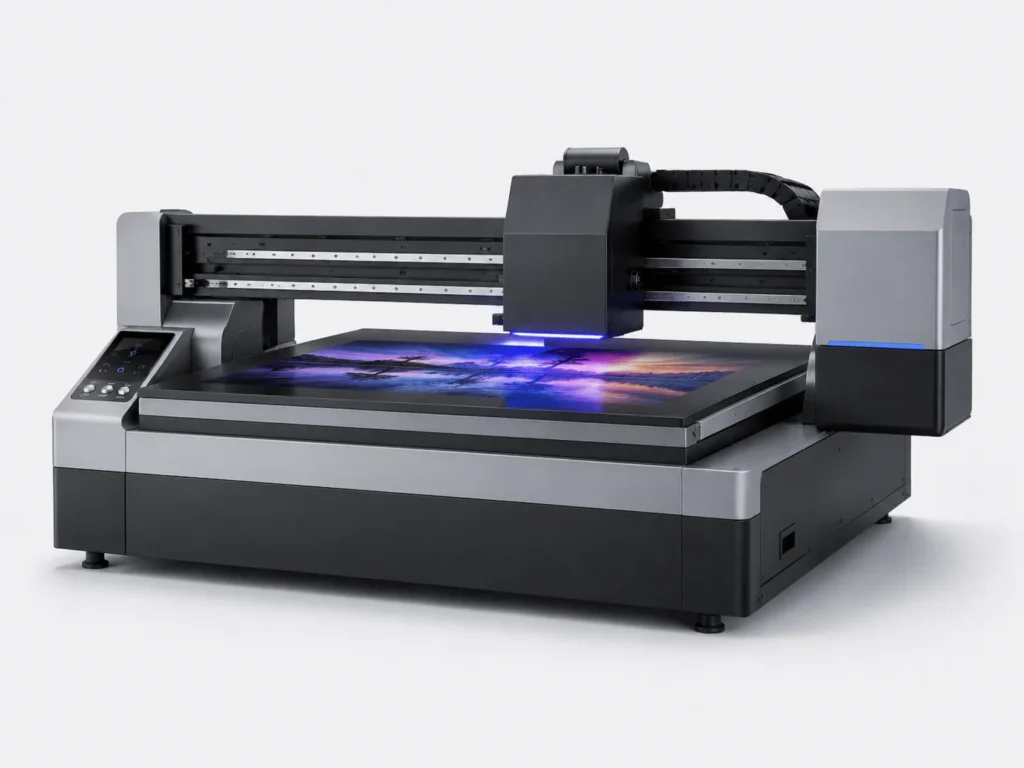
Flatbed + Conveyor Dual Mode for Multiple Scenarios
This equipment structure is one of its biggest features and one of the main reasons it is suitable for small-batch production.
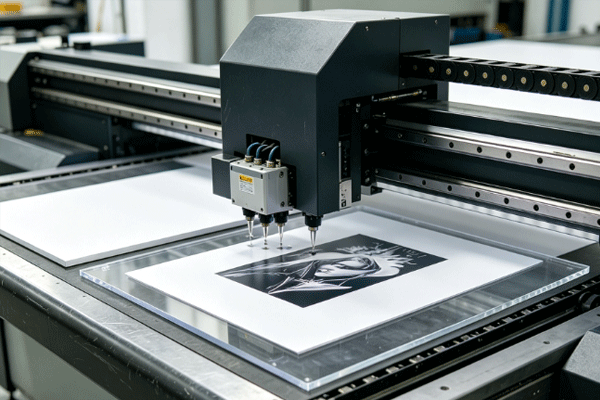
- The flatbed mode is suitable for printing on rigid materials such as acrylic, glass, wood boards, and metal sheets, allowing the company to cover more product types.
- The conveyor mode is suitable for continuous batch production, improving overall efficiency when repeated orders are common.
- One machine can cover multiple product types, reducing repeated equipment investment costs and lowering procurement pressure for the company.
- It is suitable for the transition from sampling and small-batch trial production to medium-batch production, allowing the company to maintain strong adaptability at different stages.
For small-batch factories, this is equivalent to using one machine to cover multiple business scenarios, which not only improves equipment utilization but also reduces factory space and management costs. Especially when order structures are unstable and product types change frequently, this dual-mode equipment can better demonstrate its value.
Digital Printing Reduces Upfront Preparation Costs
UV printing itself is a typical digital production method, which is especially important for small-batch businesses.
- No plate-making is required; production can start directly, reducing upfront investment and trial-order barriers.
- Design modifications are highly flexible, making it suitable for frequent iterations and sample confirmations.
- Supports parallel production of multiple versions, making it convenient to handle different customer orders at the same time.
- Can quickly respond to customization needs and shorten delivery cycles.
For companies that need rapid sampling, quick confirmation, and fast delivery, this model can effectively reduce the high startup costs and trial-and-error costs of traditional processes, and it is also better suited to the current market’s demand for personalization and short lead times.
Balancing Cost and Efficiency in Small-Batch Production
The key to small-batch production is not the output of a single run, but how to achieve higher profit margins and lower waste with limited orders. If the equipment can find a balance between efficiency, stability, and cost, it can truly help the company improve competitiveness.
Reducing Inventory and Overstock Risks
One of the core goals of small-batch production is to reduce inventory and move closer to an “on-demand manufacturing” model.
- Producing according to orders reduces accumulation and avoids finished goods taking up warehouse space.
- Avoiding long-term capital occupation improves cash flow efficiency and makes operations easier.
- Reducing the risk of unsold products and minimizing scrap losses improves overall business safety.
- It becomes easier to adjust product direction in time based on market feedback, helping the company stay more responsive to market changes.
UV flatbed conveyor printers support immediate production, allowing companies to ship quickly according to customer needs instead of stocking large quantities in advance. For industries with strong seasonality, frequent updates, and high customization, this model can significantly reduce business risks and better align with the development trend of modern flexible manufacturing.
Improving Output Efficiency per Unit of Time
Although production is small-batch, companies still need efficiency because efficiency directly affects profit margins. Continuous conveying reduces manual loading and unloading, automated processes shorten waiting time and reduce errors, and multitasking improves equipment utilization while reducing repetitive operation costs, making the production line rhythm more stable. The higher the equipment efficiency, the better the profit structure can be maintained even when orders are not large. Especially under tight deadlines and dense order schedules, completing multiple tasks quickly often determines whether a company can capture more customer demand.
Industry Applications and Purchase Considerations for Small-Batch Scenarios
Different types of small-batch orders have different equipment requirements, but UV flatbed conveyor printers have a relatively broad range of applications, especially in industries that emphasize personalization, differentiation, and fast delivery.
Personalized Customization and Packaging Industry
Small-batch orders are often concentrated in the customization market, which is also where UV flatbed conveyor printers can best demonstrate their advantages.
- Gift packaging and corporate custom boxes emphasize brand image and visual impact, so printing precision and appearance quality are highly important.
- Personalized cultural and creative products involve frequent design changes and fast updates, making them ideal for digital rapid output.
- E-commerce customized products require quick responses to different customer needs, making equipment flexibility especially important.
- Seasonal limited-edition products usually have short order cycles and frequent style changes, making them suitable for rapid sampling and fast delivery.
UV conveyor equipment can help companies quickly complete sampling and batch output, satisfying personalized needs while maintaining high production efficiency, making it very suitable for this business model.
Industrial Parts and Panel Printing
In addition to consumer products, small-batch industrial scenarios are also very common and place even higher demands on printing precision and stability.
- Home appliance control panels require clear markings and wear resistance, so graphic stability is very important.
- Equipment labels and nameplates require accurate and durable information that cannot become blurred or peel off.
- Small electronic housings often need brand graphics or functional markings while also maintaining visual consistency.
- Industrial decorative parts must be both aesthetically pleasing and functional, so they require strong material adaptability.
UV flatbed conveyor printers can achieve high-quality output on a variety of rigid materials, giving them strong applicability in industrial customization. For companies that need to balance functionality and appearance, this type of equipment offers particularly high value.
Small-batch production is fully compatible with UV flatbed conveyor printers, and in many cases, this type of equipment is precisely the core solution designed for small-batch, multi-category, and high-frequency changeover scenarios. Through its dual-mode structure, digital production method, and high automation capability, it helps businesses achieve a balance between cost and efficiency. If a company can properly plan its order structure and equipment utilization, small-batch production will not become a limitation—instead, it can become a new source of profit growth. Springyprinter focuses on the R&D and manufacturing of industrial UV digital printing equipment and can provide customers with professional small-batch flexible production solutions and technical support services.