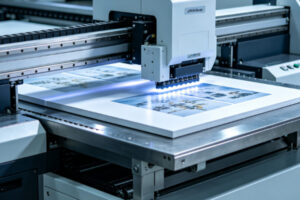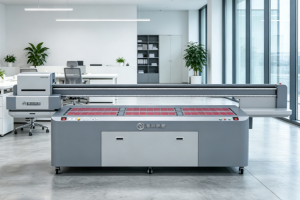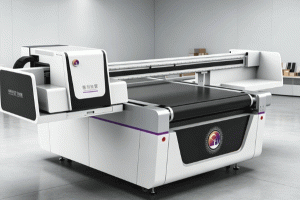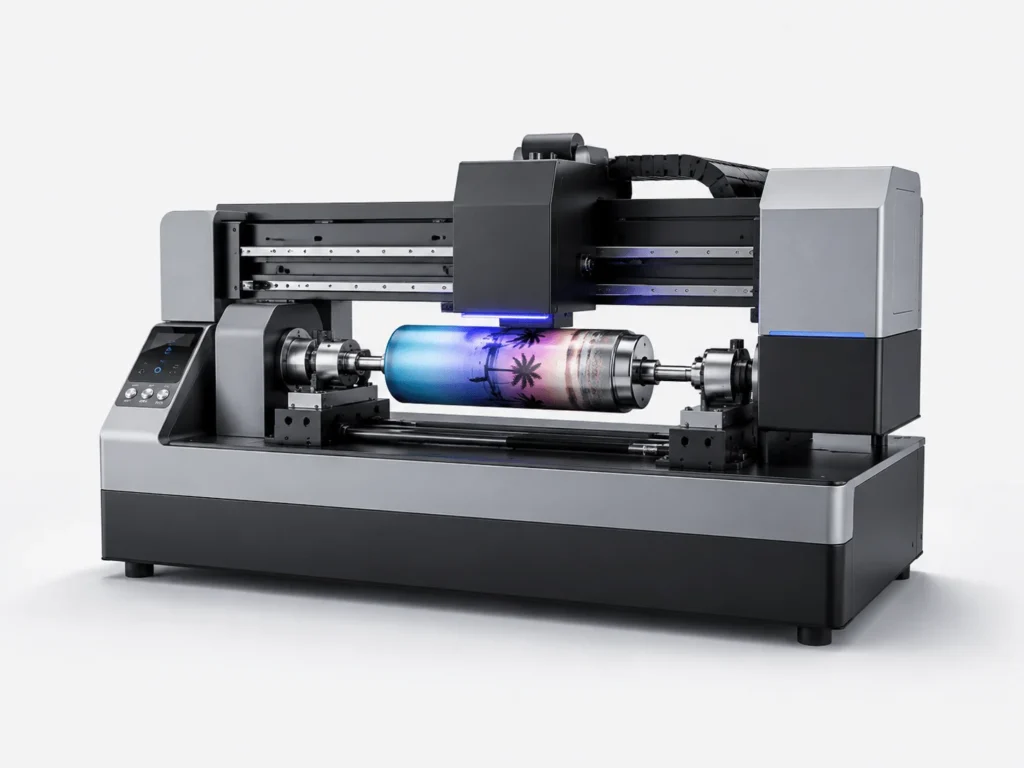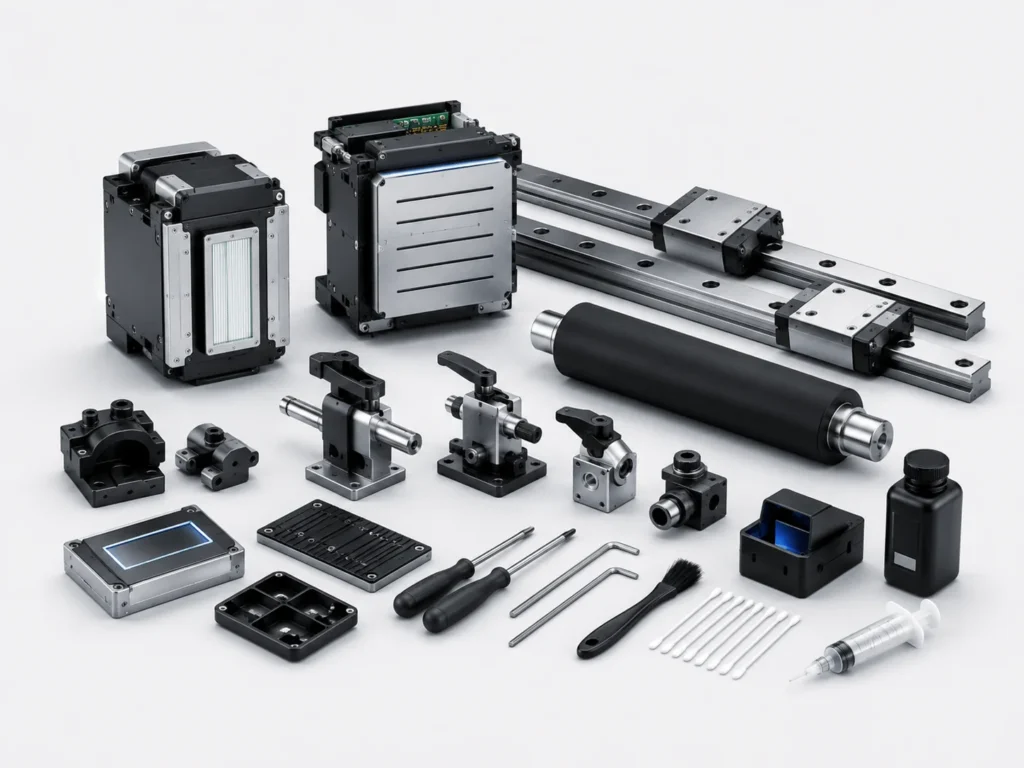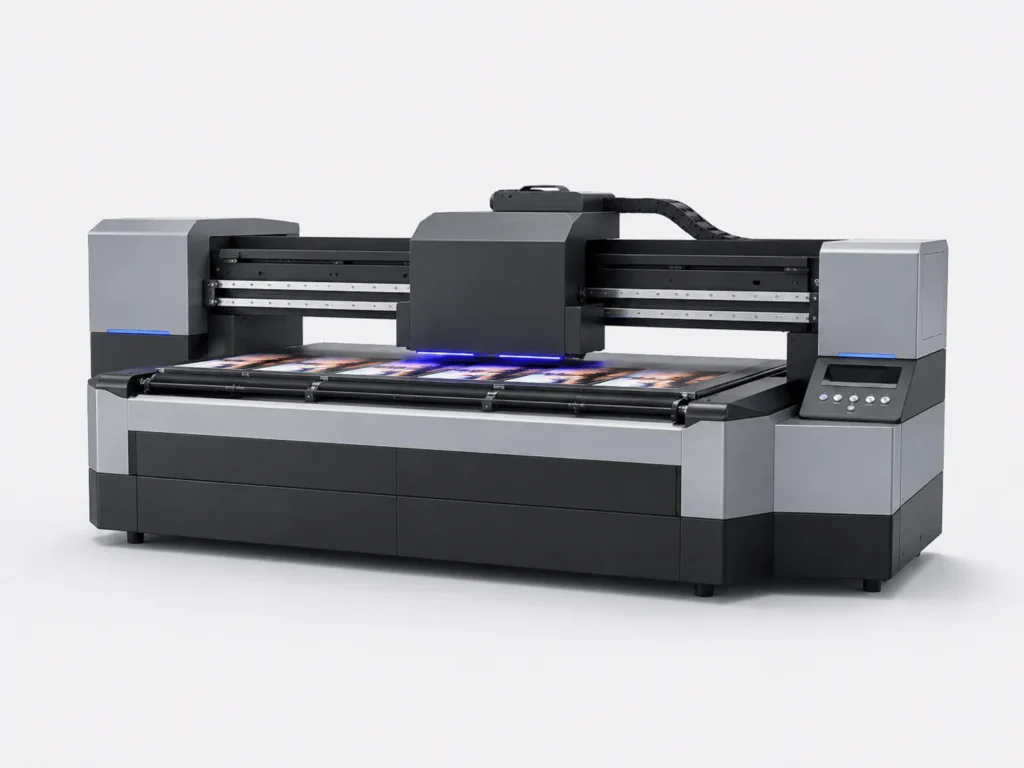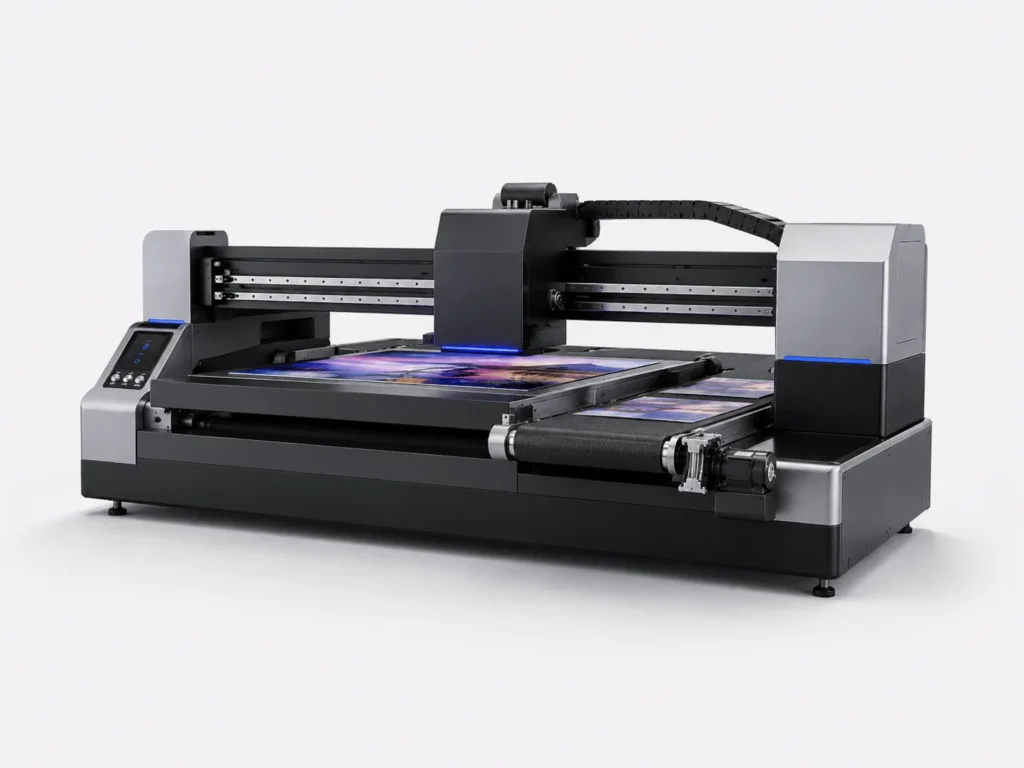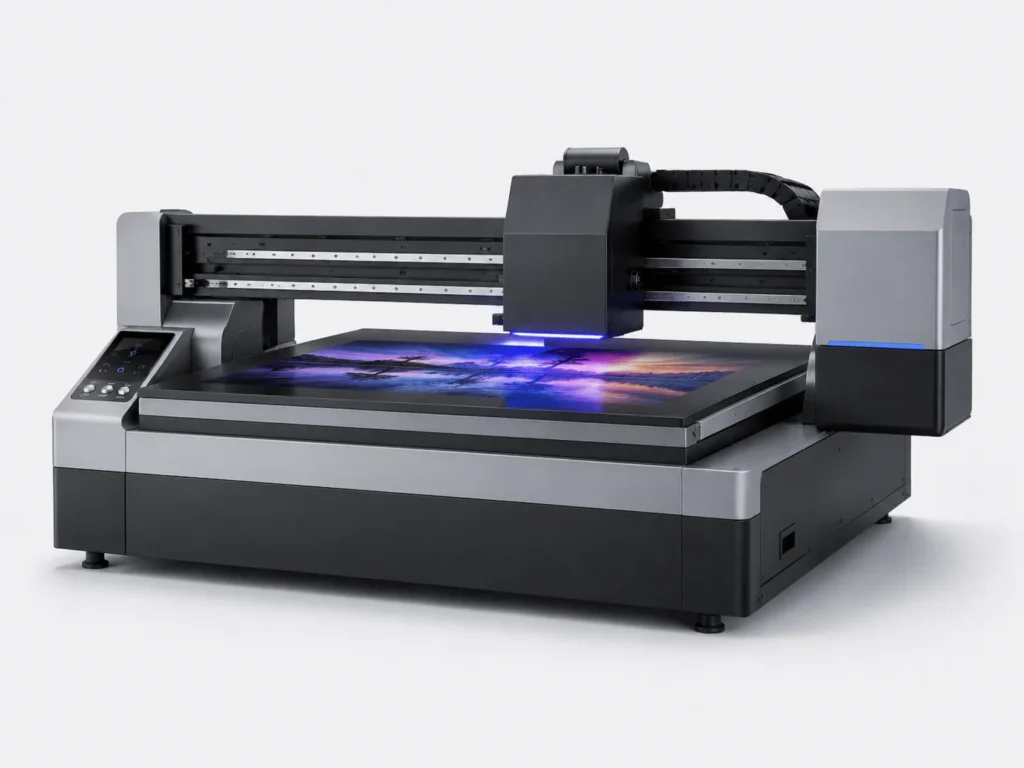
With the continued growth of brand marketing, e-commerce retail, and personalized customization demand, packaging boxes are no longer just simple product shells. They have become an important medium for conveying brand image, communicating product value, and influencing consumers’ first impressions. Although traditional printing methods still have advantages in large-volume orders, they often face issues such as high plate-making costs, low plate-changing efficiency, and insufficient flexibility when dealing with small-batch, multi-style, and fast-delivery packaging demands. With digital output, continuous conveying, and no need for plate-making, UV flatbed conveyor printers are becoming an increasingly popular choice in the packaging box printing field. For companies looking to improve efficiency, reduce sampling costs, and enhance market competitiveness, whether this type of equipment is suitable for packaging box production is worth careful analysis.
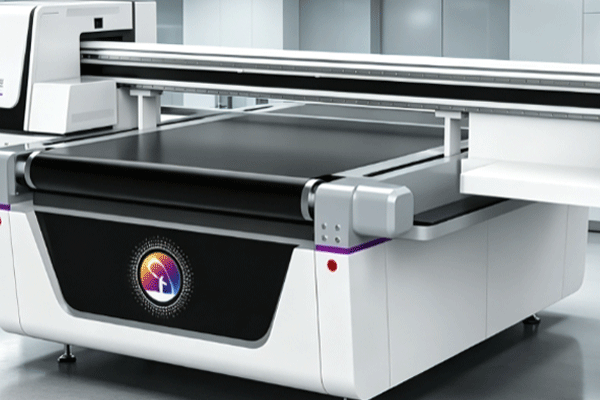
Why UV Flatbed Conveyor Printers Are Suitable for Packaging Box Production
From a production logic perspective, the advantages of this type of equipment are mainly reflected in flexibility and continuity, making it especially suitable for the increasingly obvious flexible manufacturing trend in the packaging industry.
Digital Printing Is Better for Diverse Orders
Packaging orders change quickly, and styles are updated frequently, especially for brand customization, holiday marketing, and new product promotion packaging, which place very high demands on equipment flexibility.
- Direct printing of different patterns without plate-making allows companies to enter production faster after receiving orders, reducing front-end preparation time.
- Different designs and versions can be switched quickly, making it easier to handle multi-brand, multi-series, and multi-campaign packaging orders.
- Supports one-piece sampling and small-batch production, making it especially suitable for new product testing, customer sample confirmation, and short-cycle delivery scenarios.
- Reduces the cost of new product development and trial production, so companies do not have to bear excessive upfront investment pressure when facing uncertain orders.
This production method is especially suitable for companies that need frequent order changes. It not only significantly shortens the cycle from design to finished product, but also better meets customer demands for personalized packaging and fast delivery.
Conveyor Structure Improves Continuous Production Efficiency
Packaging box production is not only about print quality, but also about efficiency. The conveyor structure helps maintain a more stable rhythm and higher output efficiency during continuous processing.
- Automatic conveying reduces manual handling, making the operation process smoother and lowering the time loss caused by repeated manual loading and unloading.
- Continuous printing improves production rhythm, allowing the equipment to complete more packaging box processing tasks in a shorter time.
- More stable positioning reduces deviation, helping ensure consistent pattern placement and improving finished product qualification rates.
- Better suited for batch packaging box processing, especially for production-oriented companies that require continuous shipment and stable delivery.
For factories that require stable delivery, this structure helps improve productivity while maintaining quality, making it especially suitable for packaging processing scenarios with fast order cycles and tight delivery deadlines.
Which Packaging Boxes Are More Suitable for UV Printing
Different types of packaging boxes have different requirements for printing effects and production methods, and UV printing shows particularly strong advantages in certain products, especially packaging types that demand high visual appeal and strong brand expression.
Color Boxes, Gift Boxes, and Brand Custom Boxes
Mid-to-high-end packaging requires stronger visual performance, and UV printing works very well in scenarios such as corporate gift boxes, tea boxes, food boxes, cosmetic boxes, holiday limited-edition packaging, and outer packaging for digital products. It not only enhances color performance and detail reproduction, but also meets different brand customization needs through small-batch, fast design switching, making packaging more brand-oriented, attractive, and differentiated, thereby increasing product competitiveness in the market. For companies that frequently launch new products or run limited-time promotions, this flexible production method is especially valuable. At the same time, UV printing can help shorten sampling cycles and improve packaging development efficiency, allowing creative ideas to be implemented faster.
E-commerce Packaging and Small-Batch Personalized Packaging
The development of e-commerce and customization markets has driven packaging upgrades, especially for flexible production models and fast-response equipment.
- E-commerce fast-moving product packaging changes quickly, and UV printing helps companies complete different packaging versions rapidly.
- Small-batch brand packaging emphasizes flexibility and cost control, which digital printing can meet very well.
- Multi-SKU quick switching reduces equipment downtime and makes production scheduling more efficient.
- Limited-edition promotional packaging is more suitable for short-run production to achieve differentiated marketing and brand communication.
These orders are usually small in quantity but frequent in variation. UV flatbed conveyor printers can meet fast-response needs very well, helping companies complete sampling, production, and delivery within short cycles and improve overall operational efficiency.
Core Advantages of UV Printing in Packaging Box Printing
Packaging boxes should not only be printed clearly, but also with texture. This is exactly where UV printing demonstrates its value. It not only improves visual effects, but also helps companies build stronger brand recognition in market competition.
Rich Color Performance and High Detail Reproduction
Packaging boxes are the first visual contact point between consumers and a brand, so printing quality often directly affects purchasing impressions and brand perception.
- High color saturation makes packaging more visually impactful on shelves and e-commerce pages.
- Clearer image layering helps present complex designs and fine textures.
- Stable performance of small text and fine lines makes it suitable for brand descriptions, product information, and decorative elements.
- Higher logo reproduction accuracy helps maintain brand visual consistency and professionalism.
High-quality printing not only enhances packaging grade, but also helps strengthen brand recognition and product premium value, turning packaging from a simple “container” into a true “marketing tool.”
Compatible with Multiple Packaging Materials
Packaging materials are becoming increasingly diverse, placing higher demands on equipment compatibility. UV printing offers strong flexibility in material adaptation. White cardboard, gray board, coated paper, art paper, PVC packaging materials, and some composite boards can all achieve stable printing through proper processes. This not only meets the visual requirements of gift boxes, color boxes, and premium packaging, but also balances decorative effects and product durability. By selecting the right ink and process parameters, UV printing can achieve good adhesion and finished results on different materials, providing companies with greater design freedom in packaging development. For companies that need to frequently change packaging styles, this flexibility can significantly improve sampling efficiency and production response speed, while also reducing trial costs, making it more suitable for small-batch, multi-version market demands.
What Companies Should Pay Attention to When Purchasing Equipment
Whether the equipment is truly suitable for packaging box printing depends not only on its functional parameters, but also on whether it matches the company’s actual business model and long-term development direction.
Choose the Right Configuration Based on Order Structure
Different companies have very different packaging order structures, so equipment configuration must match actual business needs in order to truly deliver investment value.
- Whether the daily output meets order scale determines whether the equipment can support the company’s normal delivery rhythm.
- Whether the printing width is suitable for packaging dimensions affects whether the equipment can cover mainstream product specifications.
- Whether the printhead configuration meets image quality requirements directly affects pattern precision and production stability.
- Whether continuous automatic production is supported determines the equipment’s efficiency in batch order scenarios.
Only when the equipment configuration matches the business model can resource waste be avoided, and the equipment can generate stable output faster and bring continuous returns to the company.
Value Stability and After-Sales Support
The packaging industry values delivery time and consistency, so stable equipment operation is crucial, especially during concentrated orders or tight delivery schedules.
- High operational stability reduces downtime and rework, ensuring production rhythm is not disrupted.
- Consistent positioning accuracy helps ensure that the pattern placement and effect of each batch of packaging boxes remain uniform.
- Easy daily maintenance lowers equipment management difficulty and reduces production interruption risks.
- Comprehensive after-sales technical support helps companies quickly resume production when problems occur.
For manufacturing companies, equipment must not only be able to print, but also be able to print stably over the long term. This directly affects delivery efficiency and customer satisfaction, and is also an important guarantee for continuous order acquisition.
UV flatbed conveyor printers are highly suitable for packaging box printing, especially for gift boxes, color boxes, e-commerce packaging, and brand-customized packaging applications. They not only meet the needs of small-batch, multi-style, high-quality production, but also help companies improve efficiency, shorten delivery times, and enhance market competitiveness. Springyprinter focuses on the R&D and manufacturing of industrial UV digital printing equipment and can provide customers with professional UV printing overall solutions and technical support services for packaging boxes.