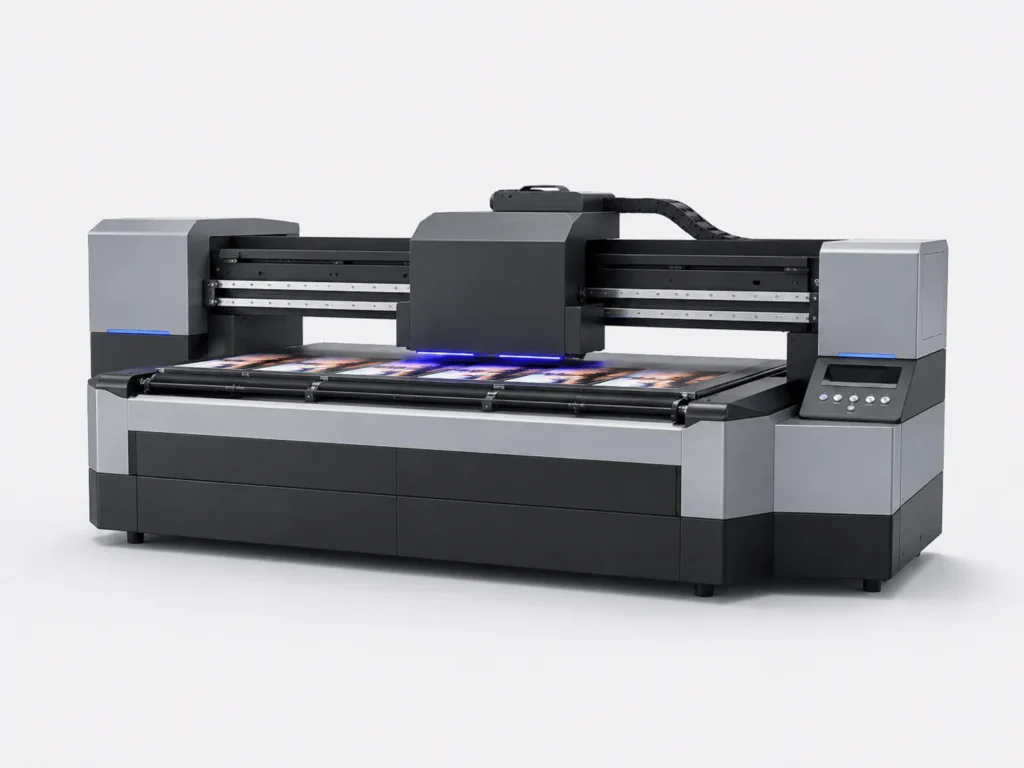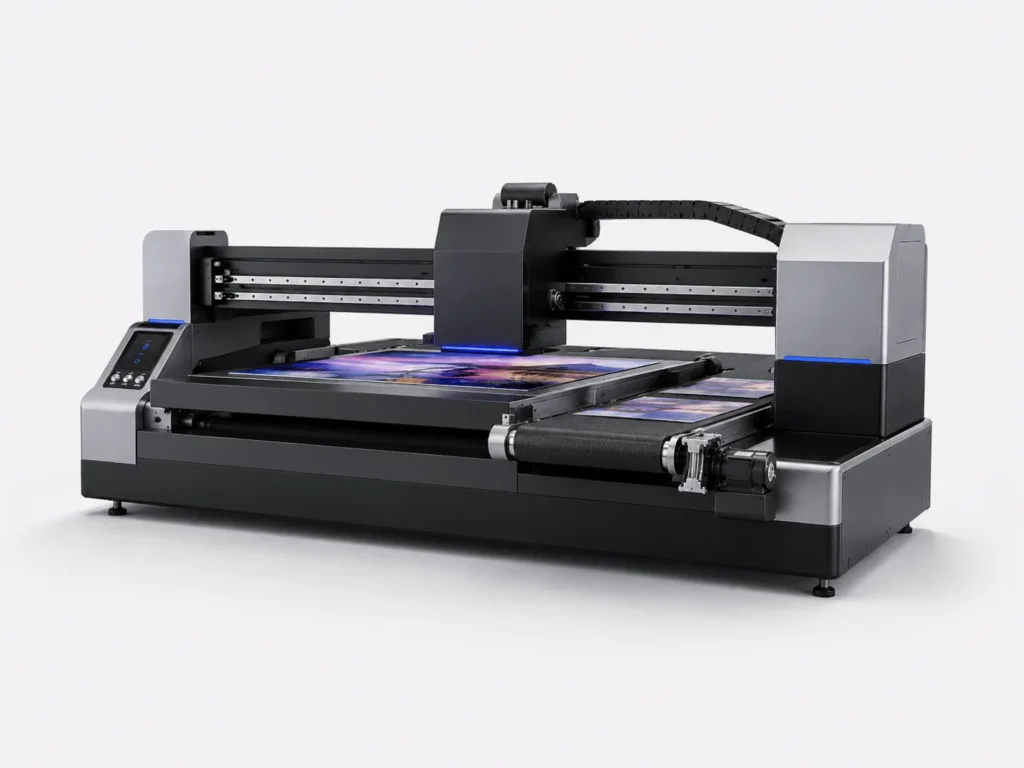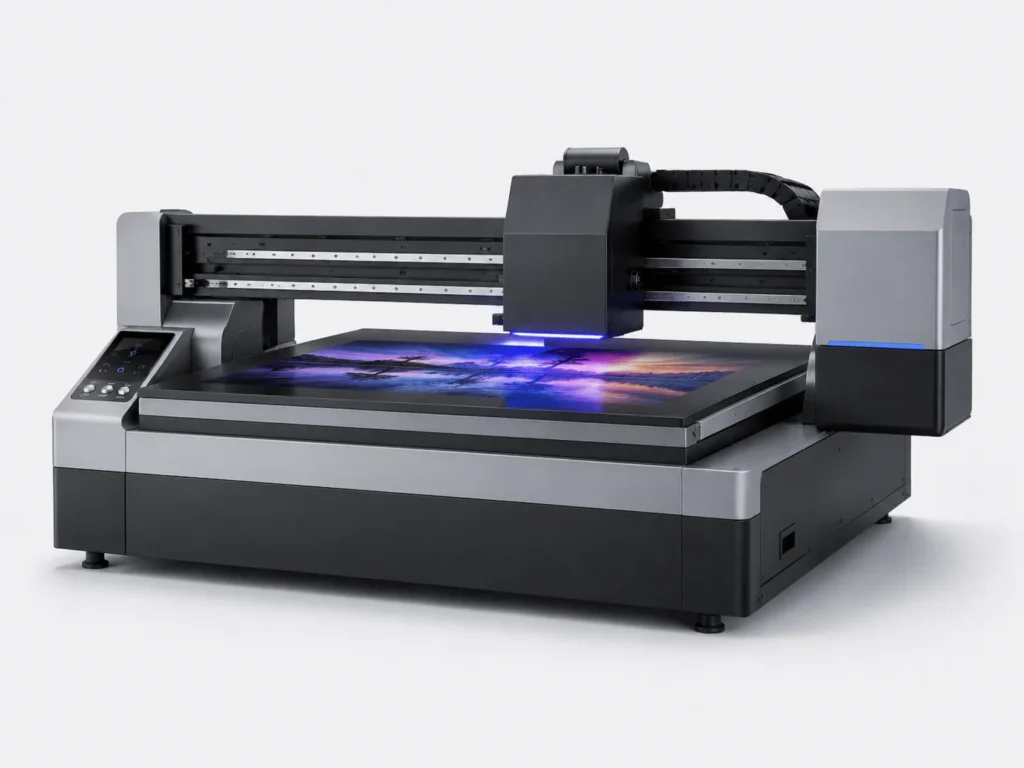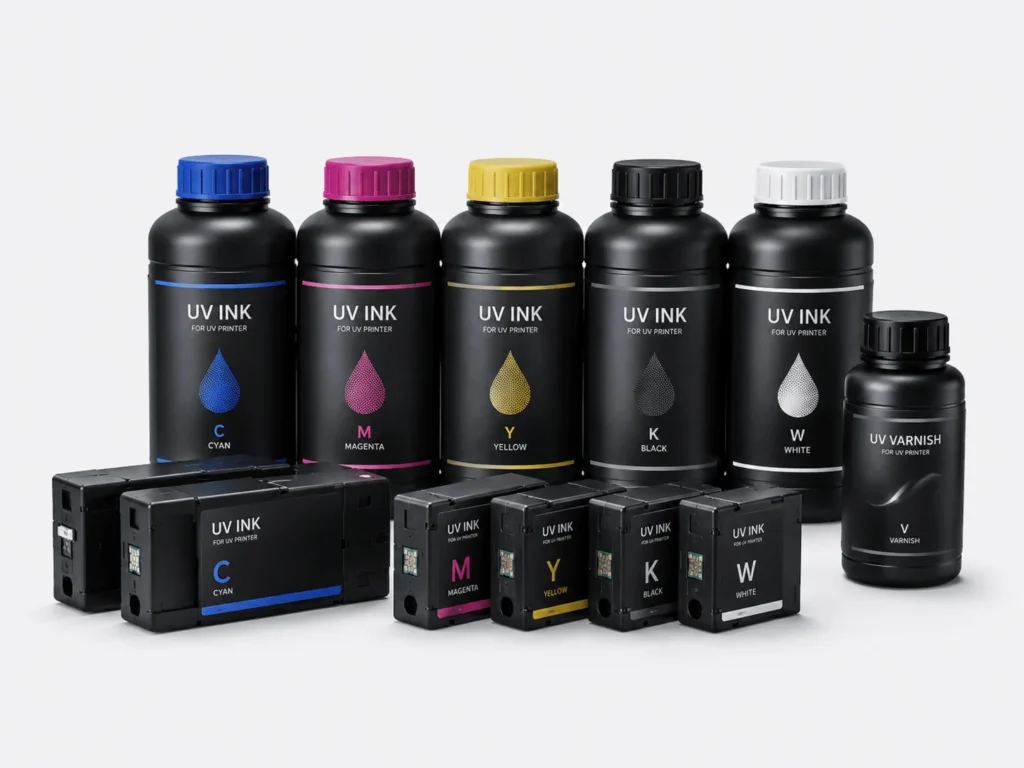
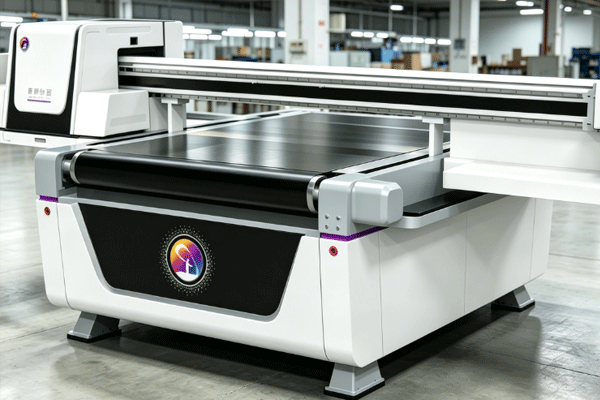
In advertising signage, home decoration, and personalized panel processing, whether the patterns produced by UV flatbed conveyor printers are wear-resistant has become an important standard for customers to judge quality. Many finished products look beautiful right after printing, but after handling, wiping, or long-term display, the surface quickly shows fading, whitening, or fine scratches, and the overall value drops accordingly. To make UV printed products more durable, it is not enough to focus only on the printing result. Materials, process, curing, and post-processing all need to be optimized together to truly extend the service life of the finished product.
Material Selection Determines the Foundation of Wear Resistance
The condition of the material itself directly affects ink adhesion. To improve wear resistance, the first step is to choose the right and stable substrate.
Choose the Right Surface Condition of the Substrate
The wear resistance of UV flatbed conveyor printed products often starts to differ from the material itself, and even subtle changes in the substrate surface will affect the final performance.
- A substrate with a flat surface makes it easier to form a uniform ink layer. During printing, the ink dots land more stably, and the finished product is less likely to peel off locally under friction.
- Materials with oil stains, dust, or mold release residue will significantly weaken the bonding force between the ink and the substrate, making the finished product more likely to fade during use.
- Surfaces that are too smooth or too loose are not ideal. The former lacks adhesion, while the latter has poor stability, both of which will cause the pattern to wear out faster.
- Conducting small sample tests before mass production can help determine material compatibility more quickly and help companies filter out substrates that are not suitable for long-term use.
The more stable the substrate condition is, the more reliable the adhesion of the subsequent printed layer will usually be, and the better the finished product will perform under long-term friction.
Pay Attention to Primer and Adhesion Layers
Many products that aim to improve wear resistance add adhesion treatment before printing. Although this step seems simple, it often determines whether the pattern can withstand long-term use.
- Primer helps UV ink adhere more firmly to the substrate, acting like a more stable connection base between the material and the pattern.
- Transparent primer is suitable for products with high appearance requirements. It enhances adhesion without significantly changing the original visual effect of the finished product.
- Different materials respond differently to primer, and only repeated verification based on actual materials can help find a more suitable treatment method.
- After adhesion layer treatment, the pattern will be more stable during long-term use, especially in application scenarios that require frequent contact.
Once the adhesion layer is properly treated, the pattern will be more stable during long-term use, and the wear resistance test results will also be more ideal.
Printing Parameters Affect Ink Layer Strength
Printing parameters are not simply about pursuing speed or color. They are about finding a balance between output efficiency and ink layer stability.
Control Ink Volume and Printing Speed
If the ink layer is too thin, the pattern will look weak. If it is too thick, it may become brittle. Therefore, printing parameters need to be controlled more evenly to ensure more stable wear resistance. A reasonable ink volume can make the pattern coverage more complete and the colors more saturated. Printing speed and resolution also need to be matched properly. If the speed is too fast, ink dot uniformity may be affected; if it is too slow, production efficiency will drop. For products that require stronger coverage, multi-pass printing can be used to improve pattern stability, especially for dark substrates and high-frequency use scenarios. Confirming the sample before mass production can also reduce material waste and rework risks. The more reasonable the parameter settings are, the more uniform the ink layer structure will be, and the stronger the product’s resistance to wear will be.
Optimize UV Curing Intensity
The curing stage directly determines whether the ink layer truly forms a film. Many problems that seem to be wear-related are actually caused by improper curing conditions.
- Insufficient curing will make the surface sticky, reducing wear resistance. In this state, the pattern is more likely to be removed during friction.
- Excessive curing will make the ink layer too hard, causing fine cracks more easily under friction, especially on materials that require a certain degree of flexibility.
- Lamp distance, power, and conveyor speed all need to be adjusted together. Only when these parameters are matched properly can the ink layer maintain a balance between hardness and toughness.
- Observing surface gloss and touch can help judge whether the curing state is appropriate. In actual production, adhesion tests can also be combined to further confirm the effect.
When the curing state is properly controlled, the ink layer can balance adhesion and flexibility, and the finished product can maintain a more stable appearance under long-term friction.
Post-Processing Improves Surface Abrasion Resistance
Post-processing often determines whether the product can remain stable in complex usage environments. It is a key reinforcement step for improving wear resistance.
Choose Suitable Varnish or Lamination
If you want UV printed products to be more wear-resistant, post-processing is often the most easily overlooked yet most differentiating step, especially in high-contact scenarios.
- A transparent varnish layer can form an additional protective layer on the surface of the pattern, reducing the direct impact of daily wiping and minor collisions.
- Lamination is suitable for products that are frequently touched or transported, especially in logistics or end-use scenarios with high frequency, where the protective effect is more obvious.
- The protective layer should balance scratch resistance and visual effect, ensuring the surface is not easily damaged while avoiding any impact on the clarity and color layers of the original pattern.
- For display products, the surface protection can also extend color brightness, allowing the finished product to maintain a good visual appeal over a longer period.
The post-processing layer is like adding a protective barrier to the pattern, which can significantly extend service life and help the product maintain a better appearance in complex environments.
Ensure Proper Cooling and Resting Time
Right after printing, the ink layer has not yet fully stabilized, and many surface damages occur during this stage. Proper resting time can help the ink layer set and reduce pressure marks and fine damage; maintaining stable temperature and humidity also helps film formation; checking the surface condition again before shipment can reduce transport wear and later complaints. Giving the finished product enough time to stabilize not only improves durability but also makes delivery results more reliable.
Equipment Maintenance Ensures Long-Term Stability
The more stable the equipment condition is, the more consistent the printing result will be, and the easier it is to maintain uniform wear resistance across different batches.
Keep the Printhead and Ink Supply Stable
When the equipment runs stably, the wear resistance of the printed result is more consistent. Many differences between batches can actually be traced back to whether the equipment is operating smoothly.
- A printhead in good condition allows ink dots to land more accurately, making the pattern edges clearer and the ink layer distribution more uniform, which naturally helps maintain wear resistance.
- A smooth white ink circulation system can reduce quality fluctuations caused by sedimentation and avoid local adhesion problems due to unstable ink supply.
- A stable ink supply system can reduce broken lines and color differences, while also keeping each product in batch production closer in output quality.
- Regular cleaning of key components helps maintain long-term output quality and reduces hidden losses caused by equipment contamination.
The smoother the equipment runs, the easier it is to keep the ink layer quality of the finished product consistent, and the easier it is to reproduce wear resistance across different batches.
Establish a Standardized Process
Wear resistance is not based on luck or experience. It depends on process accumulation. Only by fixing each step can product quality truly become stable.
- Creating dedicated parameter files for different materials can help future production find suitable solutions faster and reduce the time wasted on repeated trial and error.
- Unifying the printing, curing, and post-processing steps ensures that each batch is processed according to the same standards, thereby improving overall stability.
- Recording abnormal situations makes it easier to trace back quickly. Once fading, cracking, or poor adhesion occurs, the source of the problem can be identified rapidly.
- After the process becomes stable, product consistency and wear resistance will both improve, and the company will have more confidence when handling large-volume orders.
The more complete the standardized process is, the easier it is to reproduce wear resistance in mass production, and the easier it is for the company to build stable delivery capability and customer trust.
If you want UV flatbed conveyor printed products to be more wear-resistant, the key is not only the ink itself, but whether material selection, printing parameters, curing effect, and post-processing are properly coordinated. When each step is handled more carefully, the finished product will be more stable during handling, wiping, and long-term display, and it will be more likely to gain customer recognition and repeat orders. Springyprinter focuses on the R&D and manufacturing of industrial UV digital printing equipment and can provide enterprises with more stable printing solutions.