With the rapid popularization of DTF digital transfer technology, white ink printers have gradually become an indispensable core piece of equipment in the entire production process. Compared with ordinary color printing, the DTF process needs to achieve high-coverage and highly accurate image effects on dark or complex materials, and white ink is the key to making this possible. When many factories upgrade their equipment, they often prioritize the stability and precision of the white ink system because it not only determines whether the pattern is clear, but also directly affects order delivery efficiency, customer satisfaction, and overall profit margin.
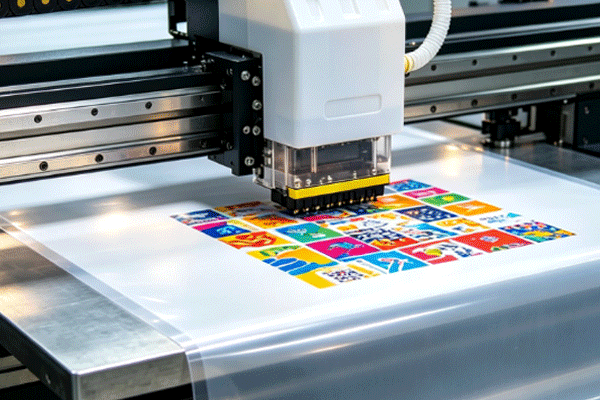
White Ink Is the Key to Achieving “Base Color Coverage” in DTF Printing
White ink plays a dual role in DTF printing: it provides a base layer and enhances brightness. It is the first guarantee of whether the pattern can be clearly presented. For dark fabrics, blended textiles, and materials with strong ink absorption, the presence of a white ink layer almost determines the visual effect of the final product.
Provides a High-Coverage Base Layer
In DTF printing, white ink acts like a “primer.” It is not simply a layer of white coating, but rather a stable, bright, and high-contrast visual foundation between the dark substrate and the color pattern.
- White ink can effectively cover the base color of dark fabrics, making the subsequent color pattern appear brighter and fuller, instead of looking dull or gray due to the dark substrate.
- It can significantly enhance the brightness and layering of color patterns, allowing ordinary designs to present stronger visual impact and higher recognition on the finished product.
- White ink can also reduce the absorption of color by the material. Especially on highly absorbent fabrics, it helps the pattern maintain more stable color performance.
- By enhancing overall visual contrast, white ink makes pattern edges clearer and the image more three-dimensional, which better meets the requirements of commercial printing for finished product quality.
Without a white ink base, color patterns on dark fabrics often appear gray, dull, or even lose their original design layers. For custom printing that pursues high saturation and strong recognition, white ink is the foundation for achieving visual impact.
Determines the Authenticity of Pattern Reproduction
The uniformity of the white ink layer directly affects the final result, and this influence is not only reflected in whether it “looks white,” but also in whether the pattern can be faithfully and completely reproduced according to the original artwork.
- If white ink is sprayed unevenly, the color layer may appear gray, dirty, or partially transparent, affecting the overall appearance.
- When the white ink is too thick or too thin in certain areas, the details of the pattern will be damaged, especially portraits, gradient blocks, and complex textures, which are more likely to become distorted.
- The clarity of image edges is also affected by the precision of white ink control. Blurred edges make the finished product look unprofessional and may even reduce customer trust in the product.
- For gradient effects, shadow layers, and fine text, the more stable the white ink layer is, the closer the reproduced design will be to the original artwork.
The more stable the white ink printing is, the higher the reproduction accuracy of the pattern. Especially for high-precision designs such as portraits, brand logos, and fine text, the control capability of the white ink layer directly determines whether the finished product looks professional and has commercial value.
The White Ink System Determines Production Stability and Yield Rate
White ink not only affects the finished product, but also directly determines whether the equipment can run stably for a long time. For factories, equipment stability means fewer stoppages, lower maintenance costs, and higher order delivery capability, all of which depend on the design quality of the white ink system.
Prevents Nozzle Clogging and Sedimentation Problems
White ink is more prone to sedimentation than color ink, and once this problem occurs frequently during production, it quickly escalates into a series of chain reactions such as nozzle failure, downtime for maintenance, and order delays.
- White pigment particles are usually larger than those in color ink. If they remain idle for a long time without circulation, they can easily form layering and sedimentation in the ink path, affecting normal nozzle operation.
- If white ink is not continuously stirred and circulated, problems such as uneven concentration, unstable spraying, or even ink interruption may occur during printing, and in severe cases, the nozzles may become clogged directly.
- Once the nozzles are clogged, it not only increases cleaning frequency, but also causes material waste, time loss, and interruptions in production rhythm, which is especially serious for bulk orders.
- Whether the white ink circulation, stirring, and filtration structures are well designed has become one of the key indicators for evaluating the quality and stability of DTF printers.
If the white ink system is not properly designed, problems such as nozzle clogging, broken lines, and uneven ink spraying will occur frequently, and in severe cases, the production schedule of the entire batch order may be affected.
Ensures Continuous Production Capability
Factories care more about whether the equipment can output stably and continuously, because profit depends not only on the quality of a single print, but also on whether the equipment can maintain consistent performance during long-term, high-intensity production. An automatic circulating ink supply system can reduce manual intervention and make ink supply more stable, lowering operational errors; stable spraying can reduce broken lines, missed spraying, and uneven ink dots, making the printing process smoother and the finished products more consistent; once the white ink system runs stably, the equipment will require fewer cleanings, saving maintenance time and improving production line efficiency; for e-commerce orders, group apparel orders, and custom gift orders, stable white ink output means higher yield and stronger delivery capability.
White Ink Precision Affects Pattern Quality and Brand Performance
The higher the spraying precision of white ink, the more complete the pattern details and the more professional the brand presentation. For companies that want to enhance their brand image through printed products, white ink quality is not only a technical issue, but also a market competitiveness issue.
Determines Detail Performance
White ink is not only a coverage layer, but also the foundation of image quality. Its impact on details is very direct, especially in high-precision patterns and complex designs. Whether small text and fine lines are clear depends on whether the white ink layer is accurate; whether the pattern edges are sharp is also closely related to the control capability of white ink; and in gradient areas and complex layers, the uniformity of white ink directly affects whether the transition looks natural. For high-end custom products, the higher the white ink precision, the more delicate the finished product appears, and the easier it is to meet customer quality expectations. If the white ink spraying is not precise enough, the pattern is likely to have fuzzy edges, ghosting, or disordered layers. Conversely, the more refined the white ink control, the more three-dimensional the pattern and the more premium the finished product looks.
Enhances Brand Product Premium Capability
Visual quality directly affects product value, and white ink, as an important part of the visual foundation, actually influences whether a brand can establish higher market recognition and pricing power.
- High-quality printing allows brand products to establish a stronger sense of professionalism and premium quality at first glance, thereby improving consumers’ overall impression of the brand.
- When the pattern is clear, the colors are rich, and the details are complete, consumers are more likely to be willing to buy and pay a higher price for better visual effects.
- On e-commerce platforms and in offline customization markets, print quality often directly affects conversion rates. The more stable the white ink performance is, the easier it is for the product to form a differentiated competitive advantage.
- For brands aiming for a high-end positioning, stable white ink output not only supports a higher pricing strategy, but also helps improve repeat purchase rates and word-of-mouth spread.
In the highly competitive apparel customization market, consumers are paying more and more attention to pattern effects and product texture. The more stable the white ink printer output is, the easier it is for brand products to form differentiated advantages and support higher prices and better repeat purchases.
The White Ink Printer Holds a Core Position in the DTF Production Process
From the perspective of the entire production chain, the white ink printer determines the quality of front-end output and also affects the subsequent transfer effect and final delivery performance. It is not only the core equipment in the printing stage, but also the key node that determines whether the entire DTF process can operate efficiently.
Determines the Starting Quality of the Entire Production Chain
The DTF process starts from the printing stage, and the white ink printer is the most critical starting device in this stage. Its output stability directly affects the performance of all subsequent processes.
- The white ink layer is the first visual foundation of the entire pattern structure, determining whether the subsequent color layers can be stably presented on the correct base layer.
- The output quality of white ink directly affects the subsequent heat transfer effect. If the front-end layer is unstable, pressing and transfer later on can hardly make up for the visual defects.
- The consistency of the finished product also depends on stable control in the white ink stage, because the smaller the front-end error, the lower the difference in subsequent batch production.
- From a production management perspective, the white ink printer is actually the core starting point of the entire production chain. The more stable the front end is, the easier the back end becomes.
If the front-end white ink output is unstable, even if the subsequent powder shaking, drying, and heat pressing processes are perfect, it is still difficult to compensate for defects in the pattern itself.
Affects the Overall Return on Equipment Investment
Equipment performance is directly related to profit, and the maturity of the white ink system is often the key factor determining whether the equipment can quickly generate stable profits.
- The higher the yield rate, the less material waste there is, and the lower the overall cost of raw materials and labor for the company.
- When the rework rate decreases, the factory can devote more time and capacity to new orders, thereby improving overall operational efficiency.
- The higher the output per unit of time, the more obvious the equipment’s returns become, and the shorter the investment payback period.
- For factories seeking quick payback, the more mature the white ink system is, the easier it is for the equipment to generate stable profit output.
As market demands for print quality and delivery efficiency continue to rise, the white ink system has evolved from an “optional configuration” into a “core configuration.” The widespread adoption of automatic stirring, circulating ink supply, and intelligent control functions has also made the white ink printer an important standard for measuring the grade of DTF equipment.
The importance of the DTF white ink printer is not only reflected in its basic function of “color coverage,” but also in the stability of the entire production system, image quality performance, and commercial value output. It determines whether the pattern is clear and whether the colors are rich, and it also affects the factory’s production efficiency and order profit. In today’s rapidly growing DTF market, the white ink system has become an important standard for evaluating equipment grade and production capacity. Springyprinter focuses on the research and manufacturing of industrial digital printing equipment and can provide customers with professional DTF printing solutions and technical support services.