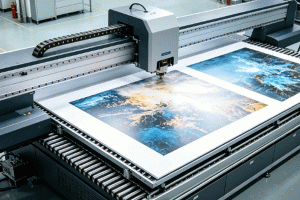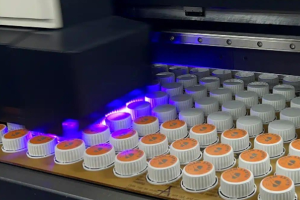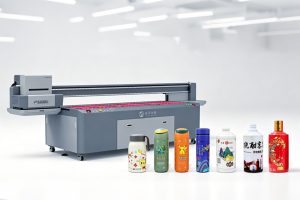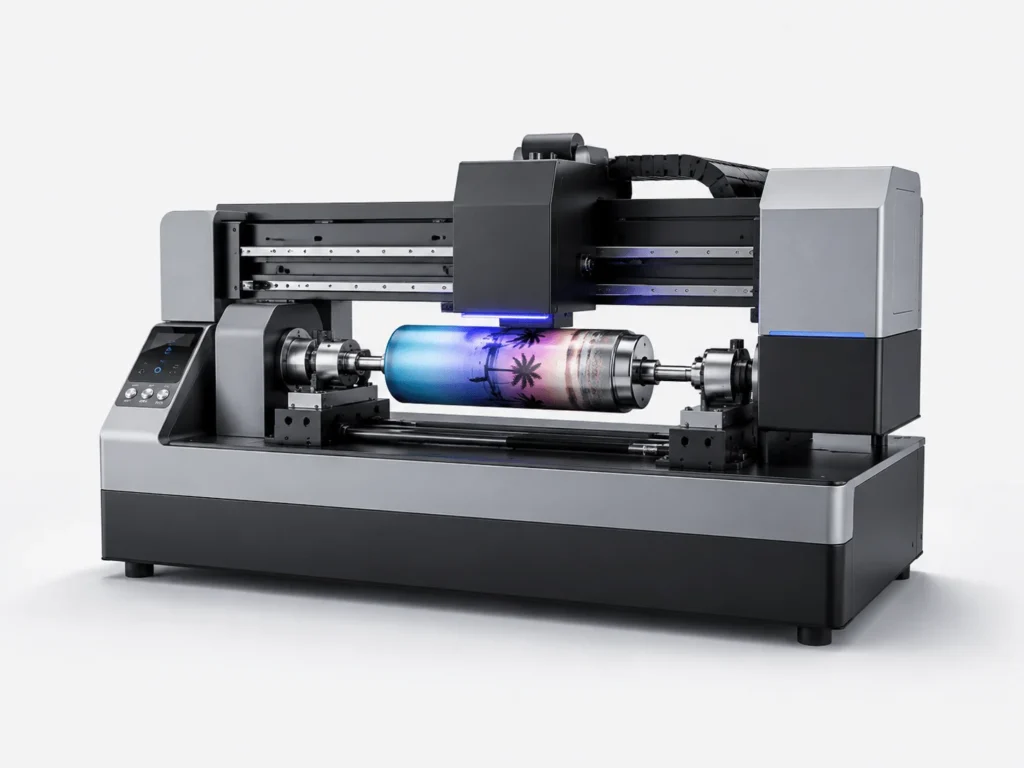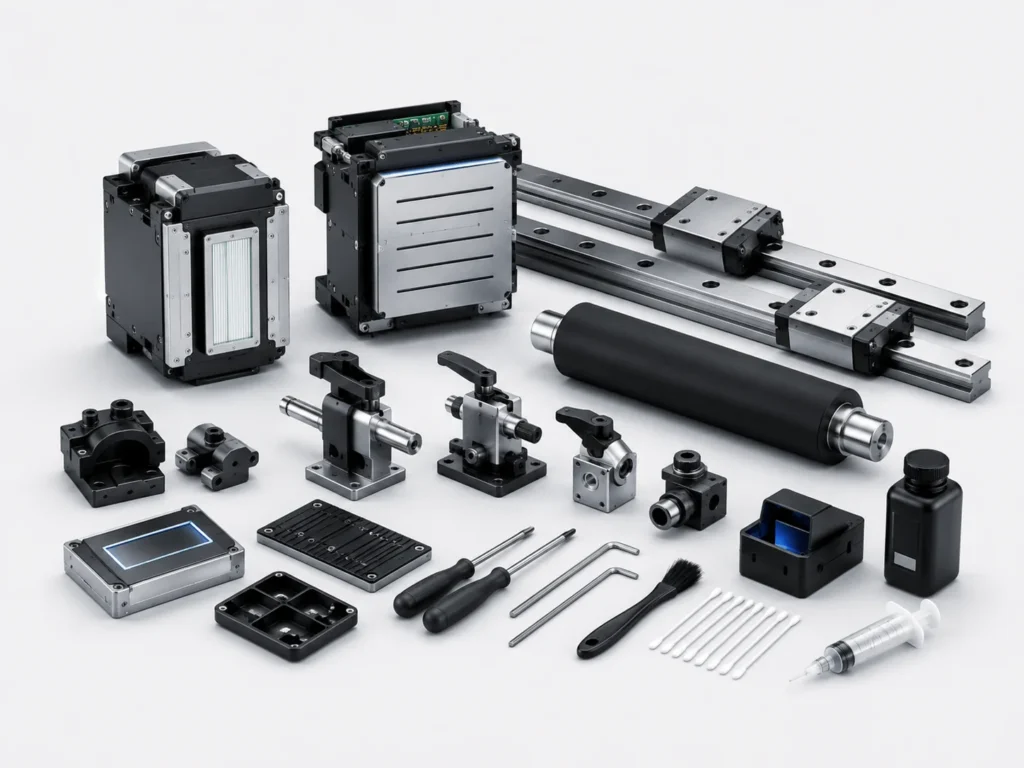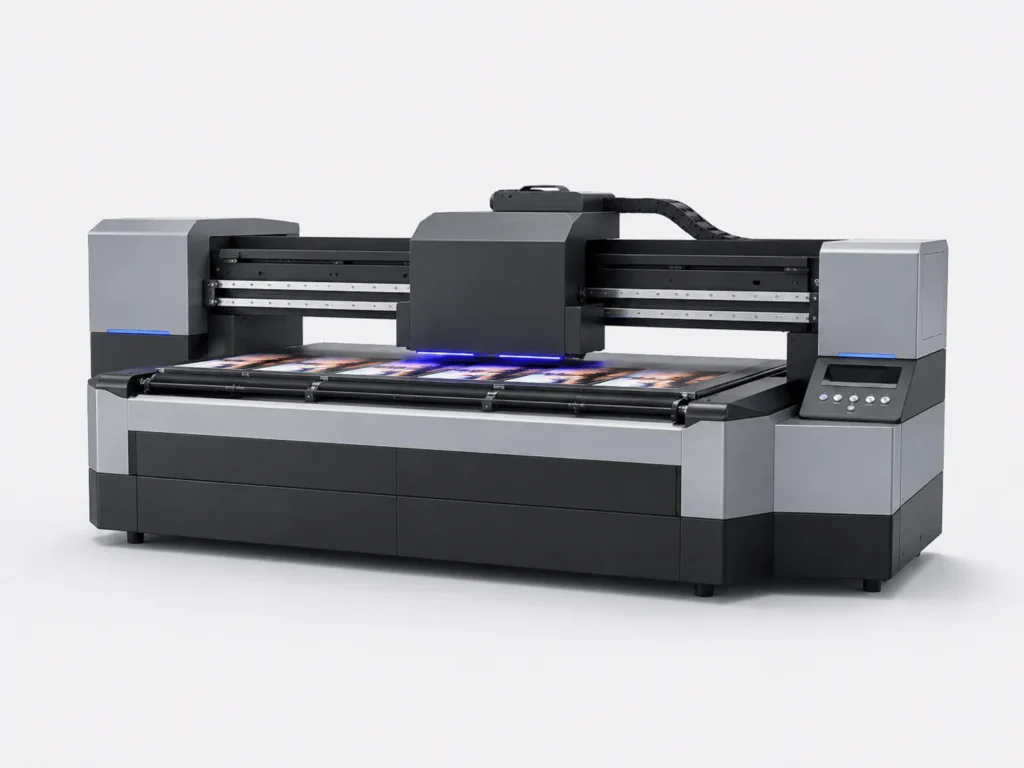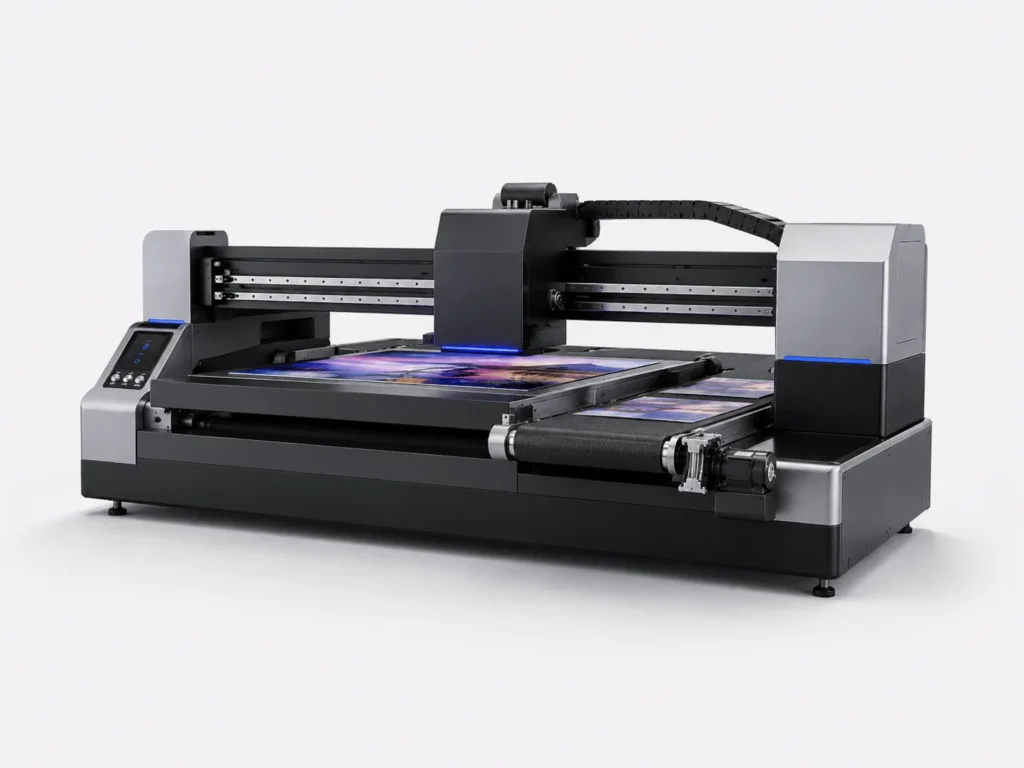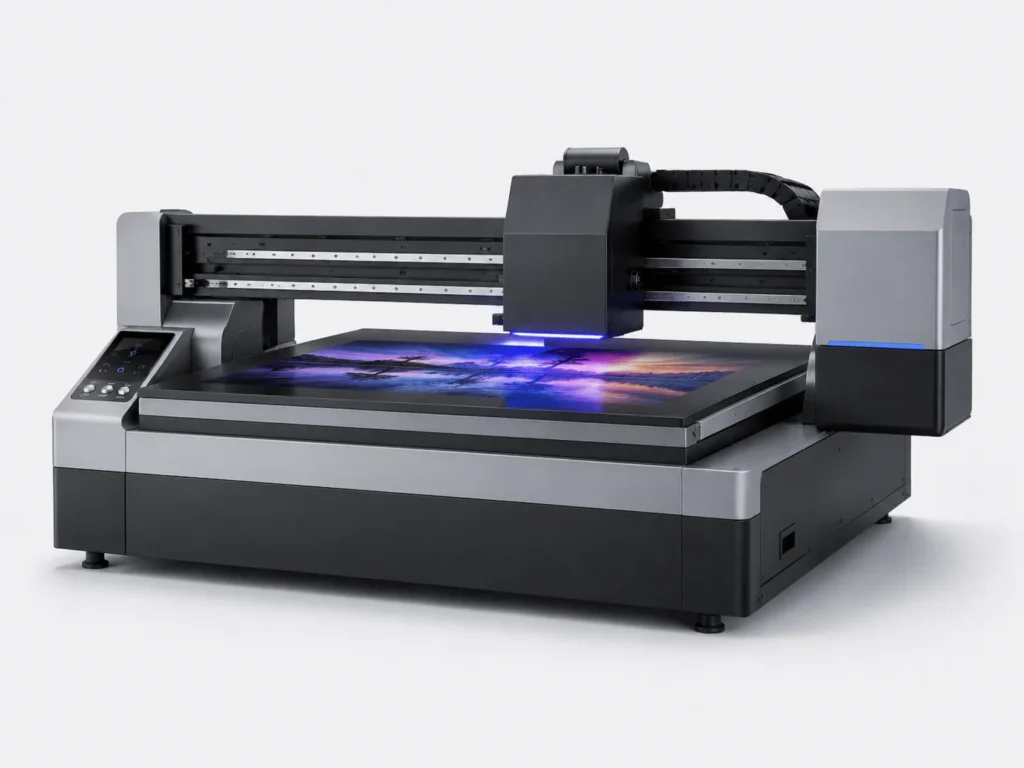
With the continuous development of industrial digital printing technology, one-pass printers have gradually become important equipment in high-speed production fields. Compared with traditional scanning printing equipment, one-pass printers use a fixed printhead array design. The material is printed in one pass through the conveyor system, eliminating the need for repeated back-and-forth movement, thus achieving higher production efficiency. Today, one-pass printers are widely used in packaging printing, decorative materials, label printing, corrugated boxes, and industrial manufacturing, becoming an important choice for many companies to increase production capacity.
How Does a One-Pass Printer Work?
One-pass printers operate using a fixed printhead array structure, which is significantly different from traditional reciprocating scanning printing. During operation, multiple industrial printheads are precisely arranged according to the printing width. When the substrate passes through the printing area, the printheads synchronously eject ink droplets based on image data, outputting the content onto the material surface in one pass. The entire production process eliminates the need for the printing carriage to move repeatedly; the material continuously moves forward through the conveyor system to complete the printing task, thus significantly shortening production time and improving overall output efficiency. Because the printhead remains stationary, the equipment operates more smoothly, ensuring image detail and color reproduction while reducing wear and tear caused by long-term high-speed mechanical movement. For large-volume orders requiring continuous production, this printing mode combines high speed, high precision, and high stability, making single-pass printers a crucial piece of equipment in the industrial digital printing field.
Key Features of Single-Pass Printers
Compared to traditional industrial printing equipment, single-pass printers offer significant advantages:
- High printing speed, suitable for large-volume continuous production.
- High production efficiency, reducing equipment downtime.
- High degree of automation, supporting intelligent production processes.
- Strong printing stability, reducing the need for manual intervention.
- Adaptable to industrial production, meeting the requirements for long-term operation.
These features make them increasingly important in the industrial digital printing market.
Industries Suitable for Single-Pass Printers
With continuous technological advancements, single-pass printers have entered various industry application scenarios. In the packaging and printing industry, it can be used for the production of cartons, boxes, and corrugated packaging; in the advertising and decoration industry, it can be used for decorative boards and personalized pattern output; in the label industry, it can meet the needs of high-speed label printing; in the building materials industry, it can also be applied to flooring, wall panels, and furniture surface decoration.
Different industries have different requirements for printing accuracy, speed, and material compatibility, and single-pass printers can be configured with different printheads and ink systems according to actual needs, thus possessing strong adaptability. For enterprises that need to produce large quantities of orders, this type of equipment can effectively improve production efficiency.
What are the differences between single-pass printers and scanning printers?
The two types of equipment have significant differences in their working modes:
- Different printing methods: single-pass printers use fixed printheads for continuous printing, while scanning printers use reciprocating motion printing.
- Different production speeds: single-pass printers typically have higher printing speeds.
- Different applicable orders: single-pass printers are suitable for mass production, while scanning printers are suitable for flexible customization.
- Different equipment structures: single-pass systems have a higher degree of automation.
- Different investment scales: single-pass equipment is usually geared towards the industrial-grade production market.
When selecting equipment, businesses need to consider order size and production needs.
Future Development Trends of Single-Pass Printers
With the continuous advancement of smart manufacturing and Industry 4.0 concepts, single-pass printers are developing towards higher speeds, greater intelligence, and higher precision. Continuous upgrades to printhead technology are improving print quality; the addition of automatic detection systems and intelligent control software is making the production process more stable and efficient. At the same time, environmentally friendly inks and energy-saving systems are gradually becoming standard features, helping businesses reduce production costs.
In the future, personalized customization and mass production will coexist, and single-pass printers, with their high-speed continuous output capabilities, will continue to hold an important position in the industrial printing field. For packaging printing, decorative building materials, and industrial manufacturing companies, single-pass printers are not only production equipment but also important tools for improving production efficiency and digitalization.