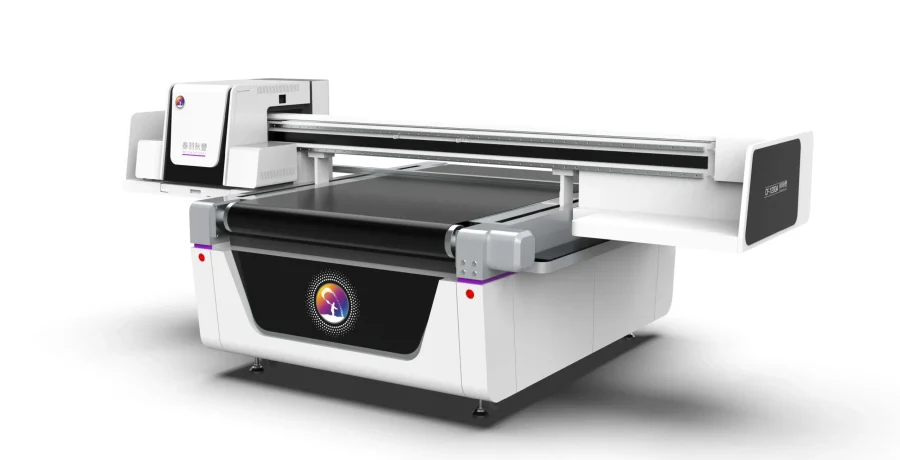
The 2513 UV printer is a common industrial-grade flatbed printing device, mainly used for high-precision pattern output on large-size materials. The “2513” in its model name usually refers to its effective printing area, approximately 2500mm × 1300mm, which can meet the direct printing needs of large-format sheet materials. In daily production, it can directly print design images onto various flat materials such as acrylic, wood, glass, and PVC. The UV curing system allows patterns to form quickly without long drying time. This model is designed with a focus on stable operation and continuous output, making it suitable for batch production or diversified order scenarios. Whether for advertising signage production or decorative material processing, it enables direct digital image output, reducing complicated plate-making and lamination steps in traditional processes and making the workflow smoother and more efficient.
Operation Process of 2513 UV Printer
The operation process of the 2513 UV printer is designed with standardization and low entry barriers as its core concept. Even operators with no prior experience can complete full operations after basic training. First, materials such as acrylic sheets, wood boards, or other flat substrates are placed and fixed on the printing platform. A vacuum adsorption system ensures stability and prevents displacement during printing. Then, the design file is imported into the software, and the appropriate printing mode, color settings, and resolution are selected based on the material type.
During the formal printing stage, the visual positioning system begins working. It recognizes alignment marks on the material for automatic positioning without repeated manual adjustment. The printhead sprays ink along a preset path with high density, while the UV lamp cures the ink simultaneously, allowing instant pattern formation. This process reduces drying time and avoids issues such as ink bleeding or color deviation found in traditional methods. After printing is completed, the platform automatically resets, and operators only need to perform simple inspection and collect finished products before starting the next batch. The entire workflow emphasizes continuity and efficiency, enabling mixed production modes such as multi-batch, small-batch, and large-scale production.
High-Precision and Multi-Material Adaptability
Inkjet and Curing System
The inkjet and curing system directly determines the stability of print quality and final product performance. In long-term continuous operation, this system must maintain stable ink output and fast curing capability to ensure consistency and detail reproduction. Its performance also directly affects durability and visual results across different materials and design requirements.
- Uses industrial-grade printheads with stable ink output and low clogging risk
- Fine droplet control ensures clearer image edges
- UV lamp cures instantly, eliminating drying wait time
- Strong ink adhesion reduces fading and surface scratching
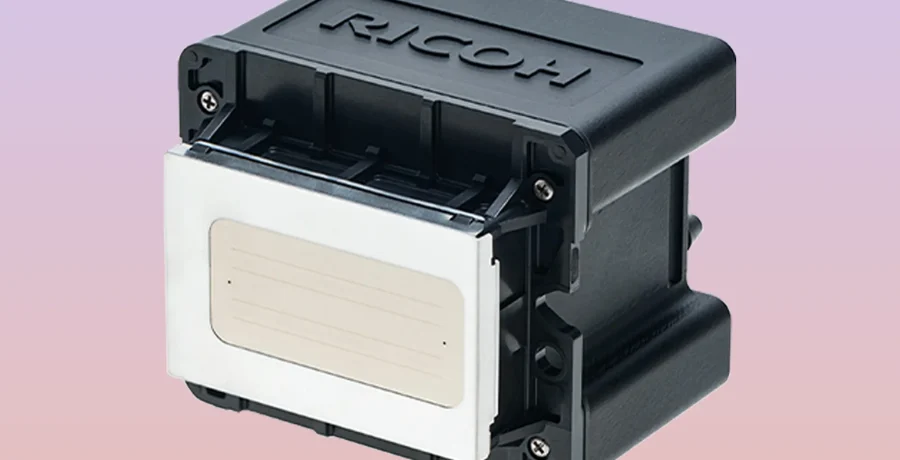
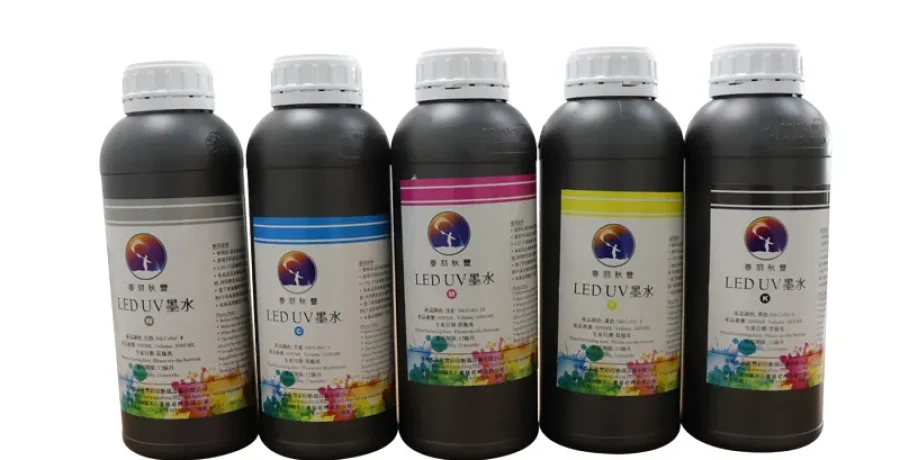
The system adopts industrial-grade printhead structures, maintaining stable ink output during long-term operation and reducing issues such as broken lines or clogging. The printheads offer good ink flow control, ensuring continuous output even for high-density patterns. Combined with UV curing lamps working synchronously, ink is instantly solidified upon ejection, forming patterns directly and reducing bleeding risks. Meanwhile, the strong adhesion between ink and material ensures durability, preventing fading or light scratching after printing.
Visual Positioning and Alignment System
The visual positioning system acts as an automatic calibration module of the entire machine, mainly addressing low efficiency and high error rates in manual alignment. In multi-pattern and multi-material production environments, manual adjustment would significantly increase time costs.
- Automatically identifies material position without repeated manual alignment
- Supports multi-template layout for improved efficiency
- Automatically corrects slight deviations to reduce waste rate
- Simple operation suitable for beginners
The system uses camera-based recognition to capture reference points on materials and automatically adjusts the printing path accordingly, ensuring accurate placement within preset areas. In multi-template layouts, different designs can be distributed across the platform and printed simultaneously without individual adjustments. Even if slight positioning deviations occur during placement, the system can automatically correct them, significantly reducing defective output caused by alignment errors.
Multi-Material Compatibility
Multi-material adaptability determines the application range of the equipment, making it a key capability for industrial UV printers. Since different orders often require different materials, poor compatibility would increase switching frequency and operational complexity.
- Supports printing on acrylic, wood, PVC, glass, and more
- Strong adaptability to flat materials with wide compatibility range
- Multiple materials can be printed together in one batch
- No frequent equipment change or parameter recalibration needed
The system supports a wide range of common industrial flat materials, including advertising boards and decorative substrates. As long as the surface is relatively flat, direct printing is possible without complex pre-treatment. Different materials can be placed together for mixed printing, reducing repetitive loading time and improving production efficiency.
High-Precision Output Performance
High-precision output is one of the most direct core values of UV printing equipment, significantly affecting visual performance. In advertising, decorative panels, and high-end customization industries, demand for fine detail continues to increase.
- Supports micro-text printing with clear edges
- Natural gradient transitions with smooth color blending
- Suitable for complex graphics and high-resolution files
- Stable performance even during long-duration printing
In high-precision mode, the equipment achieves fine ink droplet control, keeping small text and thin lines sharp without blurring or breakage. Gradient color output is smoother due to multi-layer ink control, avoiding obvious color banding. Complex design files can be accurately reproduced, and overall output stability remains consistent even during long operation periods.
FAQ
Q1: Can the 2513 UV printer print different patterns and materials at the same time?
This equipment supports multi-template parallel printing, allowing different designs to be arranged and printed on the same platform without batch separation. Combined with a vacuum adsorption platform and visual positioning system, even if material size or placement varies slightly, the system can automatically recognize and correct the printing path to ensure consistent output.
Q2: How precise is the printing detail, and can it handle small text or complex patterns?
The machine uses industrial-grade inkjet control technology with strong droplet precision, supporting high-resolution image output. In practical use, even micro-text around 0.5mm can remain clear without edge blur or breakage. For complex patterns such as gradients, fine lines, and high-density images, the high-resolution mode ensures smooth transitions. UV curing also instantly stabilizes ink, reducing diffusion and maintaining detail clarity.
Q3: Is the operation complex for beginners?
The operation process is highly standardized, mainly including material placement, file import, parameter setting, and printing start. The visual positioning system automatically handles alignment after startup, eliminating repeated manual adjustments and significantly reducing difficulty. Operators only need to select the appropriate mode based on material type, while path correction and positioning are handled by the system. After basic training, most users can quickly reach stable operation levels, making it suitable for small and medium production teams.
The core value of the 2513 UV printer lies in simplifying traditional complex graphic production into a fully digital workflow, significantly shortening the gap between design and finished output. The equipment emphasizes usability in operation, precision and stability in technology, and versatility in application scenarios, making production more flexible. It helps enterprises respond more quickly to customized demands, maintaining consistent output quality whether for small-batch personalized orders or large-scale repetitive production. With the increasing demand for digital manufacturing, this type of equipment plays an increasingly important role in production systems.For further information regarding configurations, solutions, or application recommendations, please contact:
Email:[email protected]
Phone:+86 183 1888 5593