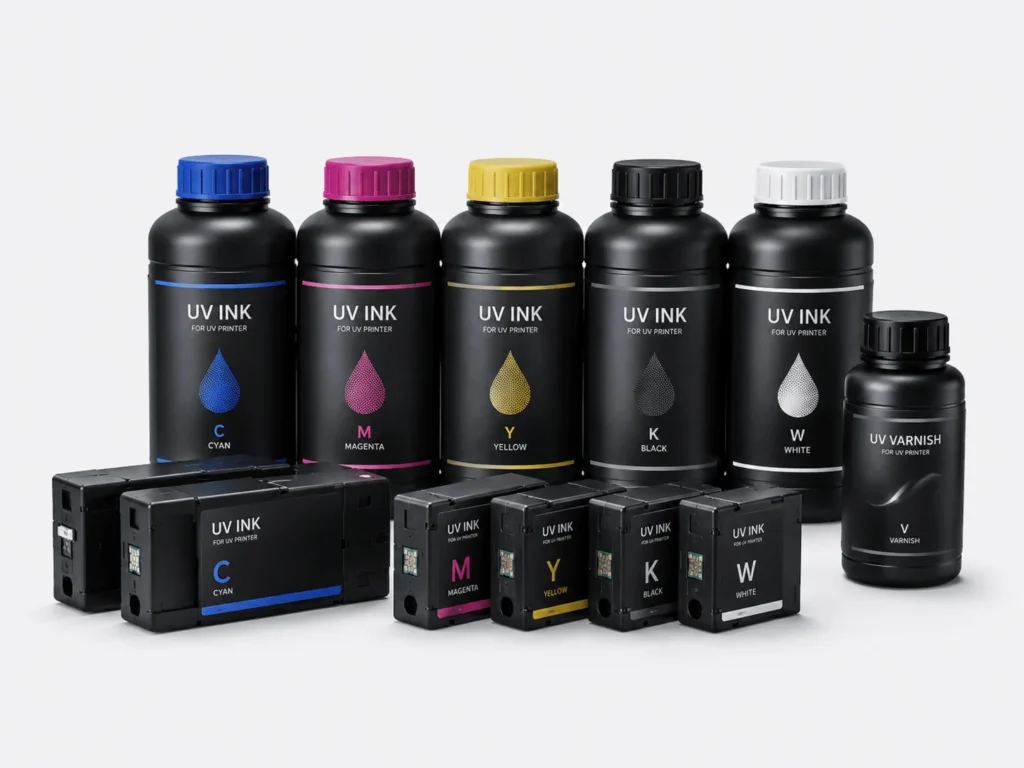
UV ink is widely used in UV flatbed printing, label printing, packaging printing, industrial inkjet printing, and decorative materials due to its fast curing speed, strong adhesion, and excellent print quality. Unlike conventional inks, UV ink cures primarily through a photochemical reaction triggered by ultraviolet light rather than by high-temperature drying. Therefore, curing time, UV light intensity, equipment settings, and ambient temperature all affect the final curing performance. Understanding the proper curing conditions not only improves print quality but also reduces rework, increases production efficiency, and extends the stable operating life of printing equipment.
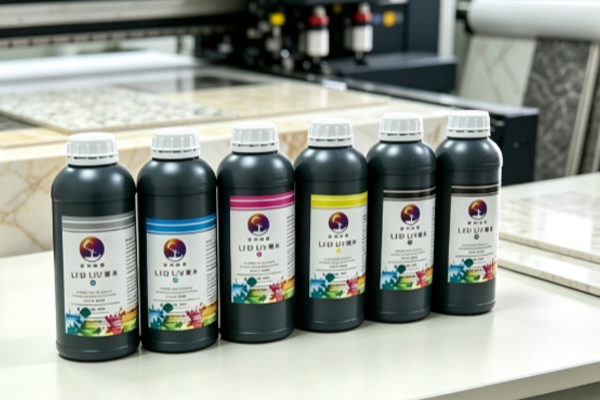
What Is the Relationship Between UV Ink Curing Time and Temperature?
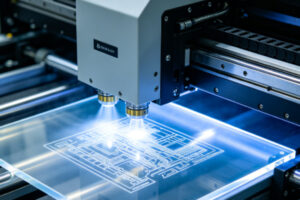
UV ink cures primarily through exposure to ultraviolet light rather than heat drying. During the LED UV printing process, the photoinitiators in the ink absorb ultraviolet light at specific wavelengths, rapidly initiating a polymerization reaction that transforms the liquid ink into a durable cured film within a short period. Although the curing process mainly depends on UV energy, maintaining an appropriate working temperature helps the ink retain good flowability, improves adhesion, and promotes more uniform curing. Under normal conditions, most UV LED inks perform best in an environment between 20°C and 30°C, providing optimal printing performance and curing efficiency.
Main Factors That Affect UV Ink Curing Time
Different equipment, substrates, and ink layer thicknesses all influence the final curing speed. Understanding these factors helps users adjust printing parameters more accurately.
● UV LED Lamp Power Determines Curing Speed
Appropriate UV LED lamp power enables the ink to cure quickly. The higher the lamp power, the more ultraviolet energy reaches the ink surface per unit of time, allowing the photoinitiators to react more rapidly and reducing curing time. If the LEDs have aged, the output power is insufficient, or the curing distance is too great, the ink may not cure completely, resulting in a tacky surface or reduced scratch resistance.
● Ink Layer Thickness Affects UV Penetration
The thicker the printed ink layer, the more UV light must penetrate, resulting in a longer curing time. For example, embossed effects, heavy ink deposits, or multiple layers of white ink all require sufficient UV exposure for each layer. If a single ink layer is applied too thickly, the interior may remain only partially cured. Therefore, many printing systems use layer-by-layer printing and curing to improve overall curing quality.
● Printing Materials Affect Curing Efficiency
Different substrates also influence UV ink curing performance. Materials such as glass, metal, and acrylic have smooth surfaces and relatively stable heat distribution, allowing the ink to cure more efficiently. Some plastics, flexible films, and leather materials exhibit different heat absorption characteristics, which can affect ink flow and adhesion. Printing speed and lamp power should therefore be adjusted according to the substrate.
● A Stable Ambient Temperature Promotes Better Curing
Maintaining a suitable working environment helps the ink perform consistently. If the temperature is too low, ink viscosity increases and flowability decreases, potentially affecting print quality. Excessively high temperatures may cause certain materials to deform and reduce printing stability. Keeping the working environment between 20°C and 30°C is generally ideal for continuous, stable production.
What Is the Recommended Temperature Range for UV Ink Curing?
● LED UV Curing Does Not Rely on High-Temperature Baking
LED UV printing uses ultraviolet energy to complete the chemical curing process rather than evaporating solvents through high heat. As a result, the surface temperature of the printed material typically rises by only a few tens of degrees Celsius during printing, unlike conventional hot-air drying systems. This is one of the reasons why LED UV technology is well suited for printing on heat-sensitive materials.
● Maintain a Working Environment Between 20°C and 30°C
Maintaining an appropriate ambient temperature helps ensure consistent printing performance. Most UV LED ink manufacturers recommend installing equipment in temperature-controlled production environments while avoiding prolonged exposure to extremely low or high temperatures. This minimizes fluctuations in ink performance and improves color consistency and curing stability.
● Curing Usually Takes Only a Few Seconds
With properly configured equipment, UV LED ink typically achieves surface curing within less than one second to a few seconds after UV exposure. For thick ink layers, high-opacity white ink, or specialty varnishes, the printer may perform multiple curing passes to ensure complete curing throughout the entire ink layer.
● Full Performance Stabilization Requires Additional Time
Although printed products can usually be handled and processed immediately after printing, some inks continue their crosslinking reactions for a short period afterward. After several hours or up to approximately 24 hours, adhesion, abrasion resistance, and chemical resistance generally become more stable. For products requiring high performance, it is advisable to allow adequate conditioning time before conducting performance tests.
Frequently Asked Questions
Why Does UV Ink Still Feel Slightly Tacky After UV Exposure?
This condition is usually caused by insufficient curing energy. Possible reasons include reduced LED lamp output, excessive printing speed, overly thick ink layers, or improper lamp distance, preventing the ink from fully curing. The equipment should be inspected, and the printing parameters should be adjusted accordingly.
Does a Higher Temperature Result in Faster Curing?
Not necessarily. UV ink cures primarily through ultraviolet light rather than heat. An appropriate ambient temperature helps maintain consistent ink performance, but simply increasing the surrounding temperature cannot replace UV curing.
Why Does White Ink Require a Longer Curing Time?
White ink contains a high concentration of opaque pigments, which partially block ultraviolet light and reduce light penetration. To ensure complete curing throughout the ink layer, it is often necessary to reduce the printing speed or increase the curing energy.
How Can You Determine Whether UV Ink Has Fully Cured?
The cured ink surface should feel dry and non-tacky. Additional evaluations such as scratch resistance testing, alcohol rub testing, and adhesion testing can also be performed. If the surface is dry, firmly adhered, and exhibits good abrasion resistance, the curing process is generally considered successful.
The curing process of UV ink relies primarily on ultraviolet light rather than conventional high-temperature drying. Equipment power, exposure time, ink layer thickness, printing substrate, and ambient temperature all influence the final curing results. Most UV LED inks perform best in a working environment between 20°C and 30°C, and under properly configured equipment settings, surface curing is typically completed within less than one second to a few seconds.During daily production, it is recommended to adjust the printing speed and LED lamp output according to the substrate and ink layer thickness while maintaining stable equipment performance. For white ink, thick ink layers, or specialty printing effects, additional curing energy or layer-by-layer curing methods may be required to improve adhesion and abrasion resistance.Only by allowing UV ink to complete the curing reaction fully can problems such as ink peeling, tackiness, and rework be minimized, resulting in more stable, attractive, and durable printing performance.