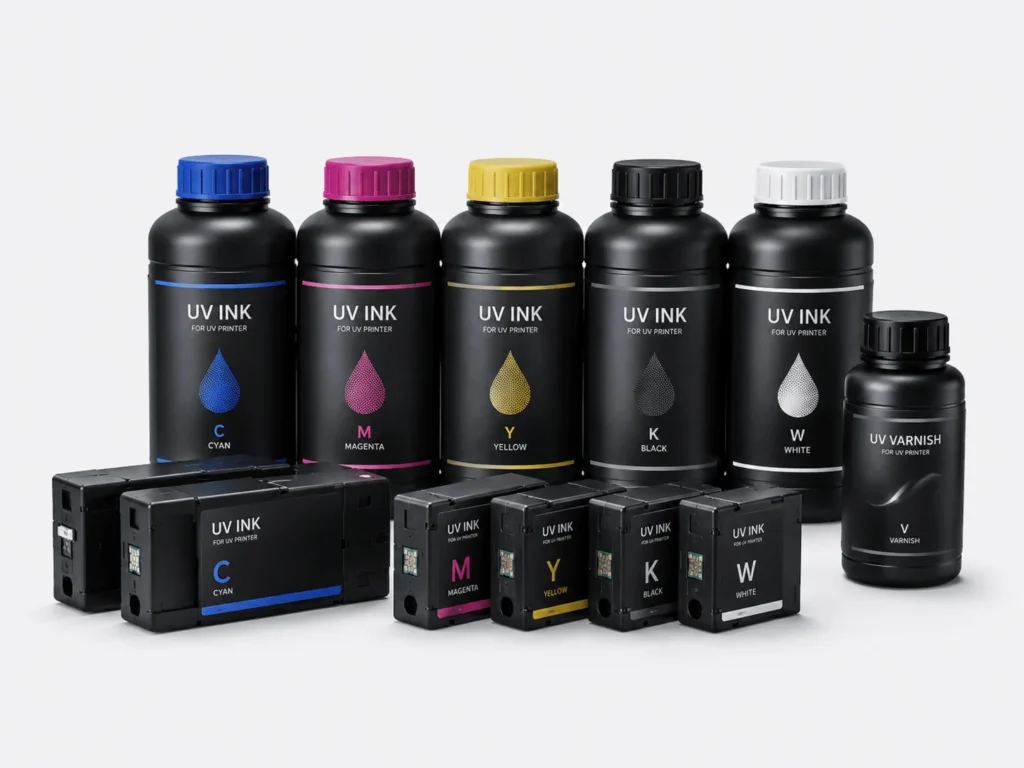
During the offset printing process, setoff has always been a major factor affecting print quality. When freshly printed sheets have not yet fully cured, the ink can easily transfer to the back of the preceding or following sheet, causing smudging, sticking, and color contamination. This not only affects the appearance of the finished product but also increases rework rates and material waste.As LED UV curing technology becomes increasingly popular in commercial printing, packaging printing, and label printing, more printing companies are asking whether this curing method can effectively reduce setoff in offset printing. Compared with traditional drying methods, LED UV curing enables the ink to cure rapidly in a very short time, minimizing the opportunity for ink transfer during paper stacking.
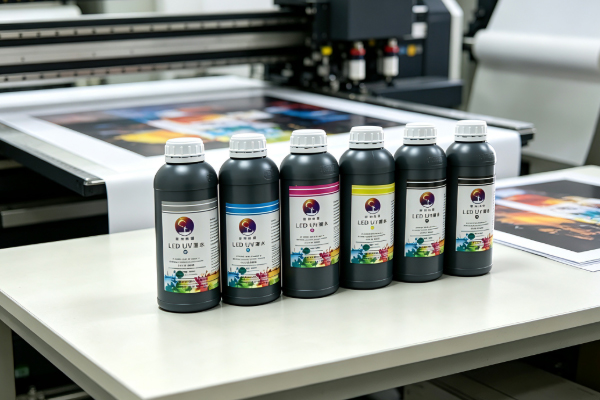
Why Can LED UV Curing Reduce Setoff?
The Ink Cures Quickly
In conventional offset printing, ink typically cures through oxidation and natural drying. As a result, the surface of freshly printed sheets remains partially wet, which is one of the main causes of setoff.LED UV curing uses ultraviolet light to initiate the curing process. When the photoinitiators in the ink are exposed to UV light of a specific wavelength, they rapidly trigger a curing reaction, allowing the ink to form a stable ink film within a very short period.By the time the printed sheet exits the press, the ink surface has essentially cured, significantly reducing the likelihood of ink transfer during subsequent stacking and effectively minimizing setoff.
It Reduces Ink Contact Between Sheets
Printed sheets are typically stacked continuously during the delivery process. If the ink has not fully cured, pressure between stacked sheets can easily cause ink transfer.After LED UV curing, the ink surface has already developed good hardness and stability. Even when sheets are stacked continuously, the cured ink is much less likely to adhere to adjacent sheets.For high-volume production, this helps reduce smudging, back-side contamination, and overall print waste.
It Maintains More Consistent Color
Many printed products require not only freedom from setoff but also consistent color quality, making curing performance extremely important.LED UV curing enables the ink to quickly form a stable ink layer, minimizing color variation that may occur during extended drying times.Because the cured ink is less likely to be rubbed off, printed graphics retain better color integrity, improving the overall quality of the finished product.
What factors affect the efficacy of decolorization rate control?
Whether the Ink Is Suitable for LED UV Curing
Not all offset printing inks are compatible with LED UV equipment, making ink selection extremely important.LED UV offset inks are specifically formulated for the wavelength emitted by LED UV light sources. Only compatible inks can achieve complete curing.Using conventional UV inks or traditional offset inks may result in incomplete curing, reducing the effectiveness of setoff control.
Whether the Curing Equipment Is Properly Configured
Equipment settings also have a significant impact on curing quality and must be properly maintained.If the LED lamp output is insufficient, the irradiation distance is incorrect, or the printing speed is too high, the ink may not cure completely.Properly optimized equipment settings ensure that the ink receives sufficient curing energy, improving curing efficiency and reducing the occurrence of setoff.
The Influence of Paper Materials
Different paper stocks have different ink absorption characteristics, which also affect setoff performance.Coated paper, white paperboard, art paper, and packaging paper each absorb ink differently.Selecting suitable paper and adjusting printing parameters according to substrate characteristics can further improve ink adhesion and overall print quality.
What Other Advantages Does LED UV Curing Offer?
Improved Production Efficiency
Shorter production cycles increase order processing capacity, making rapid curing highly valuable.With LED UV curing, printed products can immediately proceed to lamination, die-cutting, binding, or packaging without waiting for natural drying.This not only improves production efficiency but also reduces the storage time for semi-finished products.
Reduced Rework and Material Waste
Once setoff occurs, products often need to be reprinted, increasing production costs.LED UV curing reduces smudging, back-side marking, and sticking, resulting in higher finished-product yield while minimizing waste of paper, ink, and labor.For long-term production operations, this provides significant economic benefits.
Improved Print Quality
Print quality involves more than vibrant colors—it also includes image integrity and surface durability.Fully cured inks provide excellent abrasion resistance and adhesion, helping maintain sharp text edges and complete graphics.As a result, packaging, brochures, labels, and promotional materials achieve more consistent and attractive visual performance.
Frequently Asked Questions
Does LED UV Curing Completely Eliminate Setoff?
Many users assume that LED UV curing completely eliminates setoff, but this is not entirely true.If equipment parameters are improperly adjusted, incompatible inks are used, or the paper is unsuitable, localized setoff may still occur even with LED UV curing.Proper production practices therefore remain essential.
Can Conventional Offset Presses Be Directly Converted to LED UV?
Some offset presses can be upgraded to LED UV systems, depending on their design.However, such upgrades generally require compatible LED UV offset inks, LED UV curing systems, and adjustments to related process parameters.The appropriate conversion plan should be determined according to the specific press model.
Is LED UV Suitable for All Printing Products?
LED UV curing is suitable for a wide range of printing applications, but product requirements should still be evaluated individually.Commercial brochures, folding cartons, labels, pressure-sensitive labels, and premium printed products commonly use LED UV technology.For specialty materials or unique production processes, testing is recommended before full-scale production.
LED UV curing uses ultraviolet light to rapidly cure printing ink, allowing printed sheets to develop a stable ink film shortly after leaving the press and reducing the opportunity for ink transfer during paper stacking.Therefore, under properly controlled production conditions, LED UV technology can significantly reduce setoff in offset printing while improving overall printing stability.To fully realize the advantages of LED UV curing, printers should use compatible LED UV offset inks, properly configure curing equipment, and optimize printing parameters according to the paper substrate.A standardized production process ensures complete ink curing, further reducing smudging, back-side marking, and rework while improving both product quality and production efficiency.