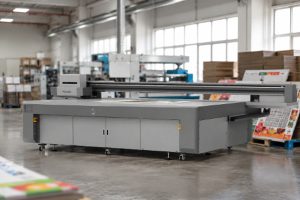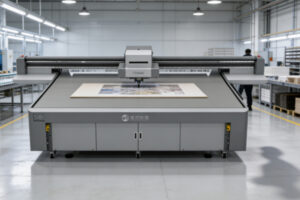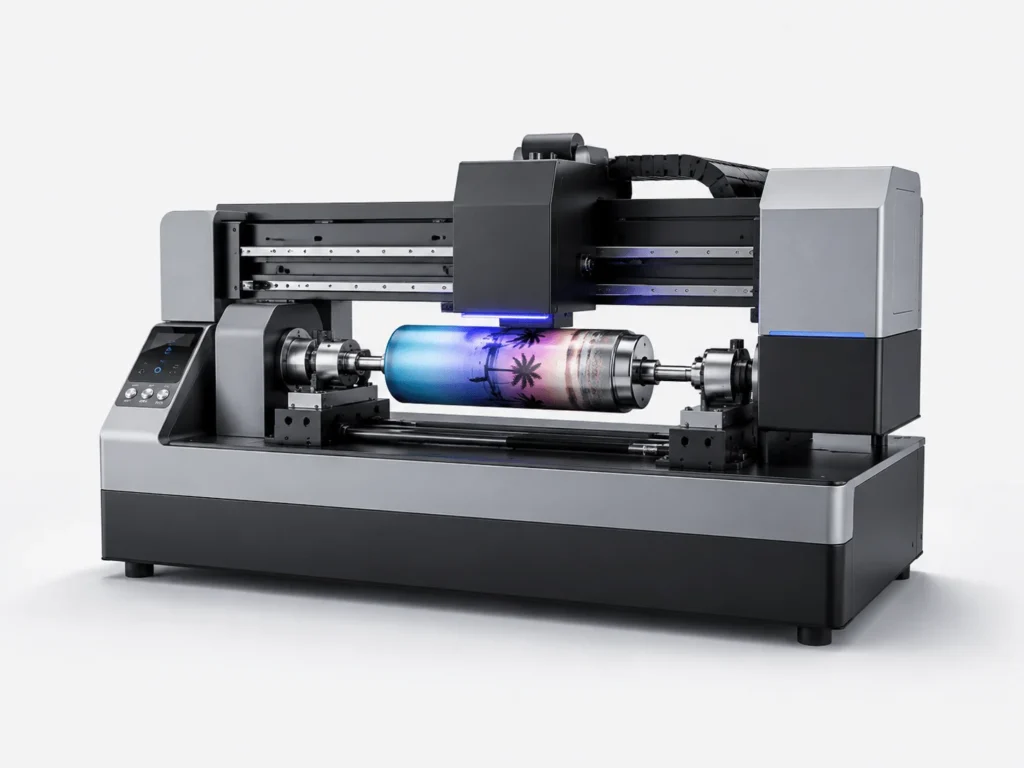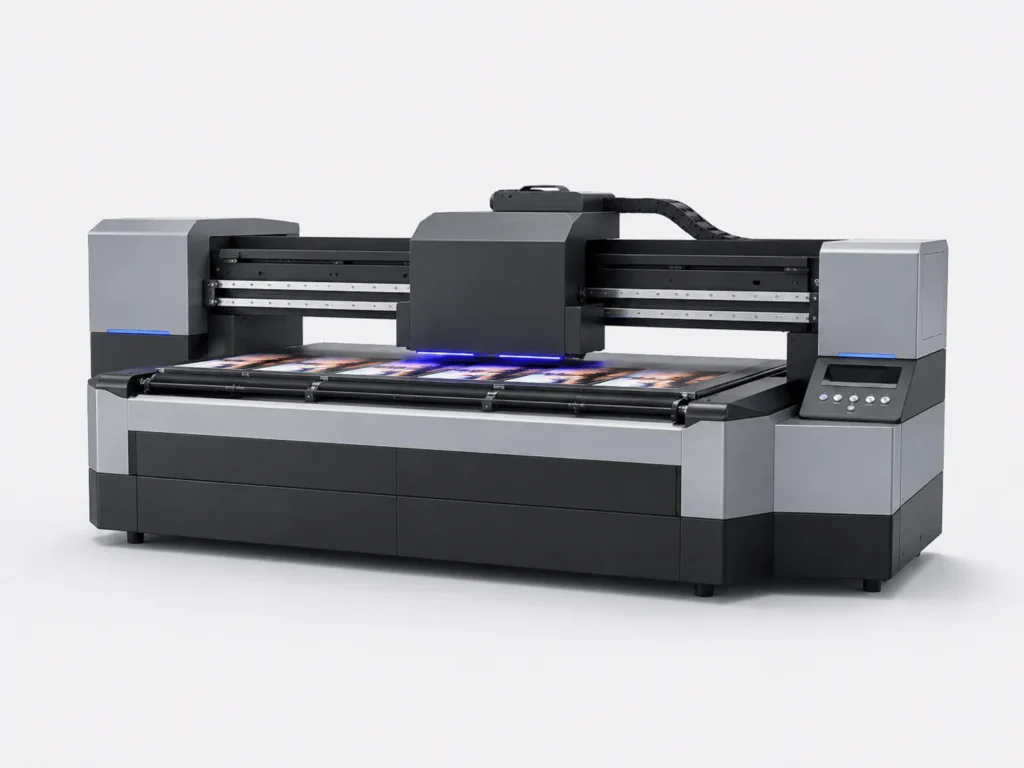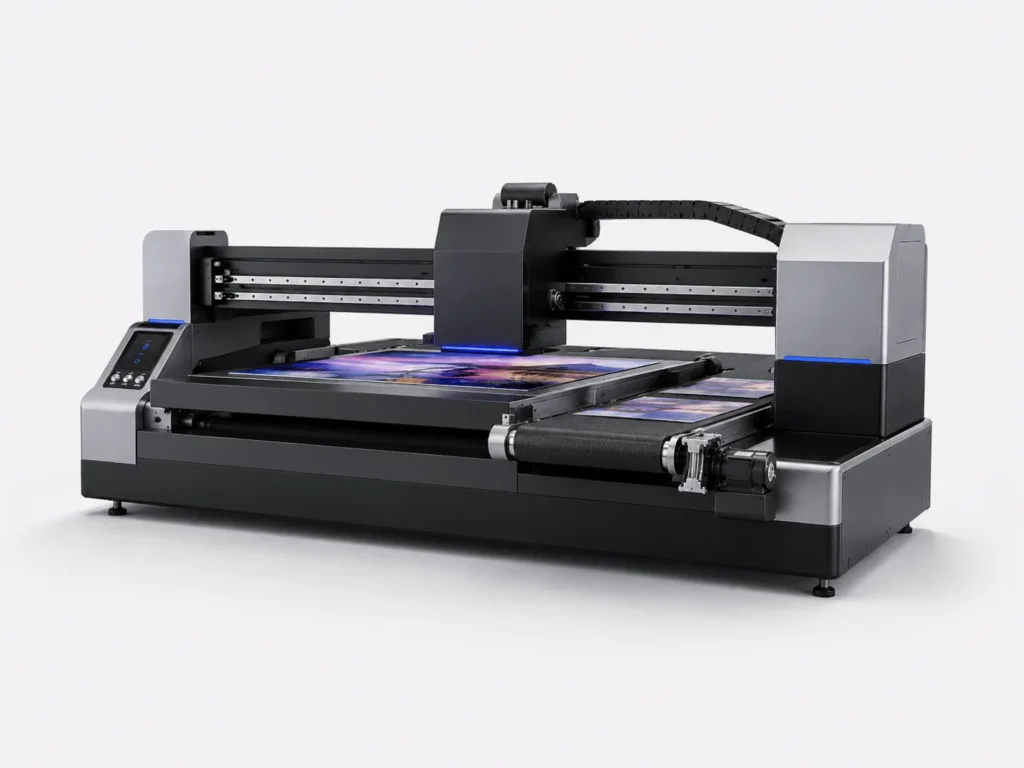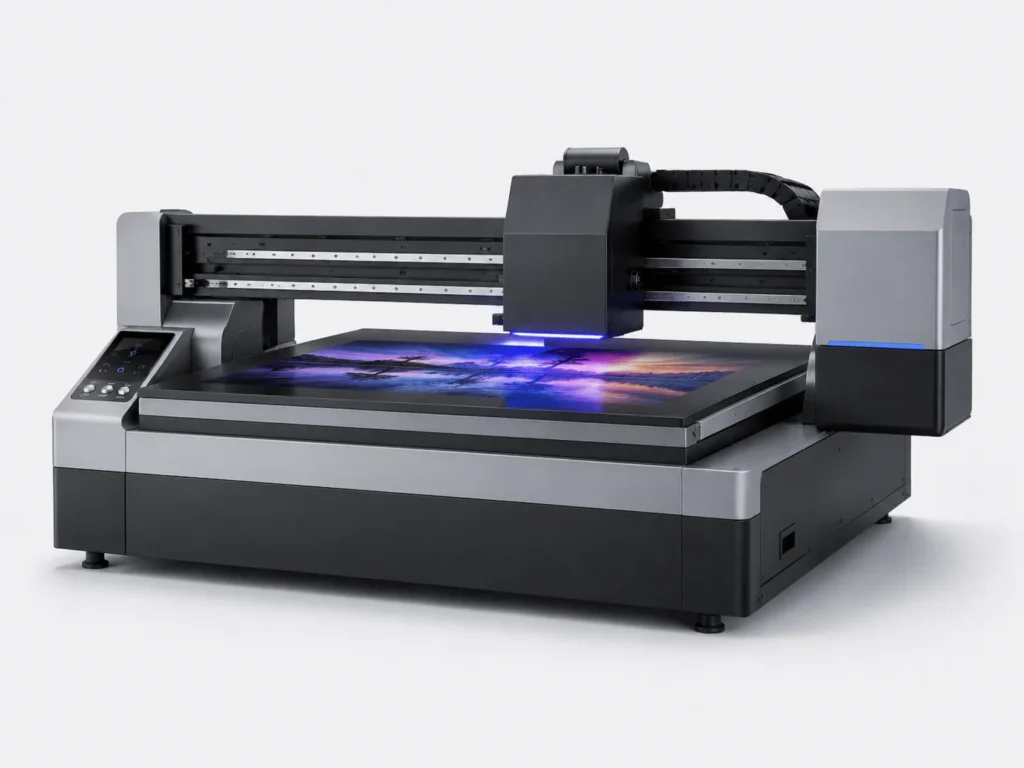
As the personalized customization market continues to expand, more and more businesses are paying attention to equipment capable of printing full-color graphics directly onto a wide variety of material surfaces. Metal materials, in particular, are widely used in industries such as advertising signage, industrial nameplates, decorative metal panels, electronic product housings, and promotional gifts. In the past, producing graphics on metal often required multiple processes such as plate making, screen printing, and etching. These methods were not only time-consuming but also costly when handling small-batch orders. In recent years, UV flatbed printers have gradually become essential production equipment for many companies due to their plate-free printing process, fast production speed, and vibrant color output.
Many customers ask the same question when learning about these machines: metal surfaces are hard, and some metals are extremely smooth. Can a UV flatbed printer really print directly onto them? Will the printed graphics be durable? Will they peel, fade, or lack wear resistance? In fact, UV flatbed printers can not only print on metal surfaces but have already been widely adopted across various industrial and commercial applications. As long as the material is properly prepared and the appropriate printing process is selected, the final print quality can fully meet everyday usage requirements and even achieve premium decorative and display effects.
Why Can UV Flatbed Printers Print on Metal Surfaces?
Metal Is a Compatible Material for UV Printers
When people first encounter UV flatbed printers, they often assume the machines can only print on materials such as acrylic, PVC boards, or wood panels. However, one of the biggest advantages of UV flatbed printers is their excellent material compatibility. The equipment uses inkjet technology, and the printhead maintains a certain distance from the material surface, meaning that material hardness does not significantly affect the printing process. Even hard metal materials can be printed successfully.
Common printable metals include:
● Aluminum sheets
● Stainless steel sheets
● Copper plates
● Iron plates
● Galvanized steel sheets
● Titanium metal sheets
● Metal nameplates
These materials are widely used in advertising production, industrial equipment, machinery manufacturing, and architectural decoration. As long as the material thickness and dimensions meet the machine’s specifications, direct printing is generally possible. For products requiring personalized graphics or colorful markings, UV printing has become a highly practical manufacturing solution.
UV Ink Provides Strong Adhesion
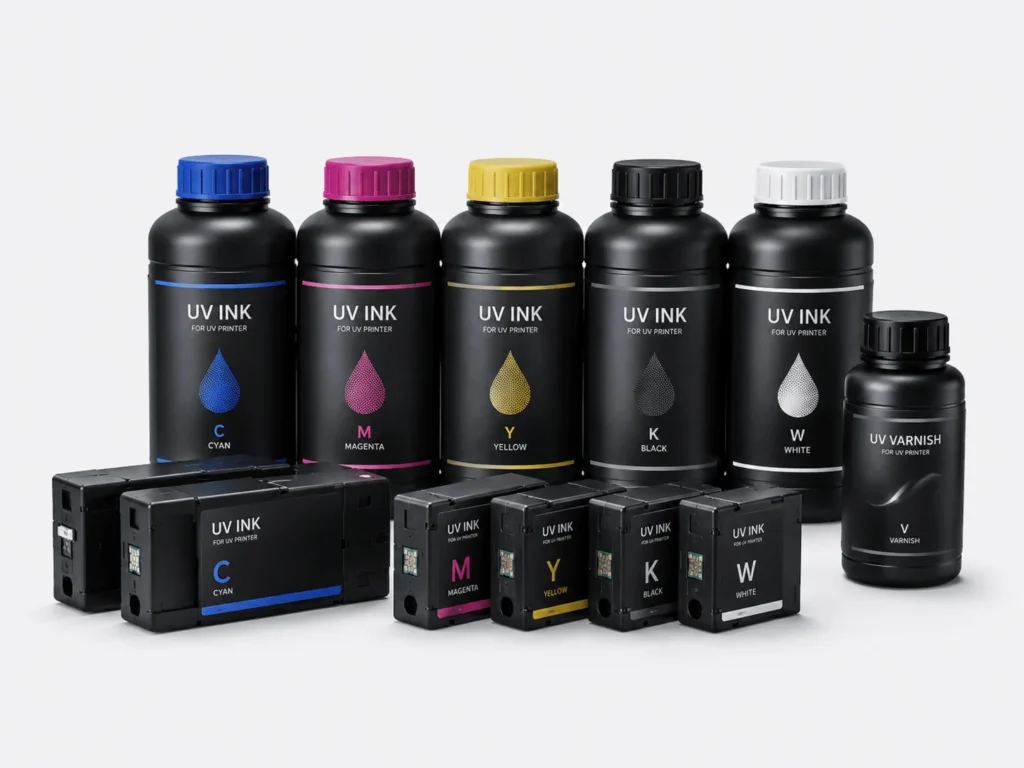
One of the primary reasons UV printing works on metal surfaces is the unique performance of UV ink itself. Unlike conventional inks, UV ink is exposed to ultraviolet light immediately after printing and completes the curing process within a very short period of time. Once cured, the ink layer forms a durable protective coating that bonds closely to the metal surface.
This characteristic not only improves graphic adhesion but also enhances wear resistance. For metal products that are frequently handled, transported, or installed, this advantage is particularly important. Many industrial nameplates and equipment panels remain clear and readable even after years of use because the UV ink layer offers excellent long-term stability.
Supports Full-Color and Raised Printing Effects
In addition to standard color printing, modern UV flatbed printers can create a variety of special effects. These capabilities provide significant value for businesses seeking premium product appearance and enhanced visual impact.
Many machines support:
● White ink printing
● Varnish printing
● Embossed texture printing
● Partial raised-effect printing
For example, company logos can be printed with embossed effects to create a three-dimensional appearance, while awards and commemorative plaques can utilize spot varnish to enhance gloss and visual appeal. Compared with traditional metal printing methods, UV printing offers richer visual depth and makes products more attractive.
What Should Be Considered When Printing on Metal?
Keep the Surface Clean
Although UV printing technology is relatively easy to operate, proper surface preparation remains essential for achieving optimal results. Many print quality issues are not caused by the printer itself but by poor material surface conditions.
During transportation and storage, metal materials can accumulate:
● Oil stains
● Dust
● Fingerprints
● Anti-rust oil
If these contaminants are not removed, the bond between the ink and the material may be compromised. In production environments, operators typically use lint-free cloths and industrial alcohol to thoroughly clean the surface. This helps improve adhesion and reduces the risk of bubbles, peeling, or localized print failures.
Apply Primer When Necessary
Not all metal surfaces offer the same level of ink adhesion. Certain metals that have undergone mirror polishing or electroplating treatments may be too smooth for UV ink to adhere effectively.
Examples include:
● Mirror-finished stainless steel
● Electroplated metals
● Polished aluminum sheets
● Mirror-finished titanium panels
For these materials, many manufacturers apply a specialized primer before printing. The primer creates an adhesion layer on the surface, allowing the UV ink to bond more securely. Testing often shows significant improvements in scratch resistance and overall durability after primer treatment.
Optimize Printing Parameters
Different metal materials vary in color, reflectivity, and surface texture. As a result, printing parameters often require adjustment based on the specific material being used. Experienced operators typically perform test prints before full-scale production.
Common settings that may require adjustment include:
● Ink volume
● Printing speed
● UV lamp power
● White ink thickness
● Number of print layers
Proper parameter settings can improve image sharpness while producing more vibrant and saturated colors.
What Are the Advantages of UV Printing on Metal?
No Plate Making Required:
Traditional metal printing methods usually require screens or printing plates to be produced in advance. If the customer modifies the artwork, new plates must be created, increasing costs and extending lead times. UV printing uses a digital workflow, allowing design files to be imported directly into the machine for production.Whether printing one piece or one hundred pieces, production can be completed quickly. This flexibility is especially beneficial for customization markets and aligns well with modern customer demands.
Higher Printing Accuracy:
Many metal products require small text, QR codes, serial numbers, or intricate graphics. These applications demand high printing precision. Modern UV flatbed printers offer high resolutions capable of accurately reproducing fine details.Even small QR codes, serial numbers, and thin lines remain sharp and readable. For industrial control panels, electronic product nameplates, and machinery labels, high-precision printing helps enhance both product quality and professional appearance.
Supports Personalized Customization:
Today’s market increasingly emphasizes customized production, and UV printing is perfectly suited to meet this demand. Businesses do not need to invest extensive preparation time for small orders, while customers enjoy greater design freedom.
Supported customization options include:
● Single-piece customization
● Small-batch production
● Multiple designs in one layout
● Variable data printing
● Personalized numbering
For the gift and branded merchandise industries, this production model can significantly improve order flexibility and capacity.
Faster Delivery Times:
Traditional manufacturing methods often involve multiple steps between design approval and finished production. UV printing eliminates many of these intermediate processes. Once the customer approves the artwork, production can begin immediately, dramatically reducing lead times.For advertising projects, exhibition materials, and corporate promotional gifts that require fast turnaround, this advantage is especially valuable. Many orders can be printed and shipped on the same day, helping businesses improve their competitiveness.
Frequently Asked Questions
Will the Print Fade or Peel After Printing on Metal?
Under normal circumstances, no. As long as high-quality UV ink is used and proper cleaning and adhesion preparation are completed, the printed graphics can adhere firmly to the metal surface. Many industrial nameplates remain in excellent condition even after long-term use.
Can All Metals Be Printed Directly?
Most metals can be printed directly. However, metals with extremely smooth surfaces or special surface treatments typically require primer application to achieve optimal adhesion.
Can Printed Metal Products Be Used Outdoors?
Yes. High-quality UV inks offer excellent weather resistance and UV resistance, making them suitable for outdoor signs, advertising boards, engineering labels, and similar applications.
Can UV Printing Replace Screen Printing?
UV printing offers clear advantages for small-batch, multi-design, and customized orders. However, for extremely large production volumes and long-term repetitive manufacturing, some companies may still choose screen printing based on specific production requirements.
UV flatbed printers are fully capable of producing high-quality prints directly on metal surfaces and have become essential equipment in industries such as advertising production, industrial labeling, electronics manufacturing, and customized gift production. Whether printing on aluminum, stainless steel, copper, or other common metals, UV printing technology can create sharp, vibrant, and visually appealing graphics. At the same time, factors such as proper surface cleaning, primer application, ink quality, and optimized printing parameters all play important roles in determining the final result. Numerous successful applications have demonstrated that when the correct process is used, UV printing on metal surfaces not only provides strong adhesion but also delivers the durability required for long-term use.