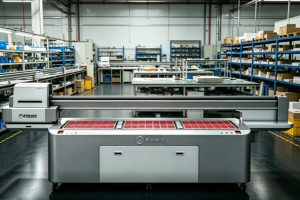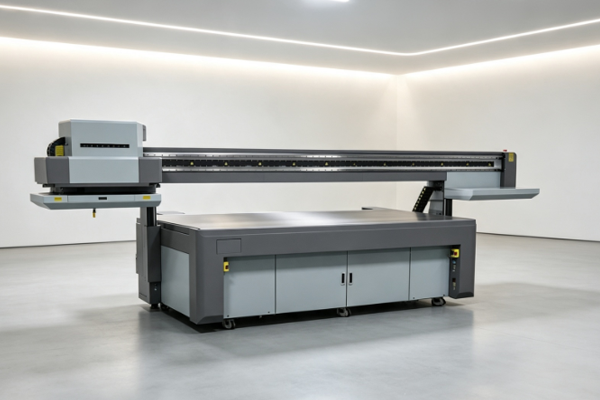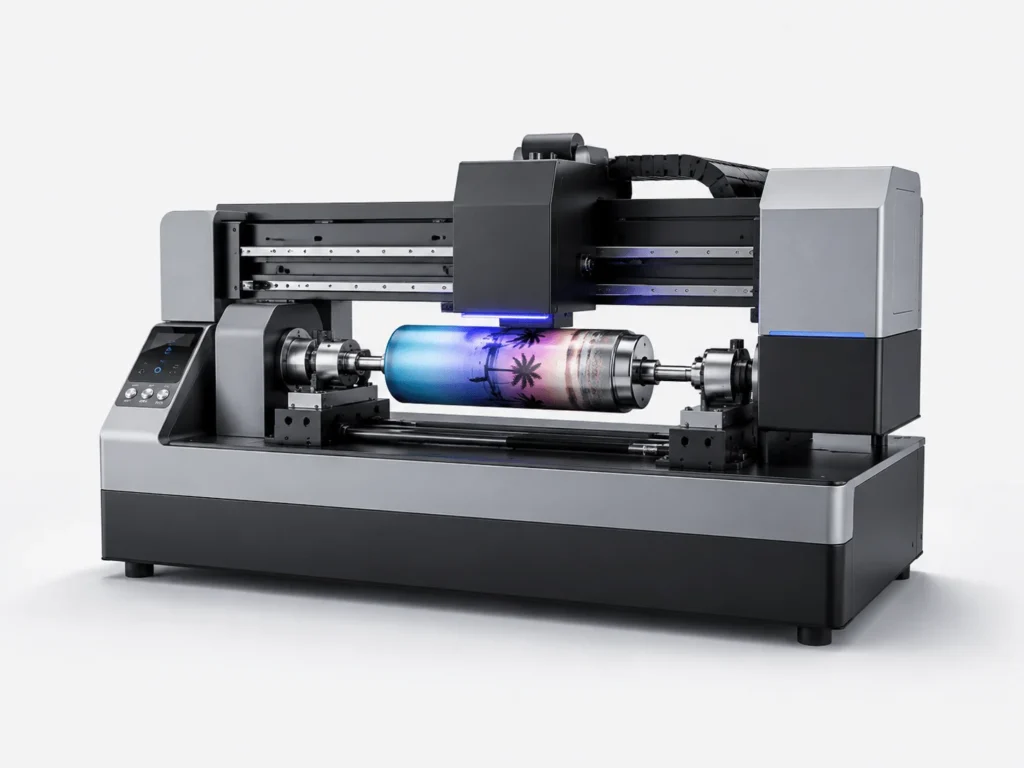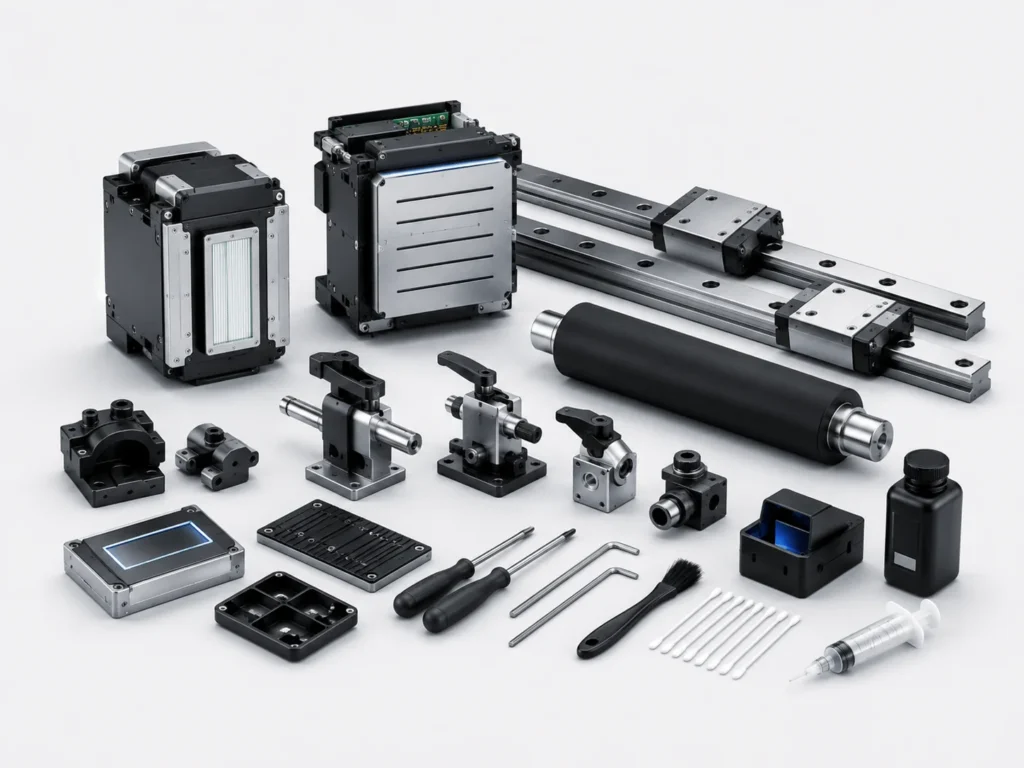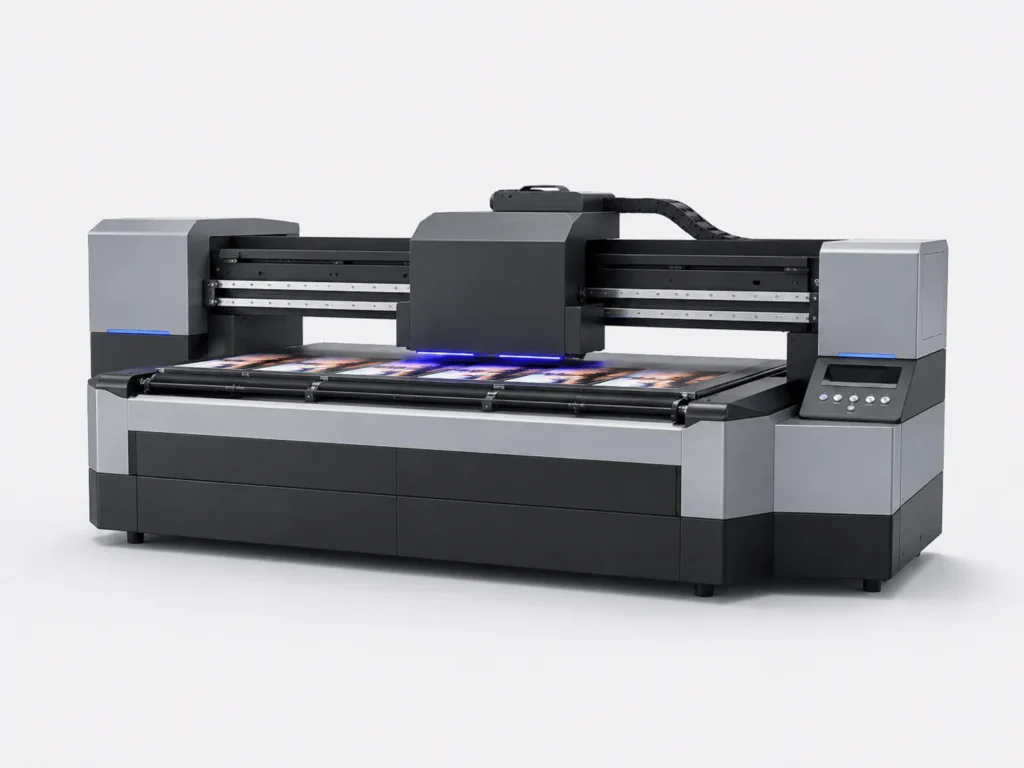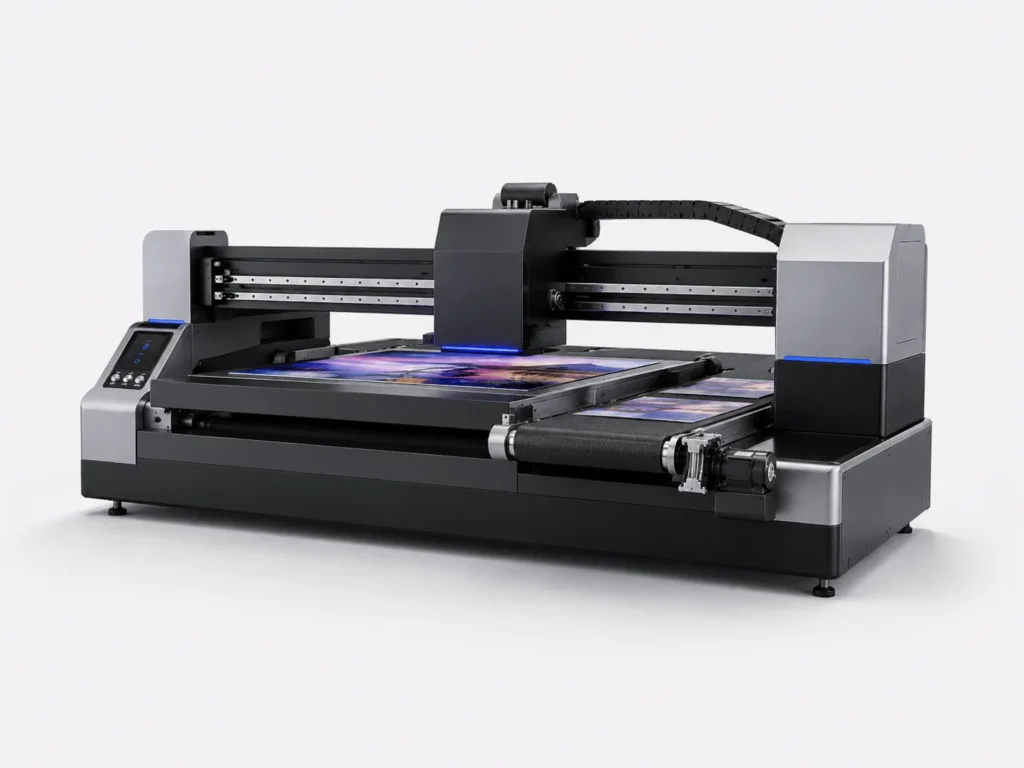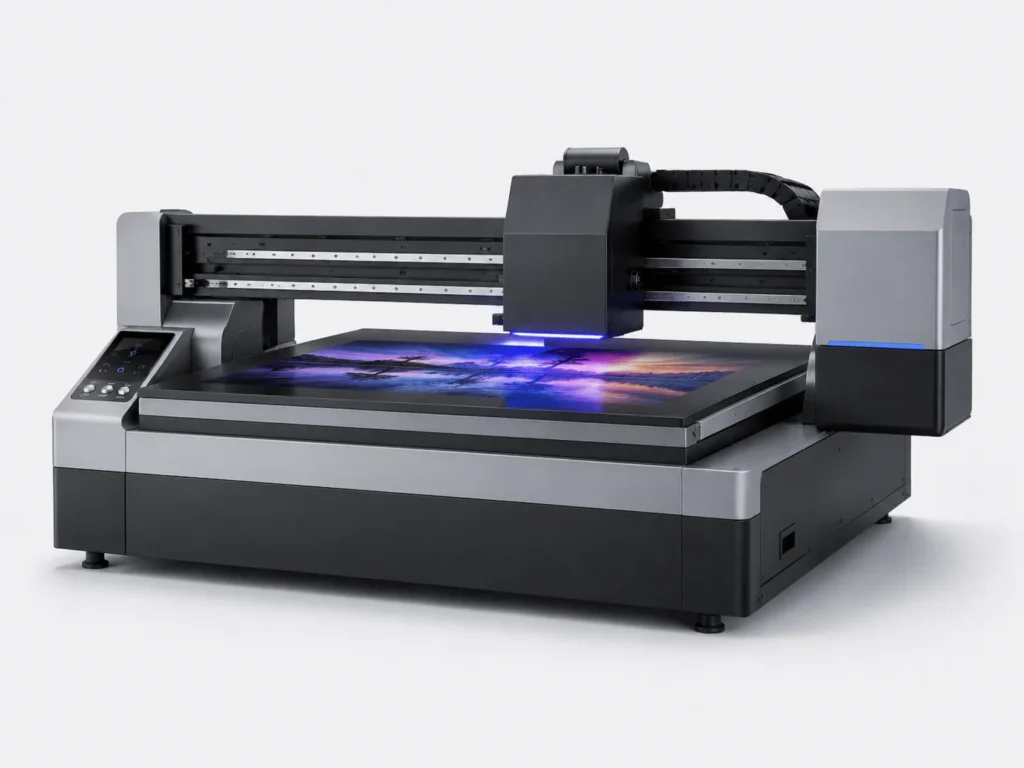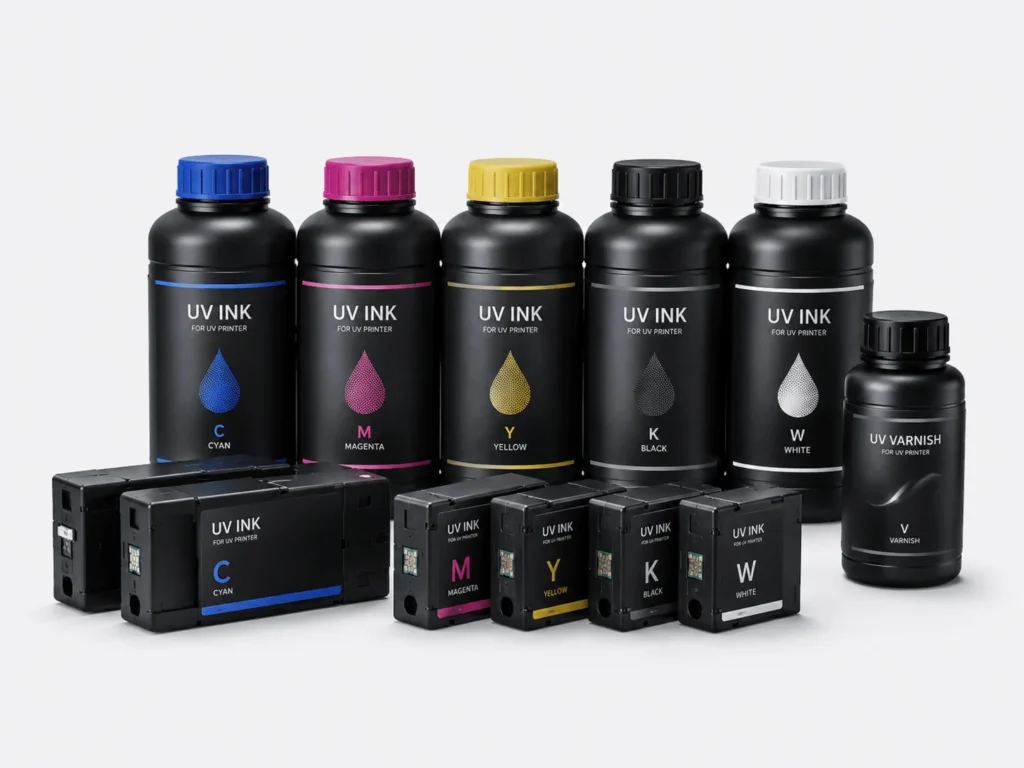
For a UV flatbed conveyor printer, the printhead is one of the most critical components. It directly affects printing precision, color performance, production speed, and overall machine stability. Many businesses tend to focus first on price and appearance when purchasing, while overlooking the fact that printhead configuration is the core factor determining machine performance. Even if two machines have the same frame, differences in printhead model and quantity can lead to noticeable differences in print quality and production capacity. Whether it is packaging printing, advertising display, home appliance panels, or industrial processing, understanding how to choose a printhead is essential. Only by selecting the right printhead can the equipment better meet actual production needs.
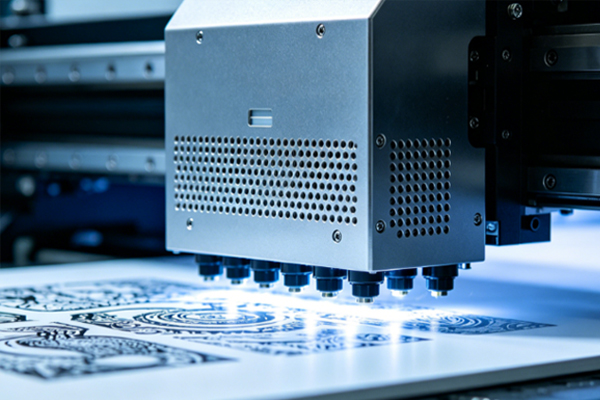
What Needs Should Be Clarified Before Choosing a Printhead
Different businesses have different production models, product positioning, and order structures. Therefore, before choosing a printhead, it is often more important to sort out your own needs first than to simply compare specifications. This helps avoid mismatched configurations, wasted capacity, or insufficient quality later on.
Choose the Printhead Type According to Product Positioning
Different product positioning requires different levels of print quality, speed, and stability. When selecting a model, you must first clarify what kind of products you mainly produce, and then match the corresponding printhead solution.
- High-end home appliance panels usually place more emphasis on sharp image edges, complete text details, and overall visual texture, so they are better suited to printhead configurations with higher precision and finer droplet control.
- Gift packaging and brand packaging care more about color reproduction and image layering. Especially when presenting a brand image, the output stability and color performance of the printhead will directly affect the grade of the finished product.
- Industrial product processing often emphasizes long-term operational reliability and durability, because such orders usually require high consistency. If the printhead lacks stability, it can easily affect batch delivery.
- The advertising industry needs to find a balance between speed and image quality. It must ensure that the visuals are eye-catching enough while also maintaining a fast delivery pace, so the printhead configuration cannot rely on a single indicator alone.
Only after clearly defining the product positioning and application scenarios can the subsequent printhead selection become more targeted and allow the equipment to perform as expected in actual production.
Plan the Printhead Solution According to Order Volume
Order volume directly affects production capacity requirements, and printhead configuration is closely related to capacity performance. Therefore, before purchasing, companies must judge what kind of printhead combination they actually need based on their order structure.
- Small-batch custom orders usually focus more on print quality and design flexibility, because such businesses often need to switch content frequently, making the printhead’s detail performance especially important.
- Medium-batch orders require a balance between efficiency and precision. You cannot slow down delivery just to pursue image quality, nor sacrifice finished-product quality just to increase speed, so a balanced configuration is more suitable.
- Large-scale production places greater emphasis on continuous output capability and overall capacity performance. Printhead quantity, printing speed, and long-term operational stability all become key considerations.
When planning a printhead solution, businesses should not only focus on current order volume but also consider future business expansion. This ensures that the equipment remains highly applicable and valuable over the next few years.
How Does Printhead Precision Affect Printing Results
Printing precision is one of the important indicators used to evaluate printhead performance. It not only determines whether the image is clear, but also affects the overall grade of the product and market competitiveness. Especially in industries with high visual requirements, precision often reflects the value of the finished product.
Precision Determines Image Detail Performance
The higher the printhead precision, the stronger the ability to reproduce image details. This is crucial for many industries that need to present brand image or product texture, because details often determine the customer’s first impression of the product.
- Text edges become clearer and sharper, and even small-font instructions can maintain good readability and completeness.
- Small-sized graphics can be reproduced more accurately, reducing blur, jagged edges, or soft borders.
- Complex lines and fine textures are less likely to distort during printing, helping preserve the layering and structure of the original design.
- Brand logos and identification graphics appear more refined, enhancing the overall professionalism and visual grade of the product.
For high-end packaging, electronic products, and fine decorative applications, printhead precision often directly determines whether the finished product can meet customer requirements, so this parameter should never be ignored.
Droplet Size Affects Image Quality
In addition to resolution, the printhead’s ability to control droplet size also affects the final image quality. The finer the droplets, the more natural the tonal transitions usually are, and the overall visual performance becomes softer and more premium.
- Smaller droplets allow the image to present finer layering, making them especially suitable for gradients, light backgrounds, and complex patterns.
- Color transitions become smoother and more natural, reducing visible graininess or block boundaries and improving overall appearance.
- The detail layers in the image become richer, better expressing the light-and-dark changes and visual focus in the design.
- Reduced graininess makes the finished product look cleaner and more polished, especially for surface printing on products with high appearance requirements.
If a company wants its products to look more premium, the printhead’s droplet control capability is a very important indicator, because it directly affects the customer’s intuitive judgment of product quality.
How to Balance Printhead Speed and Stability
Many users fall into the trap of thinking that faster is always better when choosing a printhead. In reality, the most suitable printhead solution for production is often one that finds a reasonable balance between speed, stability, and image quality, rather than blindly pursuing one extreme metric.
Production Speed Must Match Business Needs
Printhead speed is certainly important because it directly affects machine capacity and order delivery efficiency. However, different business scenarios have different speed requirements, so it cannot be judged without considering actual production needs.
- The packaging industry usually requires higher production efficiency because orders move quickly and deadlines are tight. If printhead speed is insufficient, it can easily affect the overall shipping schedule.
- The advertising industry also values efficiency, but it often needs to balance image quality and material compatibility, so it cannot simply pursue extreme speed while ignoring finished-product quality.
- Industrial production places greater emphasis on continuous and stable operation. Although speed matters, if the machine fluctuates frequently, it will affect batch consistency and delivery stability.
If you blindly pursue high-speed printing, it may lead to reduced image quality, increased printhead load, or poorer machine stability. Therefore, companies must judge based on their own business rhythm rather than simply choosing the “fastest” solution.
Stability Is More Important Than Short-Term Speed
For equipment that truly enters production, long-term stable operation is often more valuable than short-term high speed, because factories fear not insufficient specifications, but frequent problems during batch production.
- A stable printhead can reduce common issues such as ink interruption, ink splashing, and nozzle clogging, thereby lowering the chance of production stoppages.
- The more stable the machine runs, the higher the consistency of batch products, and the smaller the color differences and quality fluctuations between finished items.
- During long continuous operation, if the printhead performs stably, it can better ensure on-time order delivery and reduce rework and delay risks.
- For factory users, stability often means lower overall operating costs and higher production efficiency, so its importance should not be underestimated.
From a long-term usage perspective, printhead stability often reflects equipment value better than extreme speed, because what truly determines a company’s profit is usually not the highest speed in advertisements, but the sustained performance in daily production.
What Should Be Considered About Printhead Lifespan and Maintenance Costs
Equipment purchase is not a one-time transaction. As a core consumable component, the printhead’s lifespan and maintenance costs will directly affect future operating expenses, so long-term costs must be included in the evaluation.
Printhead Lifespan Affects Return on Investment
The longer the printhead lasts, the lower the overall cost of long-term use usually is, because fewer replacements not only save parts costs but also reduce hidden losses caused by downtime.
- A longer-lasting printhead can reduce extra expenses caused by frequent replacement, making the equipment’s return on investment more stable.
- After fewer replacements, machine downtime is also shortened, which is especially important for continuous-production businesses.
- Long-life printheads usually mean higher equipment utilization, helping companies maintain stable output over a longer cycle.
When purchasing, you should not only look at the initial price, but also focus on the actual service life, maintenance frequency, and replacement cost of the printhead. This helps determine more accurately whether the equipment is truly cost-effective.
Maintenance Difficulty Determines Later Management Costs
Even a good printhead can create significant management pressure if maintenance is complicated, cleaning is troublesome, or parts supply is unstable. Therefore, maintenance convenience is also a factor that must be considered during selection.
- Whether daily cleaning is convenient directly affects the printhead’s condition and maintenance efficiency. The simpler the operation, the easier daily management becomes.
- Whether the ink system is stable affects whether the printhead is prone to clogging, ink interruption, and other issues. This is also a practical concern for many businesses.
- Whether parts supply is timely determines whether production can resume quickly after a problem occurs, avoiding long downtime caused by waiting for parts.
If maintenance costs are too high or after-sales support is insufficient, even a machine with good initial specifications may gradually reveal problems during long-term use. Companies must include maintenance convenience and service support in their evaluation when purchasing.
How to Choose the Right Printhead Configuration for Yourself
In actual purchasing, printhead selection should not rely on a single parameter. Instead, it should be judged comprehensively based on industry characteristics, production goals, and the manufacturer’s support capabilities. Only then can you truly choose the right solution.
Different Industries Require Different Configurations
Different application scenarios have very different printhead requirements. Industry characteristics are often an important basis for printhead selection. Only by judging according to specific business needs can the equipment better fit actual production.
- The packaging printing industry usually focuses more on color performance and printing speed, because this type of business must ensure both visual quality and fast delivery.
- The home appliance panel industry values precision and stability more, because product surfaces often need clear, neat, and consistent graphics.
- The advertising industry emphasizes efficiency and adaptability, hoping the equipment can respond quickly to different orders while maintaining good output quality.
- The industrial manufacturing sector pays more attention to long-term reliable operation, because such production often requires higher consistency and durability.
Configuring the printhead according to industry needs not only improves equipment utilization, but also helps companies avoid detours in actual production and achieve stable output faster.
Choose a Manufacturer with Technical Support
Printhead performance is not determined by hardware alone. Equipment tuning, control system matching, and after-sales technical support all affect whether the printhead can perform as expected. The manufacturer’s strength is also crucial.
- Equipment tuning capability affects whether the printhead output is stable and whether parameter settings are reasonable, directly influencing print quality and production efficiency.
- The compatibility of the control system determines whether the printhead can fully perform. If the system is not mature, even the best printhead may not be able to achieve the expected performance.
- After-sales service affects the user experience. Especially when equipment abnormalities occur, timely response and professional support can greatly reduce downtime losses.
- The technical team can also provide parameter optimization suggestions based on different materials and order requirements, helping companies enter stable production more quickly.
Choosing an experienced manufacturer with technical support capabilities not only makes printhead configuration more reasonable, but also gives companies a more stable and worry-free overall experience during later use.
As one of the most critical core components of a UV flatbed conveyor printer, the printhead directly affects print quality, production efficiency, operating costs, and equipment lifespan. When purchasing equipment, companies should evaluate comprehensively based on product type, order volume, quality requirements, and future development plans, rather than simply comparing prices or specifications. Only by choosing the right printhead solution can you truly improve production efficiency and market competitiveness. Springyprinter specializes in the R&D and manufacturing of industrial UV digital printing equipment and can provide customers with professional UV flatbed printing solutions and technical support services.