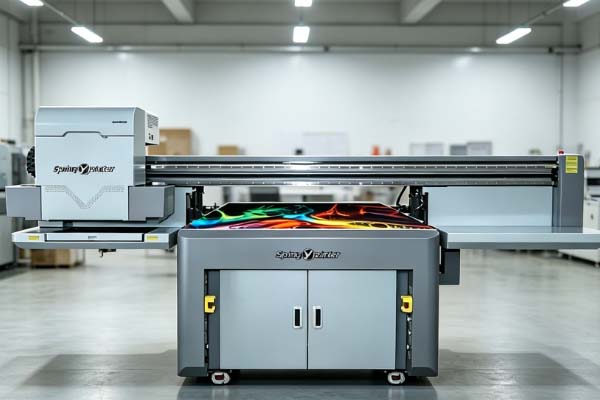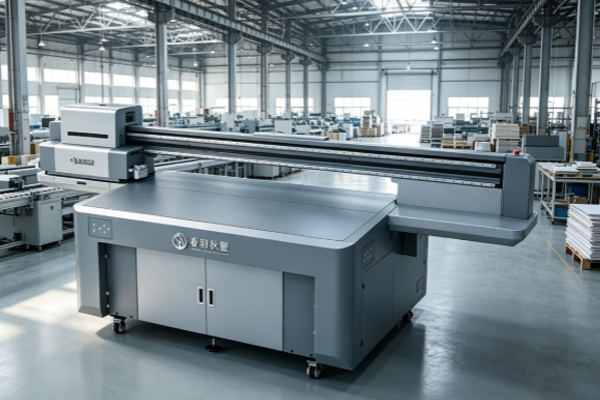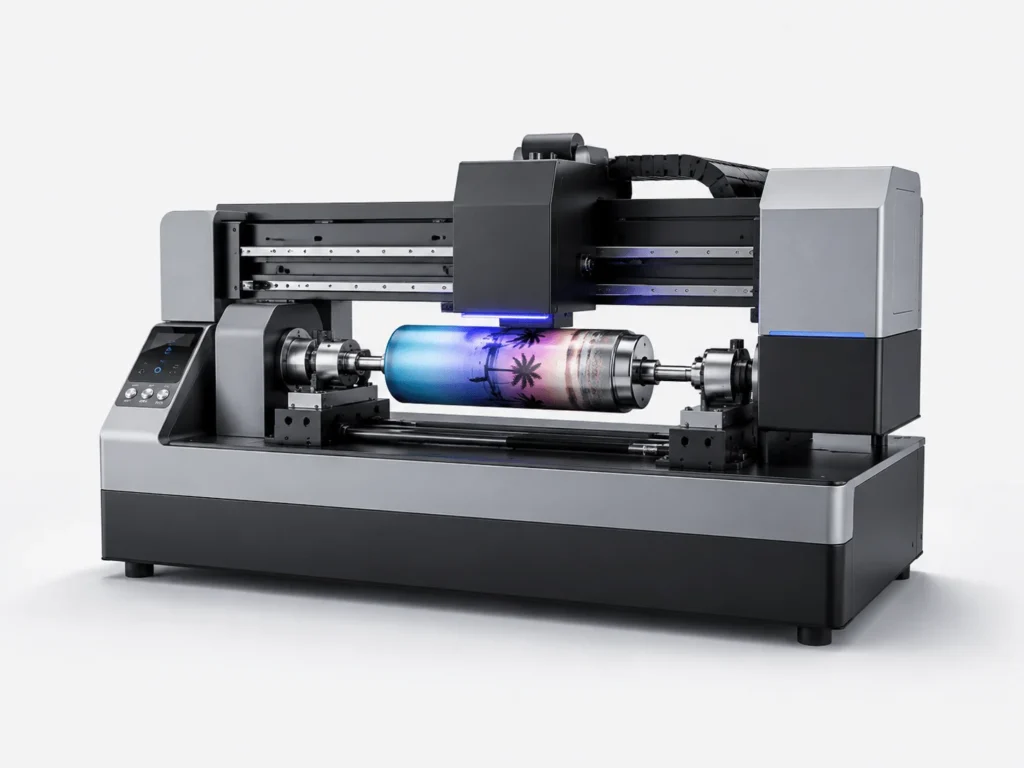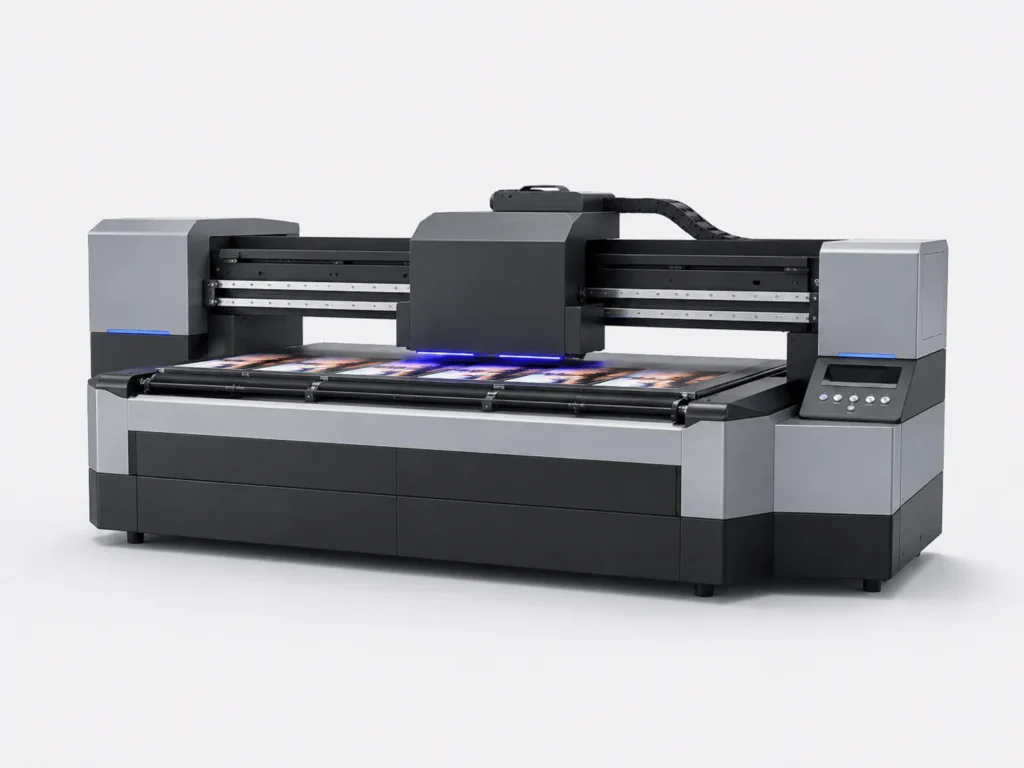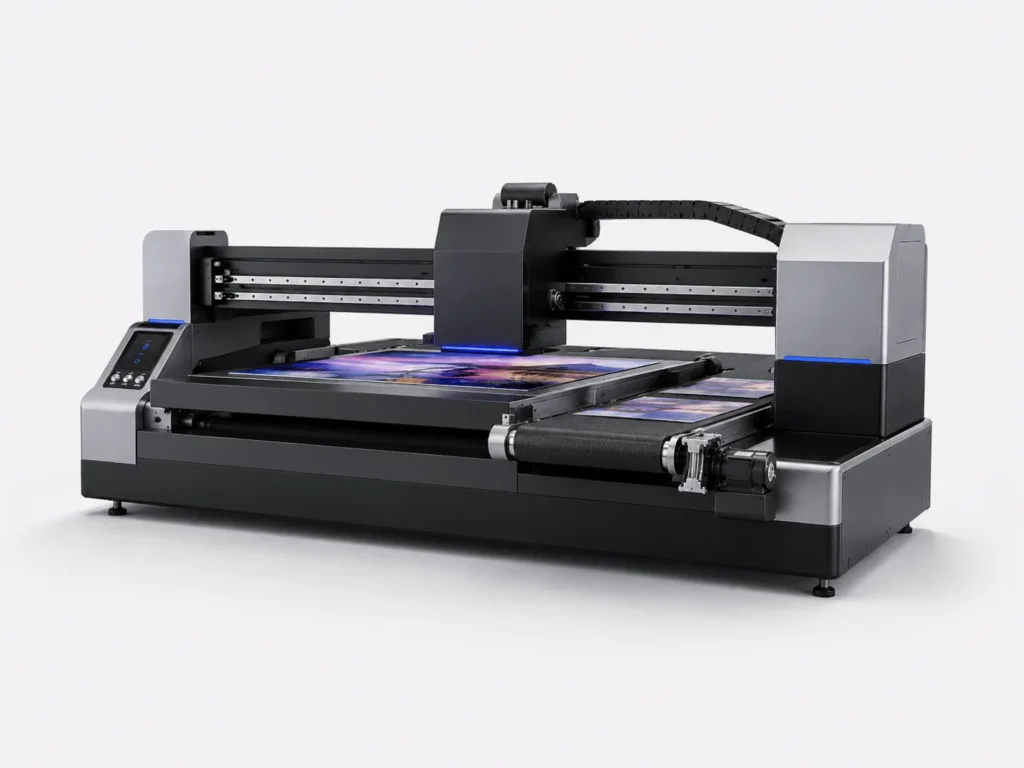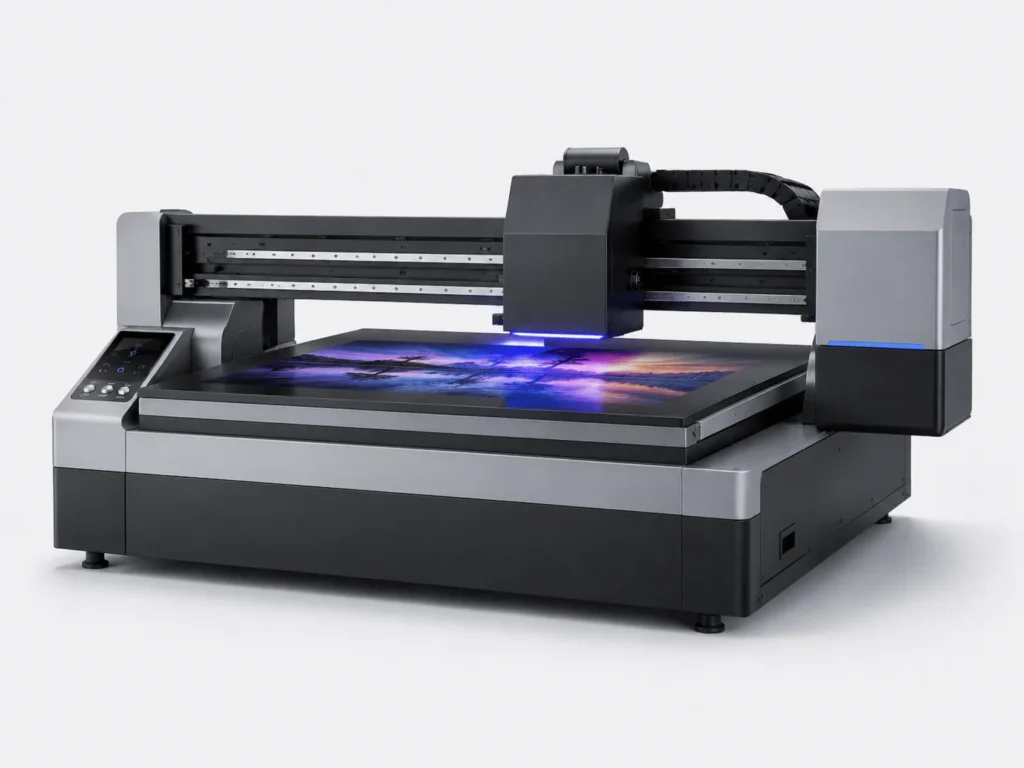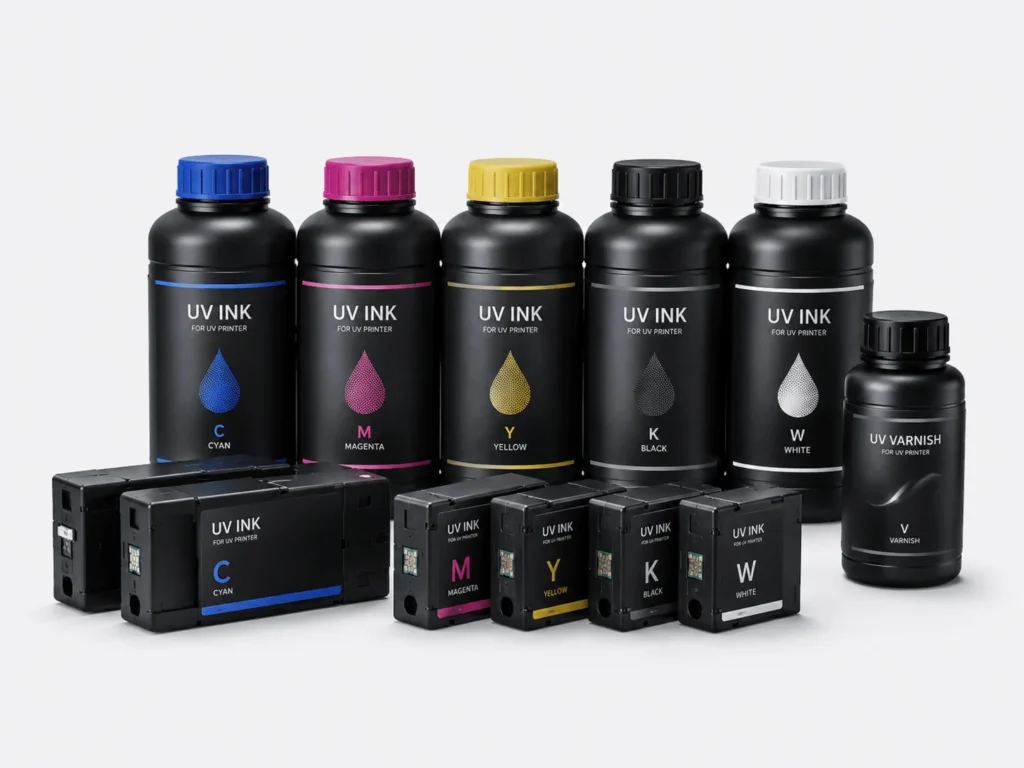
With the continuous upgrading of industrial digital printing, single-pass printing machines have become essential production equipment in industries such as packaging, decorative building materials, corrugated boxes, furniture boards, labels, and advertising signs. Compared to traditional reciprocating printing methods, single-pass printing machines can complete the entire image output in a single pass, significantly improving production efficiency while ensuring image quality. The equipment’s long-term stable operation relies not on a single component, but on the close cooperation between multiple core systems. Understanding the equipment’s structure not only helps companies select models suitable for their production needs but also assists operators in daily maintenance, extending the equipment’s lifespan.
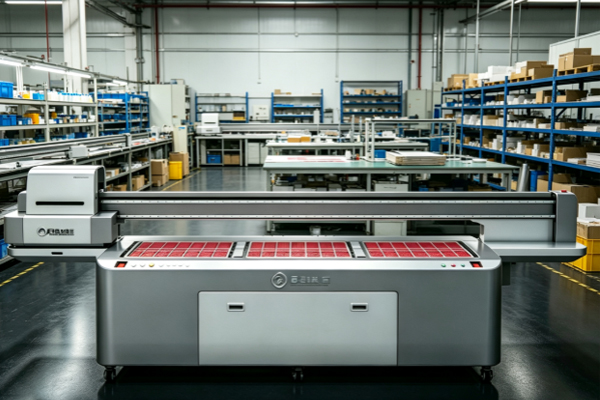
The Inkjet System of a Single-Pass Printer Handles Image Output
The inkjet system is the core unit of a single-pass printing machine for completing pattern output and is a crucial guarantee of the machine’s overall precision. During operation, the printhead jets UV ink at high speed according to the control program, completing the printing of the entire image as the material passes through the conveyor platform. The inkjet system not only requires high jet speed but also needs to ensure consistent droplet size and accurate droplet placement to achieve high-definition images and rich color reproduction. With the continuous development of industrial printing technology, high-density printhead arrays have become an important configuration for single-pass printing equipment, enabling the equipment to meet both high-speed production and detail requirements, providing enterprises with stable and high-quality printing results.
Key Components of an Inkjet System
An inkjet system typically consists of the following parts:
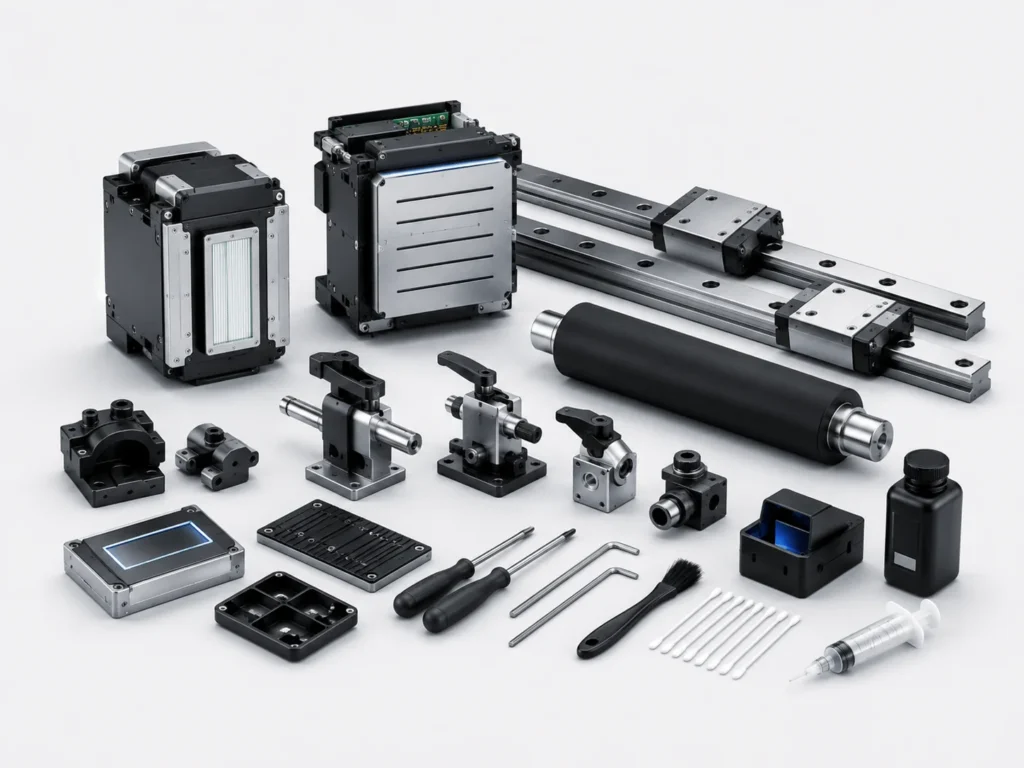
- Industrial piezoelectric printheads, responsible for precise control of ink droplet ejection.
- Printhead mounting beams, ensuring neat and stable printhead arrangement.
- Printhead drive control board, enabling high-speed data transmission.
- Automatic calibration module, improving consistency between printheads.
- Anti-collision protection device, reducing damage caused by accidental collisions.
- Automatic cleaning and humidification mechanism, keeping nozzles clear and reducing the probability of clogging.
These components work together to maintain stable image quality during long-term continuous production, reducing downtime for maintenance and improving overall production efficiency.
Intelligent Ink Supply System Ensures Continuous and Stable Production
The ink supply system is responsible for ink delivery, circulation, filtration, and pressure control, directly impacting print quality. Unstable ink supply can easily lead to ink shortages, ink splatter, and uneven color distribution, affecting product quality. Modern single-pass printers generally employ intelligent ink supply designs, which automatically adjust ink flow based on printing speed to ensure a stable ink supply to the printhead. Simultaneously, automatic circulation and constant temperature control reduce pigment sedimentation, improve ink utilization, and allow the equipment to adapt to long-term, high-load continuous production demands.
Main Components of an Intelligent Ink Supply System
To ensure stable ink supply, the system generally includes the following components:
- A large-capacity ink storage device to improve continuous production capacity.
- An automatic circulation system to maintain uniform ink flow.
- A multi-stage filtration system to prevent fine impurities from entering the printhead.
- A constant temperature control module to maintain suitable ink viscosity.
- An automatic defoaming device to reduce air entering the ink supply line.
- An ink pressure regulation system to ensure stable jetting.
A complete ink supply system effectively reduces printhead malfunctions, improves printing stability, lowers maintenance costs for businesses, and enhances overall machine operating efficiency.
High-Precision Conveyor Platform Enhances Printing Consistency
The conveyor platform plays a crucial role in transporting materials and is a significant component affecting printing position accuracy. Single-pass printing equipment uses a material-moving, printhead-fixed working mode; the stability of the conveyor speed directly impacts image clarity and registration. Modern equipment typically features high-precision servo drive systems, automatic positioning mechanisms, and synchronous detection devices to ensure stable material movement and prevent stretching, offset, or ghosting. For different materials such as cardboard, wood, PVC, glass, and metal, appropriate conveyor methods can be configured according to product characteristics, improving batch consistency and meeting the requirements of continuous industrial production.
LED Curing System Accelerates Production Cycle
After inkjet printing, UV ink needs immediate curing to ensure strong pattern adhesion and allow for the next process. The LED curing system is the core module responsible for this task. Compared to traditional mercury lamp curing, LED curing offers lower energy consumption, faster start-up, and lower temperature rise, making it more suitable for modern continuous industrial production. Rapid curing not only shortens the production cycle but also reduces material thermal deformation, improving finished product quality. For materials such as plastics, wood, acrylic, corrugated paper, and metal sheets, it can achieve excellent curing effects, giving the image wear-resistant, waterproof, and scratch-resistant properties.
Advantages of LED Curing Systems
LED curing technology is increasingly widely used in industrial printing. Its main advantages include:
- Ready to operate immediately upon startup, requiring no long preheating time.
- Low energy consumption, helping to reduce production costs.
- Long light source lifespan, reducing replacement frequency.
- Low heat generation, suitable for printing on heat-sensitive materials.
- Fast curing speed, improving production efficiency.
- Helps improve ink adhesion and durability.
With its stable and reliable curing performance, LED systems have become an important component of modern single-pass printing equipment, providing continuous support for high-speed production.
Intelligent Control System Enables Automated Production Management
The control system acts as the brain of the single-pass printing equipment, coordinating the synchronous operation of modules such as inkjet, ink supply, conveying, curing, and detection. Operators can use the control software to import images, set printing parameters, adjust colors, manage production tasks, and monitor equipment status. Some high-end equipment also features automatic alarms, fault diagnosis, remote maintenance, and production data statistics, making equipment management more intelligent. With the continuous development of industrial automation, more and more single-pass printing equipment supports connection to factory management systems, enabling production information sharing and improving management efficiency. A stable and efficient control platform not only reduces the difficulty of manual operation but also helps companies maintain continuous production capacity, creating greater value for industrial digital printing.