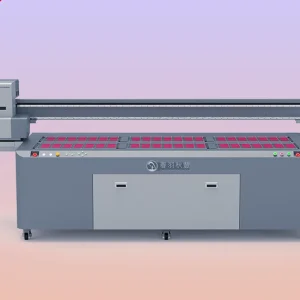
As manufacturing continues to evolve toward digitalization and intelligent production, businesses are placing greater emphasis on production efficiency, product quality, and long-term operational cost control. Traditional surface decoration processes often require printing plates, molds, manual machine adjustments, and multiple post-processing steps, resulting in longer production cycles and higher labor expenses. As market demand shifts toward customized products, small production runs, and rapid delivery, conventional manufacturing methods become less flexible. Industrial UV 3D texture printing combines high-precision inkjet technology, multi-layer UV ink deposition, and instant UV curing to produce colorful graphics and realistic embossed textures in a single production process. This advanced digital manufacturing solution reduces production steps, minimizes material waste, improves equipment utilization, and enables companies to achieve higher productivity with lower operating costs.
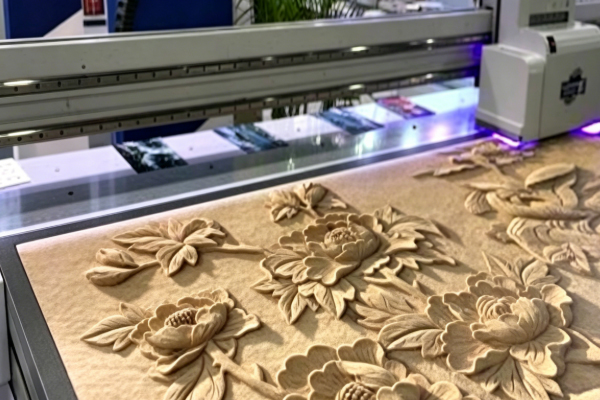
Working Principle of 3D Texture Printing for Efficient Manufacturing
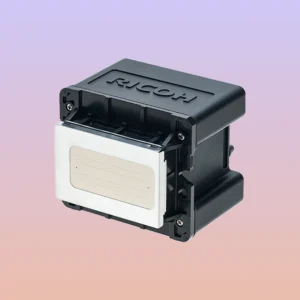
Industrial UV 3D texture printing uses piezoelectric inkjet technology to control printheads directly through digital design files without requiring engraving molds or traditional printing plates. UV ink is deposited layer by layer onto the substrate according to preset printing parameters. After each layer is completed, ultraviolet light instantly cures the ink before the next layer is applied, gradually building durable three-dimensional textures with outstanding visual depth.
A typical production workflow includes:
- Create a digital design containing graphics, colors, and texture height information.
- Use RIP software to automatically calculate printing paths, ink volume, and layer settings.
- Print UV ink continuously using high-precision industrial printheads.
- Instantly cure every printed layer with ultraviolet light to maintain production continuity.
- Build additional texture layers according to the desired embossed effect.
- Complete quality inspection before packaging or product assembly.
This digital production process eliminates repeated machine adjustments and plate-making procedures while maintaining stable print quality throughout the manufacturing cycle.
Business Value Created by 3D Texture Printing
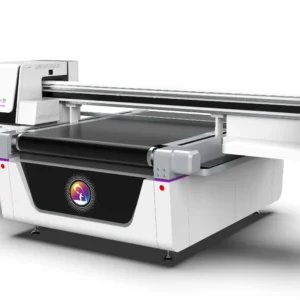
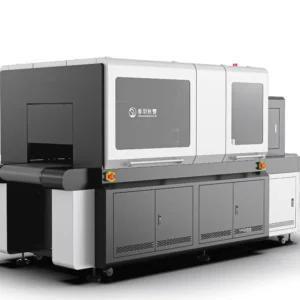
Modern manufacturers evaluate equipment not only by purchase price but also by long-term productivity and operational efficiency. UV 3D texture printing enables rapid prototyping, new product development, and fast job changeovers simply by updating digital artwork. Production can begin immediately without waiting for molds or complex setup procedures. A single industrial UV printer can process wood, glass, metal, acrylic, PVC, leather, ceramic materials, and numerous composite substrates, allowing one machine to support multiple product categories while reducing equipment investment. High-quality embossed textures also increase product value, strengthen brand identity, and help companies develop distinctive products that achieve greater market competitiveness and higher profit margins.
Advantages of 3D Texture Printing for Cost Reduction and Higher Efficiency
Continuous improvements in industrial UV printing technology provide manufacturers with more stable, efficient, and flexible digital production capabilities.
Key advantages include:
- Plate-Free Digital Production:Digital design files directly control the printing process, eliminating the need for traditional printing plates and engraving molds while reducing setup costs and preparation time.
- Higher Production Efficiency:Color graphics and embossed textures are produced simultaneously in a single printing process, reducing manufacturing steps and accelerating order delivery.
- Reduced Labor Requirements:Automated printing and instant UV curing minimize manual operations while improving overall production automation.
- Lower Material Waste:Precise inkjet technology deposits ink only where required, improving material utilization and reducing waste caused by production errors.
- Fast Product Changeovers:Manufacturers can switch between different product designs simply by updating digital files, making the technology ideal for customized production, short-run manufacturing, and continuous mass production.
- Wide Material Compatibility:Industrial UV printers support direct printing on wood, glass, metal, plastics, leather, ceramic materials, and numerous industrial panels, maximizing equipment utilization.
- Reduced Maintenance Costs:Digital manufacturing minimizes complex mechanical processing, helping equipment operate more reliably while lowering maintenance requirements.
These technical advantages help manufacturers reduce production costs while improving productivity and maintaining premium product quality.
Typical Applications of 3D Texture Printing
UV 3D texture printing has become widely used in furniture manufacturing, architectural decoration, advertising signage, packaging, consumer electronics, automotive interiors, creative products, customized gifts, leather goods, and commercial display production. Furniture manufacturers use realistic wood grain and stone textures to enhance decorative panels. Packaging companies create embossed brand logos to increase the perceived value of gift boxes. Advertising businesses produce eye-catching three-dimensional display products with greater visual impact. Electronics manufacturers apply localized embossed textures to improve product appearance and strengthen brand recognition. Digital production supports rapid prototyping, flexible manufacturing, and continuous large-scale production while enabling businesses to respond quickly to changing market demands with consistent product quality.
Best Practices for Maximizing Production Efficiency with 3D Texture Printing
Maintaining high production efficiency requires standardized operating procedures together with optimized printer settings for different substrate materials.
Recommended operating practices include:
- Thoroughly clean the substrate before printing to improve ink adhesion.
- Adjust the print platform and printhead height according to material thickness for maximum accuracy.
- Configure printing resolution, texture height, ink volume, and production speed based on product requirements.
- Optimize UV lamp intensity to ensure complete curing after every printed layer.
- Produce sample prints to verify color accuracy, texture quality, and ink adhesion.
- Begin full-scale production after confirming all printing parameters.
- Perform routine maintenance on printheads, ink supply systems, guide rails, and UV curing units to maintain stable equipment performance.
- Establish preventive maintenance and production management procedures to maximize equipment utilization while minimizing downtime.
Standardized production management ensures consistent color reproduction and embossed texture quality across different manufacturing batches while reducing equipment failures, improving continuous production capability, and lowering long-term operating costs.
As digital manufacturing technology continues to advance, UV 3D texture printing has become an essential production solution for companies seeking higher efficiency and lower manufacturing costs. Through digital workflow, high-precision inkjet printing, realistic multi-layer embossed textures, broad material compatibility, and flexible manufacturing capabilities, industrial UV printers enable businesses to optimize production, improve resource utilization, reduce operating expenses, and strengthen their competitive position in today’s rapidly changing marketplace.