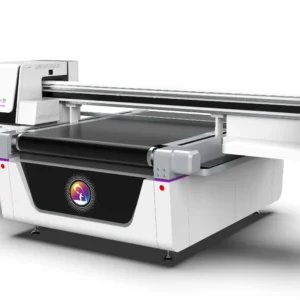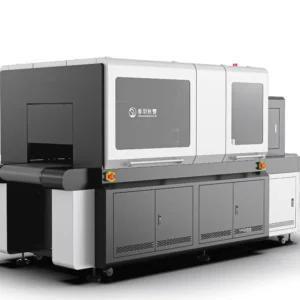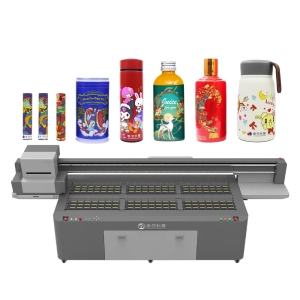
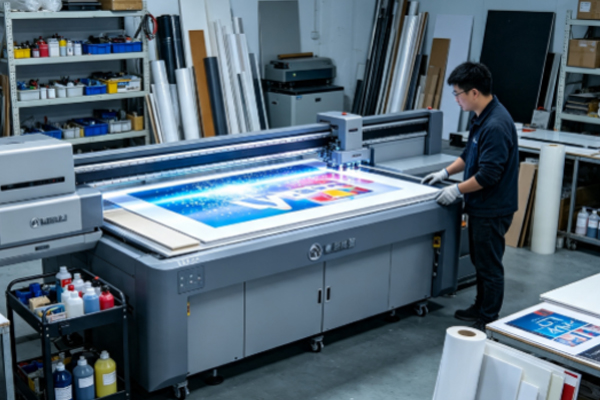
With the continuous development of industrial UV inkjet technology, 3D texture printing is evolving from a surface decoration technique into a more refined and digital manufacturing process. Industrial UV printers use printheads to accurately deposit UV ink onto a substrate and then rapidly cure the ink with ultraviolet light. This allows the ink to build up layer by layer according to digital artwork, creating raised textures with physical height, tactile effects, and visual depth. As a critical material in the entire inkjet process, UV ink has a direct influence on texture quality through its flow characteristics, curing speed, adhesion, and layer-stacking performance. In recent years, 3D texture printing ink technology has advanced significantly in high-precision jetting, rapid curing, three-dimensional stacking, substrate compatibility, and durability. These improvements provide more flexible digital processing solutions for decorative building materials, furniture panels, premium packaging, advertising signs, crafts, and electronic product housings.
Continuous UV Ink Formulation Improvements Drive 3D Texture Printing
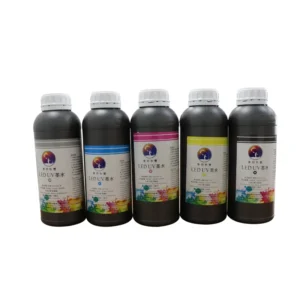
3D texture printing places higher demands on UV ink than conventional flat inkjet printing. Standard UV printing primarily focuses on color reproduction, image clarity, and surface adhesion, while three-dimensional texture printing also requires ink to maintain stable height and clear contours during repeated layer stacking. New UV ink formulations increasingly focus on balancing viscosity, surface tension, pigment dispersion stability, and photopolymerization performance, allowing industrial printheads to maintain stable jetting while reducing droplet placement errors.
With improved formulations, UV ink can better support continuous operation of high-speed industrial printheads. Precisely controlled droplets form detailed texture units on the substrate, while repeated inkjet deposition gradually builds three-dimensional structures with different heights. Some advanced formulations also provide improved flexibility and adhesion, helping printed textures resist cracking and peeling during subsequent processing, transportation, and long-term use. For products requiring strong tactile effects and fine details, ink formulation stability has become an important factor in maintaining production quality.
Rapid Curing Technology Improves Texture Layering Efficiency
UV ink is cured through ultraviolet exposure, and the curing process directly affects the forming speed and surface quality of 3D textures. As UV curing technology advances, modern inks can reach a stable cured state in a shorter period, allowing industrial UV printers to build continuous texture layers more efficiently. Rapid curing reduces waiting time and limits excessive ink spreading on the substrate, helping preserve sharp texture edges.
For high-height 3D texture printing, the bonding strength between individual ink layers is also critical. If the underlying layer does not cure properly, subsequent layers may cause texture deformation, edge spreading, or localized collapse. New UV inks optimize their photoinitiator systems to achieve more consistent curing across different ink thicknesses, improving the structural stability of the final texture.
Rapid curing technology provides several practical benefits:
- Shorter Production Waiting Times: Ink reaches a stable condition quickly after jetting, improving continuous production efficiency.
- Better Texture Formation: Each ink layer provides stable support for subsequent stacking.
- Reduced Texture Spreading: Rapidly fixing droplets helps maintain sharp edges around text, graphics, and textures.
- Compatibility with High-Speed Printing: The ink can support continuous operation of industrial UV printing equipment.
- Faster Downstream Processing: Printed products can move more quickly to cutting, assembly, packaging, or other production stages.
The combination of rapid UV curing and high-precision inkjet technology enables 3D texture printing to achieve higher productivity and more consistent dimensional effects.
High-Precision Inkjet Compatibility Becomes a Key Development Focus
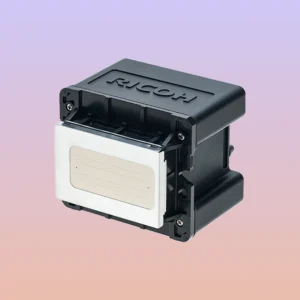
Industrial UV printers rely on high-precision printheads to deliver ink, making stable ink properties essential. Pigments, resins, and other components must remain evenly dispersed to prevent sedimentation or contamination that could affect nozzle performance and continuous inkjet operation.
Recent developments in 3D texture printing inks place greater emphasis on compatibility with industrial printheads. Controlling particle size and filtration accuracy reduces the risk of contaminants entering the printhead, while optimized viscosity and surface tension help produce more consistent droplets. Stable droplet volume is especially important for texture printing because differences in droplet size can directly affect the height of each printed layer.
High-precision inkjet compatibility mainly involves the following characteristics:
- Stable ink viscosity for continuous high-speed jetting.
- Controlled surface tension to reduce misting and droplet deformation.
- Uniform pigment dispersion for consistent color performance.
- Effective filtration to reduce the risk of fine particles entering the printhead.
- Stable ink circulation to minimize fluctuations during extended production.
When UV ink and industrial printheads are properly matched, problems such as missing lines, nozzle clogging, and uneven jetting can be reduced, making 3D texture printing more suitable for large-scale manufacturing.
Multi-Material Compatibility Expands 3D Texture Printing Applications
As UV ink technology continues to improve, 3D texture printing can be applied to an increasingly wide range of materials. Some smooth or low-absorption substrates previously required highly specialized adhesion solutions. New formulations optimize resin systems and surface bonding performance, improving ink adhesion across different substrates.
Wood panels, MDF, PVC, acrylic, glass, metal, ceramics, and composite boards can all be processed with suitable UV printing solutions based on their surface characteristics. Furniture panels can use raised wood grain and stone textures to enhance decorative quality. Premium packaging can apply embossed logos to create a stronger tactile experience. Advertising signs can use raised lettering to improve visual recognition, while decorative building materials can reproduce complex artistic textures through digital inkjet technology.
Typical material requirements include:
- Wood Panels: Strong adhesion, clear texture layers, and good surface wear resistance.
- Glass and Ceramics: Reliable surface bonding to ensure long-term texture durability.
- Metal Materials: A combination of adhesion and weather resistance for signs and decorative products.
- PVC and Acrylic: Good flexibility to reduce cracking during subsequent processing.
- Packaging Materials: Rapid curing and stable stacking performance for high-speed production.
Improved substrate compatibility allows 3D texture printing to move beyond a limited range of products and enter more industrial manufacturing and customized production applications.
Environmental Performance and High Functionality Shape Future Ink Development
Environmental requirements and demand for premium manufacturing are encouraging continuous improvements in UV ink technology. Future 3D texture printing inks will place greater emphasis on low odor, low volatility, and stable operating performance while maintaining high-precision jetting and rapid curing capabilities. As industrial UV printers become faster and more automated, inks must also support extended continuous operation with less manual intervention.
Smart manufacturing environments will further improve the matching between ink properties and printer parameters. Digital control systems can adjust inkjet settings according to substrate type, texture height, printing speed, and graphic structure, improving ink utilization and texture consistency. Future high-performance UV inks will work more closely with industrial printheads, intelligent control systems, automatic feeding equipment, and vision inspection technologies.
For 3D texture printing manufacturers, advances in ink technology can improve texture definition and tactile quality while helping industrial UV printers achieve greater continuous production capability. As new UV ink formulations enter practical manufacturing applications, industries such as premium packaging, furniture decoration, building material surface finishing, advertising signage, and customized products will gain more digital processing options. These developments will continue driving 3D texture printing toward higher precision, greater efficiency, improved durability, and higher product value.