Smart home appliances are continuously upgrading, and consumers’ expectations for refrigerator appearance are no longer limited to durability. They increasingly demand products that combine technological aesthetics, design appeal, and strong brand recognition. Glass door panels, with their high gloss, easy cleaning, and premium texture, have become an essential feature of smart refrigerators. To achieve exquisite patterns, brand logos, functional markings, and decorative textures on glass surfaces, UV printing technology is becoming the preferred choice for more and more manufacturers. With digital printing processes, companies can balance production efficiency, visual quality, and flexible manufacturing needs, making smart refrigerator glass door panels more competitive in the market.
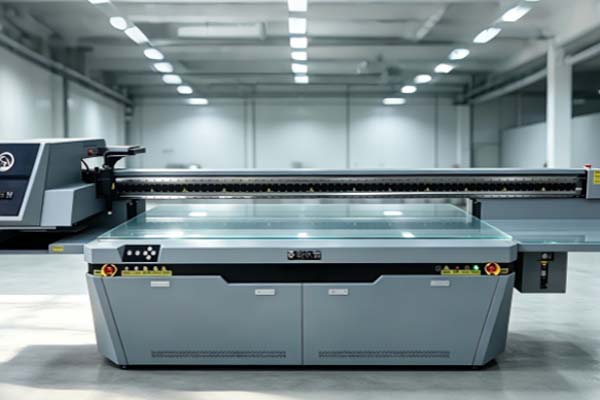
Printing Requirements for Smart Refrigerator Glass Door Panels
The exterior design of smart refrigerators is constantly evolving, placing higher demands on the visual quality and manufacturing process of glass door panels.
Meeting High-Quality Appearance Requirements
Glass door panels directly affect the overall appearance of the appliance, and print quality must remain stable.
- Patterns appear more vibrant and vivid, remaining clear and non-gray under different lighting conditions.
- Brand logos maintain sharp edges and fine details even in small text, without blurring or jagged edges.
- Decorative textures transition more naturally and smoothly, enhancing design aesthetics.
- Large-area prints maintain consistent color without noticeable color variation or uneven shading.
- The overall appearance meets the high-end standards of home appliances in terms of texture and process stability.
High-quality printing enhances product grade and strengthens brand image.
Adapting to Diverse Product Designs
With the rapid iteration of smart home appliances, different product series require different visual designs.
- Supports glass door panels of various sizes and thicknesses, compatible with different refrigerator models.
- Allows flexible adjustment of color schemes and visual styles based on product positioning for differentiated design expression.
- Meets various decorative texture requirements, including minimalist, technological, and artistic styles.
- Supports rapid prototyping of small-batch new products, shortening design validation and market testing cycles.
- Design files can be quickly switched, enabling efficient parallel production of different product series.
Flexible printing methods help companies launch more product styles quickly.
Advantages of UV Printing Technology
UV printing technology provides higher precision and efficiency in glass door panel production through digital control.
High-Precision Image Output
UV printing meets the high requirements for detail performance on glass door panels.
- Text edges are sharp and clear, ensuring good readability.
- Image transitions are smooth and natural, without obvious breaks or graininess.
- Color reproduction is accurate and close to the original design.
- Details are fully preserved, creating a more layered visual effect.
- The final product achieves a high-end customized visual texture.
Stable output ensures consistent quality across all glass door panels, improving product yield.
Improved Production Efficiency
Digital printing makes the production process more efficient by eliminating traditional plate-making and exposure steps. Designs can be directly imported for production, enabling fast image switching and quick transitions between different orders. New product sampling cycles are significantly shortened, accelerating time-to-market. It also supports long-term continuous stable production, making it suitable for large-scale orders. Equipment utilization is higher, and the overall production rhythm becomes more compact and efficient. With improved efficiency, companies can respond to market demand more quickly.
Comparison of UV Printing Application Performance
In actual production, different processes vary significantly in cost, efficiency, and quality. The following is a typical comparison:
| Item | Traditional Screen Printing | UV Digital Printing |
| Plate Cost | Requires plate-making, higher cost | No plate required, lower cost |
| Proofing Cycle | Longer | Immediate use, fast completion |
| Image Precision | Limited by screen mesh | High-resolution output |
| Color Performance | Limited layering | Rich colors, natural transitions |
| Production Flexibility | Not suitable for small batches | Supports multi-type small batches |
| Yield Rate | Easily affected by human factors | Higher stability |
UV digital printing shows clear advantages in flexible production and high-precision output, making it more suitable for modern smart home appliance manufacturing.
Meeting Smart Manufacturing Production Models
Smart manufacturing is driving the home appliance industry toward higher efficiency and greater flexibility.
Supporting Flexible Production
Multi-variety and small-batch production has become an important trend in the home appliance industry.
- Multiple orders can be processed simultaneously with flexible and efficient scheduling.
- Fast image switching reduces preparation time.
- Meets personalized customization needs and enhances product differentiation.
- Reduces inventory pressure and better aligns with market demand.
- Improves order delivery speed and responsiveness.
Enhanced flexible manufacturing capabilities help companies expand high-value-added business.
Reducing Overall Production Costs
Optimizing production processes improves overall operational efficiency.
- Reduces manual alignment and machine setup time, improving production stability.
- Lowers material waste, making each production batch more cost-effective.
- Reduces rework and scrap caused by process errors.
- Improves first-pass yield, ensuring more stable and reliable output.
- Optimizes equipment efficiency and reduces unit manufacturing costs.
Stable production not only controls costs but also improves profitability.
Building More Competitive Home Appliance Products
Through process upgrades and digital production, companies can significantly enhance product competitiveness.
Enhancing Brand Image
Excellent appearance design increases consumer purchase intent.
- Products have stronger visual impact and recognition in retail displays.
- Door panel designs become more diverse, enhancing overall aesthetic performance.
- High-end visual effects strengthen brand perception of technology and quality.
- Improves both in-store and online display performance, enhancing first impressions.
- Better meets mid-to-high-end market demands for appearance and texture.
Exquisite glass door panels become an important selling point, improving market competitiveness.
Meeting Future Industrial Upgrades
Digital printing technology is continuously driving the upgrade of smart home appliance manufacturing. By integrating with automated production lines and digital order management systems, production processes become more intelligent and efficient. At the same time, companies can respond more quickly to changes in international markets, accelerate product iteration, and gradually adapt to global smart manufacturing trends. A complete UV printing solution helps enterprises continuously optimize production capabilities and maintain long-term advantages in the highly competitive home appliance market.
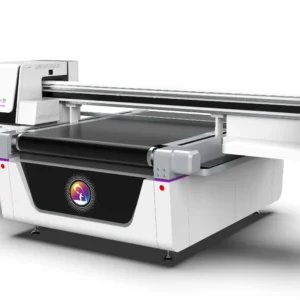
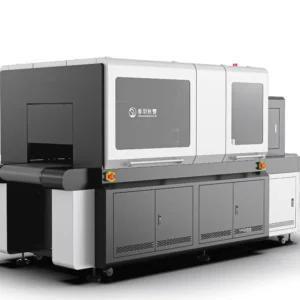
The UV printing solution for smart refrigerator glass door panels balances appearance quality, production efficiency, and flexible manufacturing needs, providing reliable support for home appliance companies to create higher value-added products. Choosing mature and stable digital printing equipment helps enhance brand competitiveness and market responsiveness. Springyprinter focuses on the R&D of industrial digital printing equipment, providing professional UV printing solutions for glass door panels and the home appliance industry.