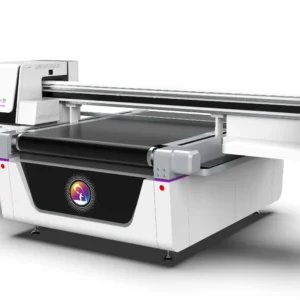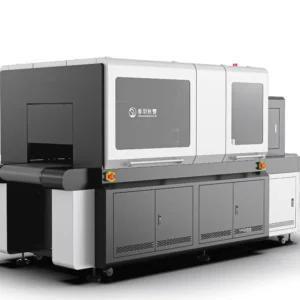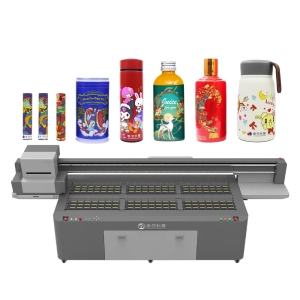
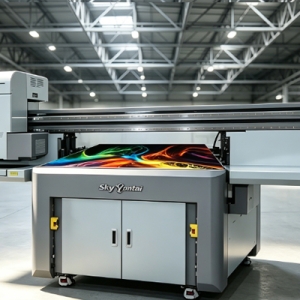
As digital printing applications continue to expand, UV printing equipment is increasingly used in fields such as advertising signage, packaging, home appliance panels, and decorative building materials. The market offers a wide variety of models, significant configuration differences, and a broad price range. When purchasing, relying only on brochures or price information often makes it difficult to determine whether the equipment truly meets production needs. Whether the equipment operates stably in the long term usually depends on process compatibility, hardware performance, after-sales service, and system upgrade capability. Making comparisons and evaluations in advance helps reduce trial-and-error costs and improves production efficiency and operational stability.
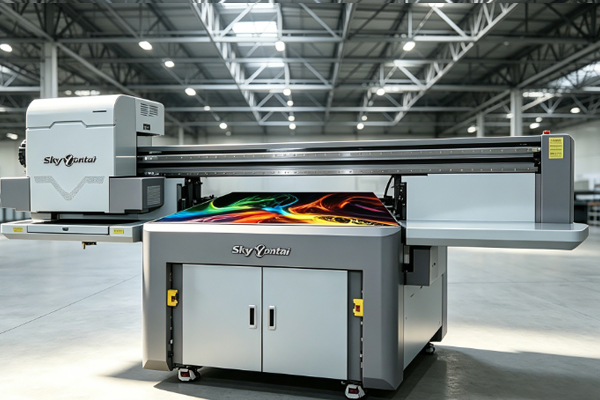
Clarify the Actual Production Needs of the Enterprise
Before entering the specific equipment selection stage, it is important to sort out the production direction and business structure. This helps avoid configuration mismatches later and allows the equipment to form stable production capacity more quickly after deployment.
Select Equipment Based on Product Type
Different products have different requirements for equipment configuration, and selection should be refined according to actual production objects.
- Identify main printing materials such as glass, acrylic, PVC, metal, or wood, and evaluate the need for white ink, varnish, or special coating support based on material characteristics.
- Select an appropriate platform size according to product dimensions, while considering extra-long or extra-thick workpiece processing scenarios.
- Estimate production capacity based on order volume to avoid delivery delays caused by insufficient capacity or waste caused by overconfiguration.
- Reserve expansion space according to future business direction so the equipment can support later upgrades and adaptation.
The better the match between equipment and production needs, the higher the efficiency and the lower the resource waste.
Pay Attention to Equipment Application Scope
Equipment compatibility determines future business expansion potential, and multi-dimensional evaluation is required during procurement. It is necessary to check the range of supported printing materials to meet changing customer order requirements, understand the capability of handling irregular products such as curved, slanted, or non-standard structures with stable printing performance, and evaluate the completeness of functions such as automatic feeding and visual positioning to improve efficiency and consistency in mass production. At the same time, assess adaptability in personalized customization scenarios to support flexible switching between small-batch and multi-category orders. Equipment with a wider application range is more adaptable to market changes and improves utilization.
Focus on Core Configuration
The stability and precision of core components directly determine final product quality and production efficiency. Key parameters and real performance should be carefully compared during selection.
Evaluate Key Component Performance
Core configuration directly affects print quality and operational stability, and long-term performance should be considered during evaluation.
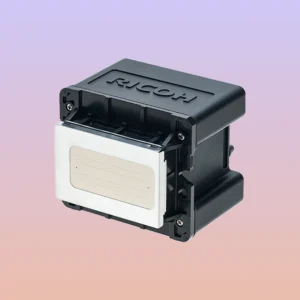
- Focus on printhead performance and printing accuracy, including minimum droplet control capability and long-term operational stability.
- Check the precision and anti-vibration capability of the motion control system, especially under high-speed operation.
- Understand the structural design of the ink system, with emphasis on anti-clogging capability and circulation stability.
- Inspect the strength of the machine frame to ensure overall stability during high-speed printing.
Stable core components support long-term continuous production and reduce maintenance frequency.
Software System Completeness
The software system is responsible for layout, control, and color management in production, and has a significant impact on efficiency.
- Supports common file formats and is compatible with mainstream design software to reduce conversion errors.
- Provides strong color management to ensure color consistency and repeatability across different materials.
- Offers convenient layout operation with batch processing and automatic optimization to improve material utilization.
- Supports future version upgrades to adapt to process changes and functional expansion needs.
A mature software system improves overall production efficiency and supports continuous process optimization.
Evaluate the Manufacturer’s Comprehensive Service Capability
Equipment is not only a hardware investment; after-sales service capability also affects user experience and production continuity, playing an important role in purchasing decisions.
Level of Technical Support
After equipment delivery, service quality directly affects how quickly stable production can be achieved.
- Provide installation and commissioning services with parameter optimization and process adjustment based on on-site conditions.
- Offer operator training to help staff quickly master operation and maintenance methods.
- Provide remote technical support for fast problem diagnosis and solutions.
- Ensure timely fault response to reduce downtime and production losses.
A professional technical team helps enterprises restore production efficiency more quickly.
Stability of Spare Parts Supply
The spare parts supply system directly affects long-term operating costs and maintenance convenience. Common parts should be supplied continuously to avoid maintenance issues caused by discontinuation. Consumable parts should be sufficiently stocked to meet frequent replacement needs in high-intensity production environments. Original consumables should be provided to ensure stable print quality and compatibility. Continuous upgrade services should also be available so that equipment performance can be optimized with technological development. This ensures long-term stable operation and convenient maintenance.
Comprehensive Evaluation of Long-Term Investment Value
From a long-term operational perspective, overall returns and sustainability are more important than price alone. Evaluation should be based on the full lifecycle of the equipment.
Not Only Compare Purchase Price
Purchase cost is only part of the total investment, and multiple hidden costs should also be considered in actual operation.
- Compare equipment efficiency, including output per unit time and operational stability.
- Understand maintenance costs such as labor, component replacement, and servicing expenses.
- Pay attention to consumable costs, as ink and accessories vary significantly between different equipment.
- Evaluate equipment lifespan to determine depreciation and investment recovery cycle.
Comprehensive cost analysis better reflects real operational conditions and helps improve return on investment.
Value Long-Term Cooperation Capability
The continuous service capability of equipment suppliers affects long-term business stability.
- Review industry application experience to assess implementation capability across different fields.
- Understand the number of successful cases to evaluate real-world performance.
- Focus on product innovation capability and continuous introduction of new solutions.
- Evaluate long-term service level, including after-sales response and technical support.
Manufacturers with strong innovation capability and a complete service system better support long-term development and upgrades.
Purchasing UV printing equipment requires comprehensive consideration of production needs, equipment configuration, manufacturer strength, and long-term service capability. Each factor affects equipment performance and investment value. Through sufficient comparison and evaluation, it becomes easier to select a digital printing solution that fits business development. Springyprinter focuses on the R&D and manufacturing of industrial digital printing equipment, providing stable and efficient UV digital printing solutions for global customers.