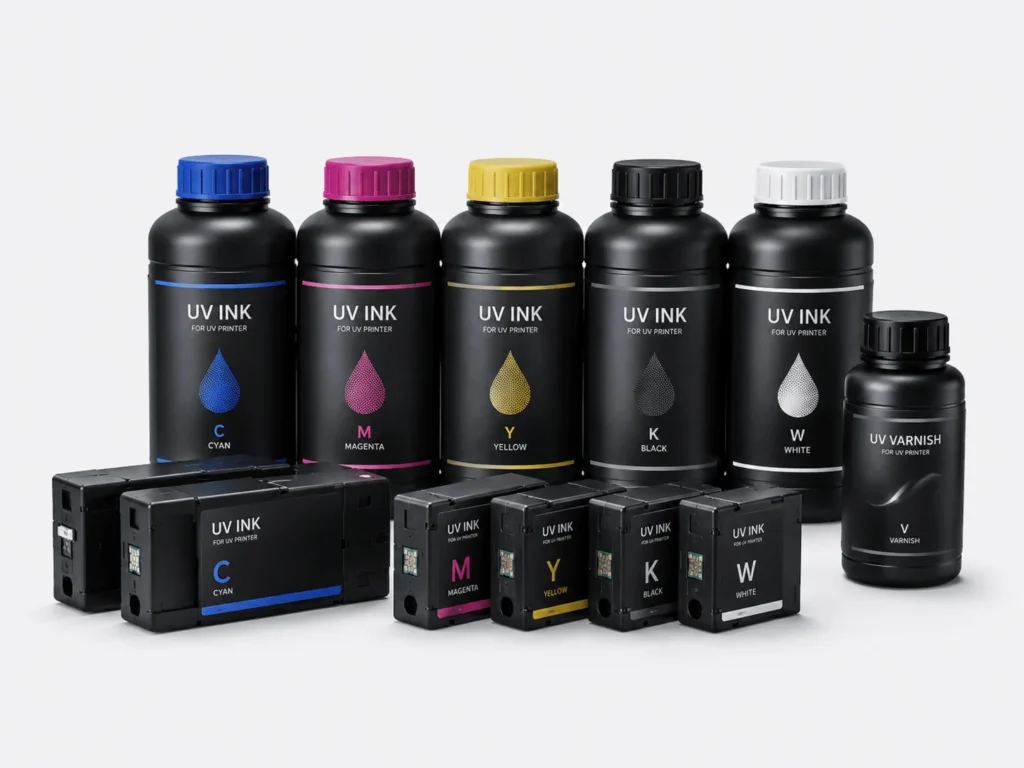
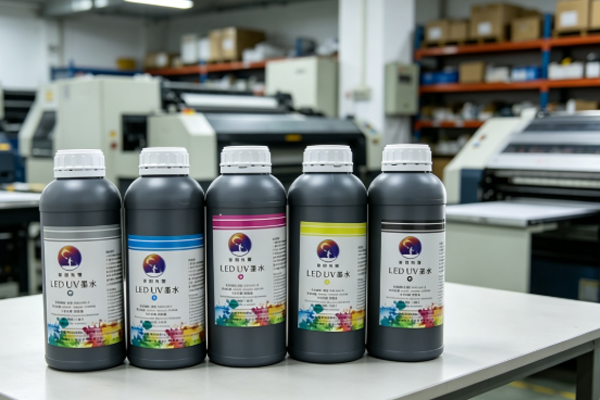
Compared with standard ink, customized UV LED ink needs to be adjusted according to actual printing requirements in order to achieve ideal adhesion, color performance, and service life. Many customers only focus on whether the color is accurate when customizing ink, while overlooking important information such as materials, equipment, processes, and application environments. If the provided parameters are incomplete, the ink may not match the product properly, resulting in unstable printing effects, insufficient pattern adhesion, or reduced production efficiency. Therefore, before starting the customization of UV LED ink, preparing and providing detailed parameters in advance can help manufacturers understand product requirements more quickly and develop a more suitable ink solution.
Provide Clear Material Parameters
UV LED ink is ultimately printed on different product surfaces, and different materials have different surface structures, absorption abilities, and chemical properties. The same ink applied to different materials may produce completely different results. For example, glass surfaces are smooth and hard, plastic surfaces vary greatly, acrylic has transparent characteristics, and metal surfaces may have special treatment layers. Without understanding the specific material conditions, it is difficult to achieve accurate ink matching. Therefore, when customizing UV LED ink, material parameters are an important basis for manufacturers to determine ink performance, and customers should provide as much detailed information as possible.
Provide Printing Material Type
When customizing UV LED ink, customers need to clearly specify the exact material used for the product. Different materials have different requirements for ink adhesion, curing performance, and surface appearance. Only by understanding material characteristics can manufacturers select suitable resin systems and additive combinations.
Customers need to provide:
- The specific material name used for the product.
- Whether the material surface has been treated.
- The material color and surface condition.
For example, although acrylic materials have smooth and flat surfaces, different brands and types of acrylic may have surface differences, requiring inks with good adhesion performance. Glass materials have no absorption ability on the surface, so the ink needs strong bonding capability. Metal materials may be affected by surface oxidation layers or coatings, influencing ink adhesion. If customers can provide accurate material information in advance, manufacturers can make targeted adjustments based on material characteristics, allowing UV LED ink to maintain better stability during actual printing while reducing subsequent testing and modification time.
Provide Material Surface Treatment Information
In addition to the material itself, the surface treatment method of the product also affects the printing performance of UV LED ink. Many products undergo processes such as spraying, polishing, frosting, electroplating, or other treatments during production, and these processes change the surface condition of the material.
Therefore, when customizing UV LED ink, it is necessary to specify:
● Whether the product has undergone spray coating treatment.
● Whether there is a protective film on the surface.
● Whether primer treatment is required.
For example, polished acrylic surfaces are smoother, making ink adhesion more difficult; plastic products with spray coatings require ink that can adapt to the coating structure; some special materials may require primer coatings to improve ink bonding performance. Providing complete surface treatment information can help manufacturers determine whether the ink formula needs adjustment and avoid problems such as ink peeling, cracking, or poor adhesion after printing.
Provide Relevant Printing Parameters
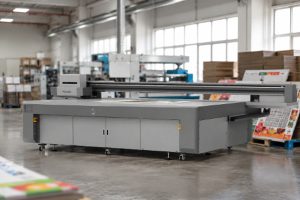
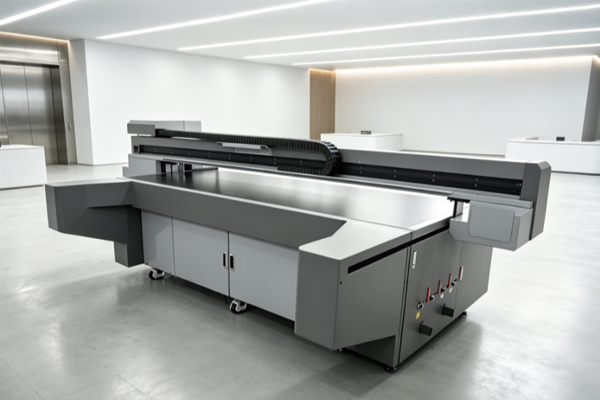
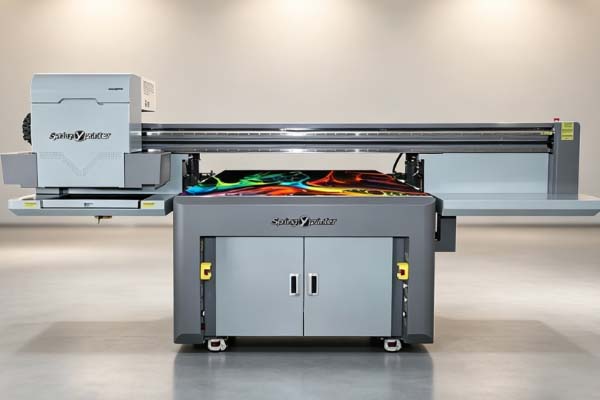
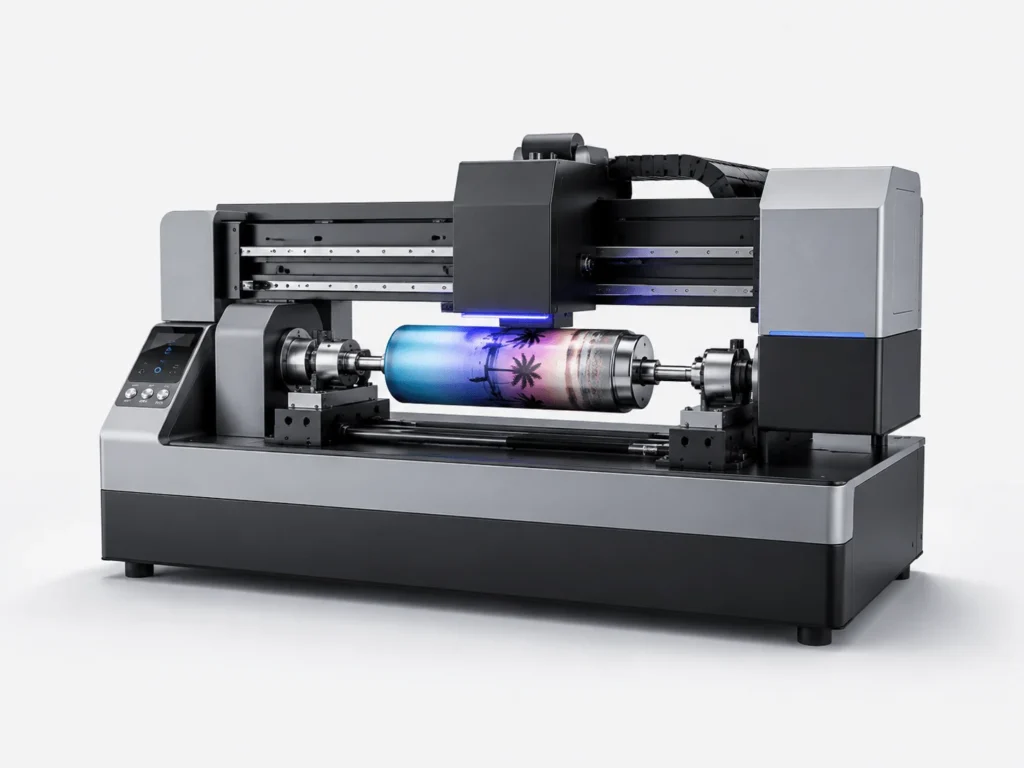
UV LED ink requires printing equipment to complete inkjetting and curing, so equipment conditions directly affect ink performance. Different brands and models of UV printers vary in print head types, droplet control, printing speed, and curing methods. If ink parameters cannot match equipment requirements, problems such as print head clogging, uneven ink output, and insufficient curing may occur. Therefore, printing equipment parameters are essential information when customizing ink.
Provide Printing Equipment Model
Different UV printing equipment has different requirements for ink performance, especially industrial-grade printing equipment and desktop printers, which differ significantly in printing accuracy and operating methods.
Customers need to provide:
● UV printer brand and model.
● Type of print head used.
● Printing method and production speed.
For example, some high-precision UV printers use fine print heads with higher requirements for ink viscosity and fluidity. If the ink is too thick, it may affect inkjet performance; if the ink flows too easily, it may cause printing edges to spread. For industrial equipment used in continuous production, long-term ink stability also needs to be considered to avoid frequent print head cleaning or equipment adjustments during production. Providing accurate equipment models helps ink manufacturers design more compatible formulations, allowing UV LED ink to maximize equipment printing performance and improve production efficiency.
Provide Printing Process Requirements
In addition to equipment models, actual production processes are also important information that needs to be understood when customizing UV LED ink. Different companies use different printing methods. Some products only require simple pattern printing, while others require multi-layer printing, three-dimensional effects, or special color combinations.
Different printing processes have different requirements for ink performance:
- High-precision printing requires ink to maintain stable flow.
- Thick ink printing requires ink with good stacking capability.
- High-speed printing requires ink to complete curing quickly.
For example, when creating three-dimensional embossed effects, the ink needs to maintain a certain thickness; when printing small text, the ink needs to maintain clear edges; when performing large-area color printing, the ink needs good color uniformity. Clearly defining printing process requirements allows manufacturers to adjust ink performance in advance, making the product better match the actual production process.
Confirm Required Color Parameters
Color is a very important part of UV LED ink customization. Especially in brand products, packaging design, and high-end decoration fields, color accuracy directly affects the visual effect of products. Many customers believe color matching only involves changing color ratios, but in actual production, material color, printing thickness, and curing level all affect the final appearance. Therefore, providing accurate color parameters helps manufacturers complete ink formulation more efficiently.
Provide Target Color Standards
Customers need to provide clear color references so manufacturers can perform accurate color matching according to standards. Different customers may describe colors in different ways. Some use color codes, some provide samples, and others determine colors through design software.
Common color information includes:
● Pantone color numbers.
● CMYK color ratios.
● RGB color data.
● Physical color samples.
For example, brand packaging usually requires colors to remain consistent with corporate standards. In this case, providing Pantone color numbers is more accurate. If the product already has physical samples, manufacturers can test printing effects based on the samples. Clear color standards can reduce repeated adjustments during color matching and make the final UV LED ink color closer to customer expectations.
Provide Color Effect Requirements
In addition to the color itself, customers also need to explain the desired visual effects. Different products have different requirements for color performance. Some require high-gloss effects, some require soft matte effects, and others require transparent or special textures.
Different effects require adjustments to ink composition:
● High-gloss effects require optimization of surface gloss.
● Transparent effects require control of ink transparency.
● High-opacity effects require increased pigment concentration.
For example, when printing on transparent acrylic, ink light transmission effects need to be considered; when printing on dark materials, color coverage needs to be enhanced; when printing high-end packaging, good visual texture and color quality must be maintained. Detailed color effect requirements help manufacturers develop UV LED ink that better matches product positioning.
Performance Requirements Need to Be Specified
Different products have different final application environments, resulting in different requirements for UV LED ink performance. Some products only require indoor display use and have relatively simple ink requirements, while outdoor products, industrial products, or frequently used products require higher ink stability. Therefore, when customizing UV LED ink, the actual application environment and special performance requirements need to be explained in advance.
Provide Application Environment Information
The product application environment directly affects the durability of UV LED ink. If ink needs to face sunlight, moisture, high temperatures, or friction for long periods, the formula needs to be adjusted to improve corresponding performance.
Customers need to specify:
- Whether the product is exposed to sunlight for long periods.
- Whether it comes into contact with water.
- Whether it operates in high-temperature environments.
- Whether frequent friction occurs.
For example, outdoor advertising boards require ink with good weather resistance to prevent fading after long-term use; electronic product housings require attention to abrasion resistance to reduce daily wear; industrial equipment markings require consideration of chemical resistance. Explaining the application environment in advance helps manufacturers select more suitable material systems and improve the stability of UV LED ink.
Provide Special Performance Requirements
Some industries have more specific requirements for UV LED ink. If customers do not explain these requirements in advance, standard formulations may not meet actual applications.
Common requirements include:
- High adhesion
- Scratch resistance
- Water resistance
- Chemical corrosion resistance
- Long-term color stability
For example, medical equipment housings may require frequent cleaning, so the ink needs resistance to cleaning agents; industrial products may come into contact with oil stains and require improved chemical resistance; outdoor products require enhanced UV resistance. Clearly defining these special requirements allows manufacturers to optimize performance during the development stage and avoid quality problems after product use.
Frequently Asked Questions About UV LED Ink Customization
Q1: Does customizing UV LED ink only require providing color information?
No. Color is only one part of ink customization. Complete customization also requires information about materials, equipment, printing methods, and application environments. If only color requirements are provided, manufacturers cannot accurately determine what performance the ink needs, which may result in printing effects that differ from expectations.
Q2: Can UV LED ink be customized without professional parameters?
Yes. If customers do not understand specific technical parameters, they can provide product samples, printing requirements, and application scenarios. Ink manufacturers can analyze and test the information to determine the suitable ink formulation.
Q3: Does providing more detailed parameters result in better customization?
Generally, the more complete the information provided by customers, the easier it is for manufacturers to develop highly compatible UV LED ink. Detailed parameters can reduce testing times, improve adjustment efficiency, and reduce quality problems during later production.
The parameters required for customizing UV LED ink mainly include material information, printing equipment, color standards, and performance requirements. Different products have different ink requirements. Only by clarifying these key data points can the ink formulation become more accurate. During the actual customization process, the more detailed information customers provide, the easier it is for ink manufacturers to adjust the appropriate formulation. For example, printing acrylic products requires attention to adhesion; printing outdoor products requires attention to weather resistance; printing high-end packaging requires attention to color reproduction. UV LED ink customization is not simply about changing colors but involves comprehensive optimization based on product application requirements. By providing complete parameters, testing time can be reduced, printing stability can be improved, and the final products can achieve better appearance quality and usage performance.