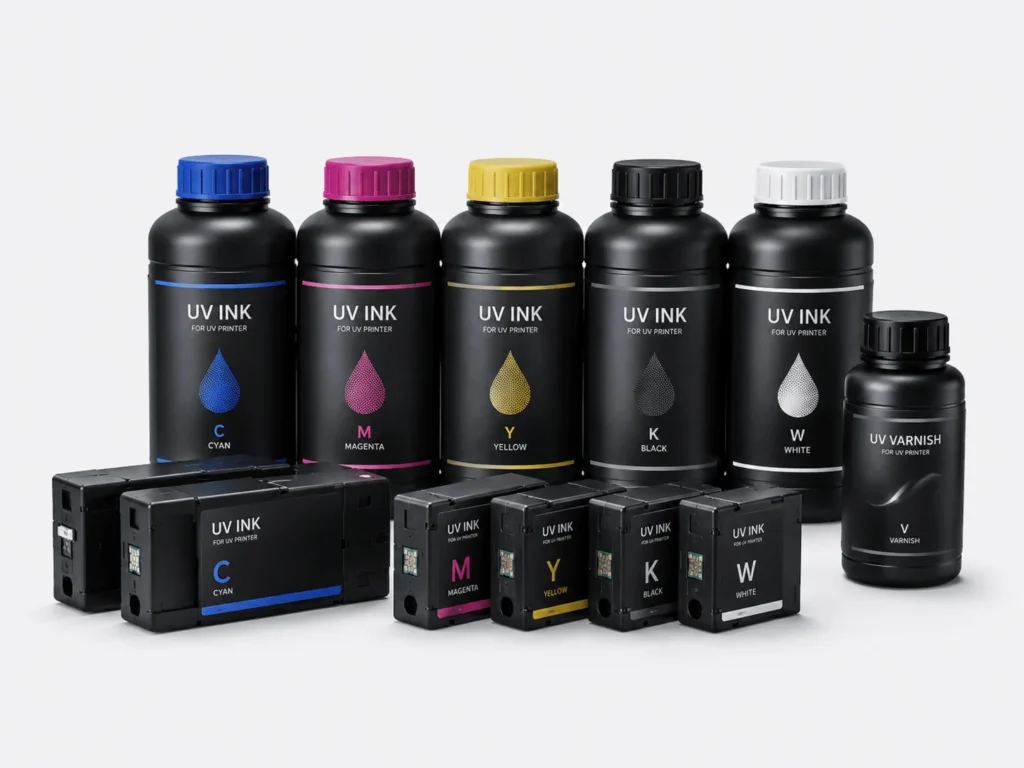
Customized production is shifting from “small-batch trial runs” to “on-demand delivery,” and customers care more about speed, quality, and flexibility. Traditional processes often face long lead times, high costs, and complicated communication when dealing with multiple styles, small batches, and frequent revisions. With its direct output, fast curing, and multi-material compatibility, UV printing technology is becoming a more popular processing method in customized production, making it easier for businesses to quickly turn ideas into finished products.
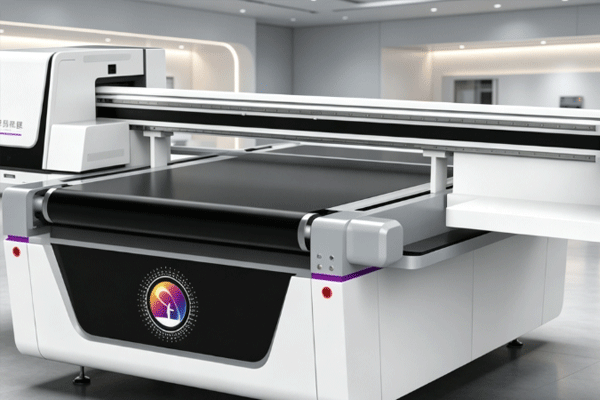
Helps Customized Orders Go to Market Faster
One of the core values of UV printing is that it compresses the originally complex production preparation process into a much shorter time. For customized businesses that pursue delivery efficiency, this speed advantage is especially obvious.
No Plate Making Required, Easier Revisions
UV printing eliminates the traditional plate-making process, greatly shortening the distance between design and finished product.
- Design files can be imported directly into the equipment. After eliminating the plate-making step, businesses can enter actual production more quickly and more easily turn customer-approved plans into finished products.
- Graphic modifications are more flexible, making it suitable for orders that require frequent content adjustments, especially when customers repeatedly revise text, colors, or layouts, significantly reducing communication and waiting costs.
- Switching between sampling and mass production is smooth, reducing waiting time and allowing businesses to maintain high responsiveness even when facing urgent orders.
- Temporary added orders can also be arranged for production more quickly, improving overall delivery capability and strengthening customers’ recognition of the company’s service speed.
This direct-output approach is especially suitable for customized projects that require quick confirmation of plans. For businesses, the faster the response, the more opportunities there are to close deals.
More Advantages in Small-Batch Production
UV printing is very friendly to small-batch orders, allowing businesses to complete diversified production without adding too much pressure.
- Single-piece or small-quantity orders can still maintain high efficiency, without making the cost seem too high or the process too cumbersome just because the order size is small.
- There is no need to bear the high upfront investment of traditional processes, which helps businesses reduce trial-and-error pressure at the beginning of an order and makes flexible operations more suitable.
- It is suitable for scenarios such as holiday gifts, event materials, and personalized accessories, meeting the growing market demand for short-cycle, fast-paced customization.
- Businesses can more easily try new styles and new markets, starting with small-scale testing when demand is uncertain and then gradually expanding production.
When order volumes are unstable, UV printing helps businesses maintain flexible operations and makes customized business easier to expand continuously.
Expands the Material Boundaries of Customized Products
When production is no longer limited to a single material, UV printing can demonstrate stronger adaptability. It broadens the application scenarios of customized products and gives design creativity more room to be realized.
Applicable to a Variety of Materials
UV printing has strong material compatibility and can be used on acrylic, glass, metal, wood panels, PVC, and many other materials, meeting the needs of more industries. When facing different customers, businesses have more options, and it is also suitable for products such as home decoration, advertising signage, and packaging shells. It extends printing capabilities to more application scenarios, makes switching between different materials more convenient, and allows production arrangements to be more flexible. When businesses receive multiple types of orders, they can organize production more calmly while expanding their business scope, increasing order opportunities, and upgrading originally single processing capabilities into a more comprehensive customized service capability. Multi-material adaptability can also reduce repeated equipment investment, helping businesses enter new niche markets faster and open up more possibilities for customized business.
Richer Design Expression
UV printing can do more than print patterns; it can also enhance product presentation through layered effects.
- It supports the overlay of white ink, color ink, and local effects, allowing patterns to maintain good visibility and layering on different substrates.
- The graphic layers are clearer and the visual impact is stronger, especially suitable for customized products that need to highlight brand image or decorative effects.
- High detail reproduction makes it suitable for complex graphics and fine text, allowing small elements in the design draft to be presented more completely.
- Customized products are easier to differentiate, increasing appeal and helping businesses create a more distinctive competitive edge among similar products.
For customized products that emphasize visual effects, richer presentation methods often mean higher added value. The more distinctive the design, the easier it is for the product to attract customers.
Improves Finished Product Quality and Delivery Stability
In customized production, stable output is often more important than a single impressive result. UV printing not only improves appearance quality but also helps businesses standardize delivery.
More Stable Printing Results
The UV ink layer formed after curing is relatively firm and can maintain good finished product performance.
- UV ink cures quickly, making patterns less likely to blur, which helps finished products maintain clarity at edge details and color block transitions.
- Color performance is relatively stable, making batch production easier to unify and reducing visual differences between batches.
- Surface adhesion is good, making finished products more wear-resistant and scratch-resistant, suitable for customized products that require long-term display or frequent contact.
- It is suitable for customized products with high appearance requirements, balancing efficiency and quality so that customers are more likely to accept the final result.
Stable printing results can reduce customers’ concerns about color differences, ink peeling, and blurry edges, while also making it easier for businesses to maintain consistent quality in repeat orders.
More Controllable Production Processes
The higher the level of standardization, the easier customized production is to manage. UV printing has obvious advantages in process control. Equipment parameters are easy to record and replicate, and businesses can establish process files for different materials and orders, then execute them according to unified procedures. This reduces human variation, makes production more stable, and simplifies training for new employees. Not only does this lower rework rates, but it also keeps delivery quality consistent, which is especially important for businesses that value reputation and repeat purchases. It also helps businesses build a standardized production system, shifting customized operations from experience-driven to process-driven.
Reduces Overall Costs and Amplifies Commercial Value
From a long-term business perspective, UV printing not only improves efficiency but also helps optimize the investment structure. Its value lies not only in saving time and effort, but also in upgrading the business model.
Reduces Hidden Losses
Customized production is most afraid of excessive upfront investment, and UV printing helps ease this problem.
- It eliminates upfront costs such as plate making and mold opening, allowing businesses to reduce financial pressure at the beginning of an order and making multi-category operations more suitable.
- On-demand production can reduce inventory pressure and avoid the backlog risks and capital occupation caused by large stockpiles.
- Trial order costs are lower, making it suitable for new product testing. Businesses can verify market feedback first and then decide whether to increase investment.
- Material utilization is higher and waste is lower, helping improve overall operational efficiency and making the profit margin of each order more controllable.
When businesses can complete trial production and delivery at lower cost, they are more likely to quickly validate market demand and are better suited to multi-category operations.
Helps Brands Create Differentiation
The key to competition in customized production is whether a business can create unique features that others do not have. UV printing helps businesses strengthen this advantage.
- Customized packaging, display materials, and gifts are more likely to create memorable impressions, helping customers remember the brand more quickly visually.
- Products look more distinctive and have higher added value, making it easier to support more competitive pricing strategies.
- It is suitable for expanding applications in e-commerce, cultural and creative products, gifts, and advertising industries, helping businesses extend the same equipment capability into multiple business directions.
- Businesses can use personalized output to enhance market competitiveness, allowing products not only to meet functional needs but also to have stronger communication value.
When a product is not only usable but also “good-looking, unique, and customizable,” the brand is more likely to build recognition. UV printing makes this differentiation easier to achieve.
The reason UV printing technology is attracting more and more attention in customized production lies in the fact that it combines “speed, precision, flexibility, and visual appeal.” Whether for small-batch trial production or multi-category parallel production, UV printing helps businesses complete delivery more efficiently and makes customized products easier to differentiate. For businesses that want to improve efficiency and conversion, choosing the right equipment and process is equally important. Springyprinter specializes in the R&D and manufacturing of industrial UV digital printing equipment and can provide stable and reliable solutions for customized production.