When the edges of a DTF printed product show fine threads, trailing marks, or ink lines that are not crisp enough, the design can look fuzzy, and the overall texture will be noticeably affected after transfer. Many people’s first reaction to stringing problems is to suspect a printhead malfunction, but in actual production, ink condition, ambient temperature and humidity, print parameters, drying rhythm, and equipment maintenance all work together to affect the final result. To make DTF design edges cleaner, the key is not to fix just one part alone, but to adjust the entire process chain into a more stable state.
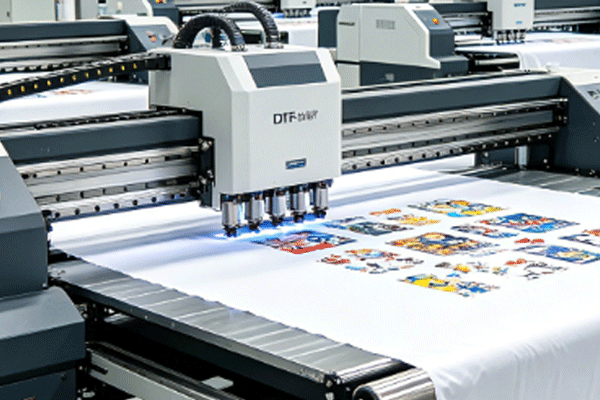
Check the Printhead and Ink Path First
Start by inspecting the most failure-prone core printing components first; many stringing issues will be significantly reduced.
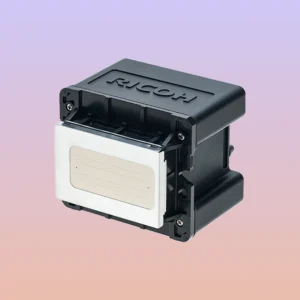
Unstable Printhead Atomization Makes Stringing More Obvious
Once the printhead becomes unstable, fine threads and trailing marks are very likely to appear at the edges of the design, and this is one of the most common sources of stringing problems.
- When the nozzles are slightly clogged, ink droplet separation becomes less clean, making trailing marks and fine threads more likely at the edges, especially on thin lines and small text.
- When the printhead height is too low, the ink droplets are more easily disturbed by the film surface or airflow, and lines that should be separated independently may be pulled into thread-like shapes.
- When white ink sediment is not handled properly, the jetting state will fluctuate between fast and slow, causing the edges of the design to become less neat.
- When there is too much residual ink on the printhead surface, the trajectory of the ink droplets will be affected, eventually creating fuzzy edges and a stringing effect.
Keeping printhead cleaning, testing, and calibration in place can often solve a large part of the stringing issue first.
Stable Ink Path Pressure Keeps Ink Output Clean
Whether the ink path pressure is stable directly affects the continuity of the ink line and the neatness of the edges.
- If the negative pressure is too high or too low, the output rhythm of the ink line will become unstable, and the edges of the design will more easily show uneven breaks.
- Once air enters the ink tubing, the pressure inside the ink path will be disrupted, and the jetting process may show slight fluctuations, increasing stringing problems.
- When the white ink circulation is not smooth, sediment particles are more likely to affect nozzle separation, causing the edge details to become less crisp.
- Performing a nozzle test before startup can detect abnormal conditions earlier and prevent problems from being amplified during formal printing.
The more stable the ink path is, the crisper the printed lines will be, and the cleaner the transfer result will look.
Do Not Overlook Consumables and the Environment
Consumables and the environment may seem like supporting factors, but in reality they directly change ink layer performance and edge detail.
Ink, Hot Melt Powder, and Film Must Match
If the compatibility among consumables is not good enough, the edges of the design are more likely to show excessive spreading, uneven adhesion, and stringing problems. When the ink viscosity is too low, the ink droplets spread faster on the film surface, making the edges easier to bleed outward; when the hot melt powder particles are uneven, the adhesion layer will show buildup or insufficient coverage, and the finished edges will also look less flat; when the coating on the transfer film is unstable, ink spreading loses control, and fine details are more likely to show fuzzy edges and trailing marks; when consumables from different batches are mixed, consistency will drop noticeably, and edge stringing problems are more likely to appear in mass production. Choosing the right consumable combination helps the ink layer, powder layer, and film layer work together more stably.
Workshop Temperature and Humidity Affect Printing Performance
Environmental conditions may seem insignificant, but they quietly change ink flow and drying speed, thereby affecting the degree of stringing.
- In a high-temperature environment, ink fluidity becomes stronger, and the difficulty of controlling the edges of the design increases accordingly, making fine details easier to lose sharpness.
- When the air is too dry, ink droplets dry faster, and the edges may solidify before they have fully leveled out, making stringing and fuzzy edges more likely.
- When dust adheres to the film surface, the edges of the design will look rough, and irregular fine threads may form due to contamination interference.
- Properly sealing consumables after opening helps keep material conditions more stable and reduces fluctuations caused by environmental changes.
Keeping workshop temperature and humidity within a relatively stable range usually leads to more consistent printing performance.
Print Parameters and Process Rhythm Must Be Adjusted Smoothly
Whether the parameter settings and process coordination are reasonable often determines whether the edges of the design can remain clean and sharp.
Speed, Bidirectional Alignment, and Printhead Height Must Be Considered Together
Print parameters cannot be solved by adjusting just one value; printing speed, bidirectional calibration, and printhead height need to work together.
- When printing speed is too fast, the ink droplets may not have fully stabilized at the landing point, making edge details more likely to show trailing marks and stringing.
- When bidirectional alignment is not accurate enough, the back-and-forth printing path will create slight deviations, and thin lines and text edges will more easily show a shadow effect.
- When the printhead height is too high, the ink mist spreads over a larger area, and designs that should have a sharp edge may become diffuse.
- Multiple small test prints are more likely to find the right balance than going straight into mass production, because different designs, different films, and different environments all produce different parameter results.
The more precisely the parameters are tuned, the easier it is to keep the design edges clear and reduce the chance of stringing.
Powder Shaking and Drying Rhythm Must Be Continuous
Whether the transition between powder application and drying is smooth directly determines whether the design edges are likely to stick together or form threads.
- Uneven powder application can cause local edges to have either too much adhesion or insufficient coverage, and the finished product will then be more likely to show stringing and fuzzy edges.
- When the drying temperature is too low, the hot melt powder cannot fully wrap the design, and the edges will look loose because the bond is not strong enough.
- When drying is too strong, the film surface becomes more brittle, and fine details are more likely to be pulled into threads during later handling.
- When the film take-up tension is unstable, the edges of the design will also be pulled, and originally flat lines may be dragged into tiny trailing marks.
Connecting powder application, drying, and take-up into one stable workflow will make the finished edges much cleaner.
Daily Maintenance and Standardized Management Are Essential
Turning maintenance and management into fixed routines prevents many stringing problems from recurring.
Cleaning and Inspection Should Become a Habit
Careful daily maintenance allows many stringing problems to be detected and handled before they grow.
- Checking nozzle status every day helps detect slight clogging or uneven jetting early, reducing the risk of stringing during formal production.
- Wiping residual ink around the printhead in time prevents ink buildup from affecting the jetting trajectory and keeps the design edges cleaner.
- White ink circulation, filters, and ink bags should all be checked regularly, because once these parts become abnormal, they often directly affect ink output stability.
- Recording abnormal prints and the corresponding handling results makes it easier to trace the source of problems later and helps operators identify recurring fault patterns more quickly.
Continuous inspection keeps the equipment in a more stable output state.
Fixed Procedures Reduce Human Variation
The clearer the standardized workflow is, the smaller the differences between operators will be, and the easier it will be to control stringing problems. Once parameter templates are unified, printing results are more likely to remain consistent during shift changes or operator changes; after becoming familiar with material characteristics, adjustments become more accurate when dealing with different films and designs; small-batch trial production can also reveal mismatches between parameters and consumables in advance, reducing mass-production risks; combined with equipment, consumables, and environment checks, on-site management becomes clearer, and many detail-related issues can be detected in time. Turning experience into procedures makes production stability more reliable than relying on individual judgment alone.
DTF stringing problems may seem minor, but they directly affect design edges, transfer texture, and the customer’s first impression of the finished product. By managing printhead condition, consumable matching, parameter rhythm, and daily maintenance together, production stability will improve significantly. Keeping the environment clean and the temperature and humidity stable during production can further reduce stringing and edge fuzziness. Springyprinter focuses on the R&D and manufacturing of DTF printing equipment and can provide customers with more stable machine solutions and technical support. Choosing the right equipment configuration can also make later production much easier and more worry-free.