In DTF printing production, the yield rate directly affects material waste, delivery efficiency, and customer satisfaction. Many factories may appear to have equipment running normally, yet still experience issues such as powder shedding, color deviation, weak transfer adhesion, and blurry image edges during actual production, which leads to a rising rework rate. To truly improve the yield rate of DTF printing, it is not enough to focus on just one step; instead, equipment, consumables, process, and management must all be optimized at the same time. Only when every step is kept stable can batch production become smoother, and enterprises can more effectively reduce waste and improve profit margins.
First, Keep the Equipment in a Stable Condition
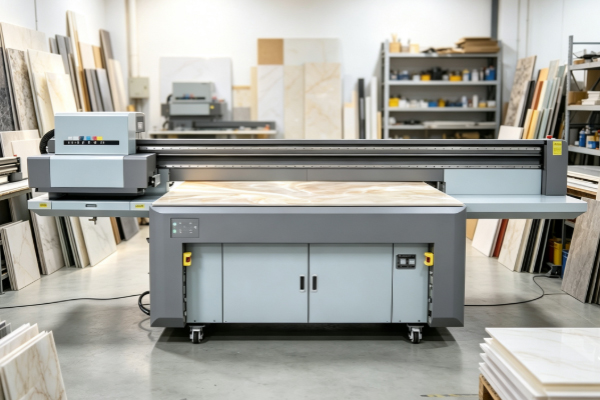
To improve the yield rate in this stage, the most important thing is not blindly pursuing higher speed, but first adjusting the equipment itself to a stable, continuous, and controllable operating state, because only when the equipment output is stable enough can the subsequent printing, powder shaking, and transfer remain consistent.
Daily Maintenance Cannot Be Ignored
Equipment stability is the prerequisite for a high yield rate, and daily maintenance is the foundation for keeping the equipment in good condition over the long term.
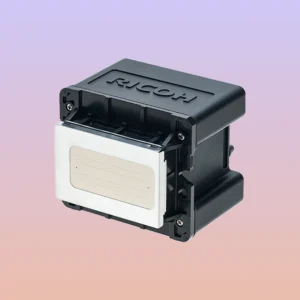
- Clean the printhead and ink path regularly to prevent long-term ink residue buildup from affecting spray performance, while also reducing recurring issues such as nozzle clogging and broken lines.
- Check whether the white ink circulation is smooth, especially paying attention to sedimentation, return flow, and stirring, because once the white ink flows unevenly, it is very likely to cause dull printing or local ink shortage.
- Deal with nozzle clogging and ink interruption in time; do not wait until the image is obviously abnormal before stopping the machine for inspection, otherwise it will not only increase the number of defective products but also slow down the production progress of the entire order batch.
- Replace wearing parts on a regular cycle, including wiper blades, ink tubes, filters, and other key components, so that the equipment can always maintain a relatively stable working condition and reduce unexpected failures.
The more stable the equipment condition is, the more continuous the printing process will be, and the lower the probability of defective products. In particular, once the white ink system and printhead accumulate ink or become clogged, it is easy to cause missing patterns and uneven colors.
Parameter Calibration Should Become a Habit
Printing accuracy directly affects the final result, and whether parameter calibration is properly done often determines whether the pattern can remain consistent during batch production.
- Printhead alignment should be calibrated as carefully and accurately as possible, because even a very small deviation may be amplified into obvious registration errors during batch printing.
- Check whether the printing height is appropriate; if it is too high, it will affect the stability of ink droplet landing, while if it is too low, it may increase the risk of the printhead touching the film, so adjustments should be made according to the material condition.
- When testing color output consistency, it is best to compare it with actual order samples, so that the current color performance of the equipment can be judged more realistically.
- Save mature process parameters and try to continue using verified settings in later production, so as to reduce the time waste and material loss caused by frequent trial and error.
Once the parameters are stable, the image details will be clearer, and the differences between batches will be significantly reduced. For enterprises that need long-term batch production, fixing a mature set of parameters is more beneficial to improving the pass rate than frequent temporary adjustments.
Put Consumable Selection First
If the consumables are chosen correctly, the subsequent process will be easier to stabilize, because DTF printing itself is a process with relatively high requirements for material compatibility. As long as one of the ink, hot melt powder, and transfer film is not coordinated, problems are likely to appear at the finished product stage.
Ink and Hot Melt Powder Must Match
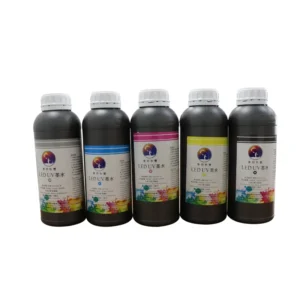
Incompatible consumables will directly affect the yield rate, so the compatibility between ink and hot melt powder is very important. Choosing ink that has been verified by the equipment and has good compatibility can reduce nozzle clogging, color deviation, and insufficient adhesion; at the same time, using hot melt powder with uniform particles helps improve powder spreading and transfer adhesion. Different brands of consumables should not be mixed, especially white ink, color ink, and hot melt powder, otherwise unstable reactions, powder shedding, or hard images may easily occur. In addition, consumables should be stored in a moisture-proof environment to avoid clumping that affects printing and curing results. Overall, a consumable combination with high compatibility and stable quality often improves adhesion, wash resistance, and production stability more effectively than simply pursuing a low price.
Transfer Film Quality Determines the Basic Result
Film quality directly affects image performance, and the stability of the transfer film itself often determines whether the subsequent printing and powder application can proceed smoothly.
- Choose film with a uniform coating, because whether the coating distribution is consistent directly determines whether the ink layer adhesion is stable and whether the powder can be evenly covered later.
- Keep the film surface flat and clean to avoid dust, creases, or static electricity attracting impurities that affect printing results; otherwise, the image edges are likely to become blurry or partially missing.
- Avoid moisture and curling, because if the storage environment is poor, the film will affect feeding stability and may even cause deviation and uneven tension during printing.
- Select specifications according to product requirements, because different orders have different requirements for film width, thickness, and surface treatment, and choosing appropriately will make production smoother.
High-quality transfer film can make the image clearer, and subsequent powder application and heat pressing will also be easier to stabilize. If the coating of the film itself is uneven, even correct printing parameters may still result in local adhesion failure.
Control the Process Parameters Properly
The finer the process control, the easier it is to improve the yield rate, because DTF printing is not simply about printing the image and finishing there. The subsequent curing, powder application, and heat pressing all affect the final result, and any large fluctuation in parameters may undo all the previous efforts.
The Curing Process Must Be Stable
Insufficient curing will directly affect image durability, so temperature and time must remain stable. During production, heating should be as even as possible to avoid local overheating or insufficient heating, and curing parameters should be adjusted according to the characteristics of different hot melt powders rather than using the same fixed settings for a long time. At the same time, over-curing and under-curing should be avoided; the former may make the image hard, while the latter may cause the powder to fail to melt completely. Regularly check the heating system to ensure the equipment is operating normally, so that each batch of products can maintain consistent curing results and reduce powder shedding, cracking, and weak adhesion.
Heat Press Operation Must Be Standardized
Heat pressing is a key step in determining the final product quality, and whether the heat press parameters are unified directly affects the bonding strength between the image and the fabric.
- Maintain appropriate pressure; too little pressure will cause the image to bond weakly with the fabric, while too much pressure may damage image details or affect the hand feel of the fabric.
- Adjust the time according to the fabric, because different materials have different heat resistance and adsorption capabilities. Only by setting parameters based on the actual fabric characteristics can more stable results be achieved.
- Ensure even heating; if the heat press plate has temperature differences, it is easy to cause incomplete transfer in some areas, so both equipment condition and operating method must remain consistent.
- Strictly follow the film peeling requirements; cold peel, hot peel, or warm peel must all be carried out according to process standards, otherwise image tearing and edge peeling are very likely to occur.
A unified heat pressing standard can keep products from different batches consistent and improve the overall pass rate. For different fabrics, heat press parameters should not be used universally, but should be fine-tuned according to the actual material to reduce rework.
Use Management to Block Problems in Advance
When management is in place, many problems can be discovered before production begins, because quality fluctuations in DTF printing are often not caused by a single mistake, but by the accumulation of multiple small issues. Only through process-based management can these hidden risks be digested in advance as much as possible.
Establish a Standardized Process
Clear processes mean fewer mistakes, and standardized management is an important means of stabilizing production.
- Fix production parameters and organize the verified printing, powder application, curing, and heat pressing settings into standard documents so that different shifts can implement them uniformly.
- Set up a first-piece confirmation step; before formal batch production, check the sample effect first so that problems can be discovered and adjusted early, avoiding the scrapping of an entire batch.
- Establish quality inspection checkpoints; dividing key processes into multiple inspection points can identify abnormalities earlier and reduce the risk of problems spreading further.
- Keep production records, including equipment status, consumable batches, and process parameters in detail, so that if problems arise later, the cause can be traced more quickly and optimized.
Standardized management helps enterprises quickly identify the source of problems and reduce repeated mistakes. Especially in multi-batch and multi-order parallel production, a unified process can significantly reduce human deviation.
Strengthen Personnel Training and Review
The skill level of operators directly affects the yield rate, and continuous training and experience review are effective ways to improve team stability.
- Conduct regular equipment operation training so employees become familiar with the usage of different functional modules and common abnormal handling methods, thereby reducing losses caused by improper operation.
- Share common fault cases; organizing actual production problems into an experience library can help the team identify similar situations more quickly and avoid them in advance.
- Improve abnormal handling ability so that when employees discover issues such as ink interruption, misalignment, or powder shedding, they can make judgments immediately instead of waiting until the entire batch is completed before reworking.
- Cultivate quality awareness so that every operator pays attention to details from the perspective of the finished product, making the whole team more stable and responsible.
Combining data review and continuously optimizing the process will make production more and more stable. Many seemingly complex quality problems can actually be prevented in advance through training and accumulated experience.
Improving the yield rate of DTF printing is essentially a systematic optimization process. The equipment must be stable, the consumables must match, the process must be standardized, and management must be in place—none of these four links can be missing. Only by paying attention to the details can enterprises truly reduce rework rates and material waste, while improving delivery efficiency and customer satisfaction. Springyprinter specializes in the research, development, and manufacturing of industrial digital printing equipment and can provide customers with professional DTF printing overall solutions and technical support services.