DTF printing technology has been widely used in garment printing, cultural and creative products, bags, shoes, hats, and many other industries thanks to its advantages of no plate making, broad fabric compatibility, and support for personalized customization. When purchasing DTF equipment, many businesses tend to focus only on the price while overlooking how the core configurations affect print quality, production efficiency, and later maintenance costs. In fact, a truly stable and durable DTF machine depends on the coordinated operation of the printhead, ink supply, drying system, mechanical structure, and control system. Only by clearly understanding these key configurations can businesses choose equipment that better matches their order requirements.
Hidden Costs Often Lie Behind Low-Priced Equipment
Low price does not mean cost-effective. Many hidden problems do not show up when you first look at the quotation, but gradually emerge during actual production. By the time rework, downtime, and frequent repairs start happening, the budget saved at the beginning has already been consumed.
Focusing Only on the Price Makes It Easy to Overlook the Real Investment
Low-cost DTF printers often cut costs in places you cannot easily see. On the surface, the purchase threshold looks lower, but in reality, the later investment may be higher.
- When the printhead configuration is too basic, printing speed and stability often cannot keep up with order volume, and weaknesses are especially easy to expose in continuous production scenarios.
- If the machine structure is overly simplified, vibration, deviation, and precision loss are more likely to occur during long-term operation, which also affects product consistency.
- When the control system is not stable enough, the machine is more likely to show errors, disconnections, or data abnormalities under frequent use, and the failure rate is usually noticeably higher later on.
- If replacement parts are not supplied in time, even a small issue may keep the entire machine down for a long time, directly slowing down delivery schedules.
The budget saved on the surface is often gradually made up through rework, repairs, and downtime, and may even affect customer trust in the factory.
Mismatched Capacity Makes the Machine Idle Quickly
If the machine is too small, it will easily get stuck when orders increase; if it is too large, capacity will be wasted. Therefore, capacity planning must match the actual business structure.
- If a small workshop blindly pursues an industrial machine, it may look more advanced, but when order volume is insufficient, equipment utilization is often low and the payback period becomes longer.
- If a medium-sized factory chooses a low-spec machine, it is easy to fall behind during peak seasons or concentrated shipment periods, and printing speed and stability may become bottlenecks.
- When sample production and mass production needs are mixed together, the machine positioning can easily become misaligned, resulting in slow sample making and insufficient batch output, which hurts overall efficiency.
- If capacity planning is unclear from the beginning, even if you want to expand orders later, you may miss larger business opportunities because the equipment cannot keep up.
Before buying a DTF printer, look at the order structure first and then at the machine rhythm. Matching is often more important than simply stacking specifications.
Unclear Core Configuration Makes It Easy to Fall Into Performance Traps
No matter how attractive the specifications look on paper, you still need to judge the machine based on key components such as the printhead, white ink system, and drying system, because these core configurations determine whether the machine can produce stably and be used for the long term.
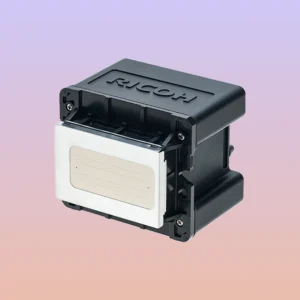
The Printhead and White Ink System Determine Stability
The core of a DTF machine is not its appearance, but its internal configuration, especially the printhead and white ink system, which often directly determine stability and later maintenance costs.
- Different printhead models have obvious differences in print precision, jetting stability, and service life, so you cannot judge by the speed figures in the marketing materials alone.
- If the white ink circulation is not sufficient, white ink sedimentation and clogging risks will rise significantly, and cleaning frequency will also increase later.
- When the ink path design is unreasonable, problems such as ink breakage, color deviation, and uneven jetting become more common, especially during long continuous printing runs.
- Machines with weak continuous printing capability often show fluctuations when handling batch orders, affecting the consistency of the entire production run.
Many machines look similar, but the real difference often lies in these invisible yet most critical parts such as the printhead and white ink system.
Drying and Rewinding Configuration Affect Yield Rate
Printing is only the beginning. Post-processing is equally important, because whether the hot melt powder can melt evenly and whether the film can be rewound smoothly will directly affect the final product quality.
- If the drying temperature is uneven, the adhesion of the hot melt powder will be worse, and after transfer the finished product is more likely to show powder loss or poor local adhesion.
- If the rewinding tension is unstable, the film is more likely to shift during operation. In mild cases, this affects image positioning; in severe cases, it can cause the entire roll of material to be scrapped.
- When the hot air system is inefficient, the image surface may become sticky, under-dried, or partially under-cured, making later operations more troublesome.
- Machines with insufficient automation often require frequent manual intervention, which not only increases operator pressure but also makes the production rhythm unstable.
Whether a DTF printer can deliver stable output is often better reflected by the drying and rewinding configuration than by the numbers on the brochure.
Poor Consumable Compatibility Creates More Trouble Later
The machine and consumables should not be viewed separately. If the combination is wrong, problems will appear in a chain reaction. At best, print quality is affected; at worst, the printhead and the entire ink supply system may be damaged directly.
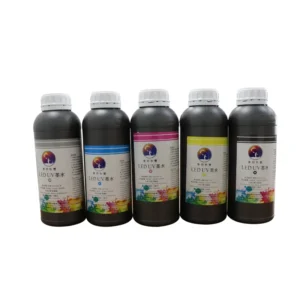
Ink, Hot Melt Powder, and Film Must Be Matched as a Set
The compatibility between the machine and consumables is very important. Many later problems are not caused by the machine itself, but by an unsuitable consumable combination.
- If inks from different brands are mixed, they can easily affect printhead condition and ink path stability, and over time may also increase clogging risk.
- If the hot melt powder particles are uneven, powder loss, powder sticking, and poor adhesion become more obvious, and the hand feel and durability of the finished product are also affected.
- If the coating on the transfer film is unstable, image edges can easily become blurry, and detail performance will decline, especially on high-precision graphics.
- If consumable batch differences are too large, product consistency will drop, and even orders from the same batch may show uneven results.
When buying a machine, do not only ask about the equipment itself. You should also check the recommended consumable solution, compatibility range, and actual test results.
Test Prints Are More Valuable Than Marketing Claims
Specifications can be read, and promotional materials can be viewed, but what really proves the machine’s performance is how it behaves during actual test printing, because many details only become visible once the machine is running.
- Observing whether the white ink coverage is even can help determine whether the machine is stable in base-layer ink laying and jetting control.
- Checking whether fine lines and gradient images are clear gives a more intuitive understanding of printhead precision and color performance.
- Testing whether powder loss occurs after heat pressing can directly verify the matching level among hot melt powder, film, and drying process.
- Checking the machine’s condition after continuous printing for a period of time often reveals whether it is suitable for long-term production better than a single sample print.
A truly reliable DTF printer is often not the one that talks the most, but the one that performs the most steadily in testing.
Poor After-Sales Service Makes Even a Good Machine Hard to Use Smoothly
Buying the machine is only the beginning. Whether production can continue smoothly later depends largely on whether the service system is complete, because even the best machine will encounter issues such as setup, maintenance, and abnormal handling.
Installation Training and Response Speed Are Crucial
A DTF machine is a production tool. After-sales service is not an extra feature, but a production guarantee. Especially in the early stage of use, whether installation and training are thorough directly affects how well the machine performs.
- If installation and debugging are not detailed enough, the machine is more likely to have unstable parameters, poor operation, or unsatisfactory print results at the beginning.
- If operator training is incomplete, employees will easily panic when facing daily maintenance and simple faults, which affects production efficiency.
- If fault response is too slow, even a small issue may cause orders to pile up, affecting delivery time and customer satisfaction.
- If spare parts supply is unstable, once the machine needs wear-part replacement, long waiting times may slow down the entire production line.
When a machine has problems, a one-day delay in response adds another layer of order pressure and makes the production rhythm easier to disrupt.
When Choosing a Brand, Look at Long-Term Support Capability
Buying equipment is not a one-time transaction; it is more like a long-term partnership. Therefore, the technical support capability and continuous service capability behind the brand are equally important.
- Whether there is a mature technical team determines whether the cause of a problem can be found quickly and an effective solution provided.
- Whether remote guidance is available determines whether many basic issues can be solved immediately, reducing unnecessary downtime.
- Whether future upgrades are supported determines whether the machine can continue to meet new production needs as the business grows.
- Whether there are stable customer cases often reflects, from another angle, the brand’s reliability in real-world applications.
A DTF printer truly worth buying is not only about the machine itself passing the test, but also about the service system behind it keeping up, so that the equipment becomes real productivity rather than a burden.
When buying a DTF printer, the biggest fear is not a high price, but buying equipment that does not suit your business. By understanding the printhead, white ink circulation, drying system, consumable matching, and after-sales support, you can avoid detours and spend your money on what truly improves capacity and profit. Springyprinter focuses on the R&D and manufacturing of DTF printing equipment and can provide customers with integrated solutions that are closer to real production needs.