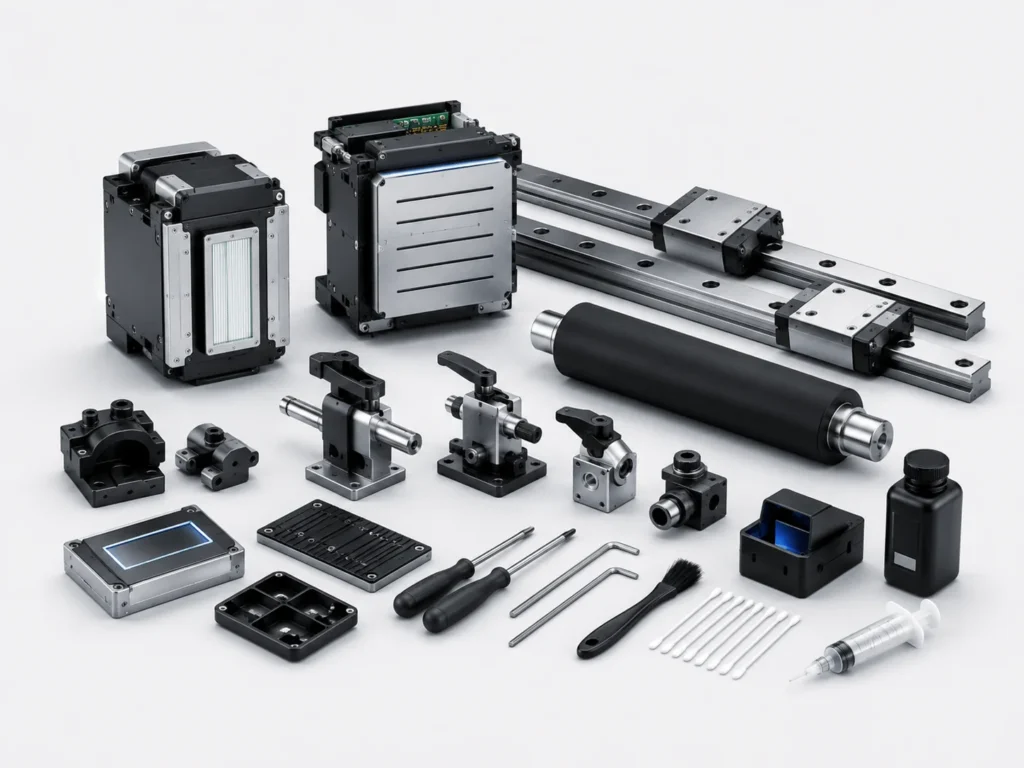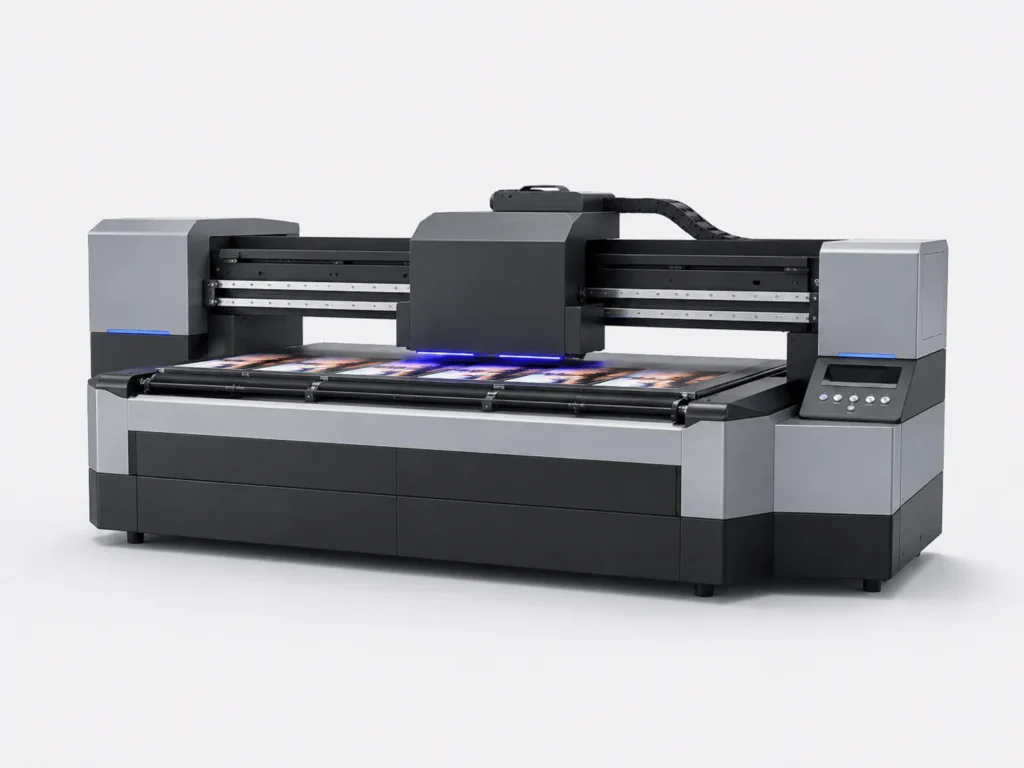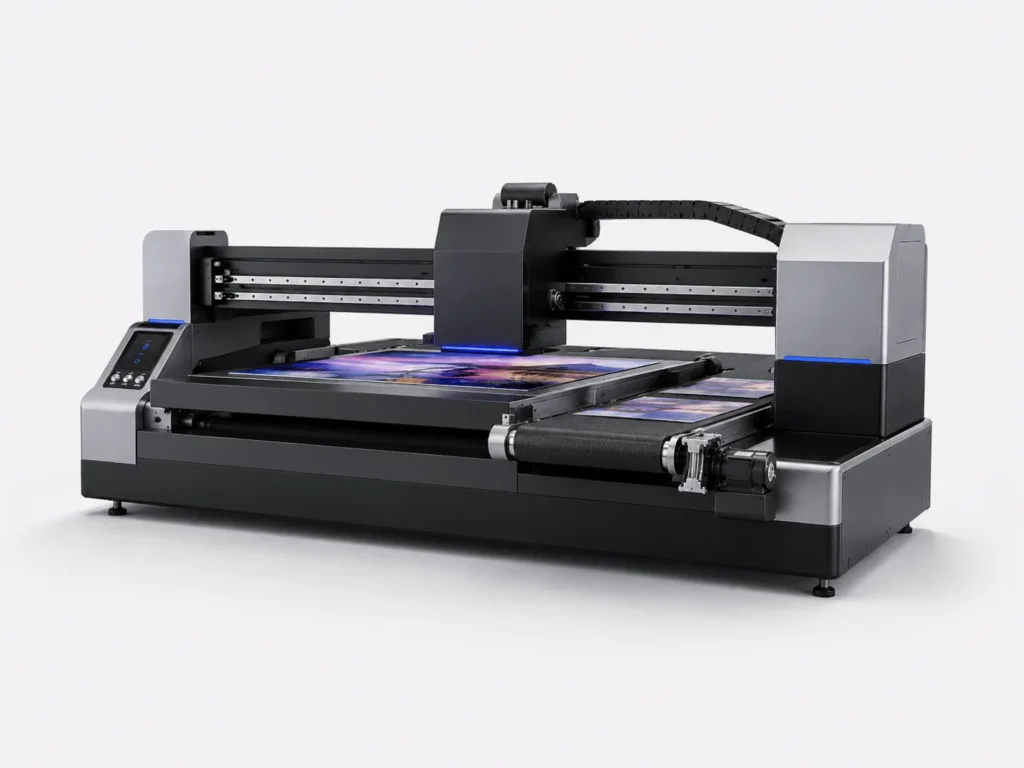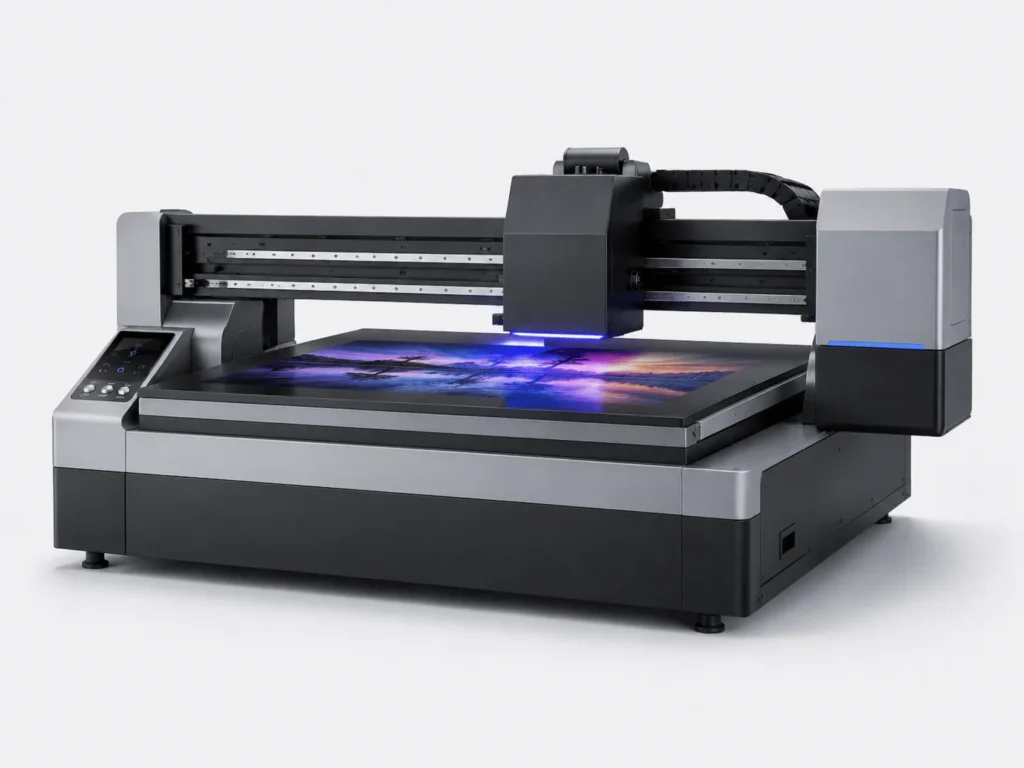
As industrial UV printing equipment continues to evolve, many companies focus more on printheads, ink, and printing speed when choosing a machine, while easily overlooking the conveyor belt structure, which is actually a critical factor. In fact, the conveying system is not only responsible for material transport, but also directly affects print positioning, surface flatness, curing performance, and overall machine stability. Especially in continuous batch production scenarios, the design quality of the conveyor belt often determines whether a UV printer can consistently produce high-quality finished products over the long term, so its impact on the final printing result is far greater than many people imagine.
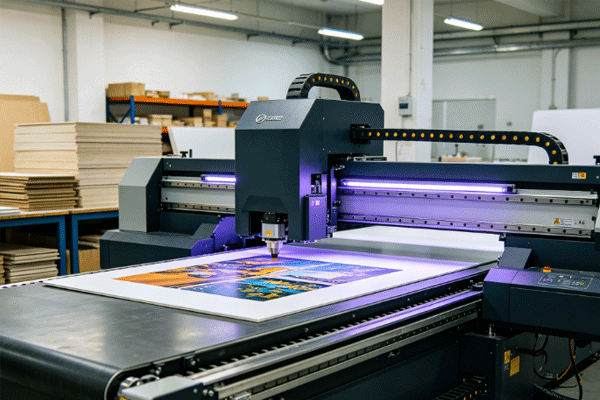
Conveyor Belt Accuracy Determines Whether the Pattern Is Positioned Correctly
The higher the accuracy of the conveyor belt, the more stable the material position will be during printing, and the more reliable the final pattern performance will be. For factories that require highly consistent output, the precision of the conveying system is often the first threshold that determines yield, because it directly affects whether the printhead lands accurately, whether the pattern edges are neat, and whether the entire batch can maintain a unified standard.
Running Smoothness Affects Printing Position
Whether the conveyor belt moves smoothly is the foundation of UV printing accuracy, because once the material vibrates even slightly during transport, the printhead landing position may deviate from the original setting, and such deviation is often quickly amplified in high-precision patterns, ultimately affecting the visual result of the entire image.
- Uneven movement can cause slight material shifting during printing, and although it may not be immediately visible to the naked eye, it will gradually become apparent in high-precision patterns.
- As the deviation accumulates, it can easily lead to pattern misalignment, edge ghosting, or local smearing, especially on text, lines, and detailed graphics.
- During high-speed printing, errors are further amplified, and even small mechanical fluctuations may become obvious deviations across the entire image.
- Long-term instability will reduce the yield rate of the entire batch and may significantly increase rework and reprinting costs.
For industrial production, even a very small deviation can affect the delivery quality of an entire order, so conveyor belt smoothness is by no means a detail that can be ignored.
Synchronization Control Affects Batch Consistency
The conveyor belt must maintain a high degree of synchronization with the printhead movement to ensure accurate pattern dimensions and consistent output standards across every batch. Once this synchronization is off, consistency in batch production will quickly decline, which in turn affects the customer’s overall judgment of product quality.
- The conveyor speed must match the printhead movement, otherwise the image may stretch, compress, or become distorted during printing.
- Otherwise, stretching or compression may occur, especially in long graphics, repeated patterns, and multi-layer overprinting tasks.
- During multi-batch production, dimensional consistency will decline, causing noticeable differences between products in the same order.
- Precise synchronization is an important standard for industrial-grade UV equipment and a key indicator of whether the machine is suitable for long-term mass production.
The more stable the synchronization control, the better the output consistency for large orders, and the more effectively a company can reduce rework and waste caused by dimensional errors.
Tension and Flatness Determine Image Clarity
The flatness of the material during transport directly affects the accuracy of ink placement and the final clarity of the image. When companies encounter blurry prints, soft edges, or uneven color blocks, they often first check the printhead while overlooking conveyor belt tension and material flatness. In reality, these two factors are often the real key to print quality.
Whether the Material Is Flat Directly Affects Inkjet Performance
UV printing is highly sensitive to the surface condition of the material, and conveyor belt tension directly affects whether the material remains flat. Therefore, this structural design has a very direct impact on image quality, especially in high-resolution graphics and fine text output, where even slight unevenness can create obvious differences in the final result.
- If the conveyor belt is too loose, the material may wrinkle, and once the surface becomes wavy, the distance between the printhead and the printing surface will change accordingly.
- Wrinkles cause the distance between the printhead and the material to vary, which makes the ink landing position deviate from the optimal point and leads to local blurring or ink spreading.
- Pattern edges may become blurry, distorted, or broken, especially in small fonts, fine textures, and high-resolution images.
- High-precision images become difficult to reproduce completely, which ultimately affects the customer’s direct perception of product quality.
The flatter the material, the clearer the printed image, and the stronger the professional appearance of the finished product. This is also why many high-end machines place great emphasis on conveyor structure design.
Stable Tension Affects Ink Layer Adhesion
Stable tension keeps the printing surface at a standard height, thereby improving inkjet quality and allowing the ink layer to form a more even and stronger bond on the material surface. This stability is especially important for long-term batch production because it affects not only appearance but also product durability.
- The inkjet distance remains more stable, allowing the printhead to maintain a relatively consistent working state with each pass.
- Ink droplet placement becomes more accurate, making image edges, gradient areas, and detail sections look cleaner and sharper.
- Problems such as local over-thickness or under-thickness are reduced, preventing some areas from appearing too dark while others look too light.
- Overall image uniformity is improved, making the visual result closer to the design file and more suitable for industrial batch production requirements.
The more stable the tension control, the better the finished detail performance, and the more effectively a company can build a reliable quality reputation in a highly competitive market.
Speed and the Curing System Together Affect Product Quality
Conveyor speed does not exist as an isolated parameter; it must work in coordination with the UV curing system to ensure stable printing results. Many companies focus only on increasing speed when pursuing higher output, while ignoring the impact of speed changes on curing performance and product durability, which is actually a crucial part of determining whether a product is truly qualified.
Conveyor Speed Determines Whether UV Curing Is Sufficient
UV printing is not just an inkjet process, but a combined process of “printing + curing,” so the conveyor speed and UV lamp power must be matched. Only when the two work in coordination can the ink layer cure at the right time and form stable adhesion.
- If the conveyor moves too fast, the ink may not be fully cured, and although the surface appears formed, the actual adhesion is insufficient, making it prone to ink shedding or stickiness later.
- If the conveyor moves too slowly, overall production efficiency will be affected. Although curing may be more complete, output per unit time will drop significantly.
- The UV lamp power must match the speed; otherwise, insufficient curing or overexposure may occur in certain areas.
- Otherwise, stickiness, fading, or poor adhesion may occur, affecting wear resistance, water resistance, and long-term product performance.
Proper speed control is the key to balancing efficiency and durability, and it is also what allows UV printing to fully demonstrate its industrial production advantages.
Speed Fluctuations Affect Color Layers and Detail
If the conveyor belt speed is unstable, the printing result will be affected, especially in high-precision graphics and multi-layer printing tasks. Color layering, ink overlap, and image reproduction all depend on a stable operating rhythm. When the speed is stable, colors are more even and transitions are more natural; when the speed changes, color differences, layer distortion, and even broken gradient details may occur. For high-end UV printing, stable speed is not only the foundation of print quality, but also an important standard for determining whether the equipment is suitable for premium orders.
Structural Design and Conveyor Type Determine Long-Term Stability
The conveying system not only affects the result of a single print job, but also determines the equipment’s long-term stability and maintenance cost. For factories, whether a machine can operate stably over time is often more important than short-term printing speed, because it directly affects order delivery, equipment lifespan, and overall operational efficiency.
Frame Rigidity and Automatic Correction Affect Efficiency
The conveyor belt is not only responsible for transporting materials, but also affects the stability of the entire machine. The more stable the frame, the smoother the equipment runs; the better the automatic correction system, the less likely it is to deviate during continuous production. When the frame rigidity is insufficient, the machine may vibrate during high-speed operation, which affects printhead positioning and may cause uneven edges, blurred details, or repeated printing errors. Over long production runs, these small deviations accumulate and eventually affect the quality of the entire batch. In contrast, industrial-grade structures are more stable, have lower failure rates, and are suitable for high-load operation. The automatic correction system can detect material position in real time and make timely adjustments when deviation occurs, preventing the material from running out of the printing area, reducing waste and manual intervention, and making the machine more suitable for long-term continuous production.
Different Conveyor Types Make a Significant Difference
Different types of conveyor belts also have different effects on printing results, so companies should not choose based on price alone. They must also consider the actual application scenario and production requirements, because differences in conveying structure often directly reflect on finished product quality and equipment lifespan.
- Ordinary conveyor belts have relatively weaker stability and are more likely to show vibration and deviation during high-speed printing or high-precision tasks.
- Industrial-grade conveyor belts offer higher precision and longer service life, making them better suited for continuous production and frequent use.
- Vacuum suction conveyor belts can hold materials in place, reducing slipping and edge lifting issues, and are especially suitable for thin materials, soft materials, and high-precision image output.
- High-end structures are more suitable for high-precision image output and for brand orders and custom orders that require high consistency.
If a company pursues high quality and high efficiency, the conveyor system configuration level cannot be ignored, because it often determines whether the equipment can truly meet long-term production needs.
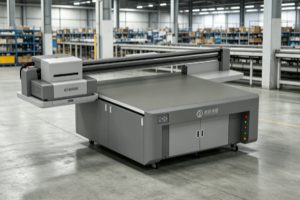
The impact of conveyor belt structure on UV printing results is comprehensive. It not only determines whether material transport is stable, but also affects pattern positioning, image clarity, curing quality, and long-term production efficiency. For industrial UV flatbed conveyor printers, the design quality of the conveying system often directly determines whether the equipment can meet the demands of high-quality continuous production. Therefore, when choosing equipment, the stability, precision, and automation level of the conveyor belt structure are all core indicators that companies must pay close attention to. Springyprinter specializes in the research, development, and manufacturing of industrial UV digital printing equipment, and can provide customers with professional UV printing solutions and technical support services.