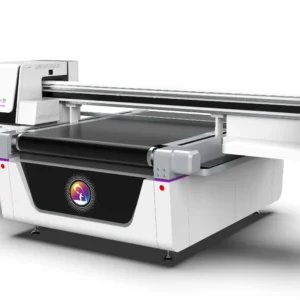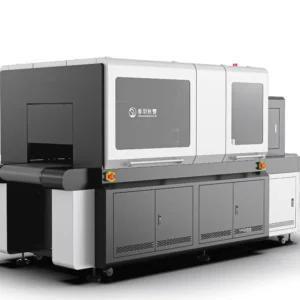
With the continuous growth in demand for industrial manufacturing and personalized processing, UV printing technology has evolved from planar color printing to three-dimensional texture processing. Utilizing multi-layer UV ink stacking and rapid UV curing, industrial UV printers can form realistic 3D textures on the surfaces of materials such as glass, metal, acrylic, wood, and PVC. For products intended for long-term use, a three-dimensional effect alone is far from sufficient; high abrasion resistance has become an important standard for measuring print quality. Through continuous optimization of equipment, inks, processes, and post-processing technologies, UV printing can balance three-dimensional layering and durability, providing a more reliable processing solution for industrial production.
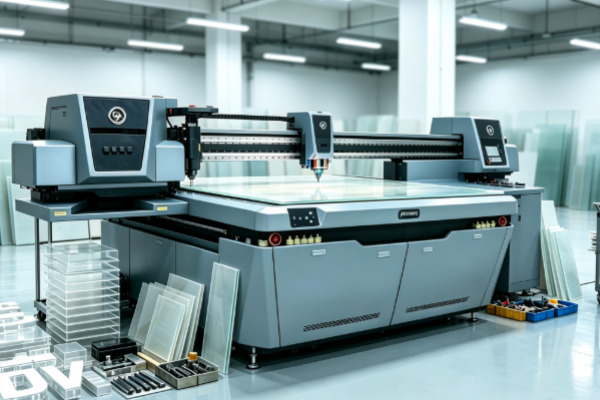
Working Principle of UV Printing for High Abrasion-Resistant 3D Textures
High abrasion-resistant 3D textures are not achieved in a single print. Instead, a digital control system precisely manages the ink layers, allowing multiple printing layers to gradually form a stable three-dimensional structure, which is then rapidly cured by UV light, improving the hardness and adhesion of the ink layers.
The entire molding process includes the following steps:
- Importing design files containing texture height data to establish hierarchical information for different areas.
- RIP software calculates the ink thickness and printing path for each layer.
- The printhead continuously sprays ink, and UV curing is performed immediately after each layer is completed.
- Repeated printing and curing gradually form the preset height.
- After the texture is completed, a protective layer is added to improve wear resistance and surface hardness.
This layer-by-layer curing method prevents texture collapse and ensures that each ink layer is firmly bonded, making the 3D effect more durable.
Product Value Brought by High Wear-Resistant 3D Textures
Compared to ordinary color printing, high wear-resistant 3D textures not only enhance the product’s appearance but also extend its service life, allowing the product to maintain a good visual effect and tactile feel for a long time.
The main value is reflected in the following aspects:
- Enhancing product grade and making the appearance more three-dimensional.
- Enhancing surface abrasion resistance and reducing daily wear.
- Maintaining texture integrity for a long time and preventing fading.
- Enhancing brand recognition and increasing product competitiveness.
- Meeting the durability processing requirements of frequently used products.
As consumers pay increasing attention to product quality, high abrasion-resistant textures have become an important processing method for packaging, decoration, and industrial products.
Key Technological Advantages Affecting Abrasion Resistance
The high abrasion resistance achieved by industrial UV printers is closely related to equipment performance and process control. Only through the coordinated use of various technologies can stable print quality be obtained.
Important factors affecting abrasion resistance include:
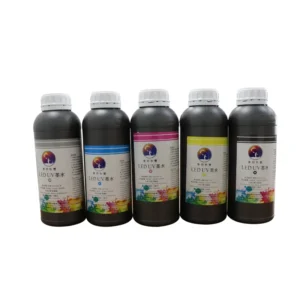
- High-performance UV ink: Professional industrial inks have high hardness and can form a dense protective layer after curing, improving abrasion resistance.
- Multi-layer printing technology: Reasonable control of the number of texture layers makes the three-dimensional height more uniform and improves the overall structural stability.
- Precision UV curing system: Uniform release of ultraviolet light energy ensures that each layer of ink is fully cured, reducing internal stress.
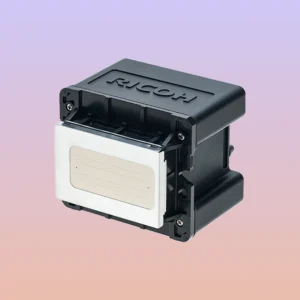
- Intelligent printhead control: High-precision printheads maintain consistent ink droplet consistency, resulting in finer textures and reduced surface graininess.
Through these technological optimizations, printed products can withstand long-term friction, handling, and daily use, making them suitable for industrial applications with high abrasion resistance requirements.
Industry Scenarios Applicable to High Abrasion-Resistant 3D Textures
With its excellent abrasion resistance and three-dimensional performance, high abrasion-resistant UV textures have entered an increasing number of industries, meeting the processing needs of various products.
Common applications include:
- Production of wood grain, stone grain, and leather textures on furniture board surfaces.
- Relief decoration of high-end packaging boxes, gift boxes, and wine boxes.
- Production of advertising signs, corporate logos, and display boards.
- Texture processing for mobile phone protective cases and electronic product casings.
- Production of industrial control panels and equipment nameplates.
- Production of art decorative paintings, cultural and creative products, and craft gifts.
These products not only need to be aesthetically pleasing but also need to maintain their complete texture over a long period of time. High abrasion-resistant UV printing perfectly meets this requirement.
Operational Methods to Improve the Abrasion Resistance of 3D Textures
To ensure the final printing quality, it is necessary to establish standardized operating procedures in the actual production process and adjust printing parameters for different materials.
It is recommended to conduct production in the following way:
- Select high abrasion-resistant UV inks suitable for industrial applications.
- Thoroughly clean the material surface before printing to improve adhesion.
- Adjust the platform height and printhead spacing according to the material thickness.
- Set the number of texture layers appropriately to avoid excessive ink buildup at once.
- Adjust the UV lamp power to ensure each layer is fully cured.
- Add a transparent protective layer after printing to improve scratch resistance.
- Regularly maintain the printhead and UV curing system to ensure stable equipment operation.
For products exposed to the outdoors for extended periods or frequently touched, a weather-resistant protection process can be added as needed to maintain the texture’s stability for a longer period.
High-abrasion-resistant 3D textures have become an important development direction for industrial UV printing. Through high-precision printing, multi-layer stacking, high-quality UV inks, and scientific process control, industrial UV printers can not only present rich three-dimensional effects but also meet the requirements for abrasion resistance and stability under long-term use conditions, providing higher-quality digital printing solutions for home decoration, industrial manufacturing, advertising displays, and high-end packaging.