UV printing on phone cases is already very common in today’s customization market, especially in e-commerce, gift processing, and small startup projects. Compared with traditional screen printing, UV printing does not require plate making, has faster design switching, and is suitable for multi-style, small-batch, and even single-piece customization. This is one of the reasons why it is popular in the phone case industry. Phone case printing involves multiple steps such as design file processing, material surface condition, equipment parameter settings, and post-print inspection. If any step is not handled properly, it may affect the final product quality, such as image misalignment, dull colors, or insufficient adhesion. Therefore, mastering the standard operating procedure is very important for beginners, as it can reduce trial-and-error costs and help achieve stable production more quickly.
Preparation process before phone case printing
Design and file processing must be completed first
Before starting the actual printing operation, preparing the design file is actually a very critical step in the whole process, and many beginners’ problems often come from here. Phone cases are products with fixed sizes and structures, and different models have different cutout positions. If the design is not matched in advance, it is easy for the image to be blocked or misaligned. Many people directly use online materials without adjusting proportions or resolution, resulting in blurry or unclear print results.
In actual operation, the design stage usually requires several key points:
● Build a standard size template according to the phone model
● Ensure the image resolution is clear enough (commonly above 300dpi)
● Handle camera cutout positions and edge avoidance areas
● Adjust color mode to make printing closer to the actual result
Although this step does not involve machine operation, it has a very large impact on the final product. Many production issues actually originate from insufficient preparation in the design stage.
Actual operation steps of UV printer
Material fixing and equipment settings
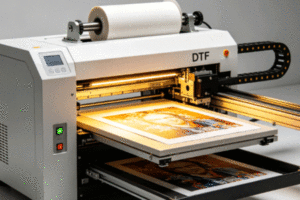
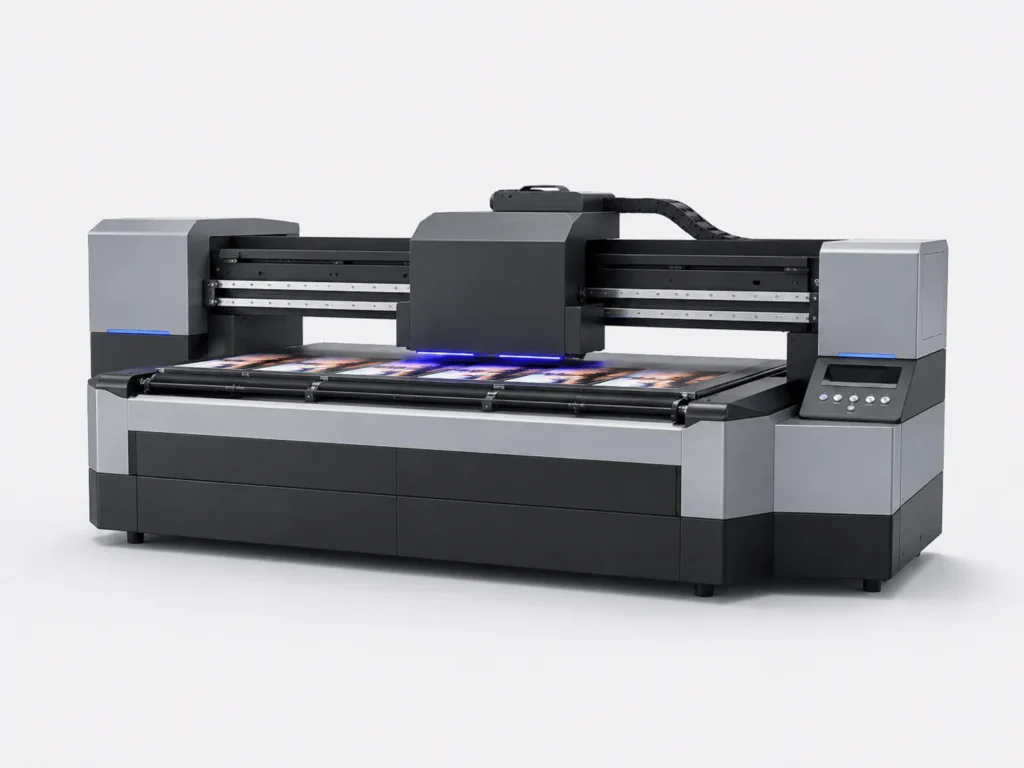
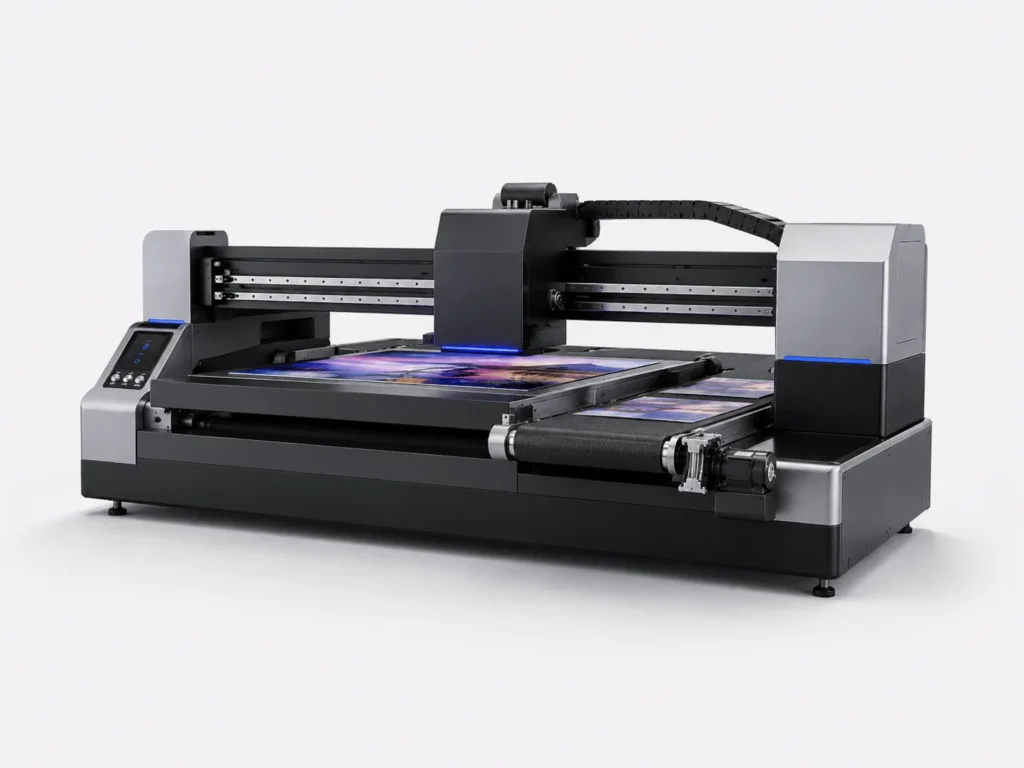
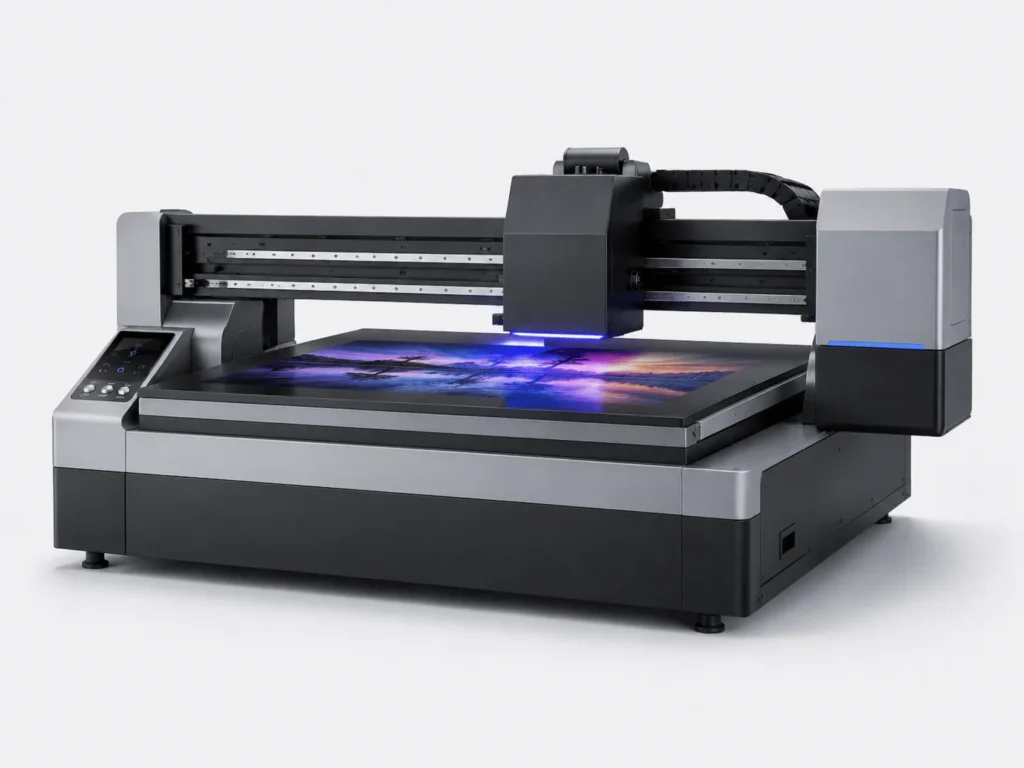
After the design file is ready, the process enters the actual production stage. This step mainly involves fixing the phone case onto the platform of the UV flatbed printer. Phone cases are small items, and if they are not placed firmly or positioned consistently, batch printing may show deviations and affect overall consistency.
During operation, several details usually need attention:
● The phone case must be tightly attached to the platform to avoid edge lifting
● Use positioning fixtures to ensure consistent placement
● Check for any movement or shaking
● Maintain uniform spacing when placing multiple products
After fixing, parameter settings in the software are also required, such as print speed, ink volume, and white ink layer thickness. Different materials require different parameter settings. For example, PC material and TPU material have obvious differences in adhesion performance. If parameters are not properly set, even a high-quality machine may still produce unsatisfactory results.
Precautions during printing process
Printhead condition and white ink layer control must be stable
When the equipment starts printing, this stage requires the most attention because the printhead and ink output status directly affect final product quality. Many factories assign operators to monitor the machine to avoid issues such as missing lines, ink drops, or color abnormalities.
During printing, key points to observe include:
● Whether the printhead maintains stable ink output
● Whether image edges are clear and complete
● Whether the white ink base layer is evenly applied
● Whether vibration or misalignment occurs during printing
The white ink layer is especially important in phone case printing. It is mainly used to enhance color contrast and coverage. If the white ink is too thin, colors may look grayish; if too thick, it may affect image detail performance. Many beginners tend to overlook this, resulting in unsatisfactory visual effects of finished products.
Common Q&A
Is a base coating necessary before printing phone cases?
A base coating is not required for all phone cases, but it is very helpful in many cases. For example, smooth PC materials or TPU soft rubber materials have relatively weak surface adhesion. Without a base coating, ink may easily peel off or detach locally later. The function of the base coating is to increase surface adhesion so that UV ink can be more firmly fixed on the material.
How many phone cases can be printed at one time?
This depends on the platform size and layout method of the equipment. Industrial UV flatbed printers can usually place multiple phone cases at the same time for batch printing. With proper layout, production efficiency can be improved, making it suitable for large-order situations.
Is drying required after printing?
UV printing uses ultraviolet light to cure ink, so there is no traditional drying process required. After printing, it can basically be used directly, but it is usually recommended to let it sit for a period of time to stabilize the ink layer.
Will phone case printing fade?
Under normal conditions, there will be no obvious fading. However, this depends on proper material handling, qualified ink quality, and reasonable parameter settings. If any step is not properly handled, adhesion performance may be affected.
Operation case reference
E-commerce customized phone case production process
In e-commerce customization business, phone case printing is usually based on a “small batch, multi-design” model. Many orders come from customer-uploaded photos or personalized designs, so image changes are very frequent.
The actual production process is usually:
● Collect and organize customer images
● Match dimensions according to phone models
● Arrange layout in software
● Place multiple phone cases on the platform for batch printing
The core of this model is flexibility, because orders are different every day, so the equipment must support fast image switching and stable output.
Factory batch phone case production process
Compared with e-commerce customization, factory production focuses more on standardization and efficiency. Usually, fixed phone models are prepared in advance, and unified templates are designed to reduce adjustment time and increase overall output.
The production process usually includes:
● Use standardized phone models
● Fix layout templates to avoid repeated adjustments
● Batch placement for continuous printing
● Continuous machine operation to increase capacity
This method is more suitable for wholesale orders or long-term customers, and has higher requirements for equipment stability.
UV printing phone case processing is actually more suitable for personalized and small-batch products. Whether it is e-commerce orders or gift customization, it can flexibly handle different design requirements. As long as the preparation work is done carefully in the early stage, the later output quality is usually relatively stable, and color performance and image clarity are easier to meet expectations. For beginners, there is no need to pursue complex operations at the beginning; it is more important to master the basic workflow. As long as the design is reasonable, material handling is proper, and equipment runs stably, UV-printed phone cases can achieve high clarity, vivid colors, and stable adhesion, fully meeting the basic needs of the current e-commerce and personalized customization market.