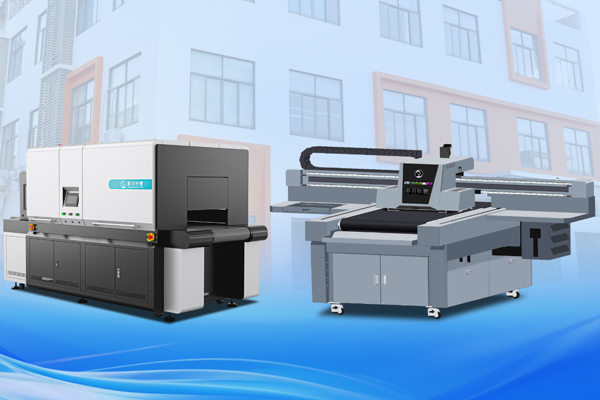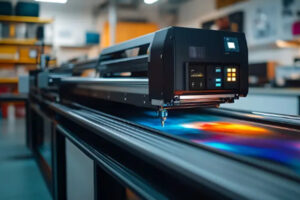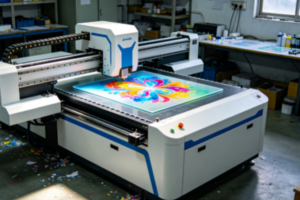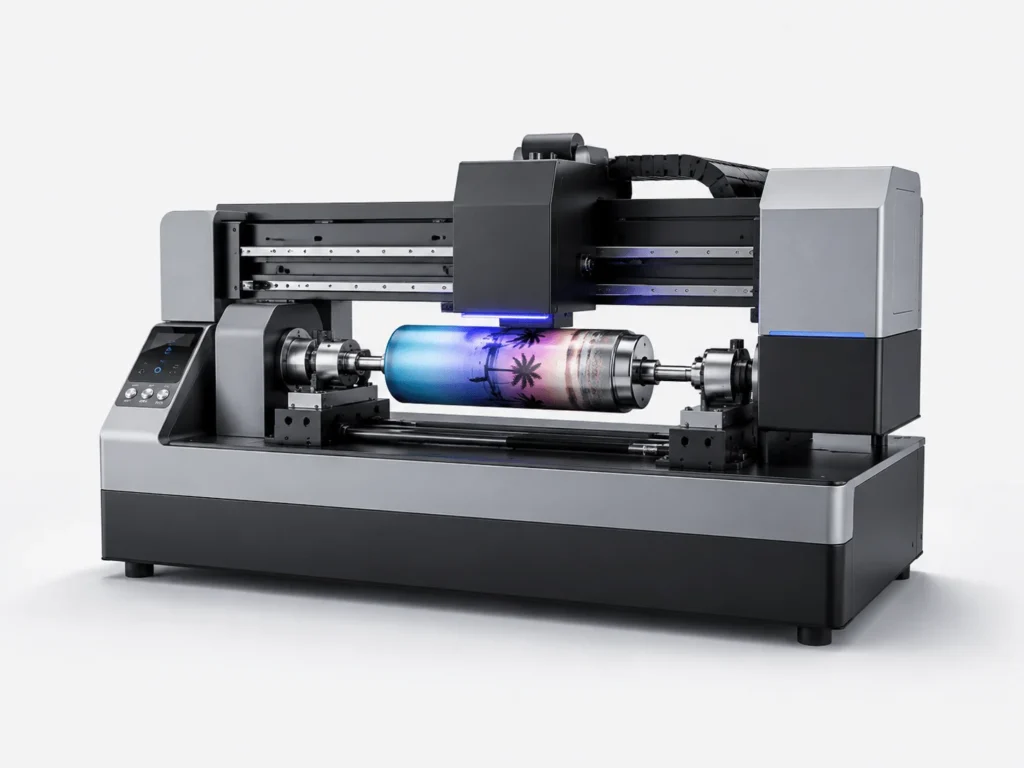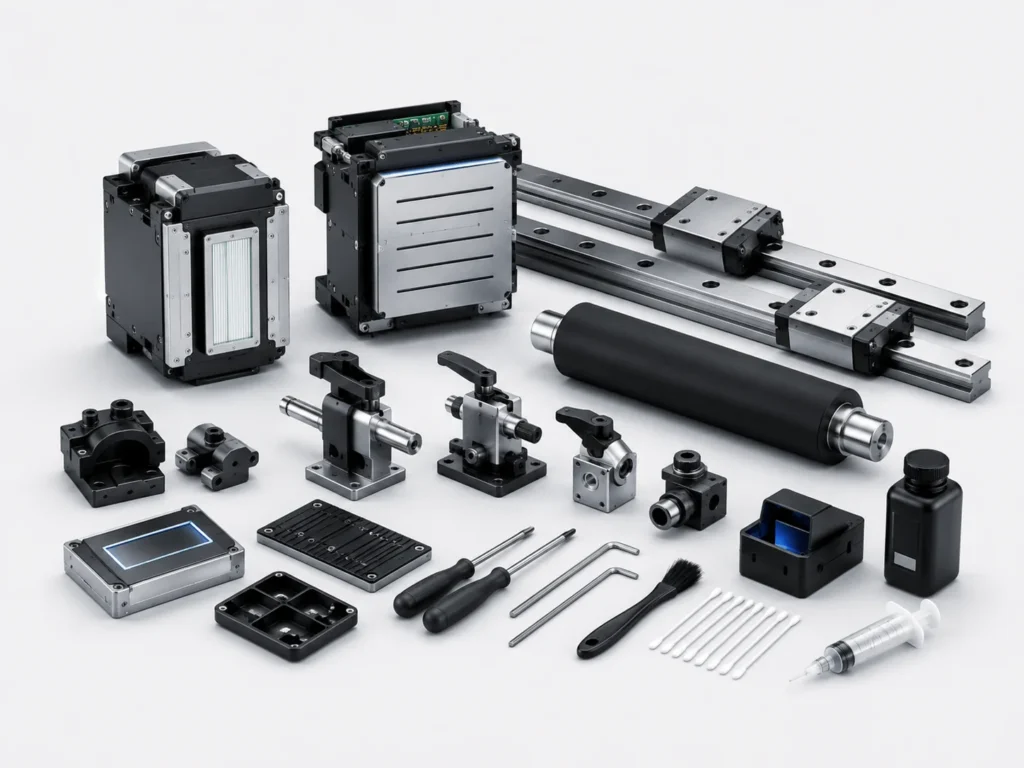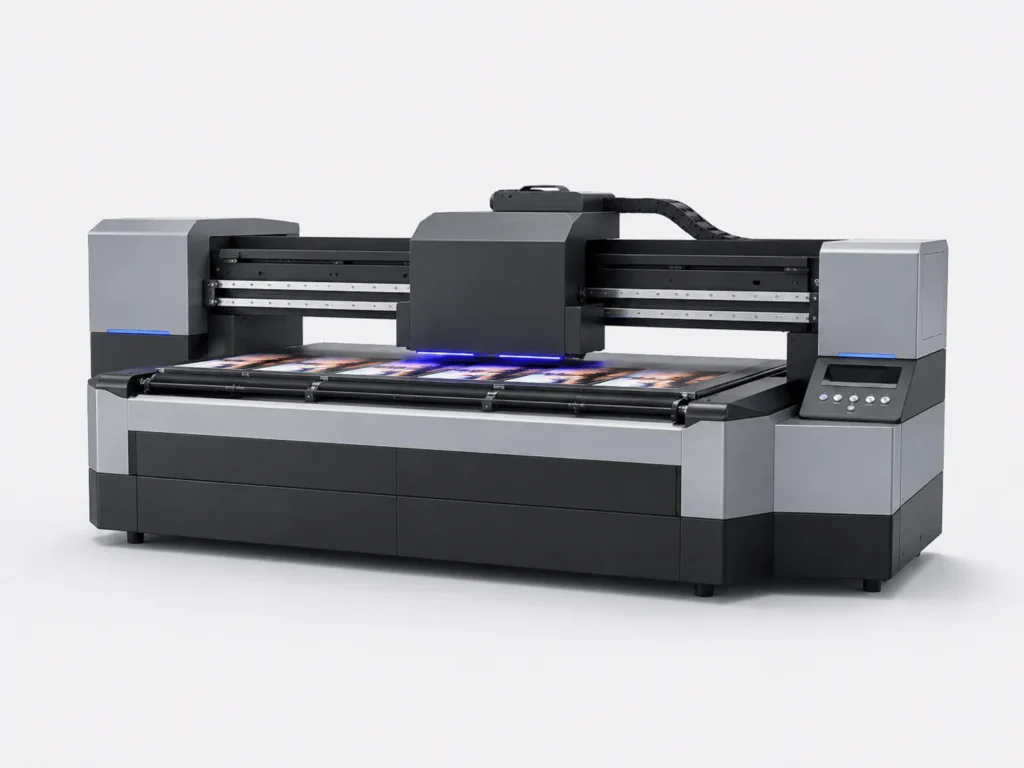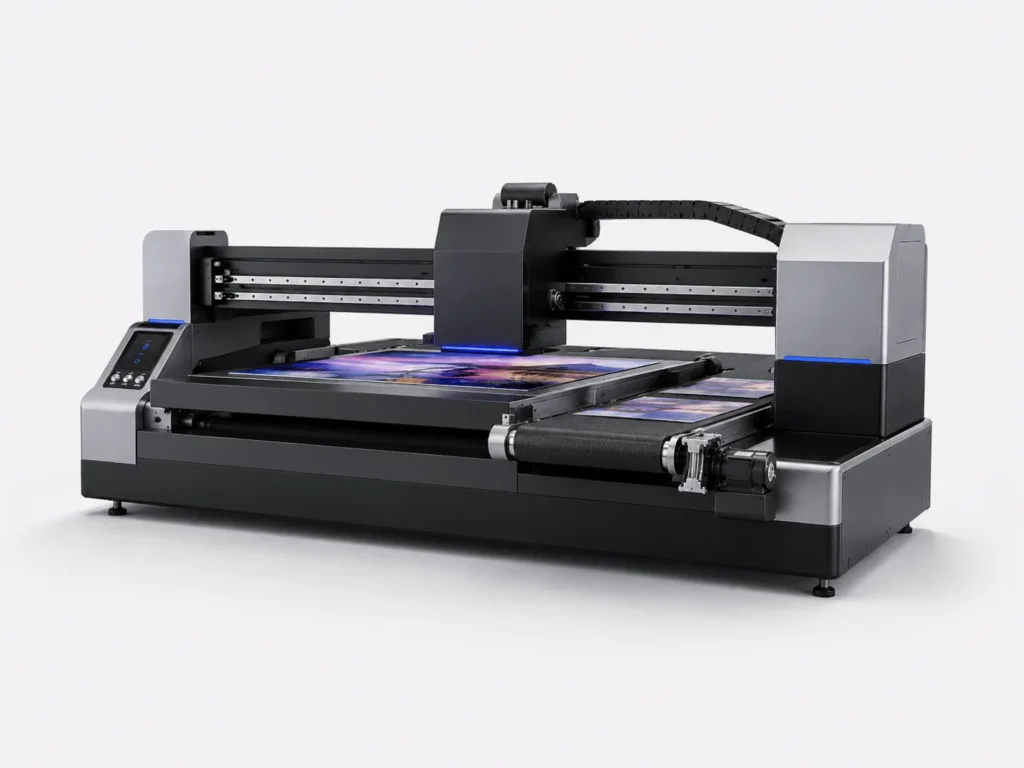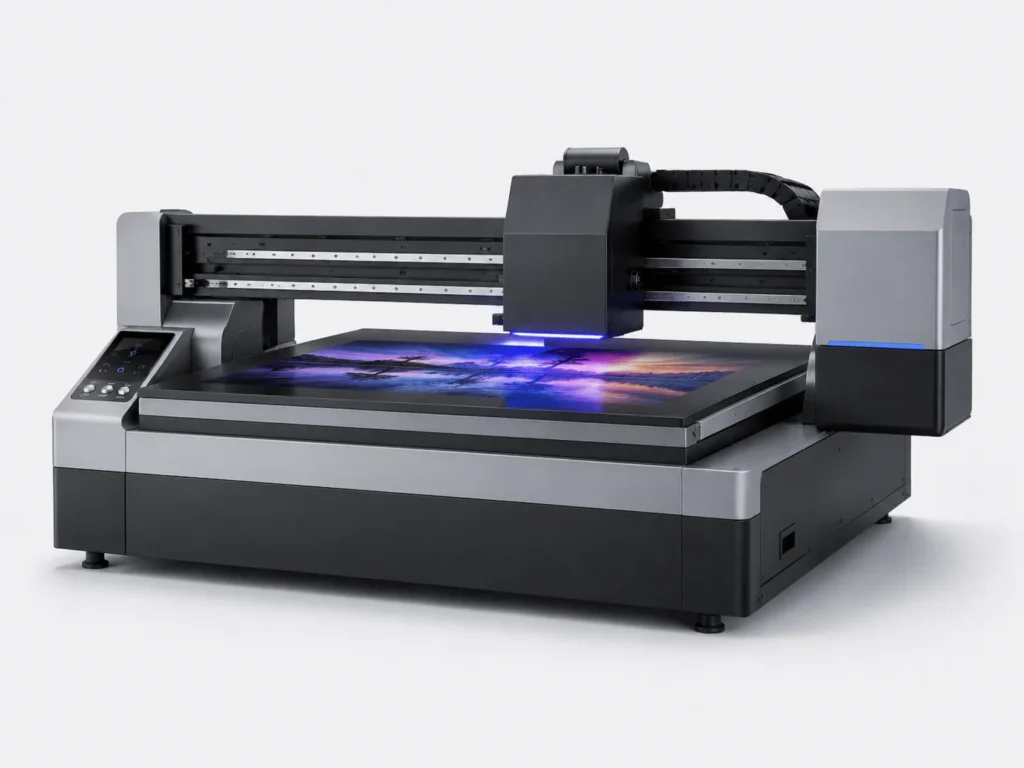
In today’s increasingly competitive manufacturing environment, companies are not only pursuing faster delivery times but also facing the realities of rising labor costs, greater hiring difficulties, and increasing pressure in production management. Many factories are turning their attention to automation equipment, hoping to complete more orders with fewer workers. UV flatbed conveyor printers have been widely adopted under such demands. Through continuous feeding, intelligent control, and high-precision printing, they help businesses reduce repetitive labor, lower rework rates, and make production processes more stable and efficient. For companies looking to control costs and improve profit margins, this type of equipment is no longer just a printing tool, but an important means of optimizing the production structure.
Automated Conveying Greatly Reduces Manual Handling
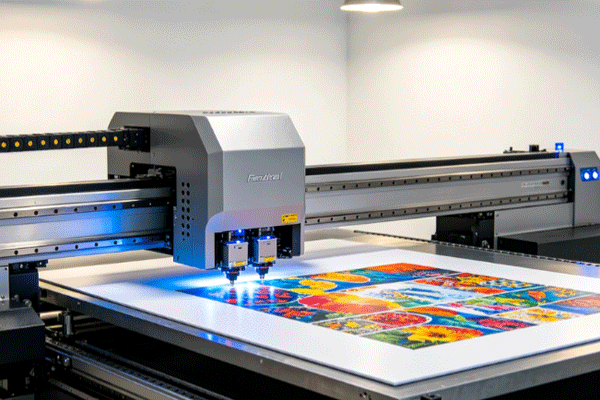
The most direct advantage of a UV flatbed conveyor printer is that it automates the loading and unloading process, which originally depended heavily on manual labor, thereby reducing a large amount of repetitive work.
Continuous Feeding Reduces Repetitive Operations
Traditional printing methods often require workers to place, remove, and organize items one by one. This is not only inefficient, but also prone to missed placement, incorrect placement, or inconsistent pacing during high-intensity production.
- The automatic conveying system can continuously complete loading and unloading, allowing the equipment to remain in continuous operation for longer periods.
- After reducing manual handling and waiting time, workers no longer need to spend so much energy on monotonous repetitive actions.
- Lowering the intensity of long-term repetitive labor also helps reduce fatigue-related mistakes and safety risks.
- Keeping the equipment running at a higher uptime allows more effective output within the same amount of time.
Continuous feeding not only saves labor but also makes the production rhythm more stable, making it especially suitable for batch and standardized orders.
Intelligent Positioning Reduces Manual Calibration Frequency
Manual alignment is one of the most time-consuming steps in many factories, and intelligent positioning can significantly improve this issue, making the operation process more time- and labor-efficient.
- After automatically identifying the printing area, the equipment can enter working status more quickly, reducing the time spent on repeated position confirmation.
- By reducing repeated position adjustments, operators do not need to frequently stop the machine for calibration, and the production rhythm becomes smoother.
- Improving consistency in batch products makes it easier for companies to maintain stable quality in large-scale production.
- Reducing losses caused by placement deviations also helps cut down on rework and scrap, which in turn lowers additional labor input.
The more precise the positioning, the less manual intervention is needed, and the higher the production efficiency becomes. Naturally, overall cost control becomes more advantageous.
Digital Printing Simplifies Traditional Processes
Compared with traditional printing workflows, UV flatbed conveyor printers are more digitally oriented, helping companies eliminate many front-end preparation steps and making production shorter and more flexible.
No Plate-Making Required, Saving Labor Input
Traditional processes usually require plate-making, exposure, and plate adjustment, which are not only time-consuming but also require specialized personnel. UV flatbed conveyor printers allow design files to be directly imported into the machine, eliminating plate-making and plate management processes, significantly shortening proofing and trial production cycles, and reducing dependence on specialized plate-making staff. Digital printing makes the production process shorter, more flexible, and better suited for multi-variety orders.
Fast Order Switching Reduces Waiting Time
In small-batch, multi-order production, frequent order changes often consume a lot of labor and time, while digital equipment has a clear advantage in this regard. Different designs can be switched quickly, and operators only need to call up the corresponding file to start production. Multiple products can also be processed continuously without frequent shutdowns due to process changes. As adjustment time is greatly reduced, equipment utilization naturally increases, and production capacity is more fully released. At the same time, with less repetitive setup work, employees can focus more on quality inspection and process optimization. For companies with fast-changing orders and diverse product types, the more efficient the switching, the higher the equipment utilization and the lower the labor cost, making it easier to handle diverse orders.
Stable Operation and Intelligent Maintenance Reduce Maintenance Labor
Whether the equipment runs stably directly determines whether a company needs to invest more maintenance and repair personnel. For factories pursuing cost reduction and efficiency improvement, stable operation itself is a way to save labor.
Reducing Extra Labor Caused by Downtime
High-quality UV flatbed conveyor printers are more mature in structure and control systems, which helps reduce unexpected failures and lowers the extra labor consumption caused by downtime.
- After achieving more stable continuous operation, production plans are easier to execute, and on-site staff do not need to frequently deal with temporary interruptions.
- After reducing the probability of nozzle clogging and material jams, the frequency of maintenance personnel intervention drops significantly.
- After reducing repair waiting time, order delivery efficiency improves, and the coordination pressure on the production site is also reduced.
- After improving order delivery efficiency, companies can reduce the need for temporary labor during rush production.
The more stable the equipment, the less frequently companies need to arrange personnel to handle abnormal situations, and management costs will also decrease accordingly.
Automatic Cleaning Functions Reduce Daily Maintenance Pressure
Nozzle and ink path maintenance are important parts of printer daily management. Automation functions can significantly reduce labor input and make maintenance work easier and more standardized.
- The equipment can automatically perform nozzle cleaning programs, reducing the frequency and time required for manual cleaning.
- After keeping the ink path circulation smooth, ink supply becomes more stable, and the risk of downtime caused by ink supply abnormalities is also reduced.
- After lowering the frequency of manual maintenance, maintenance staff can focus more on equipment inspection and preventive maintenance.
- After reducing rework caused by nozzle clogging, not only are materials saved, but repeated processing that consumes extra labor is also avoided.
Intelligent maintenance not only saves labor but also extends the service life of the equipment, allowing companies to gain more stable returns in long-term operations.
Improving Yield and Intelligent Management Reduces Rework and Training Costs
Labor costs are not only reflected in the operation stage, but also in rework, training, and management. UV flatbed conveyor printers also have obvious advantages in these areas, helping companies compress hidden costs from multiple angles.
High-Precision Printing Improves First-Pass Yield
The higher the printing precision, the lower the rework rate, and the less labor a company wastes. The more products completed in one pass, the lower the pressure of repeated processing.
- After the edges of the pattern become clearer, the finished product appearance becomes more stable, and customer acceptance rates also improve.
- After color output becomes more stable, differences between batch products are significantly reduced, lowering the need for sorting and correction.
- After batch product consistency becomes stronger, inspection and verification processes on the production line become smoother.
- After reducing repeated processing and scrap losses, labor can be freed from rework and redirected to more valuable tasks.
Once the first-pass yield improves, companies not only save materials but also save a large amount of labor used for repairs and rework.
Intelligent Management Lowers Training and Management Costs
Modern UV flatbed conveyor printers have more intuitive operating interfaces, which also lowers the difficulty of training new employees. This is especially important for factories with high staff turnover.
- After parameter settings become more standardized, operators do not need to rely heavily on experience to complete basic production tasks.
- After the operation process becomes easier to learn, new employees can get up to speed faster, and training cycles are significantly shortened.
- After new employees become proficient more quickly, companies can reduce overreliance on a small number of skilled workers.
- After production data becomes easier to manage uniformly, management can more clearly understand equipment operation and output conditions.
When the equipment becomes easier to operate, companies’ dependence on highly skilled operators also decreases significantly, and overall management efficiency improves.
The reason UV flatbed conveyor printers can help companies reduce labor costs lies in their ability to gradually transform production steps that were originally scattered, repetitive, and experience-dependent into automated, standardized, and digital processes. From automatic feeding to intelligent positioning, from no plate-making to automatic maintenance, and from improving yield to reducing training pressure, every step helps companies save labor, improve efficiency, and strengthen competitiveness. Springyprinter specializes in the R&D and manufacturing of industrial UV digital printing equipment and can provide customers with professional UV flatbed conveyor printer solutions and technical support services.