In the continuous shift toward digitalization and precision in the advertising industry, the production model of signage is undergoing significant transformation. Whether it is mall wayfinding systems, storefront signs, lightboxes, or exhibition visual materials, clients are demanding faster delivery, higher image quality, and stronger material compatibility. Traditional production methods are increasingly unable to meet the needs of small-batch, multi-version, and frequently updated orders. In this context, a UV flatbed printer–based advertising signage solution is becoming a key technological approach for improving production efficiency and output stability in the advertising industry.
Core Challenges in Advertising Signage Production
In real-world advertising production workflows, signage is not only a visual output but also an essential carrier of brand communication. Therefore, every stage from design to final production must balance both efficiency and quality, yet several bottlenecks still exist.
Complex workflows caused by diverse signage orders
Advertising signage projects often include acrylic letters, PVC boards, metal plates, lightboxes, and various other formats, each requiring different production processes.
Key issues include:
- Frequent workflow switching due to different materials
- Complex scheduling caused by small-batch orders
- High risk of order mix-ups due to multiple design versions
- Increased manual machine setup leading to lower efficiency
This complexity turns production into a multi-system coordination process rather than a single workflow.
Efficiency limitations of traditional production methods
Traditional silk-screen printing, spraying, and vinyl application still exist in some scenarios, but they struggle to meet modern fast-delivery requirements.
Common problems include:
- Long plate-making time, slow response to design changes
- High cost per unit for small-batch production
- Frequent material changeover requiring repeated setup
- Heavy reliance on manual operation with unstable output
These limitations significantly affect delivery speed and customer satisfaction in fast-moving markets.
Increasing demands for consistency and durability
Modern branding systems require strong visual consistency, and signage must maintain stable performance over time.
Key challenges include:
- Color deviation across different production batches
- Insufficient weather resistance for outdoor use
- Unstable ink adhesion on different materials
- Visual degradation during long-term exposure
Poor control of these factors can directly impact brand image.
Core UV Flatbed Printing Solutions for Advertising Signage
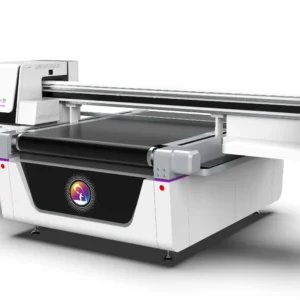
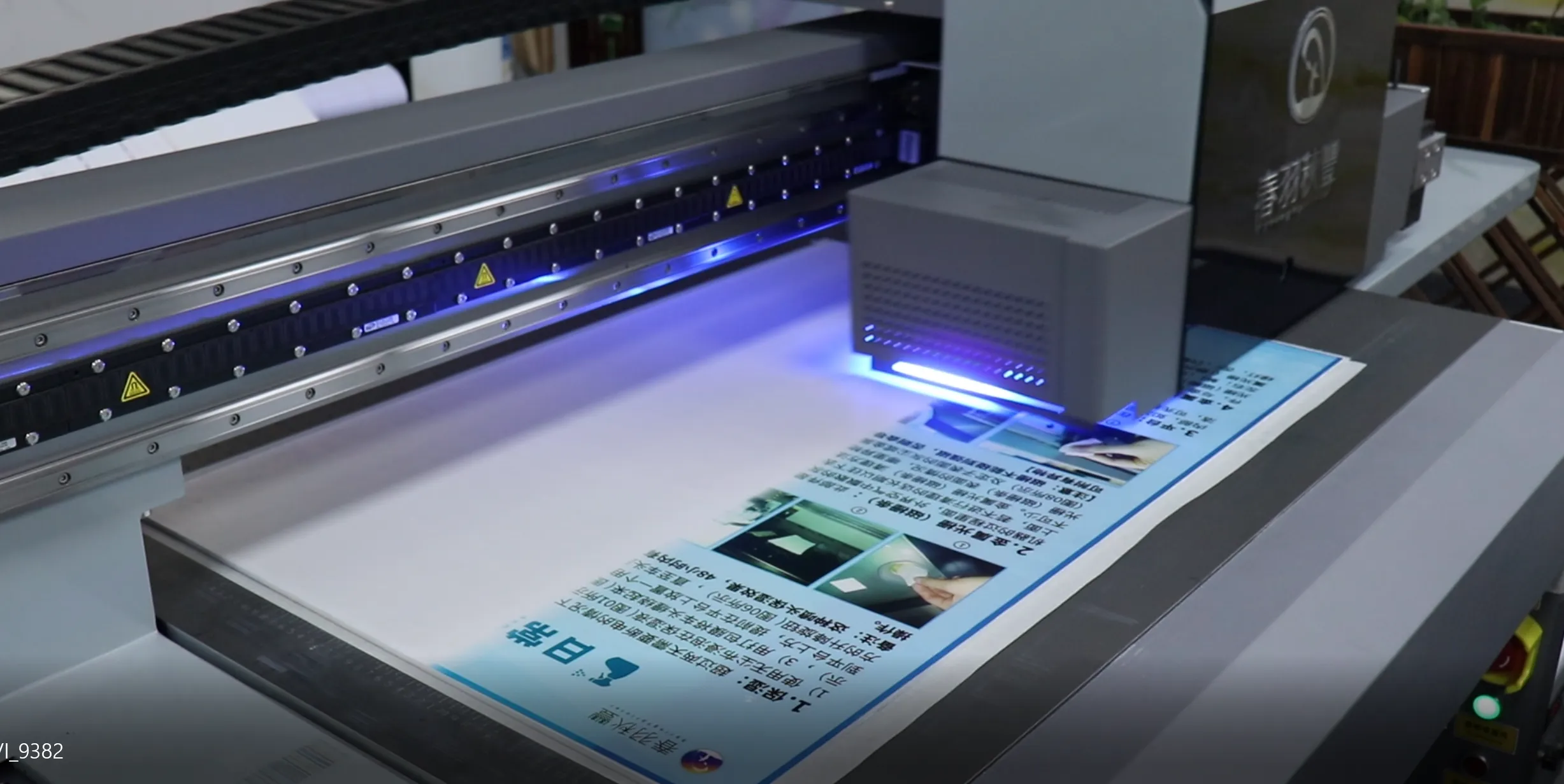
With the advancement of digital transformation in the advertising industry, UV flatbed printers use UV curing technology to instantly dry printed output, enabling faster, more stable, and more flexible signage production.
Before discussing specific advantages, it is important to compare traditional methods with UV-based production to better understand the shift in workflow logic:
| Comparison Item | Traditional Production | UV Flatbed Printing Solution |
| Production cycle | Long | Short (instant output) |
| Plate-making required | Yes | No |
| Material compatibility | Limited | Wide compatibility |
| Batch consistency | Moderate | High stability |
| Small-batch cost | High | Lower |
| Design modification | Reproduction required | Direct file editing |
Overall, UV technology shifts production from a process-driven model to a data-driven workflow, greatly improving flexibility and responsiveness.
Multi-material direct printing capability expands application scope
UV flatbed printers can print directly on a wide range of advertising materials without complex pre-processing.
Advantages include:
- Direct printing on acrylic, PVC, metal, and wood panels
- No need for lamination or transfer processes
- Reduced intermediate production steps
- Suitable for multiple signage applications
This capability transforms production from material-limited to design-driven manufacturing.
High-precision color control ensures brand consistency
In advertising, visual identity consistency is critical. UV printing uses digital color management systems to ensure standardized output.
Key features include:
- ICC color management for consistent output
- Minimal color variation between batches
- Strong reproduction of gradients and fine details
- Consistent visual output across materials
This is especially important for chain brands requiring unified visual systems.
Enhanced finishing effects improve visual impact
UV printing is not limited to image reproduction; it can also simulate premium finishing effects.
Capabilities include:
- White ink for improved layering and depth
- Varnish for localized gloss effects
- 3D-like and embossed visual simulation
- Enhanced overall visual quality and attractiveness
These effects significantly improve the commercial appeal of signage.
High-efficiency production model supports batch orders
Advertising orders often require multi-version and multi-batch production, and UV systems are well suited for this environment.
Advantages include:
- No plate-making required for file switching
- Continuous batch production capability
- Suitable for multi-location brand signage production
- Reduced human error and intervention
This greatly improves overall production efficiency and delivery speed.
Standardized UV Signage Production Workflow and Key Control Points
To maximize UV printing performance in signage production, a standardized workflow is required to ensure consistency and repeatability.
Standardized design file management
Before production, design files must be properly standardized to ensure output accuracy.
Includes:
- Unified size and resolution standards
- Standard color mode and output format
- Layer and font consistency checks
- Unified design style across product lines
This step ensures a stable foundation between design and production.
Equipment calibration and color control
UV printers require strict calibration to maintain stable output quality.
Key elements include:
- ICC color profile management
- Regular printhead calibration
- Material-specific parameter settings
- Batch consistency monitoring
This directly determines the professionalism of the final output.
Material testing and environmental validation
Signage materials must be tested for different environmental conditions.
Testing includes:
- UV resistance and weather durability tests
- Ink adhesion strength testing
- Scratch and wear resistance evaluation
- Outdoor exposure simulation tests
This reduces long-term application risks.
Batch production and fast delivery system
In the advertising industry, delivery speed is a key competitive advantage.
Features include:
- Multi-task parallel production
- Fast file switching between orders
- Reduced manual intervention
- Improved overall delivery efficiency
This is especially suitable for high-frequency order environments.
In the context of continuous upgrading in the advertising industry, UV printing technology is reshaping signage production methods, enabling better balance between efficiency, quality, and cost. UV flatbed printer-based solutions are becoming a core tool in the digital transformation of the advertising industry, and SpringYprinter provides stable and efficient UV printing support for advertising businesses.