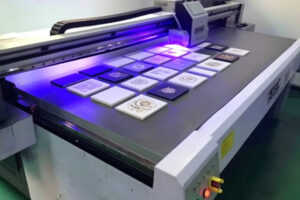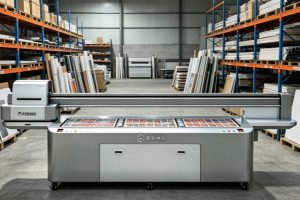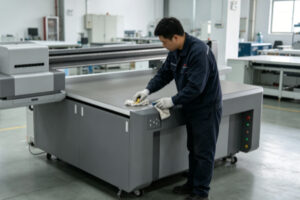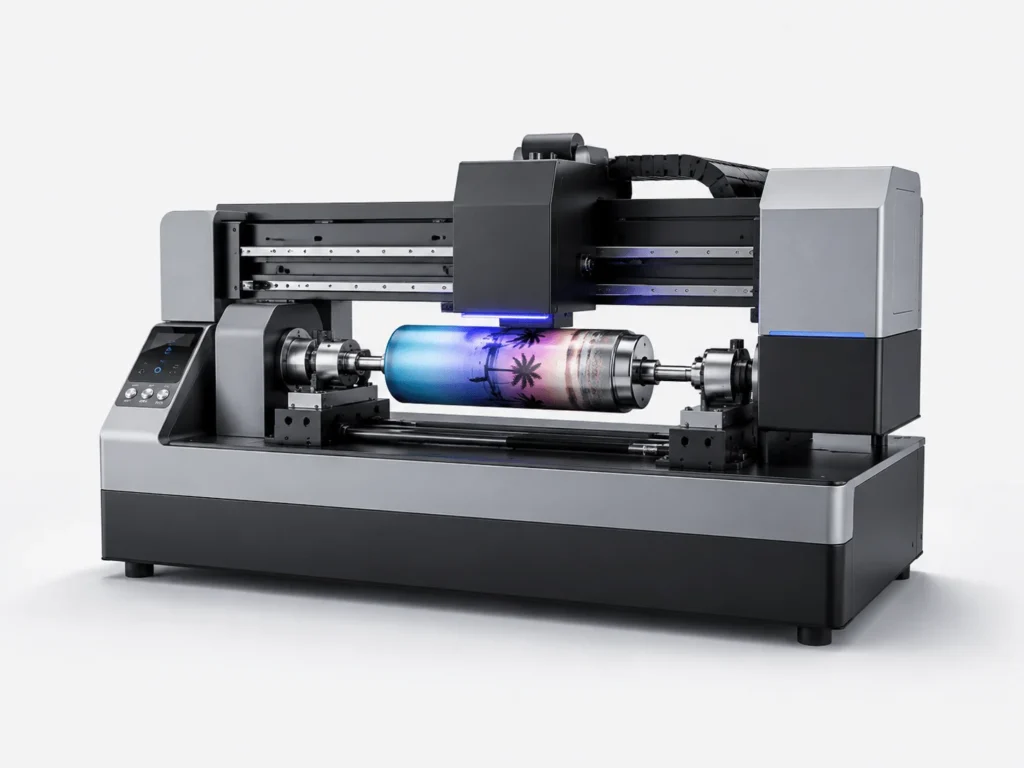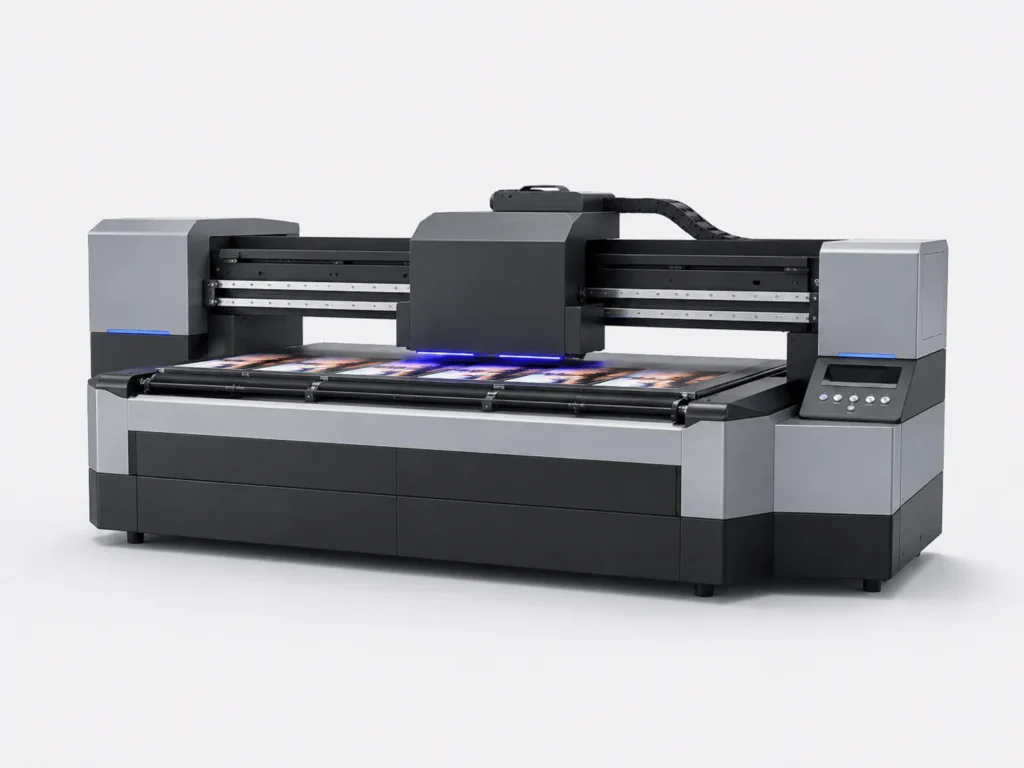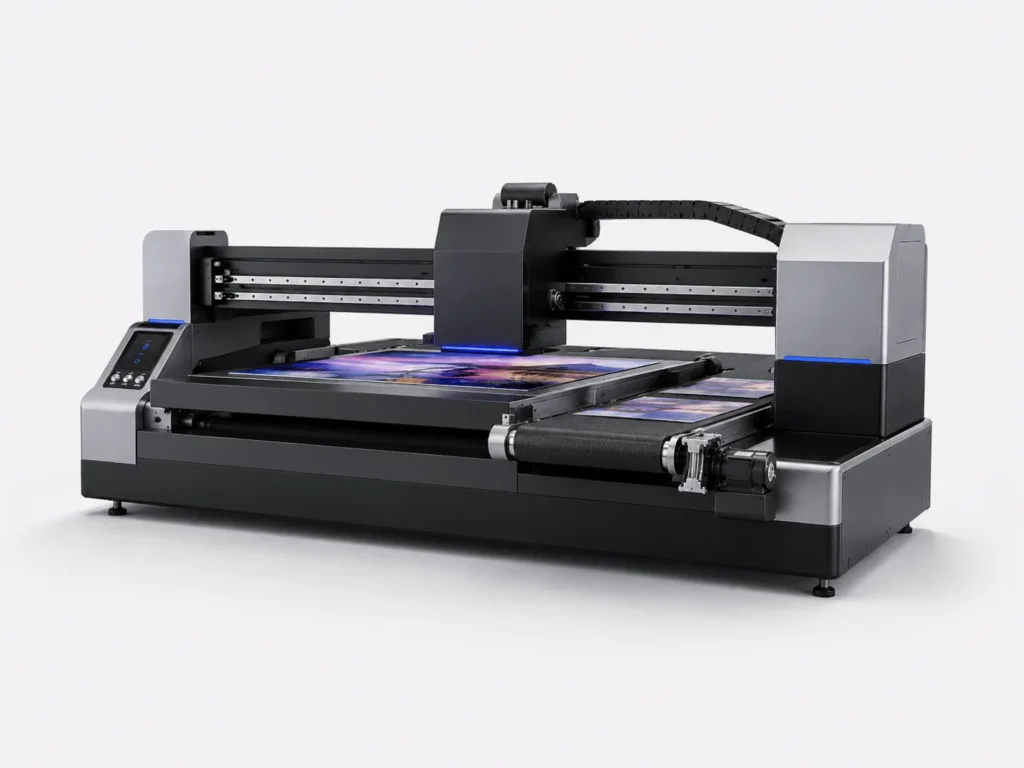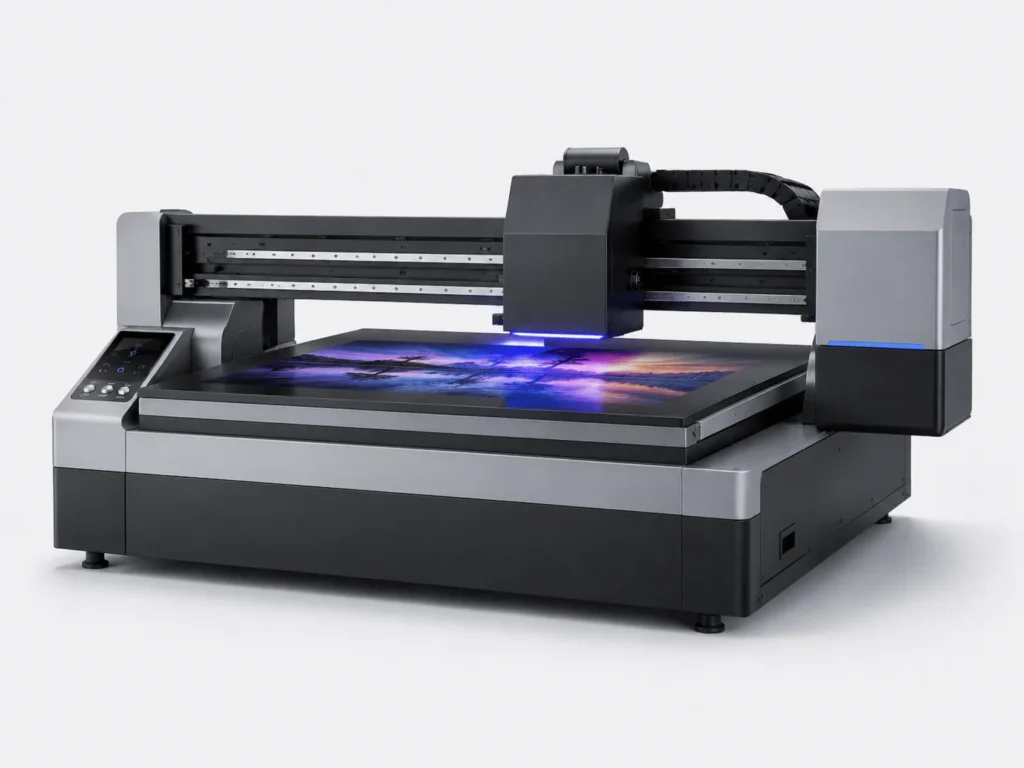
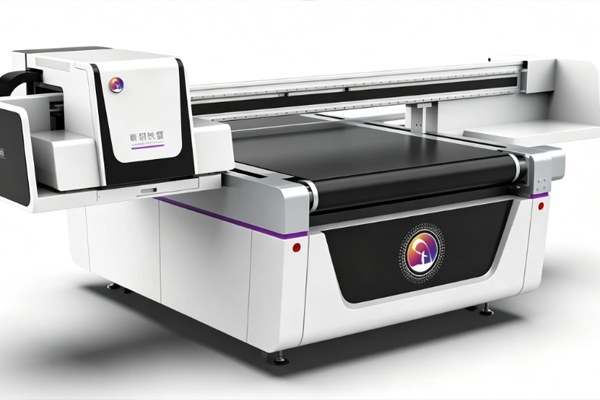
When orders gradually shift from single-piece customization to multi-style and continuous production, the efficiency and stability of printing equipment directly affect a company’s delivery capability. UV conveyor printers use a conveyor belt to continuously transport materials, connecting the processes of loading, positioning, printing, and curing, making them more suitable for continuous operation. For industries such as advertising production, packaging, home decoration, and industrial manufacturing, this type of equipment reduces repetitive operations and helps maintain a more stable production rhythm for bulk orders.
Continuous Feeding Improves Mass Production Efficiency
Bulk orders are most easily affected by manual loading/unloading and machine idle time. A conveyor-based structure helps improve this process.
Conveyor belts reduce repetitive manual operations
UV conveyor printers continuously feed materials into the printing area through a conveyor belt, so operators do not need to independently position and move each item.
- Reduces time consumption caused by frequent loading and unloading.
- Suitable for continuous processing of flat materials such as cardboard, PVC, acrylic, and KT board.
- Multi-batch orders can be arranged continuously according to production plans.
- Operators mainly handle loading, inspection, and finished product sorting.
When a large number of products with the same or similar specifications need to be processed daily, continuous feeding helps the equipment maintain a more stable working rhythm.
Reduces machine idle time
In traditional single-sheet operation modes, material replacement and repositioning often create production gaps. Conveyor systems can complete printing and curing during transport, reducing downtime. The larger the order volume, the more significant the efficiency improvement from continuous operation, and the smoother the production scheduling becomes.
Digital Printing Is Suitable for Multi-Style Bulk Orders
Mass production does not necessarily mean products must be identical. Today, many companies face a “small batch, multi-style, fast delivery” order structure.
Software switching reduces plate-making pressure
UV printing uses a digital output method, where designs are managed through software without frequent plate-making.
- Different customer designs can be switched quickly.
- A single batch can include multiple designs.
- Proofing and mass production share a similar workflow.
- Text and logo modifications are more flexible.
For industries such as packaging, advertising, and gifts, this approach enables faster response to market changes.
Supports flexible production
UV conveyor printers can handle different content within the same production process, such as different brand logos or customer designs. Files are processed sequentially without re-plate-making, making them more suitable for flexible order structures.
Stable Output Helps Control Batch Quality
Bulk orders require not only speed but also consistency.
Precise positioning reduces errors
Conveyor systems rely on stable transport and positioning mechanisms to ensure consistent material placement in the printing area, thereby maintaining image accuracy. Key factors in production include:
- Stability of conveyor belt operation.
- Consistency of material thickness.
- Positioning system accuracy.
- Printhead working condition.
- UV curing parameter matching.
These factors together determine the consistency of batch products.
Standardized parameters improve repeat production efficiency
Similar orders can use fixed parameters such as resolution, speed, ink volume, and curing intensity. Standardized settings reduce variations caused by repeated adjustments and gradually build a company’s process database, making future production more stable and efficient.
UV Conveyor Printers Help Optimize Production Costs
The core of mass production is not only efficiency but also overall cost control.
Reduces labor and plate-making costs
Continuous feeding reduces repetitive operations, and digital printing eliminates plate-making processes, significantly lowering costs related to plate production, changeovers, and manual adjustments. As order volume increases, these advantages gradually translate into higher profit margins.
Improves equipment utilization
Traditional equipment often experiences downtime during plate changes or adjustments, while conveyor systems maintain higher uptime through continuous feeding and file switching. For processing factories and customization businesses, this means more orders can be handled with the same equipment.
UV conveyor printers connect multiple stages of the printing process through continuous feeding and automated operation, making production flow smoother. Its digital workflow allows quick switching between different design files, providing greater flexibility for diverse orders. At the same time, its stable operating structure helps maintain output consistency and reduces fluctuations in batch production. Springyprinter focuses on the R&D of industrial digital printing equipment and provides stable UV conveyor printing solutions for mass production enterprises.