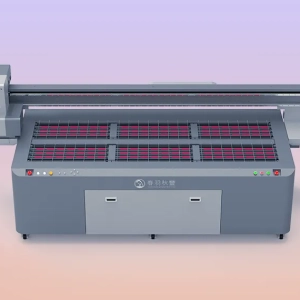

As UV printing has gradually expanded from proofing and advertising production into packaging, home appliances, electronic products, and industrial manufacturing lines, the indicators that companies focus on have also changed. In the past, many buyers paid more attention to printing accuracy and single-pass speed. Today, continuous operation capability, equipment stability, automatic conveying, and long-term production performance are receiving increasing attention. For factories with large order volumes, a UV printing machine that can operate continuously and reliably often delivers more practical production value than a machine with higher specifications alone.
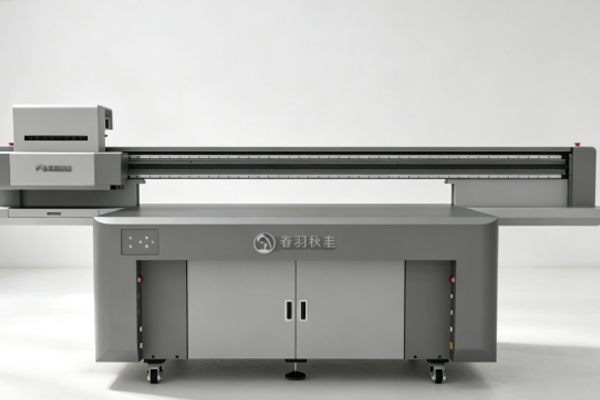
Why Has Production Continuity Become an Important Indicator for UV Printing Equipment?
After UV printing equipment enters industrial production, machine operating time directly affects order delivery and capacity utilization. The more stable the continuity, the easier it is to execute production plans.
Continuous production directly affects order delivery
Orders for packaging, appliance panels, and industrial customization usually have clear delivery deadlines. Unexpected equipment downtime can disrupt the entire production schedule.
- Large batches of folding cartons and gift boxes can continuously enter the printing process, reducing waiting time.
- Appliance panels need to maintain batch consistency, and stable continuous operation helps reduce variations caused by repeated machine adjustments.
- E-commerce packaging and promotional products are updated quickly, and stable production can reduce order backlogs.
- During centralized purchasing periods or holiday order peaks, continuous production capacity can relieve short-term capacity pressure.
For production-oriented companies, the key issue is not only how fast the machine can print, but also how much effective output it can reliably complete each day.
Reducing hidden costs caused by frequent downtime
The impact of unexpected equipment downtime usually involves more than repair expenses. It may also result in additional labor, material, and delivery losses.
- After downtime, the machine may need to be repositioned and readjusted, increasing nonproductive operating time.
- Ink, materials, and semi-finished products may incur additional waste due to abnormalities.
- Order backlogs can affect subsequent production processes.
- Emergency repairs may also increase the costs of spare parts, labor, and overtime.
Equipment with better production continuity can reduce these unplanned losses and make it easier to convert equipment investment into stable production capacity.
Which Equipment Configurations Determine the Production Continuity of UV Printing?
Whether UV printing equipment can operate for long periods is not determined by the printhead alone. It is the result of the combined performance of the printing, conveying, ink delivery, curing, and control systems.
The printhead and ink delivery system determine continuous output capability
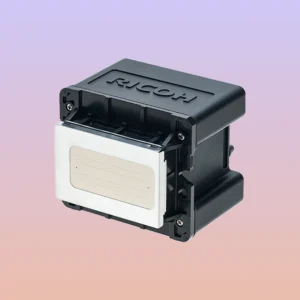
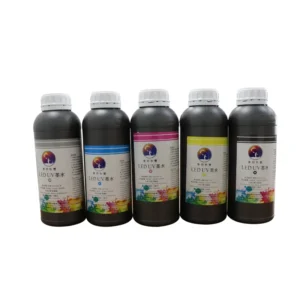
The printhead is the core component of UV printing equipment, while the ink delivery system provides a continuous and stable ink supply. Stable inkjet performance can reduce ink interruptions, missing lines, and abnormal jetting. Air bubbles, sedimentation, and changes in ink supply pressure may all affect continuous printing. White ink is especially prone to sedimentation, so the equipment needs a suitable circulation and maintenance design. At the same time, printhead protection, cleaning, and automatic maintenance should be properly implemented, and compatibility tests between the ink and printhead should be conducted to reduce the risk of clogging and ensure continuous output.
The conveying, curing, and control systems need to work together
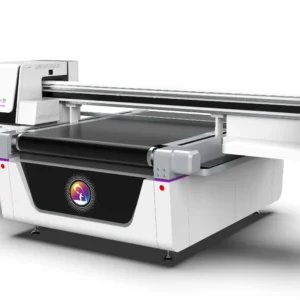
For UV flatbed conveyor printers, the conveying system directly affects the rhythm of continuous production.
- A smoothly operating conveyor belt can reduce material shifting and positioning errors.
- Automatic loading and unloading can reduce waiting caused by manual handling.
- The UV curing system needs to remain properly matched with the printing speed and ink layer thickness.
- The control system needs to remain stable during long-term operation, reducing freezes, communication errors, and task interruptions.
- A sufficiently rigid mechanical structure can reduce vibration and positioning changes during high-speed continuous operation.
Only when multiple systems work together reliably can the equipment truly provide a foundation for continuous production.
What Value Can Production Continuity Bring to Companies?
Stable operation means more than fewer shutdowns. It also affects equipment utilization, labor planning, and overall production management.
Improving equipment utilization and effective production capacity
When equipment can operate reliably for longer periods each day, the same investment can support more production tasks.
- Reduce startup waiting time and unexpected downtime.
- Increase effective output per unit of time.
- Make it easier for companies to arrange multiple batches and continuous production tasks.
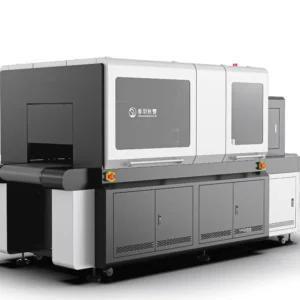
- Automatic conveying equipment can more easily connect with upstream and downstream processes to form a production line.
- During peak periods, orders can receive more stable capacity support.
For factories with a steady order supply, equipment utilization is often more important than single-pass printing speed.
Promoting standardized production management
As continuous production capability improves, companies can standardize commonly used materials and printing parameters, arrange equipment maintenance properly, record production data, coordinate printing, conveying, curing, and inspection processes, and unify production standards across multiple machines. This helps reduce adjustment time and equipment failures, making production management more stable and controllable.
How Can You Evaluate the Production Continuity of UV Printing Equipment?
When purchasing equipment, continuity should not be evaluated solely based on the manufacturer’s introduction or the printing speed shown in promotional materials. The equipment’s stable performance should be verified through actual production testing.
Observe actual operating performance through continuous testing
Actual testing provides more useful reference than simply reviewing specifications.
- Use the materials commonly used by the company for long-term continuous printing.
- Observe the printhead’s inkjet performance after extended operation.
- Check color, texture, and positioning consistency across different production batches.
- Pay attention to conveyor belt deviation and vibration after long-term operation.
- Record alarms, shutdowns, and maintenance frequency during continuous production.
Continuous testing can help companies identify the equipment’s actual performance under high-load conditions and avoid judging its capabilities solely from short-term samples.
Comprehensively evaluate the manufacturer’s technical and after-sales capabilities
Continuous equipment operation depends on the manufacturer’s technical support. In industrial production environments especially, the speed of fault resolution directly affects order delivery.
- Learn about the manufacturer’s installation, commissioning, and operator training capabilities.
- Pay attention to the response speed of remote technical support and troubleshooting services.
- Confirm the supply capability for commonly used spare parts, printheads, and other consumables.
- Understand the manufacturer’s support for equipment maintenance, software upgrades, and process adjustment.
- For special materials and complex textures, conduct actual sample testing and parameter verification in advance.
Choosing a manufacturer with comprehensive after-sales service and ongoing technical support can help companies reduce equipment downtime risks and protect production efficiency and print quality.
The selection of UV printing equipment should not focus only on single-pass printing results. It should also be evaluated comprehensively based on actual materials, order schedules, and daily maintenance conditions. For companies involved in packaging, appliance panels, electronic products, advertising, and industrial customization, it is important to understand the equipment’s application range, ease of operation, maintenance costs, and after-sales response efficiency before purchasing, ensuring that the equipment can match the existing production workflow. Springyprinter specializes in the research, development, and manufacturing of industrial UV digital printing equipment and can provide stable UV printing equipment and professional technical support for different production scales and application scenarios.