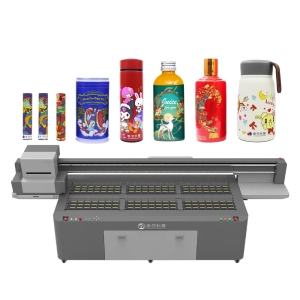

In UV digital printing applications, while equipment performance and printhead precision are crucial, the final output quality largely depends on the completeness of the color control system. The same design file may show color deviations, tonal variations, or inconsistent brand colors when printed on different machines, materials, or during different production cycles. For industries such as advertising production, packaging printing, home appliance decoration, and industrial labeling, stable and repeatable color output is a fundamental requirement for ensuring product quality. A scientific color management system enables more accurate image reproduction while improving consistency and reliability in mass production.

Improving Color Consistency in Printing
In industrial production, color stability directly affects product quality evaluation and is an important indicator of UV printing system maturity.
Maintaining Color Consistency Across Batches
In mass production, color management effectively reduces the impact of time and environmental changes, ensuring more stable output results.
- Ensures consistent color across the same order produced at different times, reducing batch variation.
- Minimizes the impact of temperature and humidity changes on color performance.
- Improves matching accuracy between design files and final printed products.
- Maintains consistent output standards for repeat orders, reducing operational fluctuations.
- Meets customer requirements for high consistency in product quality.
Stable color performance reduces rework rates and improves overall delivery quality.
Enhancing Brand Color Reproduction
Brand visual systems usually have strict color specifications, and color management ensures accurate reproduction across different media.
- Precisely reproduces brand logos and standard color values.
- Ensures visual consistency across different materials.
- Reduces reliance on manual color adjustment and improves standardization.
- Strengthens brand recognition and visual unity.
- Enhances the professional appearance of final products.
More accurate color output helps strengthen brand image and improve customer trust.
Improving Visual Performance
Color management not only affects accuracy but also directly determines visual hierarchy and overall presentation quality.
Enhancing Image Depth and Layering
Proper color control makes image details richer and more natural.
- Optimizes gradient transitions for smoother color changes.
- Improves detail reproduction for clearer images.
- Enhances contrast between light and dark areas for stronger visual impact.
- Increases overall dimensionality, making images more realistic.
- Improves visual refinement and product appearance quality.
Richer visual layering significantly enhances the attractiveness of printed products.
Improving Adaptability to Different Materials
Different materials absorb and display ink differently. Through parameter optimization, color management enables more stable output, allowing glass, acrylic, PVC, wood, and metal to achieve more balanced color performance during printing. It also improves ink adhesion and visual consistency, thereby expanding the application range of the equipment.
Improving Production Efficiency
In large-scale production, color management reduces uncertainty and improves overall operational efficiency.
Reducing Color Adjustment Time
A standardized color system reduces adjustment steps between design and production, making workflows more efficient.
- Directly uses existing color profiles, reducing repeated adjustments.
- Decreases proofing frequency and improves first-pass success rate.
- Enhances output stability and reduces rework probability.
- Shortens production preparation cycles and improves order response speed.
- Increases equipment efficiency by reducing unnecessary debugging time.
Standardized processes reduce human error and make production more stable and efficient.
Reducing Material Waste
Stable color output reduces proofing and rework, thereby lowering overall production costs.
- Improves first-pass yield rate and reduces repeated printing.
- Enhances material utilization and reduces trial-and-error waste.
- Lowers ink consumption and reduces color adjustment waste.
- Decreases additional costs caused by rework.
- Optimizes production structure and increases profit margins.
Reducing unnecessary consumption helps improve overall operational efficiency.
Enhancing Enterprise Market Competitiveness
Color management capability has become one of the key indicators of a company’s professional level.
Meeting Broader Industry Demands
As application scenarios continue to expand, different industries place higher demands on color performance. The advertising industry emphasizes visual impact, packaging focuses on brand consistency, home appliance manufacturing requires long-term stability, industrial labeling demands clarity and durability, and personalized customization requires flexible color control. A complete color management system enables companies to cover more high-value orders.
Building Long-Term Quality Advantages
Stable output capability comes from systematic management rather than a single piece of equipment.
- Establishes a unified color standard system to ensure consistent output across multiple devices.
- Standardizes printing parameter settings to reduce human variation.
- Categorizes and manages color profiles to improve reuse efficiency.
- Enhances long-term customer cooperation and strengthens trust.
- Reinforces a professional corporate image and improves market competitiveness.
By continuously optimizing color management processes and combining equipment calibration with operational standards, stable output quality can be maintained across different orders and material conditions.
In UV digital printing systems, color management not only affects visual presentation but also plays a critical role in production efficiency, cost control, and customer experience. Establishing a scientific and well-structured color control system helps achieve stable output across different materials and production batches, thereby improving overall manufacturing capability and market competitiveness. Springyprinter focuses on the research and development of industrial digital printing equipment, providing stable and reliable UV digital printing solutions for global customers.