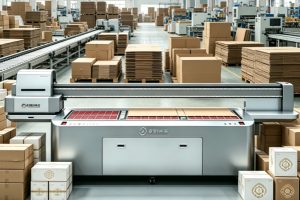
When enterprises choose UV printing equipment, many people tend to focus first on the machine quotation, while easily overlooking the links that truly affect the total investment. Transportation, installation, consumables, maintenance, training, and downtime losses may seem scattered on the surface, but in reality they all enter the company’s operating accounts. For businesses that want to expand capacity, handle custom processing, or improve delivery efficiency, only by clearly calculating both one-time investment and long-term operating costs can they judge whether the equipment is suitable and plan the payback period more accurately.
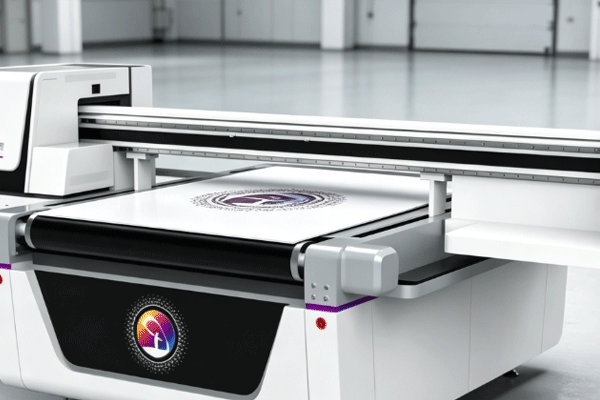
Equipment Purchase and On-Site Deployment Costs
When purchasing equipment, in addition to the price of the main unit, the expenses involved in deployment should also be included in the budget. Although these costs are often overlooked, they frequently have a direct impact on whether the overall procurement plan is reasonable.
Main Unit Configuration Determines the Purchase Budget
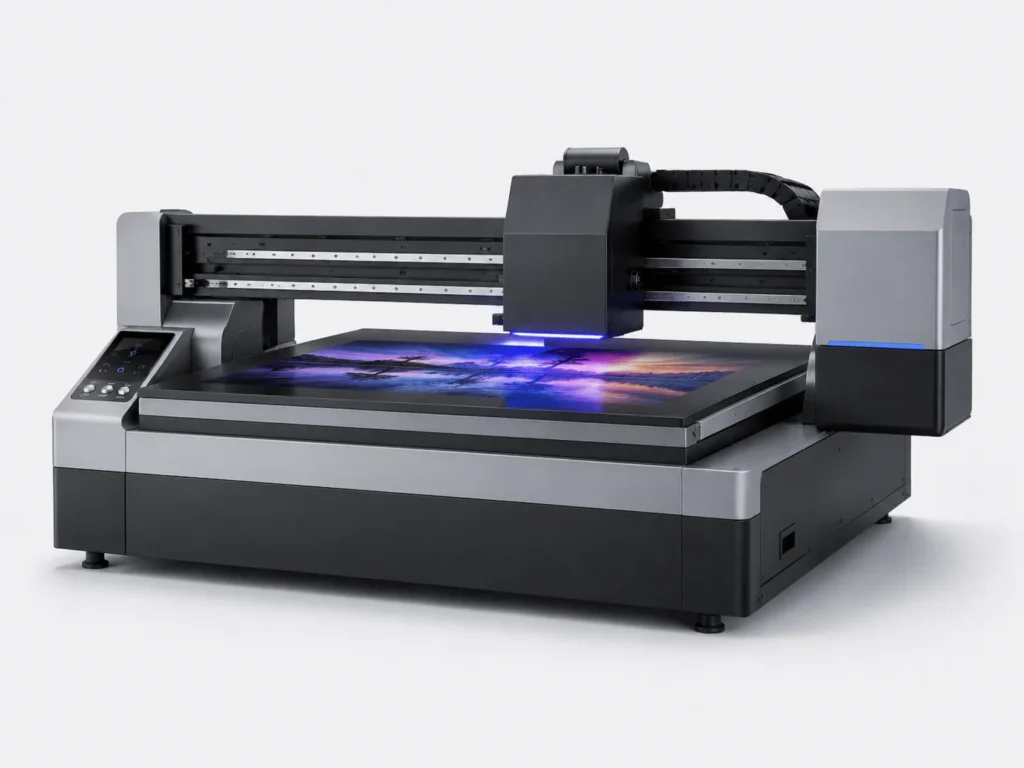
The price differences of UV printing equipment are usually first reflected in the configuration level, and the higher the configuration, the more obvious the budget pressure becomes.
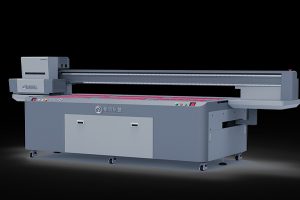
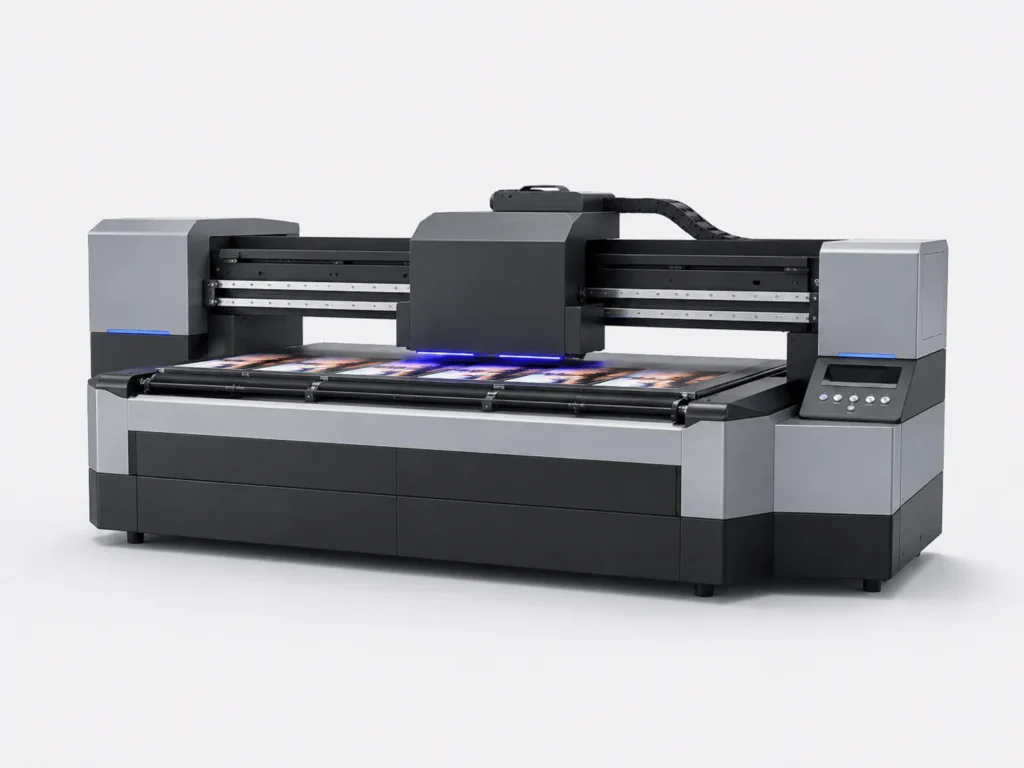
- The larger the printing format, the higher the overall machine price is usually, and the requirements for site space, handling, and later usage space will also increase accordingly.
- The number of printheads, printing speed, and printing precision all affect the quotation. When comparing, enterprises should not look at a single parameter alone, but should judge based on actual production capacity needs.
- Functions such as automatic lifting, visual positioning, and white ink circulation increase costs, but in certain application scenarios these functions can significantly improve efficiency and stability.
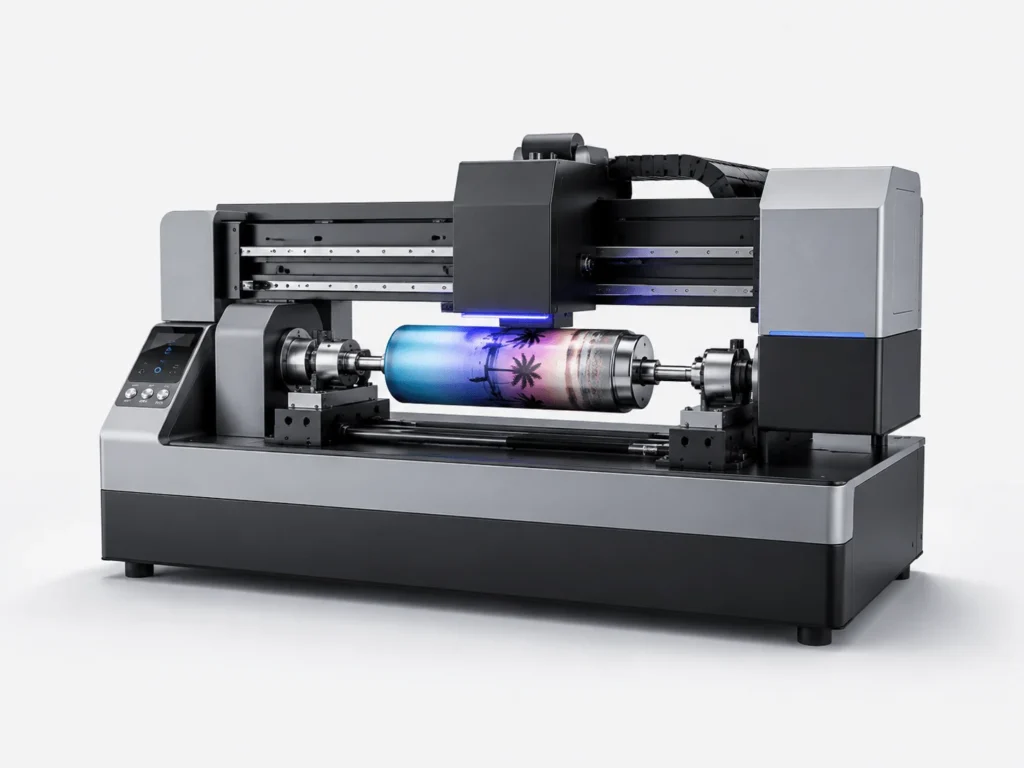
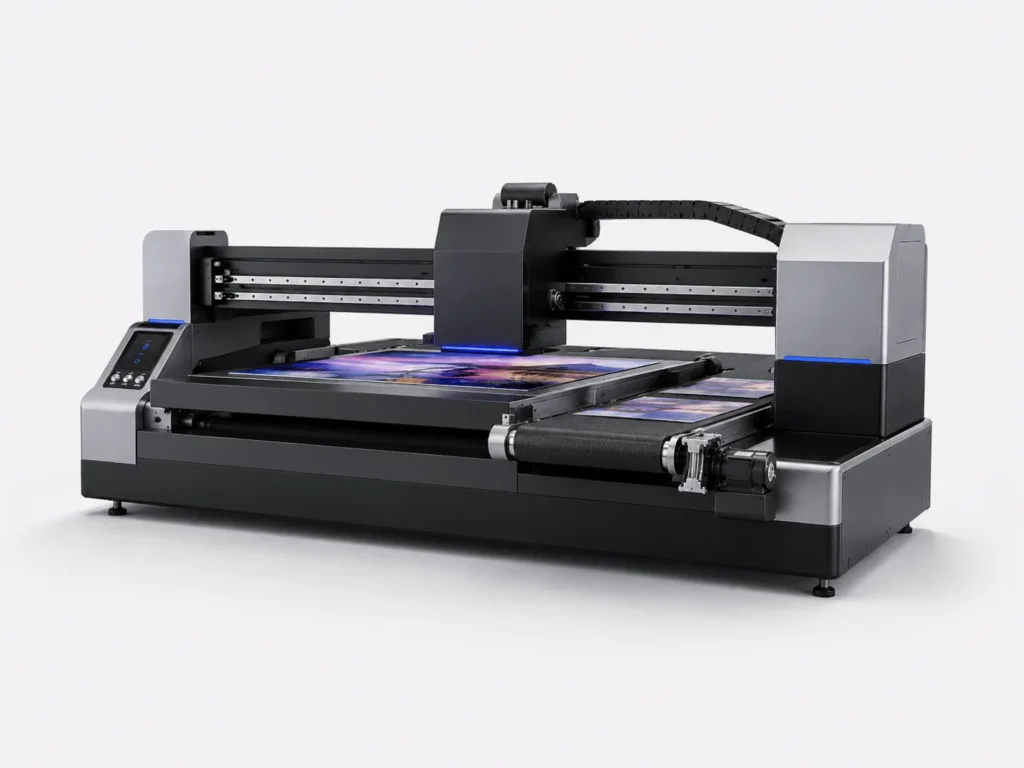
- Different application scenarios correspond to different machine models. If the selection is inappropriate, it will not only waste resources, but may also prevent the equipment from delivering its intended value in actual production.
When comparing equipment, enterprises should not only look at the listed price, but also make a comprehensive judgment based on order type, production capacity goals, and product structure. The configuration that suits your business is the truly valuable investment.
Transportation and Installation Must Also Be Budgeted in Advance
Buying the equipment does not mean the spending is over. Once it enters the factory, the deployment stage will also generate a considerable amount of expense.
- The farther the transportation distance for large equipment, the higher the cost. During cross-regional transport, additional expenses such as reinforced packaging and insurance may also be involved.
- On-site handling, lifting, and positioning may all incur extra charges, especially when the equipment is large or the factory passage is limited, making these costs easier to underestimate.
- Site modification, electrical upgrades, ventilation, and temperature control configurations are often ignored, yet these basic conditions often directly determine whether the equipment can operate stably.
- Initial commissioning, test runs, and parameter calibration also consume time and manpower. If the enterprise does not arrange technical staff in advance, the deployment cycle may be further extended.
These expenses may not seem excessive individually, but when accumulated they can exceed expectations. Including deployment costs in advance makes the budget more reliable and also helps with later production planning.
Consumables, Wear Parts, and Labor Usage Costs
Once the equipment starts running, the ongoing expenses are often more worthy of attention than the purchase price, because these costs accumulate with order volume and directly affect the company’s gross profit margin.
Ink and Auxiliary Materials Are Ongoing Expenses
The long-term costs of UV printing equipment often come from daily consumables, and these consumables change with product type and production rhythm.
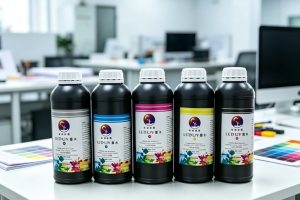
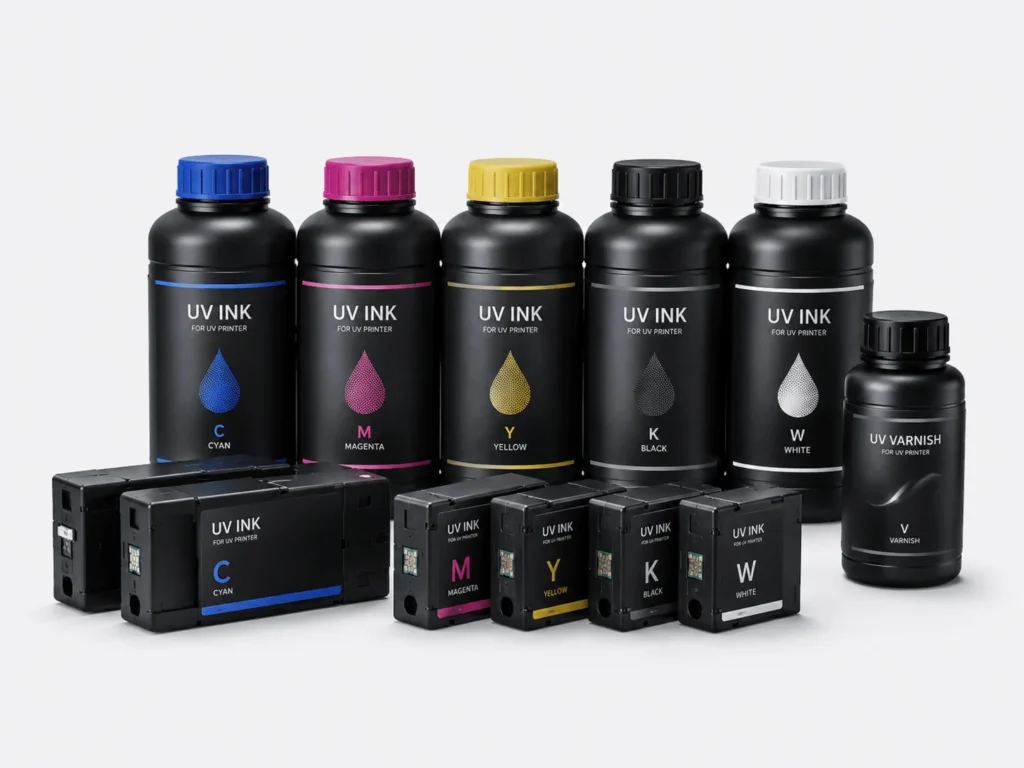
- UV ink, varnish, and primer are all continuous consumables. The more orders and the larger the printed area, the more obvious the overall consumable expense becomes.
- Different materials and image areas affect consumable usage. Complex patterns, dark backgrounds, or special effects usually lead to higher ink consumption.
- Original consumables and compatible consumables differ significantly in price and stability. Enterprises should not only look at unit price, but also consider print quality, equipment compatibility, and later maintenance risks.
- The more product types there are, the more complex the consumable categories become, and warehouse management, purchasing rhythm, and inventory turnover will all increase management costs accordingly.
When calculating costs, enterprises should estimate consumable expenses based on monthly output or order volume rather than only looking at the price of a single purchase. This makes it easier to judge the real operating pressure of the equipment and to set profit expectations more accurately.
Printheads and Accessories Cannot Be Ignored
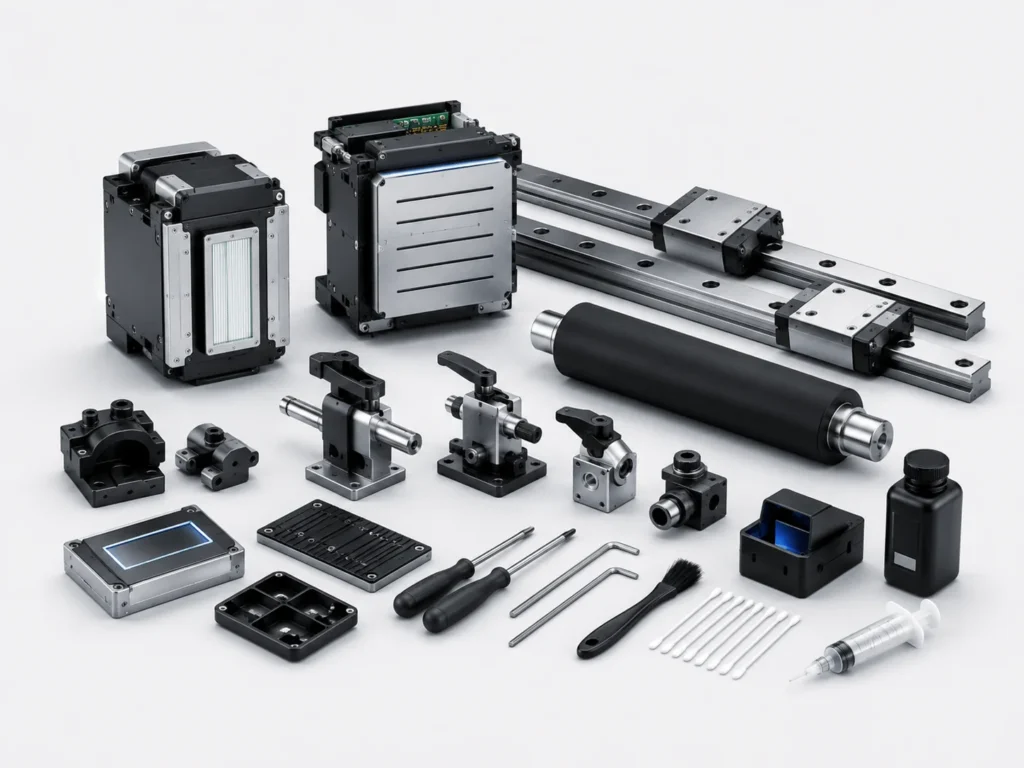
Core components and commonly used accessories also affect long-term costs. These expenses usually become apparent only after the equipment has been used for a period of time. The printhead is a core component, and maintenance and replacement costs are relatively high. Once worn, it not only increases repair expenses but may also affect production rhythm. UV lamp units will degrade over time. Once curing performance declines, print quality and production stability will both be affected. Scrapers, filters, ink tubes, and other accessories all have replacement cycles. If spare parts are not managed properly, waiting for parts during unexpected downtime will also bring additional losses. Preparing commonly used spare parts in advance can reduce downtime and allow the equipment to resume production more quickly when minor issues occur. If these wear parts are ignored, later operating costs often exceed expectations. Including accessory costs in the budget allows for a more accurate assessment of the total investment and helps avoid disruptions to later capital planning.
Maintenance, Downtime, and After-Sales Costs
Whether equipment can operate stably over the long term depends not only on performance parameters, but also on subsequent maintenance and service support. Many enterprises overlook this during procurement, only to realize after the equipment is put into production that stability is the most expensive cost.
Routine Maintenance Determines Equipment Stability
Whether equipment can operate stably over the long term depends on continuous maintenance, and whether maintenance is done properly often directly determines equipment lifespan and production efficiency.
- Printhead cleaning, rail lubrication, and ink path inspection all need to be carried out regularly. These seemingly basic actions actually have a major impact on equipment condition.
- Poor maintenance can easily lead to clogging, color deviation, and ink interruption. Once these problems occur frequently, the production rhythm will be repeatedly disrupted.
- If minor faults are not handled in time, they may develop into major repairs. Problems that could originally be solved at low cost may eventually turn into much higher repair expenses.
- Standardized maintenance helps extend equipment life, reduce long-term costs, and enables enterprises to maintain more stable delivery capacity during peak seasons.
Maintenance costs may seem to increase investment, but in reality they reduce larger losses. For manufacturing enterprises, stability itself is a form of return, and this return is often more important than simply lowering the purchase price.
Downtime Losses and Rework Costs Are More Hidden
What truly affects profit is often not the repair fee itself, but the chain reaction caused by downtime. These hidden costs are often harder to control than visible expenses.
- Order delays affect delivery and customer satisfaction, and in severe cases may also affect future cooperation and customer repeat purchases.
- Material scrap directly increases production loss, especially on high-value substrates, where the cost of rework and scrap becomes more obvious.
- Rework occupies labor and equipment time, forcing capacity that could have been used for new orders to be diverted to correction work.
- Downtime during peak seasons may also cause missed market opportunities. Especially in industries with tight delivery schedules, once equipment fails, the loss is often more than just a repair bill.
When purchasing, enterprises should not only look at machine performance, but also pay attention to equipment stability and after-sales response speed. Equipment that can resume production quickly is often more cost-effective than low-priced equipment, because it can reduce hidden losses to a lower level.
Service Support and Investment Return Costs
Whether the equipment is worth buying ultimately comes down to service capability and return performance. For enterprises, procurement is not a one-time action, but a long-term decision that continuously affects operating efficiency.
After-Sales Service Determines the User Experience
When purchasing UV printing equipment, service capability is equally important, and in many cases it even directly affects whether the equipment can be smoothly put into use and operate stably over time. Whether installation, commissioning, training, and remote support are in place affects how quickly the enterprise can get started and how stable production will be. Whether spare parts supply is timely determines whether later repairs go smoothly. Whether warranty coverage and response speed are clear also affects the enterprise’s risk assessment. Whether technical support can cover future upgrade needs determines how much value the equipment can still deliver in the future. A complete after-sales system can help enterprises reduce trial-and-error time and lower operating risks, especially for businesses that lack a mature technical team.
The Payback Period Must Be Judged According to Order Structure
Whether the equipment is worth buying ultimately depends on returns. And returns are not simply about the equipment price, but must be analyzed together with order structure, capacity utilization, and profit margin.
- Small-batch custom orders are more suitable for the UV printing model. These orders require high flexibility and are more likely to reflect the advantages of digital equipment.
- High-value-added products are more likely to shorten the payback period, because the higher unit profit makes it easier to recover the equipment investment through orders.
- When order sources are unstable, equipment utilization will be affected. The longer the machine sits idle, the harder it is to reduce unit cost.
- Before purchasing, enterprises should make calculations based on profit margin, production capacity, and market demand. Only by placing income and expenses on the same ledger can the judgment be more accurate.
Only by looking at costs and returns together can you determine whether the equipment truly suits the company’s development. Equipment is not better just because it is cheaper; it is more valuable when it matches the business more closely.
When enterprises purchase UV printing equipment, they should not compare only the quotation, but should comprehensively evaluate multiple dimensions such as equipment itself, consumables and accessories, labor training, maintenance and downtime, and after-sales service. Only by calculating these costs clearly can later overspending be avoided and the equipment’s value be realized more quickly. Springyprinter focuses on the research, development, and manufacturing of industrial UV digital printing equipment, and can provide enterprises with stable and reliable procurement solutions and technical support.