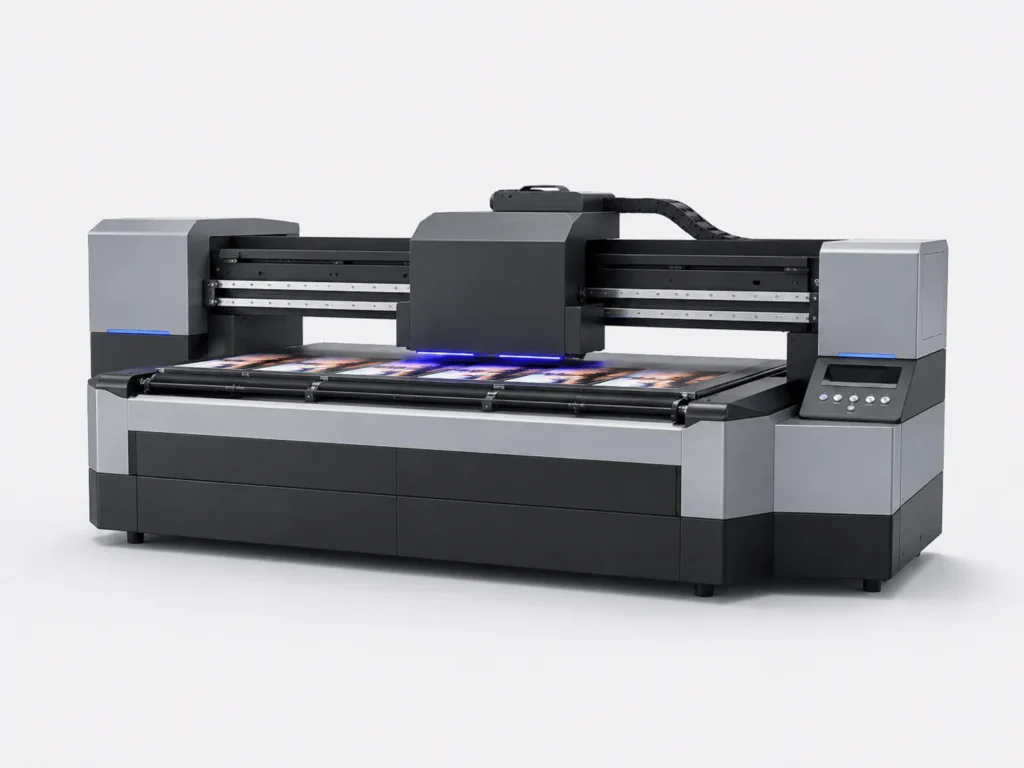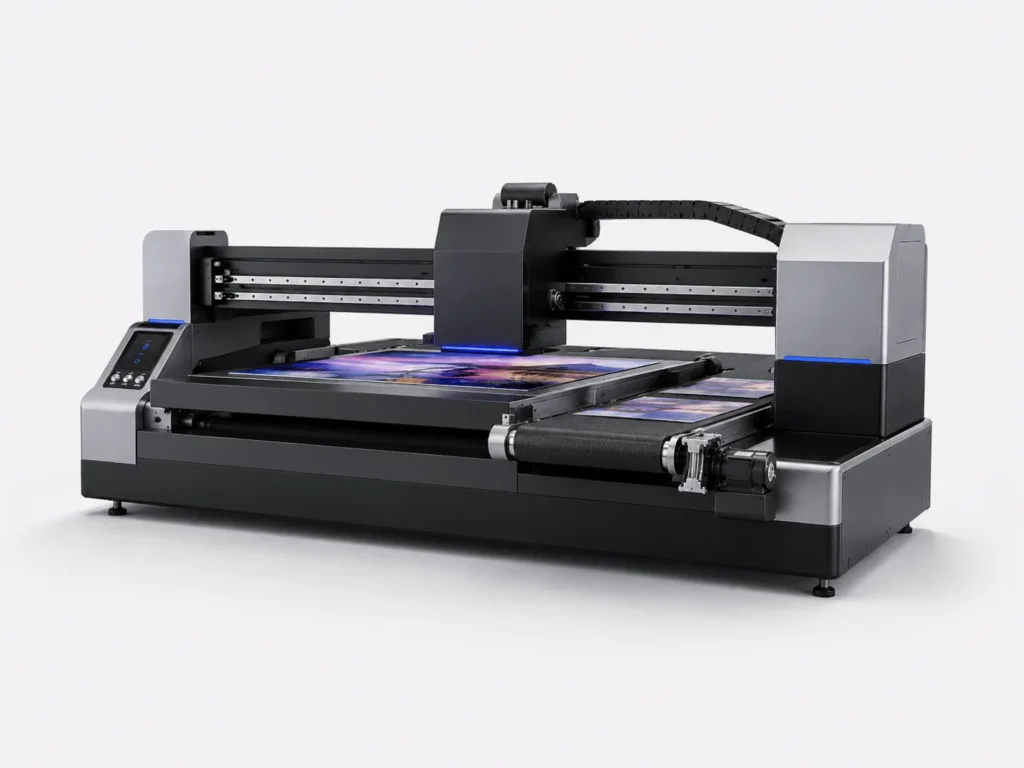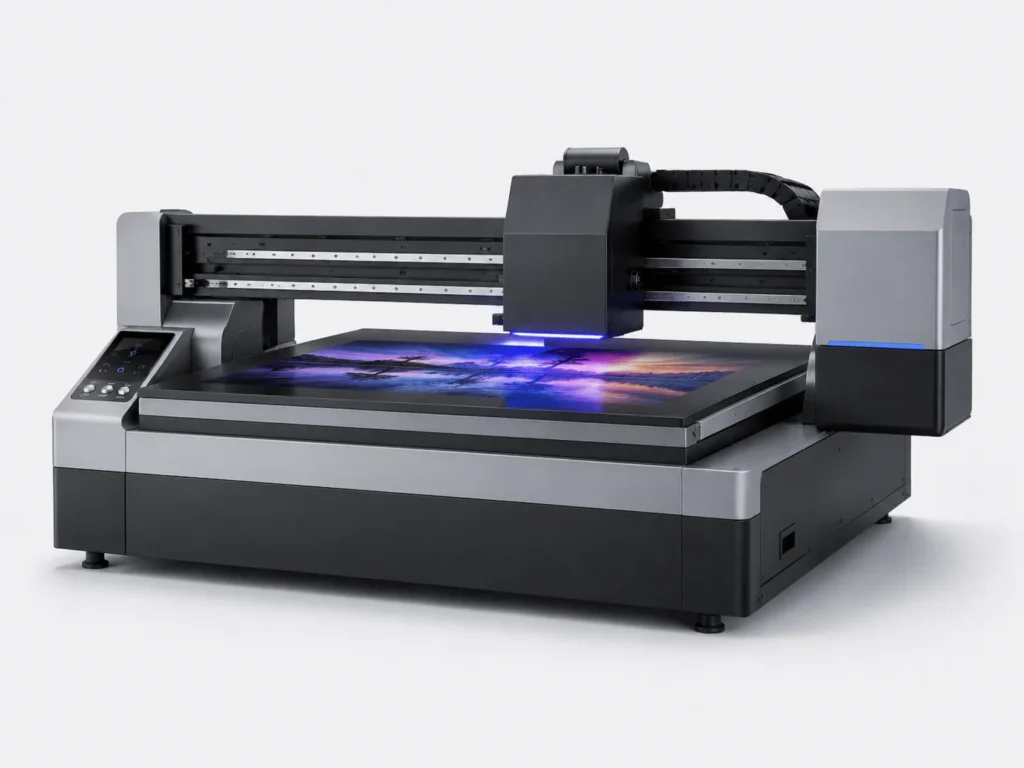
As the personalized customization market continues to develop, more and more companies are using UV flatbed printers for product decoration and graphic processing. Whether in the advertising industry, packaging industry, toy manufacturing, home decoration, or craft gift sectors, UV printing technology can be seen in a wide range of applications. Many users who are new to the equipment often have a common question: What exactly can a UV flatbed printer print? Can it only print on flat materials? What kind of results can it achieve on different products?With digital printing and instant curing technology, UV flatbed printers are now capable of meeting the production needs of a wide variety of industries.
What Products Can a UV Flatbed Printer Print?
Many people assume that printers can only print on paper, but industrial UV flatbed printers have long surpassed this limitation. They can print full-color graphics directly onto the surfaces of various materials and quickly reproduce digital designs, making them widely used across many industries.Most businesses prefer a single machine that can handle multiple product processing requirements, and UV flatbed printers are designed exactly for this purpose. By simply adjusting printing parameters and design files, different products can be printed without frequently changing equipment.
Common application products include:
● Advertising signboards
● Acrylic display panels
● Wooden crafts
● Phone cases
● Packaging boxes
● Ceramic decorations
● Metal nameplates
● Children’s toys
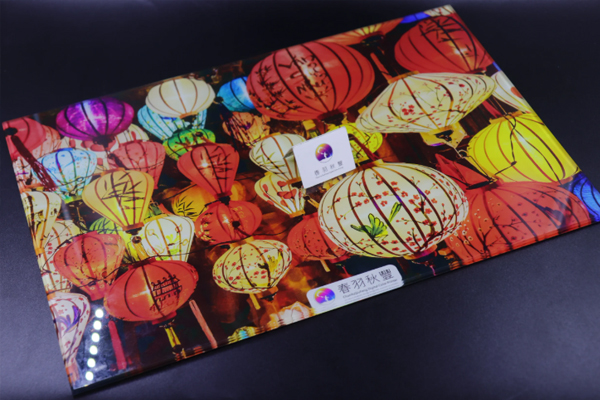
● Glass decorative paintings
● PVC decorative panels
This flexibility allows businesses to accept a wider variety of orders, improving equipment utilization and production efficiency.
Why Is UV Printing Becoming More Popular in the Toy Industry?
UV flatbed printers have become widely adopted in toy manufacturing. In the past, toy graphics were often applied using stickers, pad printing, or screen printing processes, which involved lengthy procedures and high costs when changing designs.Today, UV flatbed printers can directly print cartoon graphics, anime characters, brand logos, and various colorful elements onto toy surfaces. For children’s building blocks, plastic puzzles, model toys, and educational toys, UV printing not only provides richer color performance but also supports small-batch customization.
Why Is It Called a “Universal Printer”?
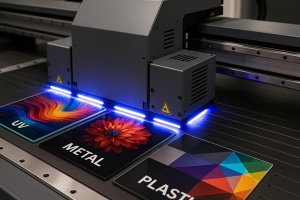
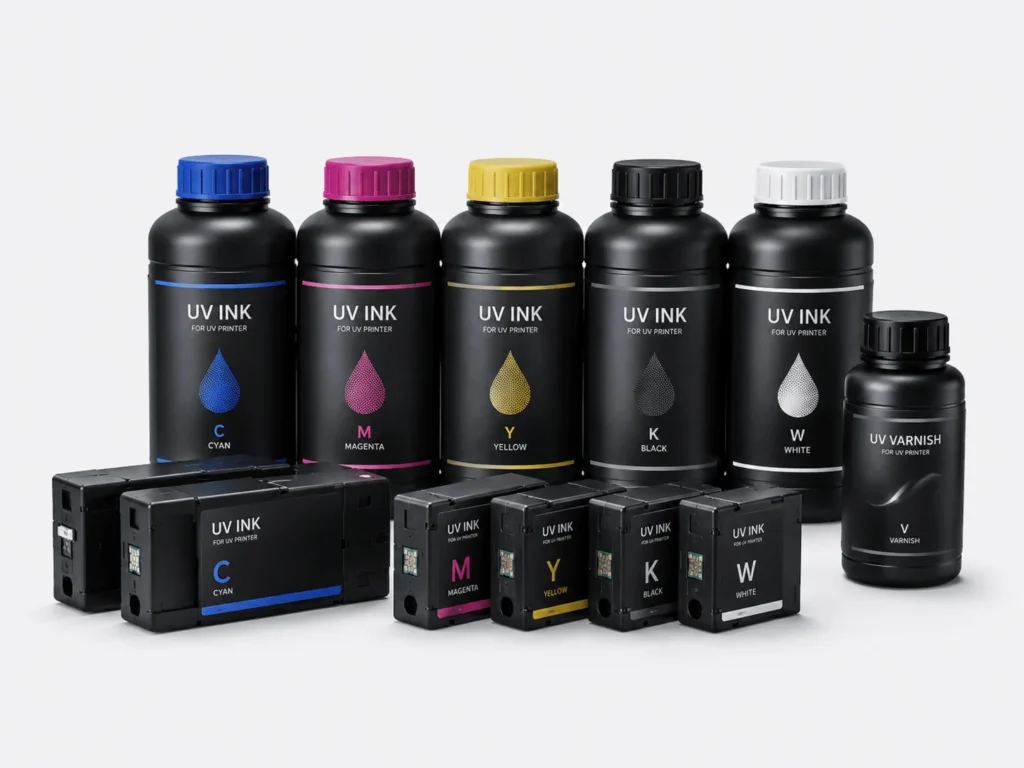
When purchasing equipment, many buyers ask about material compatibility. One of the biggest advantages of UV flatbed printers today is their ability to work with a wide variety of materials.Because they use specialized UV inks and ultraviolet curing technology, they no longer rely on materials absorbing ink. This allows graphics to be printed onto many surfaces that are difficult for traditional printing methods.
Examples of common printable materials include:
● Acrylic sheets
● PVC boards
● Wood and bamboo products
● Metal sheets
● Stainless steel products
● Glass products
● Ceramic products
● Plastic housings
● Leather products
● Composite decorative materials
Graphics can be printed directly onto glass feature walls, wooden decorative panels, and furniture surfaces. In the packaging industry, colorful decorative effects can be applied to gift boxes, display boxes, and customized packaging materials.
Do Different Materials Produce the Same Printing Results?
Although the printer can print on many different materials, the visual results vary depending on the substrate.For example, glass surfaces are smooth, producing vibrant colors with excellent transparency effects. Wood surfaces retain their natural grain, creating unique decorative appearances after printing. Acrylic materials, due to their flat and smooth surfaces, often achieve very high image clarity.Because of these diverse material characteristics, UV printing is widely used for decorative products, gifts, and personalized product manufacturing.
How Does a UV Flatbed Printer Perform Printing?
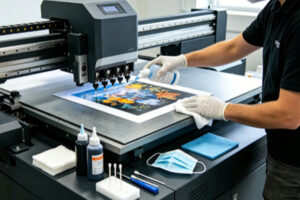
After a customer confirms the design, the operator imports the artwork file into the printing control software and adjusts the layout according to the product dimensions.Once confirmed, the material is placed onto the printer platform and accurately positioned. The machine then begins operation, with the printhead moving along predefined paths and evenly depositing ink onto the material surface. At the same time, UV lamps cure the ink instantly to form the printed image.
The entire production process generally includes:
● Graphic design and layout preparation
● Importing the file into printing software
● Placing the printing material
● Automatic inkjet printing
● Instant UV curing
● Finished product inspection and packaging
Because printing and curing occur almost simultaneously, the product can proceed directly to the next production stage without requiring lengthy drying times.
Why Can It Achieve Fast Delivery?
Traditional printing processes require plate making, color matching, and proofing. UV flatbed printers use a digital production workflow that eliminates these complex preparation steps.Once a design is modified, it can be printed immediately, greatly reducing production preparation time. This rapid response capability is especially valuable in e-commerce customization, holiday gifts, and personalized souvenir markets, helping businesses meet customer demands more efficiently.
Why Do Some Printers Produce Sharper Results?
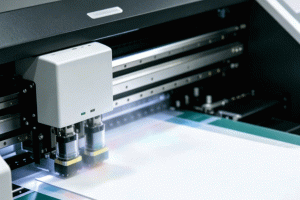
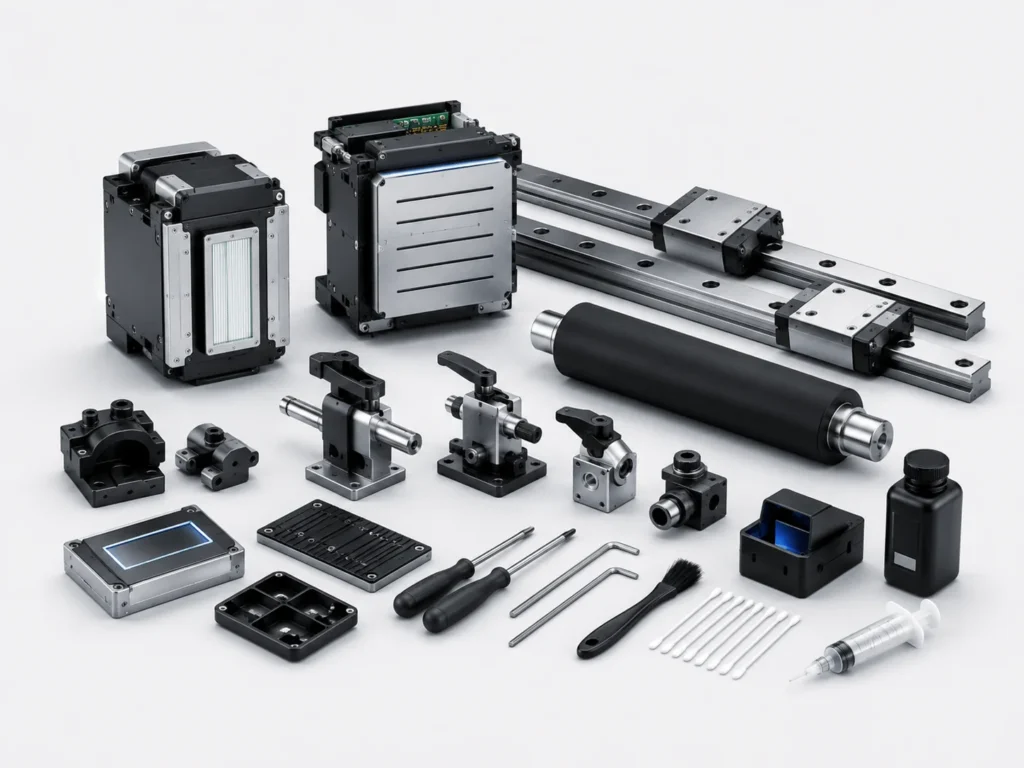
Many users notice significant differences in print quality between different brands of equipment. The primary reasons are printhead technology, control systems, and curing systems.The printhead is responsible for accurately depositing ink onto the material surface. If it can produce smaller ink droplets, graphic details become richer and text edges become sharper. For portrait photographs, cartoon graphics, and gradient designs, high-precision printheads deliver superior visual performance.
Equipment performance is typically influenced by the following factors:
● Printhead precision
● Ink quality
● Motion control system
● UV curing efficiency
● Printing stability
Together, these factors determine the quality of the final product.
What Is the Role of UV Curing Technology?
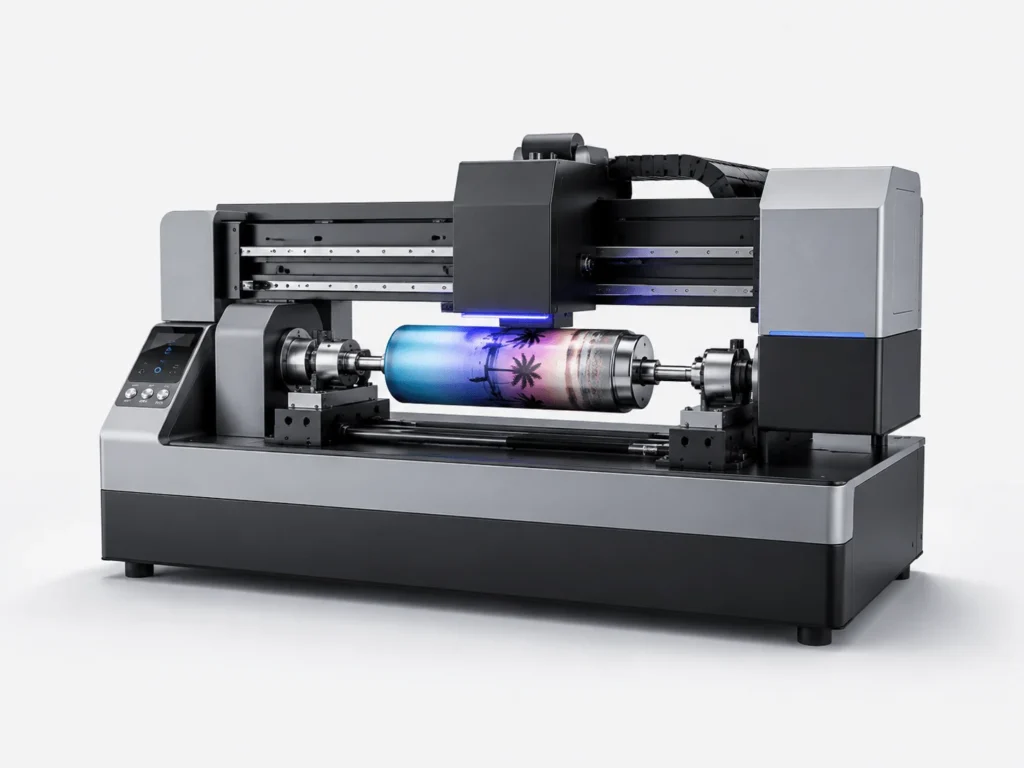
The key reason UV flatbed printers can achieve instant drying is UV curing technology.After ink is deposited onto the material surface, ultraviolet lamps immediately irradiate the ink layer, causing it to react and cure rapidly. This not only improves production efficiency but also prevents ink spreading, resulting in sharper graphic edges.For materials such as glass and metal that do not absorb ink, this technology also ensures strong adhesion of the printed image, significantly expanding the range of printable applications.
Will UV Printed Graphics Fade?
Under normal circumstances, as long as appropriate UV inks are used and the correct printing process is selected according to the material characteristics, the printed graphics will maintain excellent adhesion and color stability.For long-term indoor use, noticeable fading is generally unlikely. For products exposed to frequent friction or prolonged outdoor environments, additional protective coatings can be applied to further improve wear resistance and weather durability.
For example:
● Toy products
● Advertising signboards
● Phone cases
● Craft gifts
● Home decorative panels
These products are already widely manufactured using UV printing technology and have achieved excellent performance in practical market applications.
From advertising signage to home decoration, from packaging printing to toy manufacturing, and from craft gifts to personalized customized products, UV printing technology continues to expand its application range.UV flatbed printers not only reduce the complexity of traditional printing processes but also improve production flexibility, making small-batch production, multiple product variations, and rapid delivery a reality.Especially as demand for personalized products continues to grow, more consumers want exclusive designs and unique products. UV flatbed printers are perfectly suited to meet this market trend. Businesses can quickly complete customized production without investing heavily in plate-making costs, offering customers a wider variety of choices and greater product personalization.