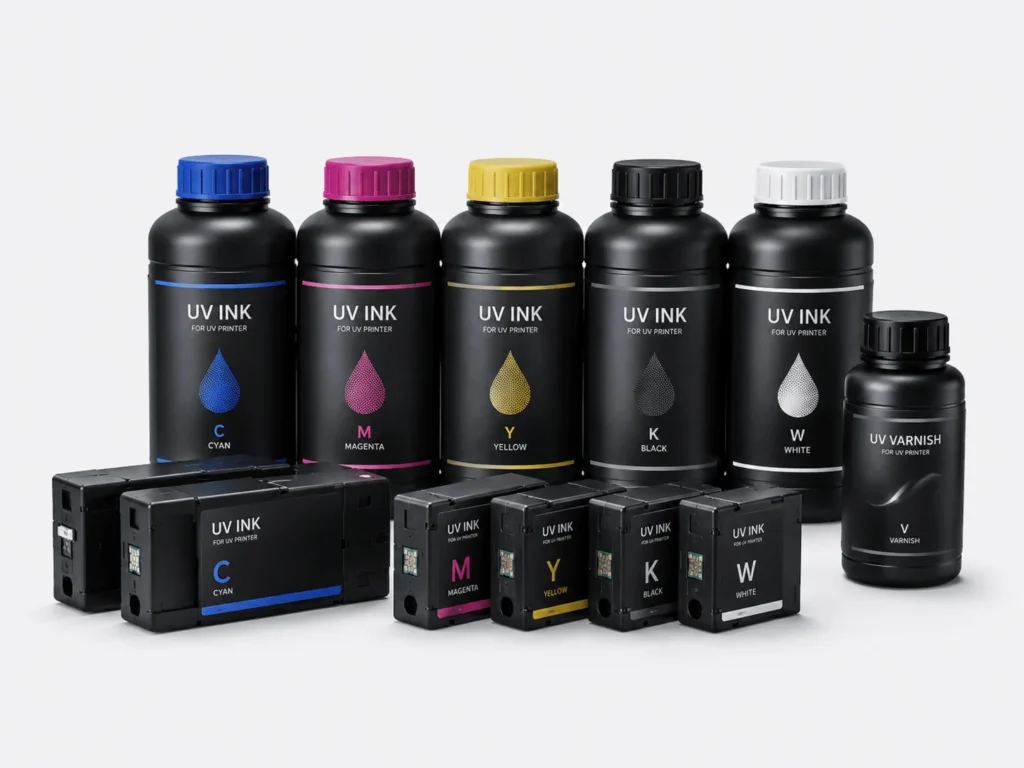
With the increasing application of UV printing technology in various industries, the types of UV ink have also become more diverse. Among them, UV hard ink and flexible UV ink are two commonly used products in production. Many companies find that both types of ink can be cured using UV LED light sources when selecting ink, but their actual printing effects and application ranges are significantly different. Choosing the wrong type may not only affect product appearance but may also cause problems such as ink peeling, surface cracking, and insufficient durability.
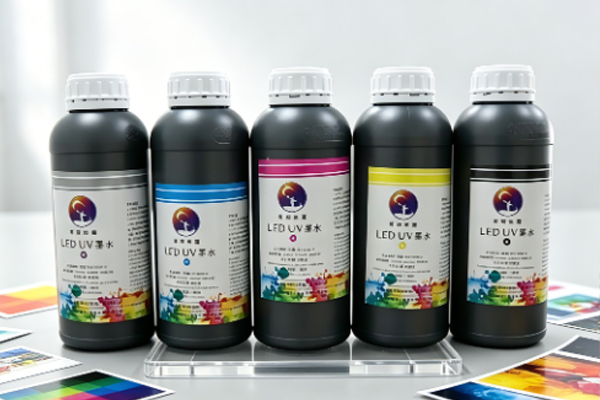
UV hard ink focuses more on hardness after curing, surface effects, and abrasion resistance, while flexible UV ink focuses more on flexibility and material adaptability. The selection needs to be based on product materials, application environments, and final appearance requirements. Only by choosing the appropriate ink type can UV printing results become more stable and meet the production needs of different products.
Differences in Ink Performance
Although UV hard ink and flexible UV ink are both UV-curable inks, there are certain differences in their formulation structures. Due to differences in resin components and additives, the performance of the cured ink layer is also different. Some products require a hard and wear-resistant surface effect, while others require ink that can remain intact as the material changes.
UV Hard Ink Has Higher Hardness
After exposure to ultraviolet light, UV hard ink quickly forms a relatively hard ink layer with good surface stability. This type of ink is more suitable for printing on materials that are not prone to deformation because the cured ink layer can maintain a stable shape and is less affected by minor friction.
Common characteristics of UV hard ink include:
- High surface hardness after curing
- Good pattern clarity
- Obvious surface gloss effect
- Strong abrasion resistance.
UV hard ink is commonly used for products such as glass, acrylic, metal panels, and hard plastics. For example, when producing advertising display boards, products usually need to maintain a fixed condition for a long time while requiring good visual effects. In this case, hard ink provides significant advantages. Due to its high ink layer hardness, printed text, patterns, and LOGO edges are clearer, meeting product appearance display requirements.
At the same time, the surface stability of hard ink can reduce wear during daily use, helping products maintain better decorative effects. However, although UV hard ink has high hardness, its flexibility is relatively lower. If the printing material itself needs frequent bending or stretching, hard ink may not fully adapt to material changes. Therefore, selection needs to be based on the actual application of the product.
Flexible UV Ink Has Elasticity
The biggest feature of flexible UV ink is that it maintains a certain level of flexibility after curing. Compared with hard ink, flexible UV ink does not form an overly rigid ink layer but can adapt to slight material changes.
Flexible UV ink usually has:
- Good stretching ability
- Strong flexibility
- Less tendency to crack after bending
- Suitability for printing on complex surfaces.
This type of ink is commonly used for materials such as leather, soft PVC, TPU, and flexible films. For example, leather products often experience folding, bending, or stretching during daily use. If ordinary hard ink is used, patterns may crack due to material movement. Flexible UV ink can follow material changes, keeping printed patterns intact and extending product service life. However, because flexible ink focuses more on flexibility, its surface hardness is usually lower than that of hard ink. If the product requires extremely strong abrasion resistance or a high-hardness protective layer, a more suitable ink needs to be selected according to specific requirements.
Different Applicable Materials
Different products use different materials, and material surface hardness, smoothness, and deformation ability all affect UV ink selection. Choosing ink that matches material characteristics can reduce printing failures and improve overall product results.
Hard Materials Are Suitable for Hard Ink
UV hard ink is mainly used on materials with stable structures that are not easily changed. These materials usually require ink to form a strong protective layer while maintaining clear and attractive printing effects.
Common application materials include: Glass, acrylic, metal, hard plastic, and wood panels.
For example, acrylic display boards are typical hard materials. During use, products usually do not experience obvious bending, so greater attention is paid to color effects, pattern clarity, and surface abrasion resistance. After printing with UV hard ink, patterns can maintain good three-dimensional appearance and visual effects. In electronic product housing processing, hard ink also has good application value. Since product housings need to maintain stable structures while withstanding certain levels of daily contact, hard ink can provide a more stable surface effect.
Flexible Materials Are Suitable for Flexible Ink
Flexible UV ink is mainly developed for materials that are easily deformed or require bending. These materials undergo certain levels of stretching or folding during use, requiring ink with better adaptability.
Common application materials include: Leather, soft PVC, TPU materials, flexible films, and elastic packaging materials.
For example, when printing patterns on leather products, the product surface may be affected by human movement and frequently bend. If hard ink is used, the surface ink layer may develop cracks after repeated folding. Flexible UV ink can maintain a certain degree of elasticity, allowing patterns to change with the material and reducing obvious damage. Therefore, flexible ink has better suitability in clothing accessories, flexible decorative products, and soft packaging industries. When selecting flexible UV ink, specific material characteristics also need to be considered. Some materials may be flexible products but have different surface treatments, resulting in different ink adhesion requirements. Therefore, testing should still be performed in advance.
Differences in Printing Effects
In addition to different material applications, UV hard ink and flexible UV ink also have certain differences in final appearance. Different products have different appearance requirements. Some products require brighter colors and smoother surfaces, while others focus more on long-term pattern durability. Therefore, the appropriate ink should be selected according to the desired product effect.
Hard Ink Provides More Stable Color Performance
Because UV hard ink forms a more stable ink layer, it generally provides better color reproduction and surface performance. For products requiring detailed display and strong visual impact, hard ink can provide clearer printing results.
Its characteristics include:
- Clearer pattern edges
- Higher color saturation
- More noticeable surface texture.
For example, in brand LOGO printing, high-end packaging decoration, and product appearance design, color accuracy and pattern clarity are extremely important. UV hard ink can make printed content more prominent and improve overall product visual quality. At the same time, the cured surface of hard ink is relatively stable and less likely to experience pattern changes caused by minor friction, making it suitable for long-term display products.
Flexible Ink Focuses More on Adaptability
Although flexible UV ink is not as hard as hard ink, its biggest advantage is its ability to adapt to material changes. When products need to bend, fold, or experience certain stretching, flexible ink can maintain better integrity.
After printing, this type of ink:
- Can adapt to material bending
- Is less likely to develop cracks
- Maintains pattern continuity.
For example, sports products, flexible packaging, and leather decorative products are continuously affected by external forces during long-term use. If the ink lacks flexibility, patterns are more likely to become damaged. Therefore, flexible UV ink is more suitable for products emphasizing service life and material adaptability.
The selection methods differ
There is no absolute difference between UV hard ink and flexible UV ink in terms of quality. The main difference lies in their suitable applications. Many companies focus only on color effects or price when selecting ink while ignoring actual product usage conditions. If the ink type does not match product requirements, problems may occur after long-term use even if the initial printing effect is good. Therefore, when selecting UV ink, it is necessary to consider product materials, application environments, and desired printing effects. Understanding product characteristics in advance can reduce later production adjustments and improve UV printing stability.
Select According to Product Application Environment
The final application environment directly affects UV ink selection. If products remain fixed for long periods and experience little external force variation, hard ink is more suitable. If products are frequently moved, folded, or stretched, the flexibility of soft ink needs to be considered.
For example: Display cabinet panels; Advertising signs; Industrial nameplates. These products usually do not undergo significant deformation after installation. During use, more attention is paid to surface hardness, color retention, and abrasion resistance, making UV hard ink more suitable.
The following products: Leather decorative products; Flexible packaging; Foldable materials. May continuously bend during use. If hard ink is applied, cracks may appear after long-term use. Therefore, these products usually require flexible UV ink to provide better adaptability. In addition to whether the material is soft, factors such as long-term outdoor exposure, frequent water contact, and frequent cleaning should also be considered.
Select According to Printing Requirements
In addition to product application environments, customer requirements for printing effects also influence ink selection. Some products require brighter colors and clearer patterns, while others focus more on stability after ink bonding with materials. If customers require: High-gloss effects, clear patterns, and high-hardness surfaces. UV hard ink can be considered first. After printing, this type of ink usually provides a smoother surface, stronger color performance, and is suitable for brand identification, product decoration, and display products.
If customers require: Flexible performance, bending without cracking, and adaptability to material changes. Flexible UV ink is more suitable. In some special applications, products may require both certain hardness and flexibility. In this case, ink formulations can be adjusted or customized UV ink solutions can be selected to achieve a more suitable printing effect.
Frequently Asked Questions
Q1: Can UV hard ink be printed on flexible materials?
Generally, UV hard ink is not recommended for flexible materials that require frequent bending. Because hard ink forms a rigid ink layer after curing, when the material changes, the ink layer may not follow stretching or contraction, resulting in cracks or peeling. If flexible materials are only used for fixed display and do not require bending, usage can be determined based on testing results.
Q2: Can flexible UV ink be printed on hard materials?
Flexible UV ink can be used for printing on some hard materials, but the final effect may differ from hard ink. Since flexible ink emphasizes flexibility, the surface hardness after printing may be lower. If the product requires strong abrasion resistance or high-gloss performance, UV hard ink is usually more suitable.
Q3: How can you determine which UV ink to choose?
When selecting UV ink, it is necessary to consider material type, product usage method, and printing effect requirements.
Customers can provide:
● Product material.
● Whether bending is required.
● Application environment.
● Desired surface effect.
Ink manufacturers can recommend suitable ink types based on this information.
The main difference between UV hard ink and flexible UV ink lies in their cured performance. UV hard ink has higher hardness, better abrasion resistance, and clearer color performance, making it more suitable for stable materials such as glass, acrylic, metal, and hard plastics. Flexible UV ink has better flexibility and stretching ability, making it more suitable for leather, soft films, TPU, and other easily deformable materials.
When selecting UV ink, companies need to make decisions based on actual product conditions. If the product needs to maintain a fixed shape for a long time and requires strong surface protection, UV hard ink can be selected. If the product needs frequent bending, folding, or has elasticity, flexible UV ink should be chosen. Correctly distinguishing between the two ink types can reduce quality problems during printing, improve product appearance, and enhance usage stability. For products with special materials or special printing requirements, UV ink can also be customized to make ink performance better match actual production requirements.