The consumer electronics market keeps upgrading rapidly, and laptops are developing towards ultra-thin design, personalized appearance and high overall aesthetics. Plain-color shells can no longer meet the aesthetic demands of end consumers. Meanwhile, laptop brands, OEM manufacturers and customized merchants are in urgent need of efficient and eco-friendly surface printing technologies compatible with multi-material shells. Traditional screen printing, heat transfer and water transfer printing suffer from low pattern resolution, poor fitting effect on curved surfaces, non-environmental ink and low yield rate, failing to satisfy the production standards for high-end laptop shells nowadays.
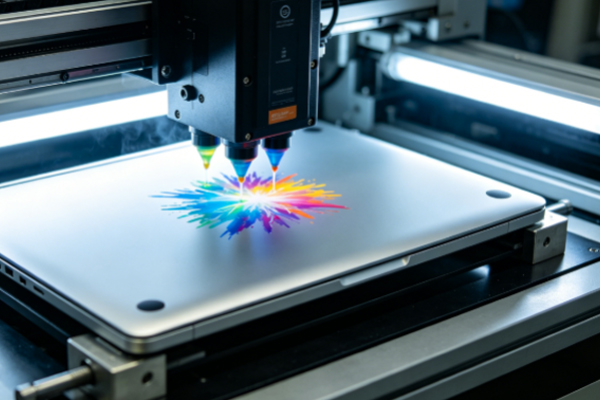
Focusing on the printing difficulties of mainstream laptop shell materials including ABS plastic, aluminum alloy and frosted composite plate, our company builds a full-process closed-loop UV printing system covering substrate pretreatment, high-precision digital printing, curing inspection and finished product quality testing. All production equipment is manufactured in accordance with standardized production and quality control procedures and complies with ISO quality management standards. All supporting printing consumables and automated equipment have obtained CE safety certification and RoHS environmental certification, with no heavy metals or volatile harmful substances. The whole production system meets global environmental access requirements for consumer electronics. We also provide professional OEM manufacturing and ODM customization services to support large-scale standardized mass production and small-batch personalized customization, helping electronic shell manufacturers cut production costs and improve overall market competitiveness.
Analysis on Printing Pain Points of Mainstream Laptop Shell Materials
Laptop shells made of different materials vary greatly in surface molecular structure and surface tension. Direct processing by ordinary UV printing equipment will easily cause pattern peeling, color fading, edge ghosting and curved surface printing faults. Combined with actual mass production conditions in the industry, common processing difficulties of three typical substrates are summarized below with targeted process optimization directions.
Printing Difficulties of ABS Plastic Shells
ABS plastic is the most widely used material for mid-range and entry-level laptop shells. It features dense and smooth surface with low surface tension, making it hard for printing ink to form firm adhesion with the substrate. In daily use, laptop shells are constantly exposed to sweat corrosion, backpack friction and desktop scratches, so patterns printed by common technologies will peel off and turn white in a short time. In addition, plastic shells are designed with curved edges and mounting grooves, while ordinary flat UV printers cannot fit irregular curved surfaces, resulting in missing printing and distorted patterns on edge areas.
Printing Difficulties of Anodized Aluminum Alloy Shells
High-end thin-and-light laptops generally adopt anodized aluminum alloy shells. The stable oxide layer on metal surfaces presents strong oleophobicity, which prevents ordinary UV ink from penetrating and bonding with substrates effectively.
- Poor color reproduction: The metal base color will reflect printing colors, causing distortion of high-definition logos and gradient patterns and failing to meet brand appearance design standards;
- Insufficient weather resistance: Ink layers will crack and turn yellow after long-term exposure to light and temperature changes, damaging the overall appearance consistency of laptops;
- Assembly scratch risk: Laptop shells need subsequent assembly of keyboards, screens and screws. Printing layers with insufficient hardness are easy to be scratched by assembly fixtures during production.
These defects will impair the overall appearance quality of finished laptops, which are core problems to be solved in UV printing for metal laptop shells.
Printing Difficulties of Frosted Composite Plate Shells
Matte frosted shells are designed with anti-fingerprint and anti-glare functions. The rough surface will absorb partial UV ink, leading to blurred patterns and jagged edges. Besides, uneven concave-convex surfaces of frosted plates cause inconsistent refraction of curing light, resulting in incomplete ink curing in partial areas and potential peeling risks in later use.
Core Process Configuration of UV Printing Technology
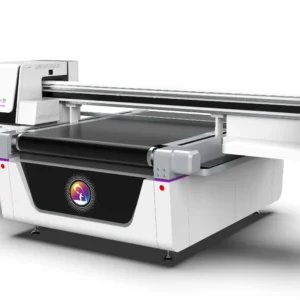
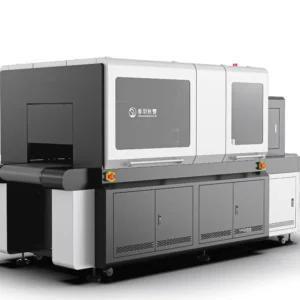
An integrated automated production line combining substrate pretreatment, high-precision digital printing, low-temperature curing and post-surface protection is adopted instead of single printing equipment. The production line is compatible with all types of laptop shells. All production equipment is debugged in line with ISO quality control standards, and independent quality inspection nodes are set for each working procedure to control the defective rate of semi-finished products strictly.
Substrate Surface Pretreatment Process
Differentiated pretreatment processes are matched for different shell materials to improve ink adhesion fundamentally without manual polishing or damage to the original shell texture. Plasma surface activation treatment is applied for plastic shells to enhance surface tension; special adhesion primer is sprayed on metal shells; electrostatic dust removal is conducted for frosted plates to eliminate interference from surface dust and static electricity. The fully automated pretreatment process guarantees consistent processing effect and supports mass production with a daily output of over 10,000 pieces.
High-precision Digital Direct Printing Process
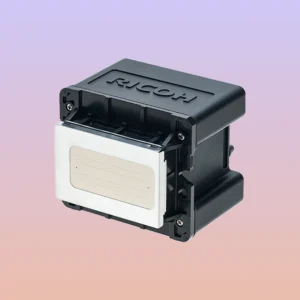
Industrial high-definition piezoelectric printheads are equipped to output vector patterns with high resolution, meeting printing demands for brand logos, gradient illustrations, texture embossing and privacy lines. Core equipment advantages are listed as follows:
- Adaptive printing for irregular curved surfaces within 3mm, perfectly fitting curved edges and side grooves of laptop shells without pattern distortion or missing printing;
- Controllable ink droplet with minimum printing accuracy up to 7PL, ensuring clear fine lines and tiny marks without ink bleeding;
- White ink base printing available to realize high-saturation color printing on dark shells and eliminate color difference caused by reflection of metal base surfaces.
The three core advantages make up for shortcomings of traditional printing technologies, balancing printing accuracy, visual effect and material compatibility.
Low-temperature LED Curing Process
Cold-source LED ultraviolet curing technology is adopted with curing temperature lower than 40℃. It avoids shell deformation and substrate warpage caused by high temperature in heat transfer printing, which is suitable for ultra-thin thin-walled laptop shells. Ink can be cured instantly after printing, so finished products can be stacked and transported immediately without drying time, greatly shortening the whole production cycle.
Performance Comparison Between UV Printing and Traditional Printing Technologies
To present the practical advantages of UV printing technology intuitively, a horizontal comparison is conducted among mainstream shell printing technologies in terms of production cost, mass production yield, environmental compliance, curved surface compatibility and wear resistance. All test data come from actual production tests on our standardized production lines and conform to ISO quality inspection specifications.
| Printing Technology | Unit Production Cost | Mass Production Yield | Environmental Certification | Irregular Shell Compatibility | Wear Resistance Service Life |
| UV Digital Printing | Medium | 99.2% | CE & RoHS Certified, Zero VOC Emission | Compatible with flat and curved surfaces | More than 5 years for daily use |
| Heat Transfer Printing | Relatively High | 92.5% | Partial consumables contain volatile additives | Only suitable for flat plates | Fading occurs within 1-2 years |
| Screen Printing | Relatively Low | 90.1% | High solvent pollution from printing ink | Incompatible with curved shells | Scratches and peeling occur within 6-12 months |
Mass Production Quality Control System and Compliance Support
Most electronic shell orders are exported overseas, so production stability and product compliance are core demands of OEM manufacturers. Our company implements full-process standardized quality control covering equipment operation, consumable selection and finished product testing, meeting factory audit standards of global famous electronic brands.
Full-process Standardized Production Control
The whole UV printing production line is built in accordance with ISO quality management standards. Three quality inspection links are set including raw material incoming inspection, in-process patrol inspection and finished product final inspection. Regular calibration is implemented for printheads, curing light power and equipment moving accuracy to avoid batch defective products caused by equipment errors. All production and inspection data are recorded completely for batch traceability, facilitating order review and factory audit for brand clients and OEM manufacturers.
Authoritative Environmental and Safety Certifications
UV printing equipment, eco-friendly ink and surface treatment agents have passed third-party authoritative tests and obtained complete CE safety certification and RoHS environmental certification. No restricted harmful substances such as lead, mercury and polybrominated biphenyls are contained in finished products. All products comply with EU electronic and electrical environmental directives and can be exported directly to Europe, Southeast Asia, the Middle East and other regions without additional environmental re-inspection, simplifying customers’ customs clearance procedures.
Special Weather Resistance Test for Finished Products
All printed finished products will pass four extreme performance tests before delivery to match the full life cycle usage scenarios of laptops, including steel wool wear test, sweat corrosion test, high and low temperature aging test, and tape peeling adhesion test. These tests ensure long-term intact printing patterns in daily use.
Customized OEM and ODM Service Modes
Supported by independent automated production lines and professional R&D team, we provide customized OEM manufacturing and one-stop ODM services for laptop shell manufacturers, laptop brand owners and cross-border customized merchants to match different order scales and R&D demands.
OEM Manufacturing Service
Clients only need to provide blank shell workpieces, design drawings and production standards, and our team will undertake full-process UV printing processing. Clients can save costs on equipment procurement, production line construction and process R&D. We support urgent mass production orders, strictly follow customized appearance parameters and quality standards, deliver products on time and cooperate with customers’ random quality inspection all the time.
One-stop ODM Customization Service
For clients without mature printing processes and demands for differentiated shell products, we provide full-chain ODM services covering pattern design, process debugging, sample making and production line launching.
- Free sample making service with physical samples and official quotations provided within 72 hours;
- Customized special visual effects including embossed UV printing, matte ink covering and high-gloss surface treatment based on client product positioning;
- Complete compliance document sorting service with full certification reports and quality inspection reports provided for clients.
The worry-free one-stop customization service greatly lowers clients’ threshold for product R&D and mass production launch.
After-sales Production Line Supporting Service
For clients with self-built production lines, we offer equipment selection guidance, on-site process debugging and operator training services to solve later operation maintenance and process upgrading problems, ensuring long-term stable operation of UV printing production lines.
UV printing technology boasts mature performance and wide material compatibility to solve common printing problems of various laptop shells effectively. Adhering to ISO standardized production specifications, owning complete CE and RoHS certifications, and providing flexible OEM and ODM services, our company delivers high-quality and fully compliant integrated printing processing services for digital equipment shell manufacturers worldwide.