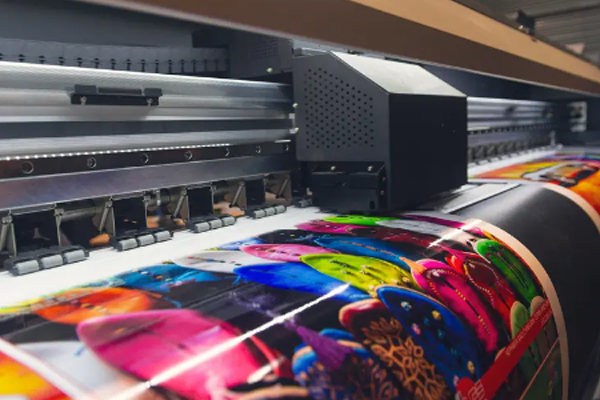
In today’s rapidly changing advertising industry, clients continue to demand faster delivery, higher print quality, and greater material compatibility. This is especially evident in high-frequency projects such as retail advertising, exhibition graphics, and brand visual upgrades, where orders are often small-batch, multi-run, and highly time-sensitive. Many advertising companies are not lacking business opportunities; rather, their production workflows are slowed down by excessive processes, frequent job changes, and fragmented operations. To truly improve efficiency, the key is not simply accelerating individual tasks but restructuring the entire production system. UV printing has emerged as one of the core technologies driving this transformation.
Production Efficiency Bottlenecks in the Advertising Industry and the UV Printing Upgrade Path
In advertising production, efficiency challenges are rarely caused by a single factor. Instead, they result from changing order structures, lengthy production processes, and a high dependence on manual labor. Traditional production models often struggle when dealing with high-frequency, small-batch, and multi-specification orders. When multiple projects are running simultaneously, production schedules can become disorganized, equipment must be switched frequently, and delivery timelines become less predictable.
At a deeper level, the advertising industry is shifting from large-scale, stable production toward high-frequency, small-batch delivery. However, many companies still rely on traditional segmented workflows, creating a mismatch between market demand and production capability.
Order Structure Changes and Production Pressure
The fragmentation of advertising orders has become increasingly apparent. A growing proportion of small orders requires production teams to constantly adjust priorities and schedules, creating additional operational pressure.
Key challenges include:
- Small-batch orders now account for a larger share of production volume.
- Urgent orders frequently interrupt existing production schedules.
- Multiple specifications and material types must be processed simultaneously.
- Tight delivery deadlines create continuous fluctuations in production planning.
These changes directly reduce equipment utilization and consume valuable production time through frequent interruptions.
Long Production Chains Lead to Efficiency Loss
Traditional advertising production often depends on several independent processes. Each stage introduces waiting times, transfers, and additional coordination requirements.
Major issues include:
- Design, plate making, printing, lamination, and cutting are completed separately.
- Waiting and queue times exist between processes.
- Outsourced work increases delivery uncertainty.
- Multiple equipment changes raise communication and scheduling costs.
Although each issue may seem minor individually, together they significantly extend production cycles.
Heavy Reliance on Manual Labor Reduces Stability
The advertising industry has long depended on experienced operators. While expertise remains valuable, excessive reliance on manual work creates instability in larger-scale production environments.
- Differences in operator skill levels affect product quality.
- Coordination between multiple processes can be inefficient.
- Employee turnover impacts production capacity.
- Management and communication costs increase as order volume grows.
Efficiency Comparison: Traditional Production vs. UV Printing
| Comparison Factor | Traditional Advertising Production | UV Printing Production |
| Workflow | Multiple segmented processes | Integrated output |
| Equipment Usage | Multiple machines required | Multi-purpose single system |
| Drying Process | Requires waiting time | Instant curing |
| Small Order Handling | Lower efficiency | Flexible and efficient |
| Labor Dependency | High | Medium to low |
| Delivery Cycle | Longer and less stable | Shorter and more predictable |
Overall, UV printing does not simply improve one step of production—it fundamentally restructures the entire workflow.
One-Stop Production Solutions Driven by UV Printing
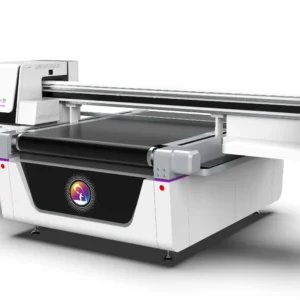
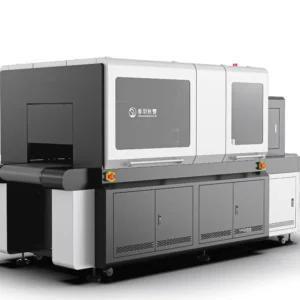
The true transformation in advertising production does not come from upgrading a single machine but from rebuilding the entire production ecosystem. A one-stop UV printing solution integrates equipment, materials, workflows, and production processes into a unified system, allowing production to move from fragmented execution to continuous output.
As UV printing technology continues to mature, advertising companies are transitioning from multi-machine, multi-process production systems to integrated production centered around a single core platform. This shift significantly improves responsiveness and simplifies the execution of complex projects.
UV Printing Restructures Production Workflows
One of the greatest advantages of UV printing is process integration. Several traditional production stages are combined into a single workflow.
Key benefits include:
- Direct output without plate-making.
- Printing and curing occur simultaneously.
- Multi-material processing reduces equipment switching.
- Less manual intervention and fewer intermediate transfers.
This restructuring transforms production from segmented execution into continuous manufacturing, significantly reducing overall project timelines.
Following workflow optimization, order handling also becomes more flexible. Small orders can be processed quickly, and urgent jobs can be inserted into production without disrupting the entire schedule.
Multi-Material Compatibility Improves Production Flexibility
Advertising projects often require various materials, traditionally demanding different machines or outsourced processing. UV printing offers a unified solution.
- Supports acrylic, PVC, wood, glass, metal, and other materials.
- Reduces machine switching and outsourcing requirements.
- Improves the execution of complex projects.
- Lowers cross-process coordination costs.
With material processing consolidated into a single system, production becomes more streamlined and controllable.
Standardized Color Management Improves Delivery Stability
Brand owners increasingly demand color consistency across all advertising materials. UV printing achieves stable results through digital color control systems.
- Accurate reproduction of brand colors.
- Consistent output across multiple production batches.
- Reduced manual color adjustment errors.
- Lower rework rates.
Improved stability accelerates customer approval processes and shortens delivery cycles.
Key Optimization Strategies for Improving Advertising Production Efficiency
While equipment upgrades play an important role, production efficiency can only be fully realized when combined with workflow and management improvements.
Efficiency Gains Through Workflow Compression
- Fewer production steps.
- Significantly reduced waiting times.
- More stable production scheduling.
- Faster order processing and movement.
Better Equipment Utilization Through Scheduling Optimization
- Consolidated processing of small orders.
- Fast insertion mechanisms for urgent projects.
- More efficient multi-task switching.
- Increased machine operating time.
Greater Production Control Through Data Management
- Real-time visibility of order progress.
- Dynamic monitoring of equipment status.
- Analysis of cost and efficiency data.
- More effective allocation of resources.
UV Printing Efficiency Improvement Results
| Efficiency Metric | Traditional Production | UV Printing Production | Improvement |
| Project Cycle Time | 2–5 days | 0.5–2 days | Significantly shorter |
| Small Order Capacity | Low | High | 2–3× increase |
| Manual Production Steps | 6–10 steps | 2–4 steps | Greatly reduced |
| Material Waste Rate | 10%–20% | 3%–8% | Significantly reduced |
| Equipment Utilization | Average | High | Noticeably improved |
For advertising companies, improving production efficiency is not about accelerating individual processes but eliminating unnecessary steps throughout the workflow. When production shifts from fragmented multi-process operations to integrated UV printing output, and when equipment evolves from single-purpose machines to unified multi-material platforms, efficiency improves at a structural level. UV printing is becoming a key upgrade path for the advertising industry, enabling faster and more reliable delivery through one-stop production solutions. SpringYprinter specializes in UV printing equipment and system solutions, providing stable and efficient production support for advertising companies.