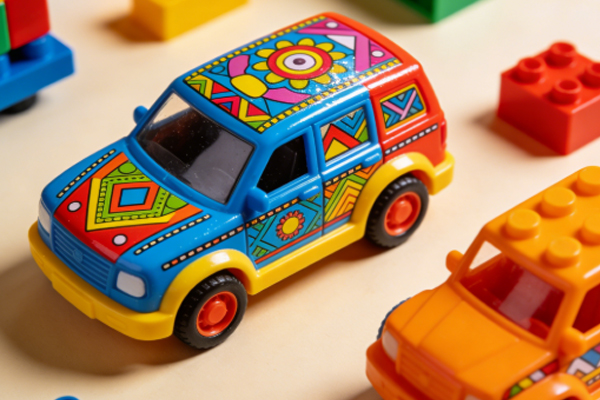
When consumers choose toys, they often first focus on whether the appearance patterns are clear, whether the colors are vivid, and whether the details are realistic. Therefore, traditional methods relying on stickers or simple printing can no longer meet market demands. Digital color printing technology has emerged in this context. Through a more intelligent approach, design images can be directly and precisely presented on the surface of plastic toys, making products more visually attractive while also providing enterprises with higher production efficiency and customization capabilities.
What is Digital Color Printing for Plastic Toys?
Before understanding the technical process, it is important to know what “digital color printing” actually is. It is a technology that directly outputs computer-designed patterns onto plastic toy surfaces through digital control, without relying on traditional plate-making, color separation, or other complex processes. Its biggest advantage is flexibility and precision, allowing quick switching between different designs, making it highly suitable for modern toy industry needs such as small-batch and multi-style production. This technology is not only used for simple logo printing, but also enables detailed facial expressions, complex background patterns, and even gradient color effects, making toys more refined and collectible.
Basic Usage Instructions
In traditional production, a pattern often requires multiple processes to complete, whereas digital printing is more like “direct photo printing,” reducing intermediate steps and simplifying production.
| Comparison Item | Traditional Method | Digital Printing |
| Plate-making required | Yes | No |
| Pattern change speed | Slow | Fast |
| Suitable for small batches | Not suitable | Very suitable |
| Color performance | Average | Richer |
| Customization capability | Weak | Strong |
This method is especially suitable for anime IP toys, blind boxes, figurines, and educational toys.
How is the Process from Design to Finished Product Completed?
Each step of digital color printing affects the final product quality, such as pattern clarity, color consistency, and surface adhesion. Therefore, standardized processes are usually followed to ensure stable quality across all batches.
- Design and Pattern Preparation
Although the design stage does not directly involve the physical product, it has the greatest impact on the final result. The visual appearance of toys entirely depends on the design. If the design is not reasonable, even advanced production techniques cannot achieve ideal results. Therefore, this step is not only an artistic task but also a technical preparation closely linked to manufacturing.Designers need to adjust patterns according to the shape, size, and target audience of plastic toys, ensuring both aesthetics and print feasibility. For example, children’s toys tend to use bright colors, while collectible toys emphasize fine detail reproduction.
- Surface Treatment and Basic Preparation
Before printing, the surface of plastic toys must be cleaned and pre-treated. Plastic materials may contain oil, dust, or microscopic particles during production. If not properly cleaned, these impurities will affect ink adhesion, causing uneven patterns or even peeling. Although this step seems simple, it is a key prerequisite for stable quality.Common treatments include basic cleaning, anti-static treatment, and surface optimization to make the material more suitable for printing.
- Digital Printing and Positioning
After preparation, the most critical stage begins—printing. The equipment sprays ink point by point onto the toy surface according to pre-set design data. This process requires extremely high precision control, as even minor deviations can affect the overall pattern integrity.The toy is fixed in a dedicated fixture, and the system automatically identifies the position for accurate printing. Even curved or irregular surfaces can maintain clear and complete patterns.
- Curing and Protection
After printing, the pattern is formed but still relatively fragile and can be affected by friction or external force. Therefore, curing treatment is required to firmly bond the pattern to the plastic surface. This step acts as a protective layer, making the pattern more durable.Curing methods are usually adjusted according to material type, such as UV curing or thermal treatment, improving color stability and wear resistance.
- Quality Inspection and Shipment
In the final stage of the entire process, quality inspection is required. Inspection includes color consistency, pattern completeness, and surface defects. This ensures that defective products do not enter the market and guarantees stable product quality.
Core Capabilities for Quality Improvement
In digital printing systems, technology determines final output quality. These technologies do not work independently but complement each other to ensure stable production.
- Color and Visual Consistency
Color plays a crucial role in toy products because it directly affects first impressions. Especially for series products, consumers often display multiple items together, making color consistency very important. Digital printing provides stable color control, reducing batch-to-batch differences and ensuring closer reproduction of original design colors.
- Curved Surface Adaptability
Plastic toys are rarely flat; they often include curves, rounded edges, grooves, and raised structures. Traditional printing methods may cause distortion or incomplete patterns on such surfaces. Digital printing, however, can adapt better through flexible positioning and output control, allowing designers more freedom and improving product creativity and recognition.
- Small-Batch Flexible Production
Many toy companies now focus on customization, such as event souvenirs, co-branded gifts, and limited editions. These products usually require small quantities but frequent design changes. Digital printing has a clear advantage here because it eliminates plate-making and enables fast design switching, making production more flexible and efficient.
Common Questions
Will the print fade or peel off?
Generally no. With proper curing treatment, the pattern has good durability and is not easy to peel off.
Can different types of plastic materials be printed?
Most common plastics such as ABS, PVC, and acrylic can be used. However, due to differences in surface structure and absorption ability, some adjustments in process parameters may be required.
Will complex patterns affect printing quality?
Usually not. Digital printing is designed for complex patterns, including multi-color gradients and detailed images. However, overly small or low-contrast designs may affect final visual performance, so optimization is often done during the design stage.
Plastic toy digital color printing is a more modern and flexible production method that simplifies complex pattern creation. Enterprises no longer need traditional plate-making processes or worry about high costs for small-batch orders. With only a prepared design file, high-quality toy products can be produced quickly. This results in more refined toys, richer colors, and more detailed expressions, along with faster delivery and stronger market competitiveness.As the toy market continues to evolve, digital printing is becoming the preferred choice for more and more companies. It not only improves production efficiency but also expands product design possibilities.
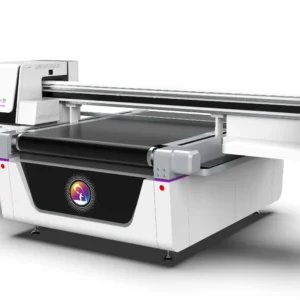
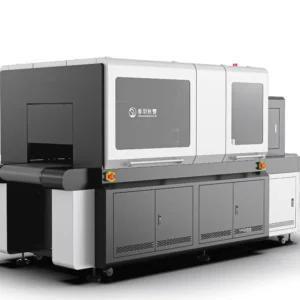
If you are looking for a stable and reliable digital color printing solution for plastic toys, you can explore Springyprinter’s industrial UV printing technology. Founded in 2015, Springyprinter specializes in the R&D, production, and sales of industrial UV printers. All equipment follows ISO standardized quality management systems and has passed CE and RoHS certifications. With over 10 years of industry experience, the company has served more than 3,000 global partners and holds over 400 patented technologies. OEM/ODM customization is supported, and the equipment is widely used in various industrial printing applications, providing more efficient and stable color printing solutions for the toy industry.