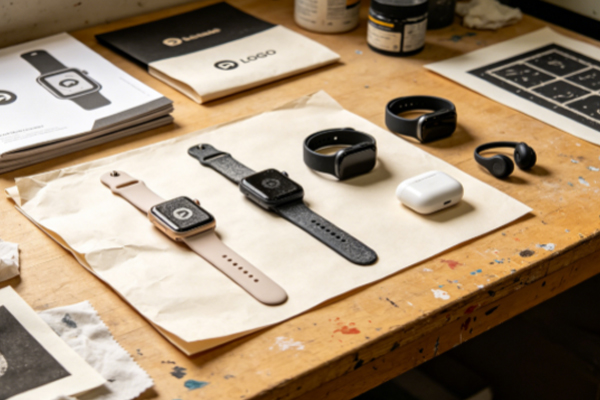
Most smart wearable devices adopt compact special-shaped curved housings designed for long-term skin contact. Their printed brand logos and identification patterns must resist sweat, grease and frequent friction. The printing quality directly affects product appearance, durability and brand image. Traditional printing processes fail to meet strict production requirements of multi-material compatibility, high precision, superior wear resistance and environmental compliance for wearable products, often causing pattern peeling, printing distortion and poor weather resistance. Tailored for digital device housing manufacturing scenarios, this complete brand printing solution adapts to housings of different materials and diverse mass production demands. It balances printing accuracy, product durability and production cost, helps housing manufacturers solve common printing defects, and meets global environmental protection and quality inspection standards for electronic products.
Core Industry Pain Points of Smart Wearable Housing Printing
Different from ordinary digital product housings, smart wearable housings feature unique structures and application scenarios. General printing processes on the market tend to cause mass quality defects in actual production. Based on practical experience of printing tens of millions of wearable housings, we summarize frequent on-site production problems to fully match actual demands of manufacturing workshops.
Difficult Ink Adaptation for Multi-substance Housings
Mainstream materials for smart wearable housings include aluminum alloy, tempered glass, TPU silicone, PC plastic and ceramic, with huge differences in surface energy. Silicone and PC materials feature inert surfaces that cannot stably bond with conventional ink. The smooth and dense anodized layer of metal housings leads to integral peeling of printed patterns. Dense pores on ceramic surfaces cause uneven ink penetration and mottled colors. A single type of printing ink cannot support full-material production lines, forcing manufacturers to prepare materials separately for multiple lines and raising material management and manufacturing costs significantly.
Insufficient Printing Accuracy for Special-shaped Curved Structures
Nearly all smart wearable housings are designed with arcs, rounded chamfers and 3D curved surfaces without complete flat printing areas. Traditional screen printing only fits flat workpieces, resulting in pattern stretching, logo distortion and text misalignment on curved surfaces. Fine parameter texts and minimalist brand logos cannot be restored in line with original design drawings, greatly impairing the premium texture of high-end wearable products.
Poor Weather Resistance for Long-term Skin Contact
Printed layers have to withstand continuous sweat erosion, mechanical friction and temperature fluctuation in daily wearing scenarios, while conventional printing processes hardly satisfy such requirements. Three typical durability defects are summarized as follows:
- Sweat corrosion: Salt and grease contained in human sweat erode printed layers continuously, making common ink turn white, peel off or fall off within one week;
- Daily friction loss: Frequent friction with clothes and desktops on wrists and ears blurs printed patterns quickly and damages brand visual consistency;
- Poor temperature and humidity adaptability: Thermal expansion and contraction cracks occur on printed layers amid extreme temperature changes outdoors, failing product overall reliability tests.
These weather resistance defects will increase after-sales complaints and damage brand reputation, which are key problems requiring urgent solutions in wearable device printing processes.
Comparison of Four Mainstream Printing Processes for Wearable Devices
Matching three production modes including small-batch customized sampling, medium-batch new product trial production and large-scale mass production, we select four mature printing processes suitable for different housing materials and pattern complexities. The comparison table below displays core parameters clearly to help manufacturers select optimal processes and avoid rework losses caused by improper process selection.
| Printing Process | Applicable Housing Materials | Pattern Precision | Wear Resistance Grade | Applicable Production Scale | Unit Printing Cost |
| UV Digital Inkjet Printing | PC, TPU, glass and all common materials | Ultra-high, supports gradient pattern restoration | 4H friction resistance | Small-batch sampling, personalized customization | Relatively high |
| Nano Screen Printing | Plastic, flat metal housings | Medium, suitable for single-color logos | 3H friction resistance | Medium and large-batch single-color marking printing | Low |
| Heat Transfer Film Printing | Curved silicone, special-shaped bracelet housings | High, no pattern stretching or deformation on curved surfaces | 4H friction resistance, excellent sweat-proof performance | Mass production of bracelets and watch straps | Medium |
| Laser Etching + Ink Filling | Hard housings made of aluminum alloy and ceramic | Ultra-high, clear tiny texts without burrs | 5H super wear resistance, permanent colorfastness | High-end flagship wearable products | High |
Recommended Process for Small-batch Customization
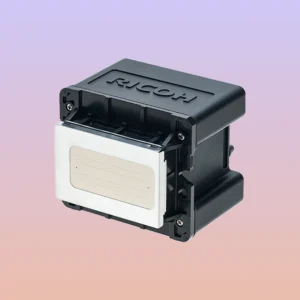
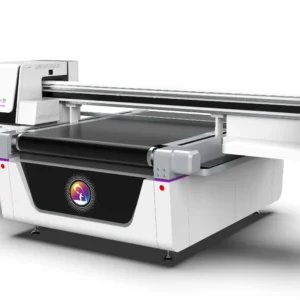
Brands iterate new products rapidly and need hundreds of samples for market testing in early stages. UV digital inkjet printing is the optimal choice with no screen plate cost. It supports direct printing after importing design drawings, delivers finished samples within 2 hours, and realizes multi-color gradient and embossed pattern printing, perfectly fitting customized niche wearable products.
Recommended Process for Large-scale Mass Production
For mass production of conventional wearable devices in tens of millions of units, nano screen printing and heat transfer printing are preferred. Both processes support high-speed operation with hourly output over 3,000 pieces. Matched with dedicated wear-resistant ink, they meet basic daily wear requirements and effectively control overall housing processing costs.
Recommended Process for High-end Flagship Products
An integrated laser etching and ink filling process is adopted for mid-to-high-end smart watches and smart rings. Printed marks are embedded into the housing surface, resisting long-term friction and sweat immersion. The process improves overall product texture and service life, matching the premium positioning of high-end digital products.
Standard Pre-printing Surface Pretreatment Solutions for Wearable Housings
Most printing peeling failures result from incomplete removal of release agents, dust and oxide layers on housing surfaces rather than defective ink or processes. Standardized pre-treatment procedures can reduce printing defect rate to below 1%, compatible with full-material wearable housing production lines.
Plasma Activation Treatment Process
Low-temperature plasma activation equipment is applied for inert silicone and PC housings with low surface energy. Without chemical solvent wiping, each workpiece completes surface activation within 3 seconds. The process opens surface molecular pores to form chemical bonding between ink and housings, fundamentally solving ink peeling problems. The whole low-temperature treatment avoids deformation and yellowing of thin-walled wearable housings.
Material-specific Surface Cleaning Procedures
Different housing substrates carry different surface contaminants, so targeted cleaning procedures are required to remove impurities thoroughly and strengthen ink adhesion:
- Plastic housings: Wipe with dust-free cloth and anhydrous ethanol to remove injection molding release agents and avoid pinholes and white spots after printing;
- Metal housings: Conduct ultrasonic degreasing cleaning to eliminate dust on anodized surfaces and ensure straight printing edges without ink bleeding;
- Glass and ceramic housings: Implement static electricity dust removal to clear fine dust adsorbed by static electricity and guarantee uniform high-definition pattern printing.
Differentiated cleaning procedures balance cleaning efficiency and effect without damaging original housing appearance and surface processes, adapting to all types of wearable housing processing demands.
Customized Positioning Fixtures for Printing Surfaces
Customized fitting positioning fixtures are developed based on 3D mold data of wearable housings to fix special-shaped curved workpieces stably and prevent offset during printing. The error of logo position and pattern size of all products is controlled within ±0.05mm, ensuring consistent appearance of bulk products.
Supporting System of Special Environmental-friendly and Wear-resistant Ink
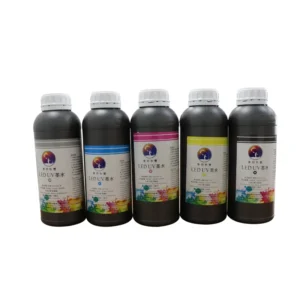
Ink is the core material determining printed layer durability and environmental compliance. We abandon general digital printing ink and develop exclusive ink systems for wearable devices adapting to close-fitting wearing scenarios and meeting dual domestic and international testing standards.
Special Sweat and Oil Resistant Ink
Hydrophobic protective factors are added into ink formula to form a dense protective film after curing. The film isolates corrosion caused by human sweat and skin care grease. After 500-hour artificial sweat immersion tests, no whitening, bubbling or peeling occurs on printed layers, suitable for all-day close-fitting wearable devices.
Core Advantages of Low-temperature Fast Curing Ink
Aiming at three production requirements of heat-sensitive thin-walled housings, fast production beat and strict brand color matching, customized low-temperature curing ink has three prominent advantages for automated production lines:
- Curing temperature ≤ 60℃, avoiding housing deformation caused by high-temperature baking for thin plastic and silicone housings;
- Curing time: 3-5 seconds, matching high-speed assembly line speed without delaying subsequent assembly processes;
- Color restoration rate ≥ 98%, accurately matching official brand color cards and eliminating batch color difference.
Stable and controllable curing parameters reduce production line debugging downtime and improve overall printing yield, perfectly fitting large-scale continuous manufacturing.
Matching Topcoat Protection Process
Matte or glossy protective topcoat is sprayed uniformly after printing to optimize overall housing hand feel and eliminate rough touch on printed areas. It further enhances wear resistance, keeping patterns intact after ten-thousand-time friction tests.
Full-process Quality Control and Delivery Service
A complete brand printing solution covers not only process and material matching, but also pre-production, in-production and post-production quality control as well as one-stop delivery services, meeting one-stop procurement demands of digital housing OEM manufacturers.
Pre-production Drawing Check and Sample Confirmation
Before mass production, we verify brand logo vector drawings, font sizes and color standards one by one, and provide 3 to 5 free physical samples. Formal mass production starts only after customers confirm appearance, wear resistance and size parameters, avoiding batch waste caused by drawing errors.
Multi-node Online Inspection During Production
A segmented online quality inspection system is deployed to set multiple detection nodes in the whole printing process for real-time defect elimination. Three core inspection links are included:
- First-piece inspection: Conduct full-dimensional appearance and wear resistance tests on the first product of each production batch;
- Periodic sampling inspection: Check pattern position, color and adhesion every 30 minutes;
- Finished product full inspection: Remove defective products with blurred patterns, position offset and missing edge printing to strictly control delivery quality.
Post-production Iteration and Adaptation Service
We quickly update printing programs and fixtures for product iteration, housing structure revision and logo upgrade without expensive re-mold costs. Free process debugging is also available to adjust ink ratio and printing parameters according to actual production line speed and workshop environment, realizing seamless connection with customers’ original housing processing procedures.
As competition in the smart wearable market becomes increasingly fierce, delicate housing printing directly promotes product premium capability and optimizes user reputation. This one-stop brand printing solution covers pain point analysis, process selection, surface pretreatment, ink matching and full-process quality control. It supports both small-batch customized R&D and low-cost large-scale production, helping digital housing manufacturers and wearable brands launch high-quality smart wearable products with exquisite appearance, strong durability and full environmental compliance.