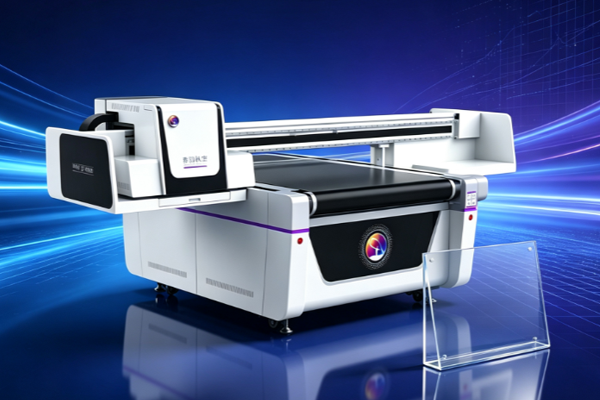
In the advertising industry, a good display board is not only used to deliver information but also to showcase a brand’s professionalism. Whether it is a product information board in a shopping mall, a corporate showroom display, or a promotional sign for an event, acrylic display boards are widely used because of their high transparency, elegant appearance, and premium visual appeal. However, as customers demand better display effects, traditional production methods are gradually becoming unable to meet requirements for high-definition images, customized designs, and special visual effects. UV printing technology makes acrylic display board production more flexible, improving image quality while helping advertising companies complete customized projects faster.
Common Challenges in Acrylic Display Board Production
Acrylic itself has excellent display characteristics, but during actual production, many advertising companies still face challenges. Especially in commercial displays, brand promotions, and exhibition projects, customers not only care about appearance but also expect faster production, stable quality, and convenient design adjustments.
Traditional Production Methods Struggle with Detailed Designs
Today’s advertising displays focus more on visual impact. Many brands add high-resolution images, logos, gradient colors, and creative graphics to display boards. However, if printing accuracy is insufficient, the final product may differ significantly from the original design.
Common problems include:
- Small text becoming unclear after printing
- Logo details not being fully displayed
- Complex graphics lacking visual depth
For the advertising industry, a display board represents a brand’s image. If the visual effect is not impressive enough, it may reduce customer recognition and weaken the overall presentation.
Acrylic Materials Require Higher Printing Precision
Acrylic has a smooth surface and comes in different types, including transparent and semi-transparent materials. Although these features create better visual effects, they also increase printing challenges. Unstable printing technology may lead to poor ink adhesion or inconsistent color performance.
Main issues include:
- Different acrylic materials producing different results
- Colors appearing less vibrant on certain surfaces
- Difficulty achieving special printing effects
Therefore, advertising companies need a more reliable printing solution to ensure consistent quality across different acrylic display boards.
Increasing Customization Needs Require Higher Efficiency
Many advertising projects today are not large-volume orders but customized solutions based on specific customer requirements. For example, new product promotions, event displays, and store advertisements often require different sizes and designs of acrylic boards.
Customers usually care about:
- How quickly samples can be produced
- Whether designs can be modified easily
- Whether small-batch production is cost-effective
This is one of the main reasons why more advertising companies are adopting UV printing technology.
How UV Printing Improves Acrylic Display Board Quality?
UV printing is a direct printing technology that applies designs directly onto acrylic surfaces and uses UV light to quickly cure the ink. Compared with traditional production methods, it reduces processing steps while providing better visual performance.
High-Resolution UV Printing Creates More Refined Displays
The biggest advantage of acrylic display boards is their premium appearance, and high-resolution printing further enhances this benefit. UV printing can accurately reproduce design details, making images, text, and brand elements clearer.
Main advantages include:
- Complete reproduction of image details
- Stronger logo presentation
- Richer color performance
- More premium display effects
For store advertising, corporate displays, and commercial events, clear visuals help brands attract more attention and improve customer experience.
Comparison Between UV Printing and Traditional Acrylic Production Methods
When choosing an acrylic display board production solution, advertising companies usually focus on production speed, visual quality, and customization flexibility. Different production methods have clear differences in practical applications:
| Comparison Item | Traditional Production Methods | UV Printing Solution |
| Production Process | More steps and longer preparation time | Direct printing from design files with a simpler workflow |
| Graphic Effects | Limited performance for complex designs | High-resolution printing with clearer details |
| Customization | Higher modification costs | Quick design adjustments |
| Small-Batch Production | Higher production costs | More suitable for customized orders |
In practical applications, UV printing better meets the current needs of the advertising industry. Especially for exhibitions, store promotions, and branding projects, customers often need quick adjustments, and UV printing allows companies to complete production and delivery faster.
Multiple Printing Effects Improve Display Quality
Besides standard color printing, UV printing can combine different techniques to create more attractive visual effects, making acrylic display boards more creative and premium.
Common effects include:
- White ink printing for enhanced transparent material effects
- Varnish effects for improved surface gloss
- 3D printing effects for stronger visual depth
These special effects allow advertising companies to create more eye-catching display products and meet the visual expectations of premium brands.
Flexible Customization Meets Different Advertising Needs
Advertising companies often work with different customers and projects, meaning each order may require different sizes, designs, and applications. UV printing allows files to be adjusted quickly without complicated preparation.
Key features include:
- Supporting small-batch production
- Easy design modifications
- Suitable for various display scenarios
This flexibility helps advertising companies improve their service capabilities and better respond to changing customer demands.
Key Production Considerations for Acrylic Display Board UV Printing
Although UV printing improves production efficiency, achieving consistent results still requires attention to production details. From design preparation to material testing, every step can affect final product quality.
Prepare Design Files in Advance to Reduce Printing Errors
Design files directly determine the final display effect. Before printing, files should be carefully checked and optimized.
Main steps include:
- Confirming image resolution
- Adjusting color settings
- Checking printing dimensions
Proper file preparation reduces rework and improves production efficiency.
Test Acrylic Materials to Ensure Stable Results
Different acrylic materials may produce different printing results. Conducting tests in advance helps companies find the most suitable printing settings.
Testing includes:
- Checking ink adhesion
- Testing different acrylic materials
- Confirming color performance
Material testing helps make mass production more stable and reduces quality issues.
Improve Production Management for Consistent Quality
Advertising projects often require multiple display products to be produced at the same time. Without unified standards, differences may appear between finished products.
Main measures include:
- Setting consistent production requirements
- Regularly checking equipment conditions
- Strengthening finished product inspection
A standardized production process helps advertising companies continuously deliver high-quality acrylic display boards.
As the advertising industry places more emphasis on visual marketing, acrylic display boards now require better design performance and higher production efficiency. With advantages such as high-resolution output, diverse printing effects, and fast customization, UV printing provides advertising companies with a more flexible production solution. By applying UV printing technology effectively, businesses can create more attractive display products, improve brand communication, and strengthen market competitiveness.