In today’s commercial environment, advertising displays have become an important way for companies to attract customers and strengthen brand recognition. Whether used for store signs, exhibition displays, or brand showcases in commercial spaces, acrylic advertising boards are widely used because of their excellent transparency, premium appearance, and strong visual appeal. However, as the advertising industry becomes more competitive, customers are demanding higher standards for advertising production, including better visual effects, faster delivery, and more flexible customization. Traditional production methods are gradually facing limitations when handling high-resolution designs, small-batch orders, and fast customization needs. UV printing technology provides a more efficient and stable solution for acrylic advertising board production.
Common Challenges in Acrylic Advertising Board Production
Although acrylic materials offer excellent visual performance, producing high-quality advertising boards requires solving several challenges, including printing accuracy, color consistency, and production efficiency. Especially in the advertising industry, customers increasingly require different sizes, styles, and applications, which creates higher demands for traditional production processes.
Traditional Printing Methods Struggle to Reproduce Detailed Designs
As brands pay more attention to visual marketing, advertising designs are becoming more detailed and complex. Many customers want to display fine logos, high-resolution images, and creative graphics on acrylic boards, but traditional production methods often cannot fully achieve the desired results.
Common issues include:
- Small text and fine lines lacking clarity
- Loss of details in high-resolution images
- Poor performance of gradient colors
- Differences between finished products and original designs
These issues directly affect the overall quality of advertising boards. Especially for premium brand displays, insufficient detail and poor visual performance can make it difficult to deliver a professional brand image.
Acrylic Materials Require Higher Printing Technology
Acrylic has a smooth and flat surface, which creates excellent visual effects but also increases printing requirements. Traditional printing methods may struggle with ink adhesion, color stability, and long-term display performance.
Main challenges include:
- Unstable ink adhesion on the surface
- Different printing effects on various acrylic thicknesses
- Uneven color performance
- Limited ability to create special visual effects
Therefore, acrylic advertising board production requires a printing solution that matches the characteristics of the material to ensure clear graphics, stable colors, and long-lasting display quality.
Customized Advertising Demands Increase Production Pressure
Today, the advertising market focuses more on personalized displays. Companies no longer want simple standard advertising materials but require customized designs based on promotions, product launches, and brand positioning.
Common production challenges include:
- Increasing demand for different sizes and designs
- Multiple design versions requiring quick testing
- Higher costs for small-batch production
- Difficulty handling urgent advertising projects
For advertising manufacturers, improving production flexibility and shortening delivery time have become key factors in increasing competitiveness.
How UV Printing Improves Acrylic Advertising Board Production?
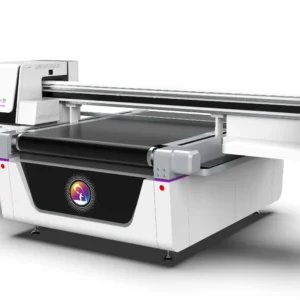
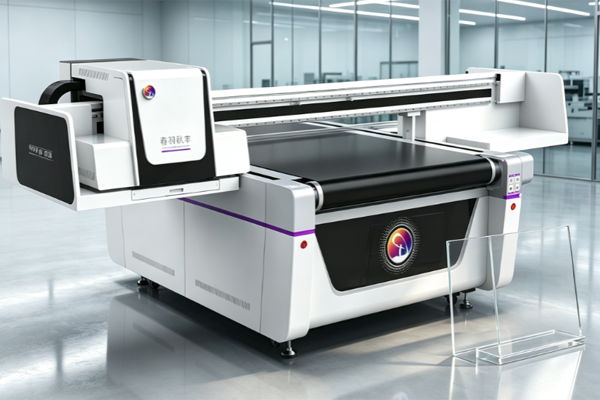
With the advertising industry moving toward digital production, UV printing has become an important solution for acrylic advertising boards due to its direct printing capability, high-resolution output, and strong material compatibility. Compared with traditional screen printing and other methods, UV printing reduces complicated production steps and allows designs to be directly printed onto acrylic surfaces while maintaining excellent image quality and color stability.
In practical production, UV printing not only improves manufacturing efficiency but also helps advertising companies handle customized orders more easily and reduce the pressure of small-batch production. The differences between traditional methods and UV printing solutions can be seen below:
| Comparison Item | Traditional Production Methods | UV Printing Acrylic Board Solution |
| Production Process | More steps and longer preparation time | Direct printing after file processing |
| Image Quality | Limited detail performance | High-definition and accurate reproduction |
| Color Stability | More variation risk | More stable digital control |
| Customization | Higher modification costs | Flexible design adjustments |
| Application Range | More material limitations | Supports various advertising materials |
With UV printing, advertising companies can complete customer projects faster while improving the overall quality of acrylic displays and creating more attractive visual results.
High-Definition UV Printing Enhances Advertising Visual Effects
For advertising boards, visual impact is one of the most important factors. UV printing uses high-precision printing technology to reproduce design details more accurately, allowing logos, text, and images to achieve better presentation on acrylic surfaces.
Main advantages include:
- Improving brand logo clarity
- Reproducing high-resolution image details
- Enhancing color performance
- Increasing the overall premium appearance of advertisements
High-quality printing helps companies create more professional advertising displays, allowing customers to notice brand information more easily and improving advertising effectiveness.
Multi-Layer Printing Creates Richer Visual Effects
Compared with ordinary printing methods, one of the biggest advantages of UV printing is the ability to create special visual effects. By combining white ink and varnish technologies, acrylic advertising boards can achieve stronger depth and a more three-dimensional appearance.
Applications include:
- White ink enhancement for better color expression
- Gloss effects for highlighted areas
- Embossed visual effects
- Improved depth on transparent acrylic materials
These techniques allow ordinary acrylic advertising boards to achieve a more premium appearance, making them suitable for brand displays, commercial spaces, and high-end stores.
Fast Production Meets Changing Advertising Needs
The advertising industry often faces rapidly changing requirements, such as promotional campaigns, brand upgrades, and temporary marketing projects. Long production cycles may affect campaign schedules.
UV printing helps businesses:
- Shorten advertising production time
- Complete samples quickly
- Test multiple design options
- Reduce small-batch production costs
- Improve order response speed
Fast production capabilities allow advertising companies to respond more flexibly to customer needs and improve their service competitiveness.
Multi-Material Compatibility Expands Application Possibilities
Although acrylic is a common advertising material, real-world applications often include PVC, glass, metal, and other surfaces. UV printing offers strong adaptability, allowing companies to expand their advertising production capabilities.
Common applications include:
- Acrylic brand signs
- PVC display board printing
- Glass decorative printing
- Metal advertising board production
Multi-material printing capabilities reduce production limitations, allowing advertising companies to handle more types of projects and improve equipment utilization.
Key Production Control Points for Acrylic Advertising Board UV Printing
To achieve high-quality acrylic advertising boards, choosing UV printing technology alone is not enough. Proper design preparation, material testing, and production management are also essential. A complete production process helps reduce errors, improve consistency, and ensure the final product meets customer expectations.
Optimize Design Files for Better Printing Results
Before printing begins, design files need to be reviewed and optimized. Especially for brand logos, text information, and high-resolution images, proper preparation is necessary to ensure the final output quality.
Main steps include:
- Checking file dimensions and proportions
- Improving image resolution
- Adjusting color settings
- Confirming printing areas
Proper design preparation reduces later adjustments and improves overall production efficiency.
Test Materials to Ensure Printing Stability
Different acrylic materials may affect ink performance, so material testing is an important step before production. Through testing, suitable printing parameters can be determined to avoid quality issues during mass production.
Main testing items include:
- Checking ink adhesion
- Testing color reproduction
- Adjusting printing parameters
- Confirming final appearance
Material testing helps companies identify potential issues in advance and improve the long-term stability of advertising boards.
Build a Standardized Production Process
For advertising manufacturers, a stable production process is essential for maintaining quality and delivery efficiency. Especially when producing large quantities of advertising signs, standardized management can reduce errors.
Main measures include:
- Establishing unified production standards
- Controlling product quality
- Improving equipment efficiency
- Reducing rework situations
A complete production system helps companies complete orders faster while improving customer satisfaction.
As the advertising industry continues to demand higher visual quality and production efficiency, acrylic advertising board UV printing has become an increasingly popular solution. UV printing delivers high-definition output, flexible customization, and fast production, helping advertising companies create more attractive and professional display products. By applying UV printing technology effectively, businesses can improve their advertising production capabilities and gain stronger advantages in a competitive market.