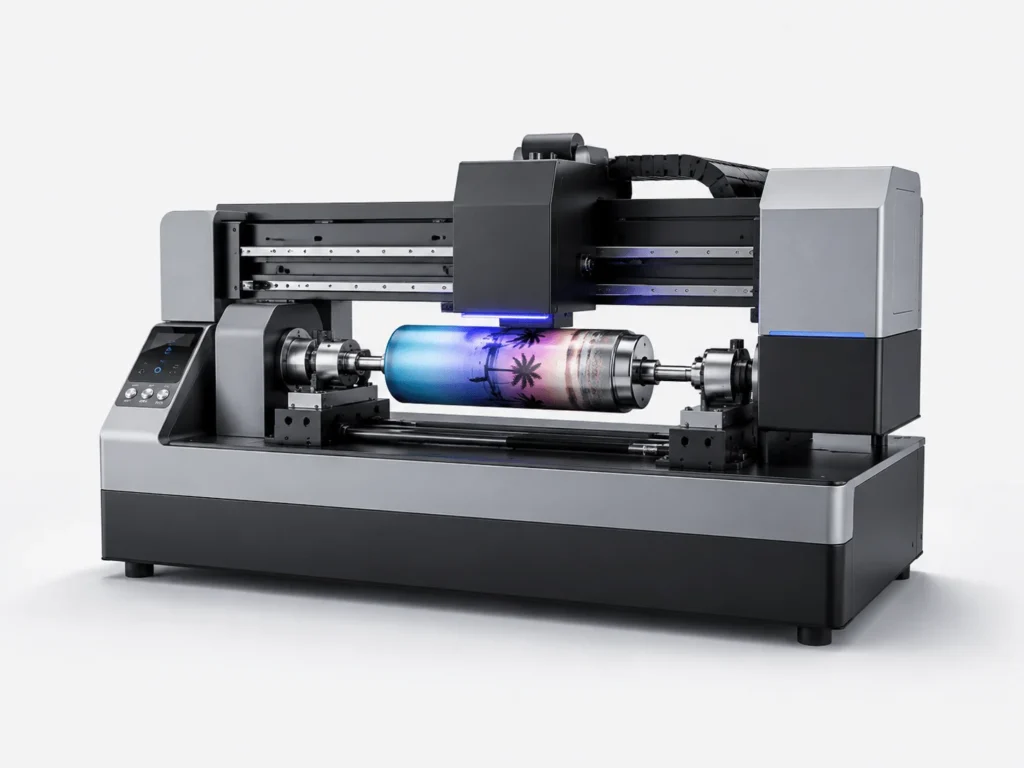
As personalized consumption and small-batch orders continue to grow, the demand for customized designs on cylindrical products such as cups, thermos bottles, wine bottles, and cosmetic containers is becoming increasingly evident. Traditional printing methods often involve considerable time and cost pressures when changing plates, producing samples, and handling multiple designs. Cylindrical printers use rotary positioning and digital inkjet technology to print designs directly onto cylindrical surfaces, providing customized-product manufacturers with a more flexible production method. For businesses that need fast design changes, small-batch orders, and multi-product production, this type of equipment offers significant practical value.

Why Are Cylindrical Printers Suitable for Customized Production?
The surface structure of cylindrical products differs from that of ordinary flat materials, and the design must be printed continuously as the product rotates. Cylindrical printing equipment is designed specifically for this production characteristic, making it better suited to personalized orders.
Supports Fast Switching Between Different Designs
Customized orders change quickly, and the same customer may require multiple designs, logos, or text combinations.
- Designs can be switched directly through digital files without frequently producing traditional printing plates.
- Designs for different customers can be adjusted quickly according to order requirements.
- Suitable for company logos, commemorative designs, event themes, and personalized text.
- During new product sampling, designs can be quickly modified and printed again.
- Multi-design orders can reduce waiting time caused by plate changes.
This fast design-switching capability helps improve order response efficiency for customized gifts, e-commerce products, and branded merchandise.
Better Suited to Small-Batch and Multi-Product Orders
Traditional high-volume printing is more suitable for standardized products, while customized production usually involves small quantities and multiple designs. Cylindrical digital printing can better adapt to this production pattern.
- Supports small-batch orders and lowers the production threshold for personalized products.
- Enables production according to orders, reducing finished-product inventory.
- Different designs can be arranged within the same batch to improve equipment utilization.
- Suitable for new product testing, limited-edition products, and holiday promotional products.
- Maintains good production flexibility even for single-piece or small-quantity customization.
This production model helps processing companies expand their long-tail orders and improve their ability to handle customized business.
What Customization Requirements Can Cylindrical Printers Meet?
Customized production involves not only design changes but also requirements related to materials, dimensions, colors, and surface effects. The adaptability of the equipment directly affects the actual scope of business.
Covers a Wide Range of Cylindrical Products
Cylindrical printers are mainly used for products with rotating surfaces and have a wide range of applications.
- Daily-use products such as thermos bottles, mugs, and drinking cups.
- Wine bottles, beverage bottles, and certain glass containers.
- Cosmetic packaging such as perfume bottles and skincare containers.
- Metal cans, plastic containers, and cylindrical packaging.
- Personalized gifts, cultural and creative products, and branded merchandise.
- Corporate promotional products and event-customized items.
Different materials have different requirements for ink adhesion, surface treatment, and curing parameters, so testing and adjustment are required before actual production.
Supports Logo, Design, and High-Precision Text Printing
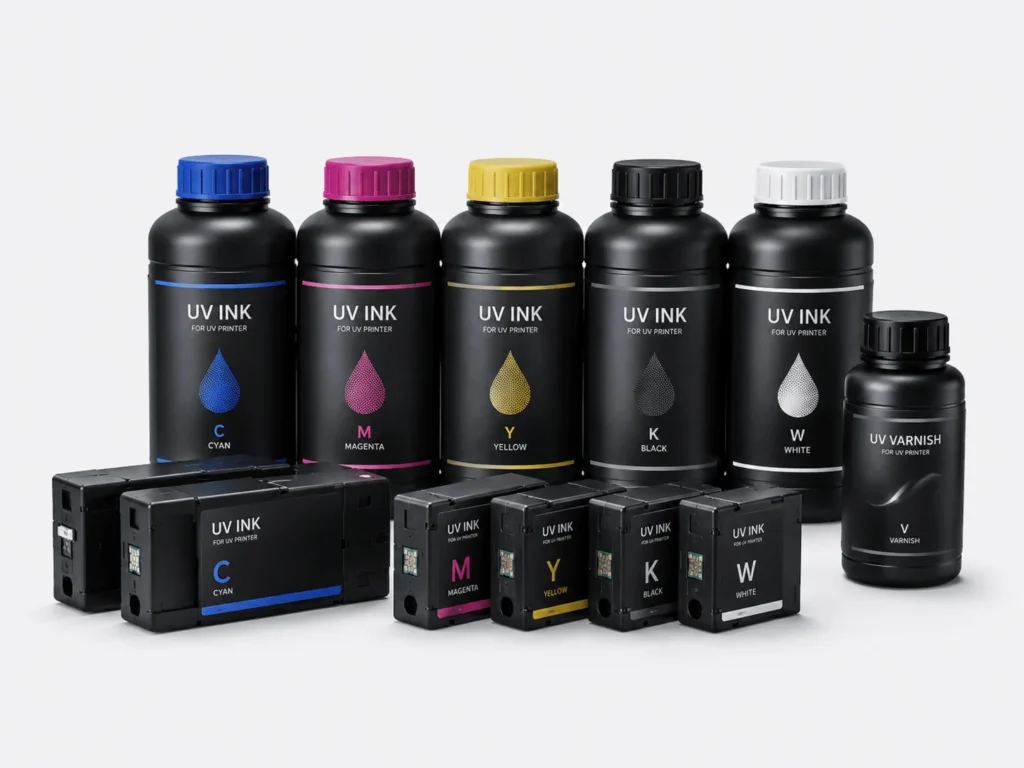
Customized products place great importance on brand recognition and visual presentation. Cylindrical printers can print brand logos, product names, promotional text, high-resolution images, complex designs, and gradient effects. They are also suitable for wraparound designs and can be equipped with white ink, color ink, or varnish effects according to product requirements. Clear and stable printing results help increase the added value of high-end customized products.
Practical Advantages of Cylindrical Printers in Customized Production
In addition to design switching, sampling speed, production efficiency, and overall costs also affect the profitability of customized business. Digital production offers significant advantages in these areas.
Shortens Sampling and Delivery Cycles
Customized customers usually want to see the finished product as soon as possible. Fast sampling helps improve communication efficiency and shorten new product development time.
- Adjusted design files can quickly enter production.
- Reduces the preparation time required for traditional plate making.
- Enables faster resampling after customers modify their designs.
- Allows limited-edition designs for festivals, events, and co-branded products to be launched quickly.
- Enables e-commerce sellers to adjust product appearances promptly based on market feedback.
For customized businesses with short order cycles, equipment response speed directly affects customer experience and order acquisition capabilities.
Reduces the Pressure of Multi-Design Production
Customized production often involves numerous designs, inventory accumulation, and frequent plate changes. Cylindrical digital printing can reduce plate-making and management costs, support production according to orders, lower inventory pressure, arrange different designs flexibly, and reduce manual plate-changing operations, making the production process simpler and helping companies handle orders from multiple customers and product lines more steadily.
What Should Be Considered When Choosing a Cylindrical Printer?
Products, order volumes, and material conditions vary among different companies. When purchasing equipment, businesses should select configurations based on their actual operations rather than simply pursuing the highest specifications.
Choose Equipment According to Product and Order Structure
Equipment configuration should match the main products and production rhythm.
- When mainly producing standard cylindrical products such as thermos bottles and wine bottles, focus on rotary positioning and continuous printing stability.
- When orders mainly involve small batches and multiple designs, pay attention to design-switching efficiency and ease of operation.
- When products emphasize high-end visual effects, carefully evaluate printing precision, color performance, and white ink results.
- When order volumes are large, focus on continuous operating capability and overall production efficiency.
Actual sample testing provides a more direct way to determine whether the equipment meets real production requirements.
Pay Attention to Printheads, Rotary Systems, and After-Sales Support
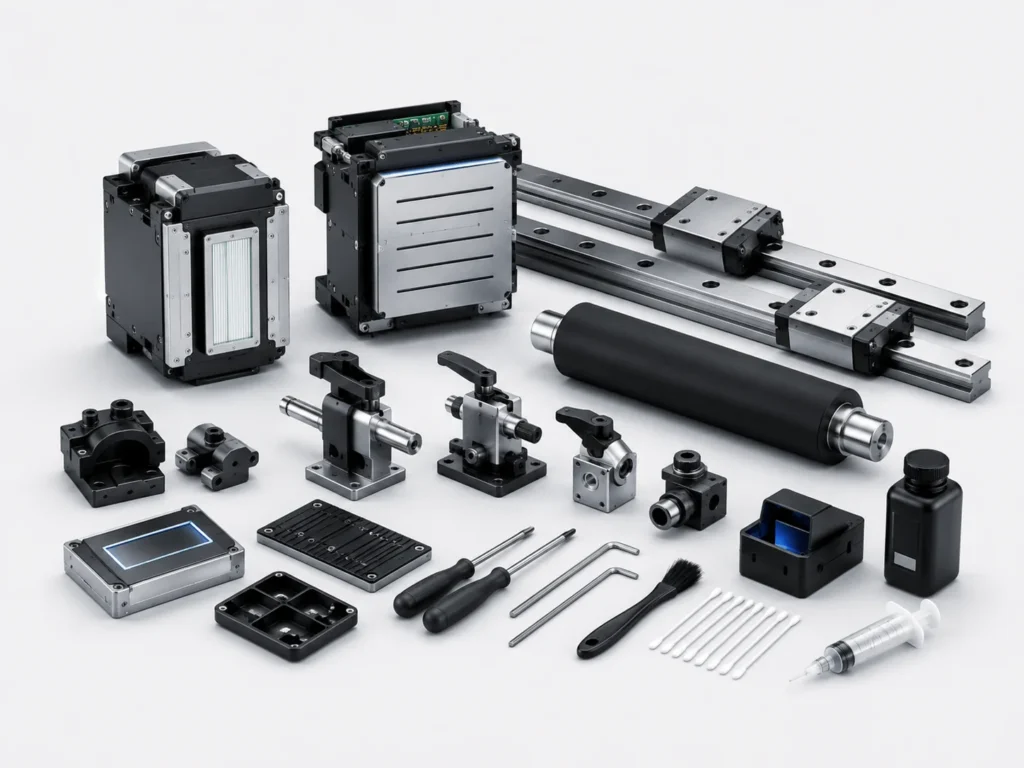
The stability of cylindrical product printing depends not only on the printheads but also on rotary positioning and the overall machine control system.
- Printhead configuration affects design details, color performance, and printing speed.
- The rotary system must remain stable to prevent misalignment while the product rotates.
- The ink delivery system and UV curing system must be properly matched with the printing parameters.
- The software should make it easy to import designs, set dimensions, and switch between orders.
- The manufacturer’s sample testing, technical training, spare parts supply, and after-sales response also affect long-term operating costs.
For companies planning to develop customized business over the long term, choosing an equipment supplier with comprehensive services is more important than comparing prices alone.
When selecting equipment, companies should focus on material compatibility, order volume, design precision, operating stability, ease of operation, and after-sales service capabilities, and confirm the printing results through actual sample testing. Springyprinter specializes in the research, development, and manufacturing of industrial UV digital printing equipment and can provide cylindrical printing equipment and application technology support for products such as thermos bottles, wine bottles, cosmetic containers, gifts, and branded merchandise.