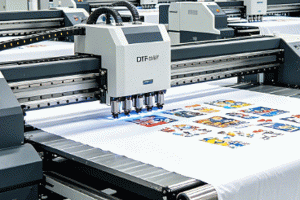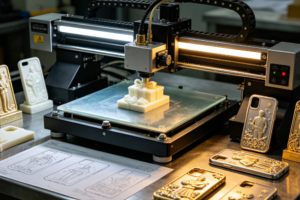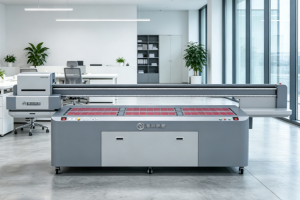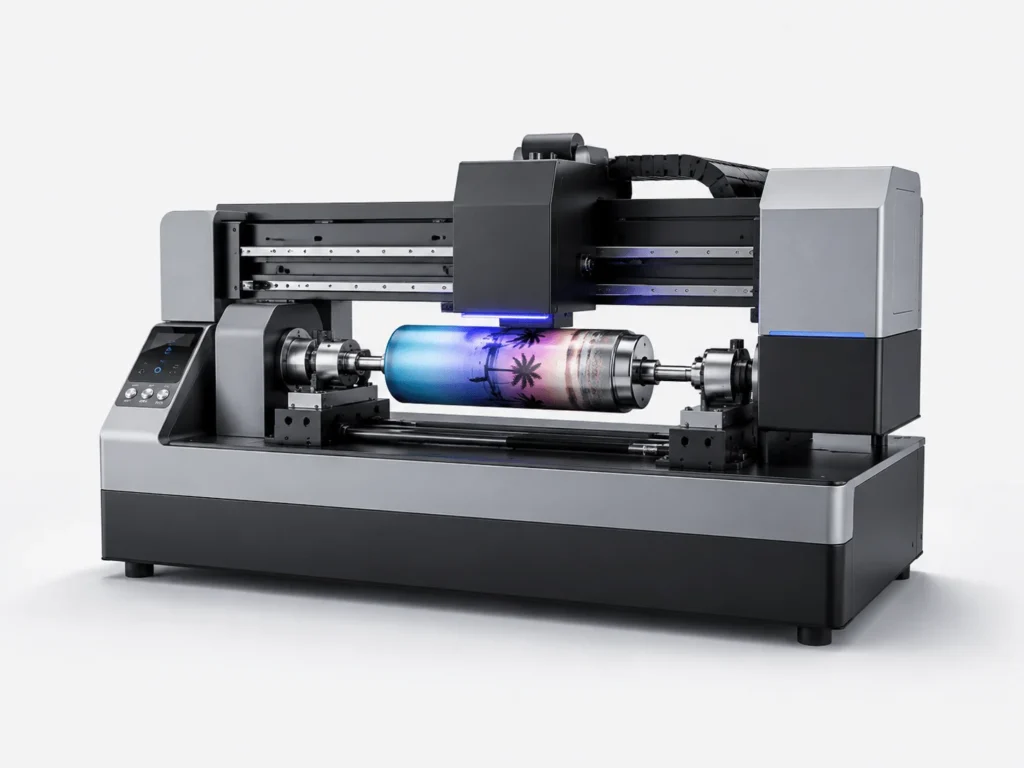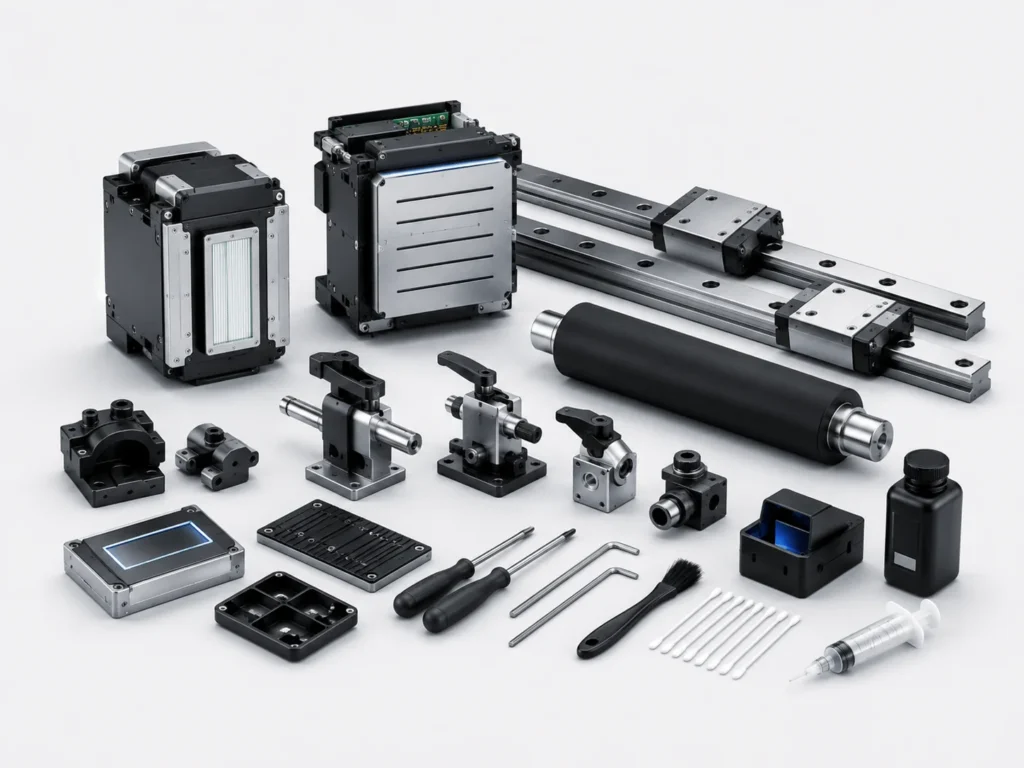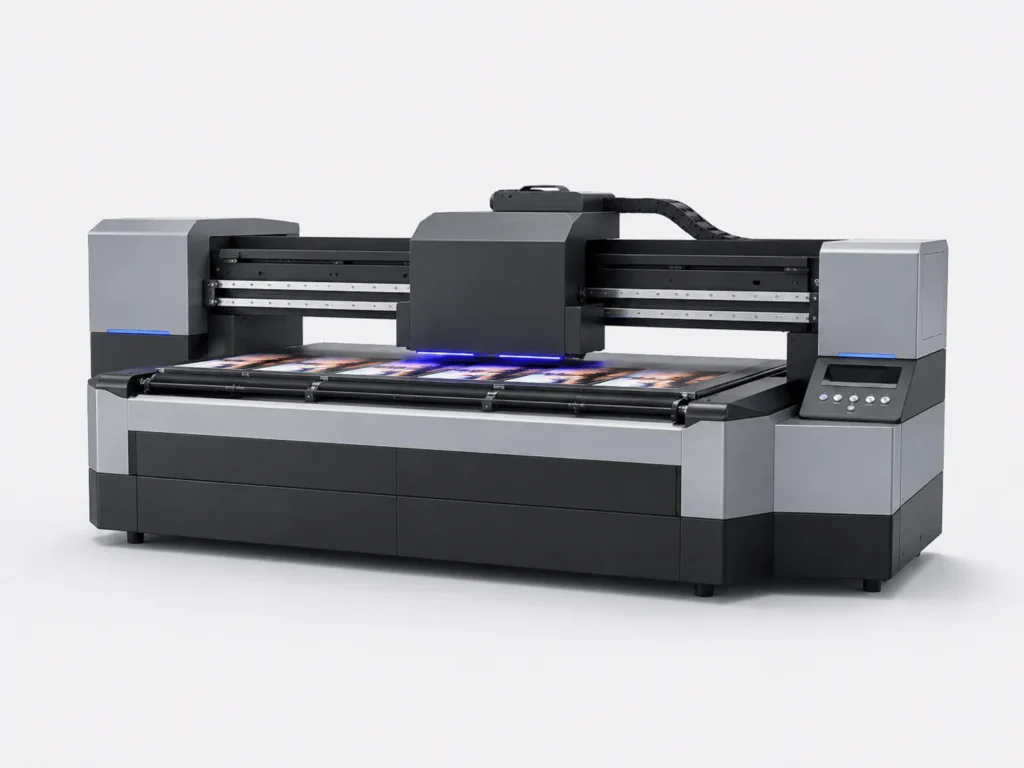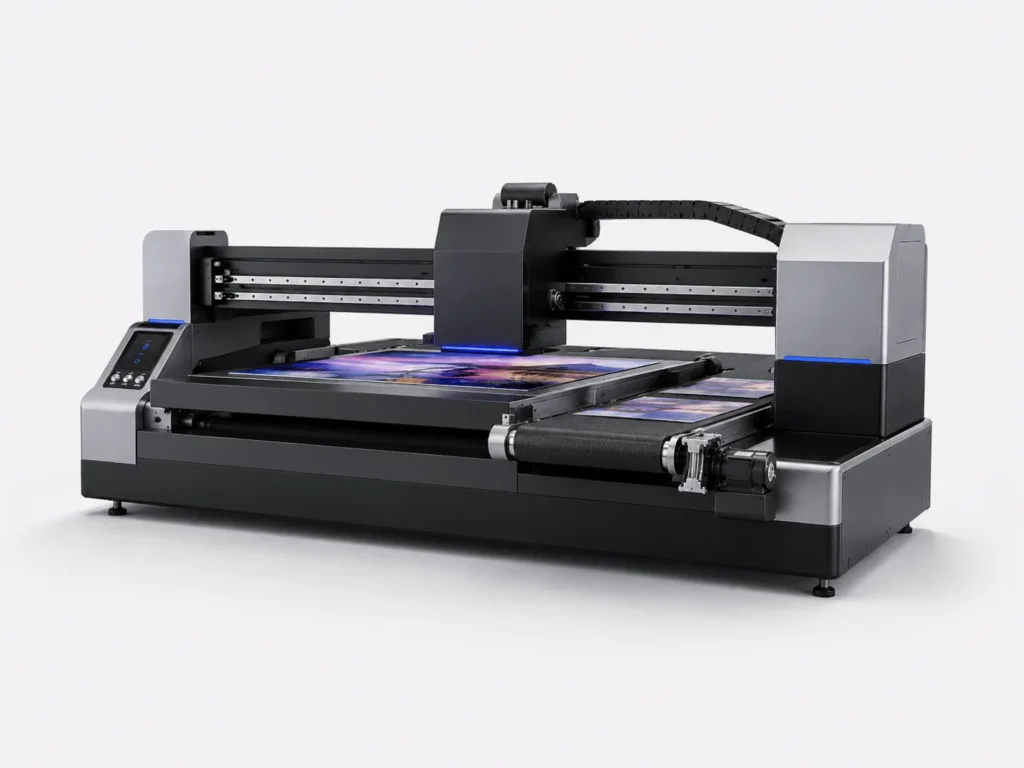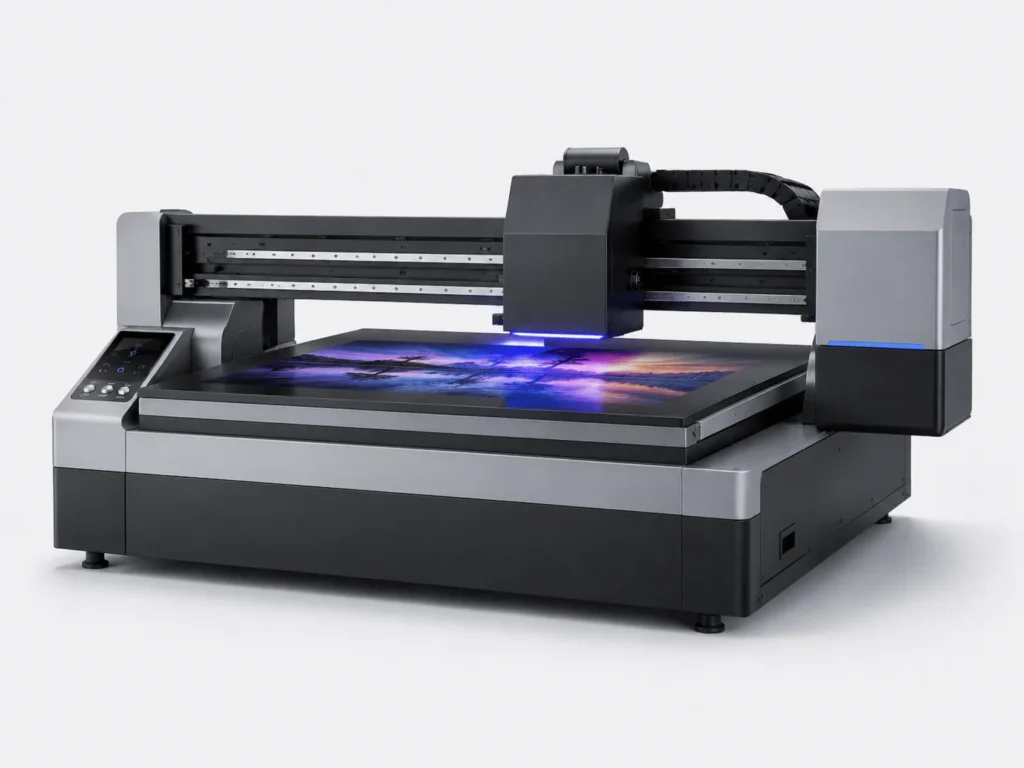
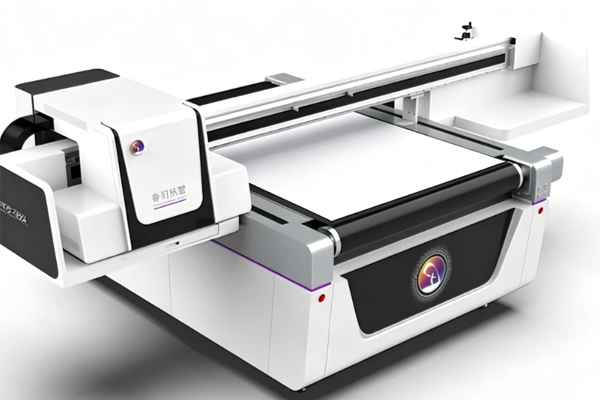
The automatic feeding system has become an important component of modern digital printing equipment and is widely used in UV flatbed conveyor printers as well as various industrial automated production lines. As customers place higher demands on delivery speed, product consistency, and production efficiency, relying on manual loading and unloading can no longer meet continuous production needs. The automatic feeding system enables equipment to operate continuously, reduces manual involvement, improves product consistency, and helps enterprises better handle multi-variety, small-batch, and mass production orders. For companies seeking to enhance competitiveness, the automatic feeding system is no longer just an efficiency tool, but also an important configuration for optimizing production management.
Automatic Feeding Improves Overall Production Efficiency
The automatic feeding system plays a key role in modern production systems. It stabilizes equipment operation rhythm and reduces uncertainties caused by traditional manual operations.
Continuous Production Reduces Waiting Time
The core value of automatic feeding lies in improving production continuity.
- Products can automatically enter the printing area, keeping equipment in a stable operating state and reducing pauses caused by manual intervention.
- After one product is completed, the next one can quickly move into position, ensuring smooth workflow connection.
- Idle time of the equipment is reduced, improving actual output efficiency.
- Continuous order production requirements can be met, maintaining stable output even for large batches.
A continuous production mode increases equipment utilization and makes production planning easier to execute.
Shortened Manual Operation Process
Automatic feeding reduces repetitive manual actions and simplifies workflows.
- It effectively reduces the labor intensity of frequent product handling, easing repetitive physical workload for operators.
- Operators can simultaneously handle equipment monitoring, material preparation, and simple troubleshooting, improving overall work efficiency.
- Reduces time spent on product positioning and adjustment, making the printing process more efficient and smooth.
- Improves coordination efficiency and operational smoothness between different production stages.
With reduced human involvement, production rhythm becomes more stable and overall efficiency is easier to improve.
Improved Printing Quality Consistency
Automatic feeding not only affects efficiency but is also directly related to product quality stability.
More Accurate Product Positioning
Stable feeding helps equipment maintain precise positioning.
- Each product enters the same position, keeping the printing area standardized and reducing deviation.
- Reduces positioning errors caused by manual placement, ensuring each print is based on the same reference.
- Helps maintain pattern consistency, making visual effects and dimensional performance more stable.
- Ensures stability in multi-batch production, maintaining high consistency even during long operation periods.
Precise feeding improves printing consistency and reduces rework caused by positioning deviations.
Reduced Human Operation Errors
Manual operations are easily affected by experience and working conditions, while automatic feeding follows fixed programs.
- Each feeding action remains consistent.
- Product entry rhythm is more stable.
- Product spacing is controlled more precisely.
- High accuracy is maintained even during long-term operation.
A stable automated process helps reduce quality fluctuations and makes production more controllable.
Helps Enterprises Reduce Overall Costs
Automatic feeding offers significant advantages in cost control, especially in large-scale production scenarios.
Labor Cost Savings
Automated operation reduces dependence on manual labor.
- One operator can manage multiple machines simultaneously.
- Reduces repetitive loading and unloading tasks.
- Lowers long-term labor costs.
- Improves utilization efficiency of human resources.
As order volume increases, this advantage becomes even more significant.
Reduced Material Waste
Stable feeding helps improve material utilization.
- More accurate product positioning reduces defect rates and deviation occurrences.
- Reduces repeated printing, improving first-pass yield.
- Lowers rework and secondary processing, reducing additional process consumption.
- Improves overall material efficiency, making production costs more controllable.
With reduced material loss, production costs become easier to manage.
Easier to Meet Flexible Production Requirements
Modern manufacturing increasingly demands flexibility, and automatic feeding adapts well to this trend.
Adaptation to Different Order Types
The modern market places greater emphasis on customization. The automatic feeding system supports continuous production of multiple product specifications. Even when product sizes or materials differ, production modes can be switched quickly. Different designs can also be changed rapidly, significantly reducing order changeover time. Small-batch production becomes more flexible without affecting overall efficiency due to frequent job changes. Customized product production efficiency is higher, making it more suitable for e-commerce and personalized markets. It also helps enterprises respond more quickly to market changes and improve order handling capability.
Better for Automation Upgrades
Automatic feeding can work in coordination with various equipment.
- Can connect with automatic positioning systems for coordinated workflows.
- Supports intelligent recognition and automatic adjustment.
- Helps build automated production lines.
- Offers strong scalability.
As automation levels increase, production systems gain greater development potential.
The automatic feeding system helps enterprises achieve continuous production, stable positioning, reduced labor input, and lower material waste. It provides significant value in improving both efficiency and quality. With the continuous development of automated manufacturing, more enterprises are adopting automatic feeding systems to build flexible production lines, offering more stable support for order delivery, quality management, and cost control. Springyprinter focuses on the R&D of industrial digital printing equipment and provides stable and efficient automatic feeding printing solutions.