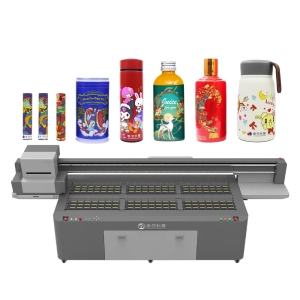
With the continuous increase in UV printing equipment brands and supply channels, companies often find during selection that basic product parameters are not significantly different, yet price ranges vary widely, and marketing materials mostly emphasize stability and efficiency. In actual production, the factors affecting performance are more complex. They are not only related to equipment performance, but also closely linked to the supplier’s R&D capability, manufacturing process, technical response speed, and service capability. Therefore, a multi-dimensional comparison is necessary in decision-making to determine whether the equipment and supply system meet production requirements.
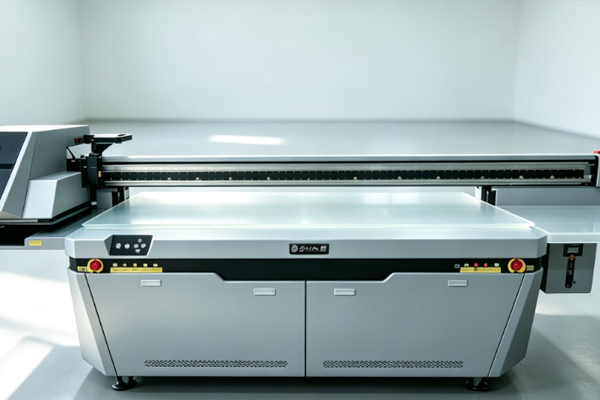
Understanding the Supplier’s R&D and Manufacturing Capabilities
When evaluating the professionalism of a supplier, R&D and manufacturing capabilities are the core foundation. They directly affect equipment quality and future upgrade potential, and also determine adaptability and stability in different application environments.
Independent R&D Capability
Technical accumulation determines product iteration speed and continuous improvement in functionality and stability.
- Pay attention to whether the company has a complete R&D team and solid technical background. Long-term experience in digital printing equipment development is more valuable.
- Observe product update frequency. Continuous introduction of improved models indicates ongoing technological progress.
- Understand software system optimization and upgrade status, which can improve user experience and printing efficiency.
- Evaluate core technical capabilities such as printhead control, ink system design, and motion structure design.
Companies with strong R&D capabilities can continuously optimize equipment according to market demand and respond more quickly when issues arise, providing more stable technical support.
Maturity of the Production System
The maturity of the manufacturing system directly affects equipment consistency and reliability, and determines long-term operational stability.
- Factory scale and standardized production processes reflect structured assembly and division of labor.
- Consistency in assembly processes affects the uniformity of key components.
- Whole-machine testing includes long-duration operation tests and precision calibration.
- Quality management systems determine inspection standards for key components.
A well-established production system improves equipment consistency, reduces batch differences, and ensures stable output performance across different environments.
Matching Equipment Performance with Production Needs
The degree of alignment between equipment performance and real application scenarios directly affects production efficiency, user experience, and maintenance costs. It is an important indicator of supplier professionalism.
Application Coverage Capability
Different production modes require different equipment capabilities. Wider coverage means stronger adaptability.
- Wide material compatibility, such as glass, metal, acrylic, leather, etc.
- Flexible switching between mass production and small-batch production to match order cycles.
- Complete automation functions such as auto cleaning, auto height detection, and intelligent positioning.
- Sufficient modular upgrade space for future expansion.
The broader the application range, the more flexible the business expansion options, and the lower the future equipment replacement cost.
Long-Term Operational Stability
Stable operation capability directly affects order delivery schedules and production efficiency, and is a core reflection of equipment reliability. Continuous operation remains stable without significant performance fluctuations; printing accuracy remains consistent over long-term use; the ink system has anti-clogging and stable ink supply capability; and the mechanical structure maintains stability even under high-speed operation. Stable performance reduces downtime, improves production efficiency, and lowers rework risk.
After-Sales Service and Support System
Service capability runs through the entire equipment lifecycle and has a long-term impact on production continuity and user experience. It is an important component of overall supplier strength.
Technical Support Responsiveness
After equipment is put into use, technical support becomes essential for stable production.
- Complete installation and commissioning services improve deployment efficiency.
- Remote technical support systems ensure faster problem resolution.
- Quick fault diagnosis and recovery reduce downtime.
- Comprehensive training systems improve operator proficiency.
A well-developed technical support system reduces learning costs and minimizes production interruptions during equipment issues.
Spare Parts and Maintenance Support
Long-term stable operation depends on reliable spare parts supply and maintenance systems.
- Stable supply of consumables ensures continuous production.
- Standardized replacement solutions for core components.
- Sufficient spare parts inventory ensures controllable delivery cycles.
- Continuous upgrade support provides long-term optimization services.
A complete parts system reduces maintenance difficulty and helps maintain high operational efficiency over time.
Industry Cases and Comprehensive Experience Reference
Real application cases provide a clearer understanding of a supplier’s overall capability and project experience, helping evaluate delivery stability.
Customer Applications and Industry Coverage
Real project experience reflects adaptability and stability across different scenarios.
- Wide industry coverage across multiple application fields.
- Mature application cases with replicable solutions.
- Stable printing results across different materials, meeting diverse needs.
- High proportion of long-term customers, indicating strong service continuity.
Rich project experience indicates that the supplier has mature solution capabilities and can better handle complex production requirements.
Long-Term Cooperation Value Evaluation
Equipment procurement should not only meet current needs but also consider future development potential and long-term cooperation capability. The supplier’s overall solution capability, system support level, scalability, production adaptability, product iteration capability, and technical upgrade capability all play important roles. Service stability and continuity of technical support are also critical. Suppliers with continuous innovation capabilities are more likely to provide stable long-term support, helping enterprises continuously optimize and upgrade their production systems.
When selecting a UV printer supplier, it is necessary to evaluate multiple dimensions, including R&D and manufacturing capability, equipment performance, service system completeness, and industry experience. After systematic assessment, it becomes easier to find a long-term partner with cooperation value, thereby improving production efficiency and product quality. Springyprinter focuses on the R&D and manufacturing of industrial digital printing equipment, providing stable and efficient UV digital printing solutions for global customers.