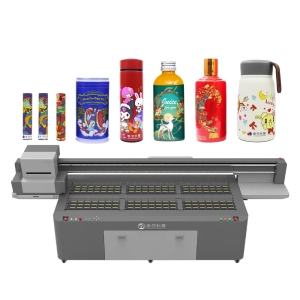
In today’s rapidly evolving digital customization industry, UV printers have become essential equipment in advertising production, packaging design, industrial marking, and personalized customization. However, with so many models and configurations on the market, many users struggle during the selection process, often unsure about performance differences or technical specifications. In reality, choosing a UV printer is not just about price—it requires a comprehensive evaluation based on business type, production capacity, and long-term operating costs. The right machine not only improves efficiency but also directly affects product quality and customer satisfaction.
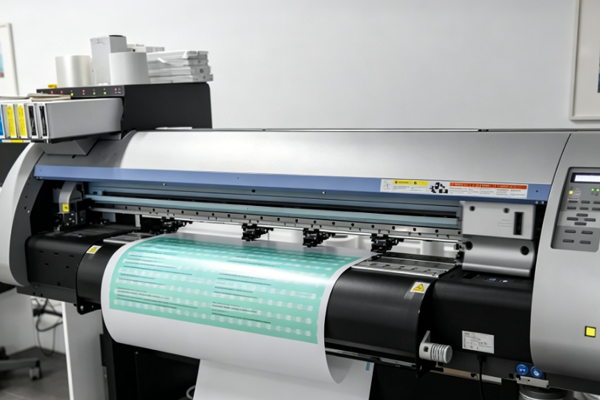
First Define Your Application Scenario
The first step in choosing a UV printer is not looking at the machine, but understanding what you will use it for.
Different applications require very different equipment capabilities, such as:
- Advertising signage: focuses more on speed and print size
- Packaging industry: emphasizes color accuracy and resolution
- Industrial printing: requires stability and durability
- Personalized customization: demands flexibility and multi-material compatibility
If your business mainly focuses on small-batch customization such as phone cases, gifts, or insulated bottles, you should prioritize flexible switching capabilities. If you are running factory-level mass production, then continuous operation capability and stability become more important.Many users overlook this step and end up purchasing machines that are either underutilized or over-specified for their actual needs.
Printheads and Precision Determine Image Quality
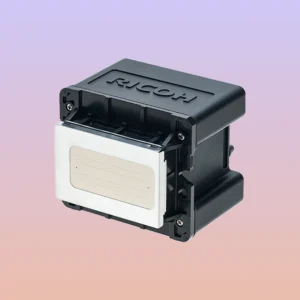
The printhead is the core of a UV printer and directly determines image clarity and output quality.
Key factors to consider include:
- Printhead type (industrial-grade is more stable for long-term production)
- Resolution (affects image detail performance)
- Droplet control capability (determines gradients and fine details)
- Multi-printhead configuration (affects speed and efficiency)
Generally, high-precision printheads not only produce finer image output but also handle small text, gradient logos, and complex graphics more clearly—especially suitable for high-end packaging. At the same time, printhead stability is critical; frequent clogging or repeated maintenance can reduce productivity and increase operational costs.
Machine Structure and Stability Are Crucial
UV printers are long-term operating machines, and structural stability directly impacts user experience.
Key aspects to evaluate:
- Whether the frame uses an industrial-grade structure
- Whether guide rails are precise and wear-resistant
- Whether the motion system runs smoothly
- Whether vibration reduction design is included
A stable structure helps reduce issues such as misalignment or ghosting, especially during high-speed printing. For production-oriented businesses, machine stability is often more important than printing speed, because downtime can directly affect order delivery schedules.
Ink and Material Compatibility Should Not Be Ignored
One of the reasons UV printers are widely used is their strong material compatibility, but differences still exist between machines.
When selecting equipment, pay attention to:
- Whether it supports white ink and varnish functions
- Whether it is compatible with glass, metal, plastic, and other materials
- Whether ink adhesion is stable
- Whether it supports special effects (embossing, spot gloss)
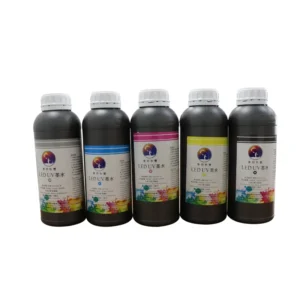
For example, when printing on transparent materials, a white ink base is essential; otherwise, colors may appear faint or invisible. Poor compatibility can limit business expansion and increase future upgrade costs.
Production Capacity and Maintenance Cost Must Be Considered Together
Many users focus only on machine price but ignore long-term operational costs, which are often the largest hidden expense.
Key comparisons include:
- Whether printing speed matches order volume
- Whether it supports long continuous operation
- Consumable costs (ink, printheads)
- Ease of daily maintenance
A cost-effective machine is not necessarily the cheapest one, but the one with the lowest total operating cost. A stable machine may cost more initially, but fewer breakdowns and less downtime often make it more economical in the long run.
After-Sales Service and Technical Support Are Equally Important
UV printers are technical equipment, and after-sales service plays a critical role in long-term usage.
Important factors include:
- Whether technical training is provided
- Whether spare parts supply is stable
- Whether remote or on-site support is available
- Whether response time is fast
Many production issues are not caused by the machine itself but by the lack of timely technical support. A strong service system significantly reduces operational risks and ensures production continuity.
Choosing a UV printer is essentially choosing a production capability and a business model. Different machines suit different stages of development, and the key is matching real business needs rather than simply pursuing high specifications or low prices. Only by evaluating application scenarios, printhead precision, machine stability, material compatibility, and long-term costs can you find the right solution. SpringYprinter specializes in UV printer solutions, providing stable and efficient digital printing equipment for businesses.