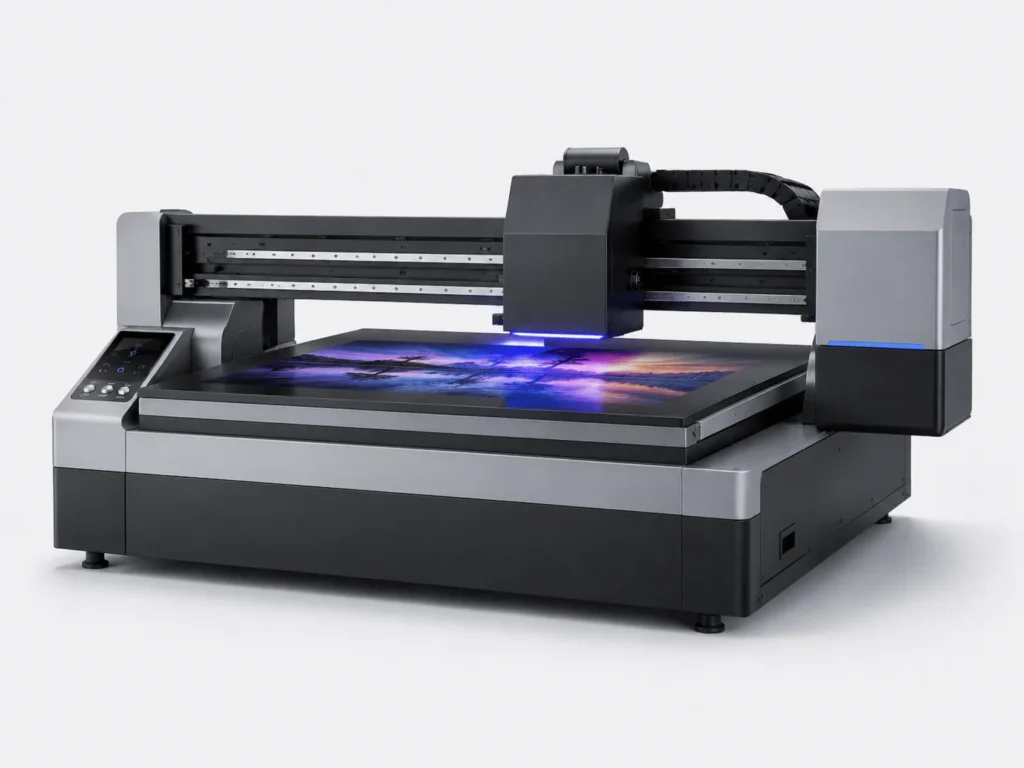
With the continuous upgrading of industrial digital printing technology, the market demand for high-speed, high-quality color printing continues to grow. Traditional printing equipment is often limited by printing speed and production efficiency when faced with large-volume orders. However, UV single-pass printers, with their continuous printing technology and UV curing system, are gradually becoming important equipment in the industrial printing field. Whether it’s packaging printing, corrugated boxes, decorative materials, or industrial product surface printing, UV single-pass printers can achieve high-speed production while maintaining high-quality output.

What is the Working Principle of a UV Single-Pass Printer?
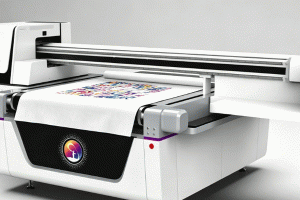
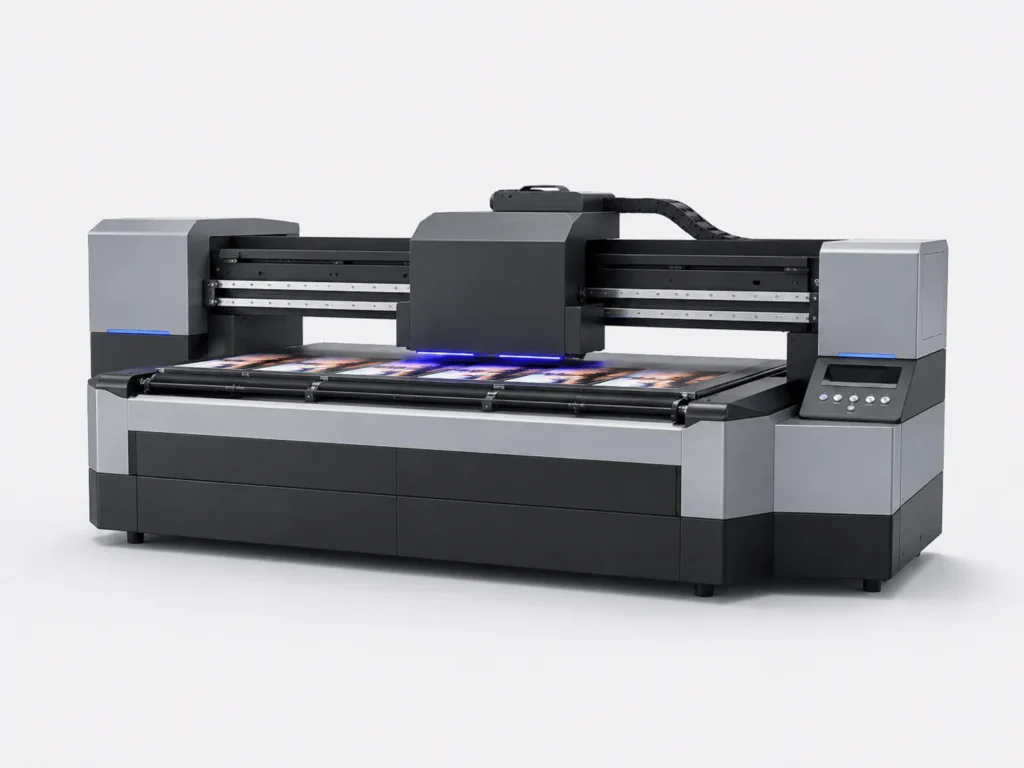
UV single-pass printers use a fixed printhead array design. The printheads are arranged according to the printing width, covering the entire printing area. When the material passes through the conveyor platform, the printheads simultaneously eject color ink droplets, printing the image onto the material surface in one pass. Unlike traditional scanning printing, the equipment does not require printhead reciprocating motion, thus significantly improving printing efficiency.
After printing, the UV curing lamp immediately irradiates the ink, causing the ink to quickly cure and firmly adhere to the material surface. The entire process is completed almost simultaneously, without the need for additional drying time. This continuous production mode enables the equipment to maintain high-speed operation for extended periods, meeting the demands of industrial-grade mass production.
Core Advantages of UV Single-Pass Printers
Compared to traditional digital printing equipment, UV single-pass printers possess the following characteristics:
- High printing speed, suitable for large-volume order production.
- Rich color reproduction and high image fidelity.
- Fast UV curing speed, improving production efficiency.
- Supports printing on various material surfaces.
- High degree of automation, suitable for industrial production environments.
These advantages make them an important solution for industrial color printing.
How High-Speed Color Printing Ensures Image Quality
High-speed printing does not mean reduced image quality. UV single-pass printers control ink droplet ejection precision through high-density industrial printheads, ensuring images remain clear and detailed even at high speeds. An advanced color management system precisely controls ink output, ensuring natural color transitions and complete rendering of pattern details.
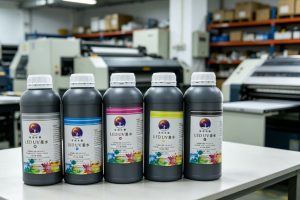
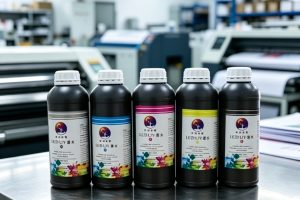
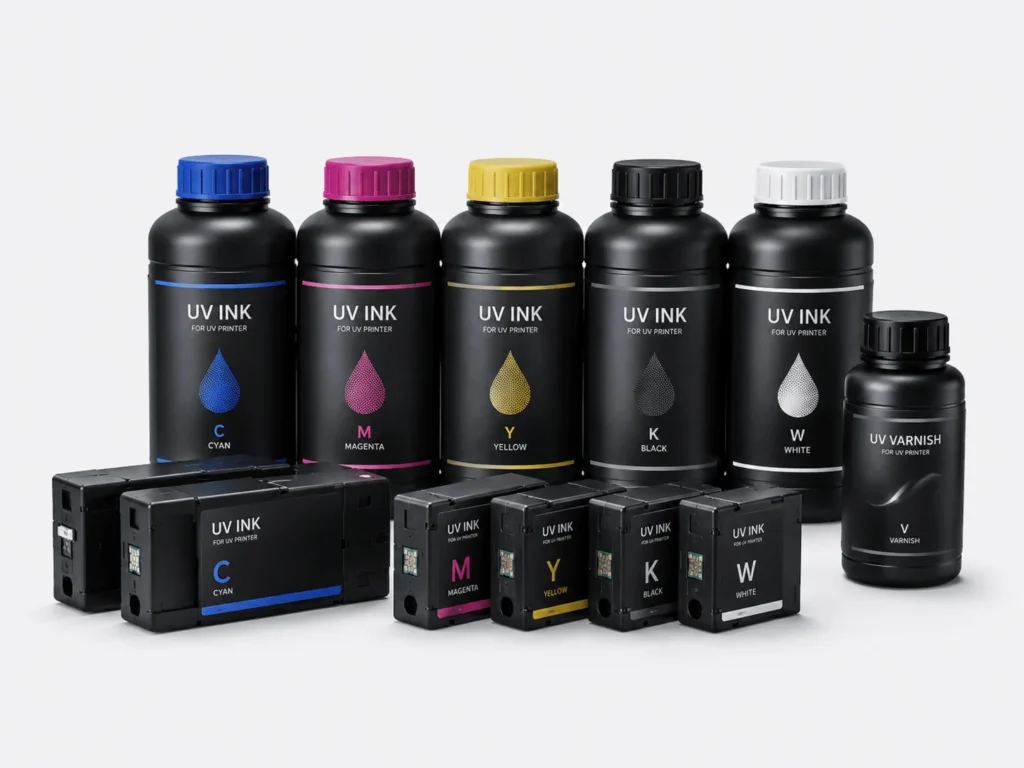
In actual production, the equipment automatically adjusts inkjet parameters according to different materials and printing content, thereby maintaining stable printing results. Combined with high-performance UV inks, the printed images exhibit vibrant colors and high durability, achieving ideal output results even with complex patterns and high-resolution requirements.
Technologies Facilitating High-Speed Continuous Production
UV single-pass printers achieve high-speed color printing primarily through the following key technologies:
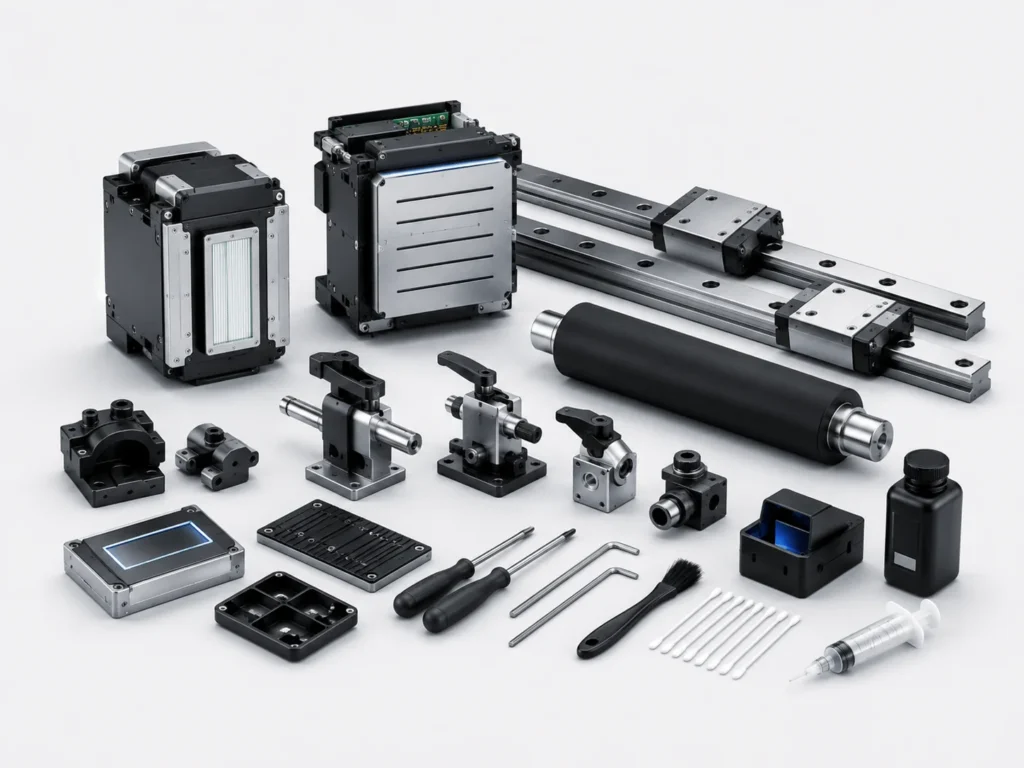
- Industrial-grade printhead array technology, improving printing coverage efficiency.
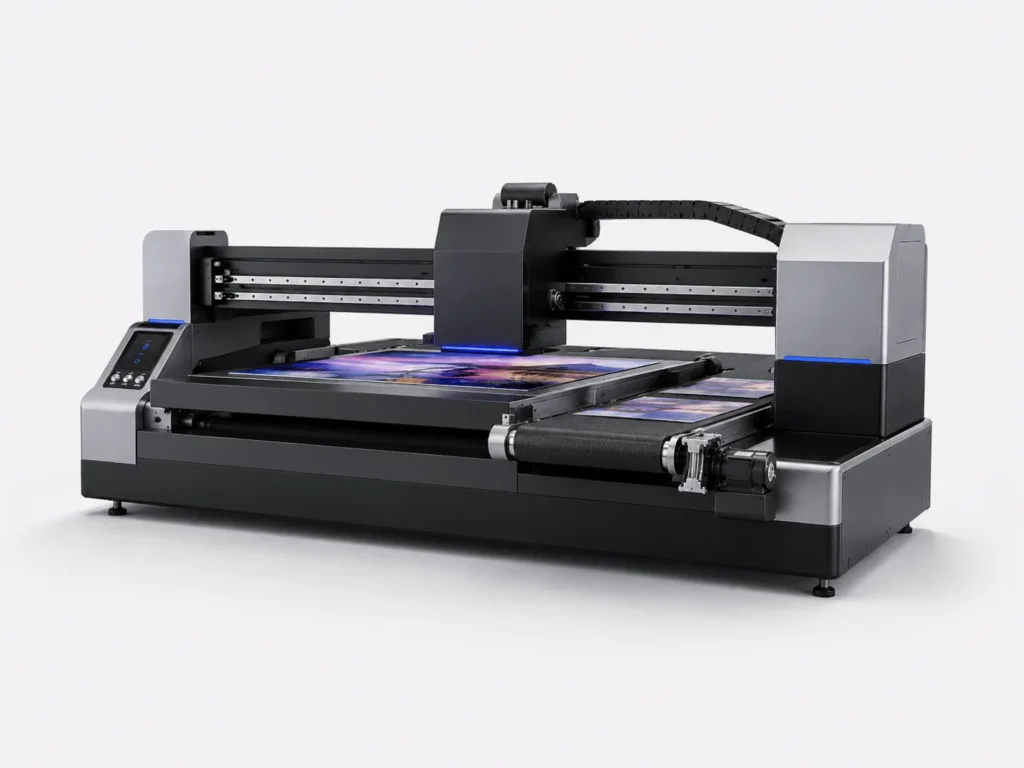
- High-speed conveyor system, enabling continuous material transfer.
- UV instant curing system, reducing waiting time.
- Intelligent control software, improving equipment operational stability.
- Automatic detection system, reducing production failure rate.
These technologies collectively construct an efficient and stable production system.
Future Development Trends of UV Single-Pass Printers
With the continuous advancement of digital transformation in the packaging printing, decorative building materials, and industrial manufacturing industries, UV single-pass printers are developing towards higher speeds, higher precision, and greater intelligence. New industrial printheads are continuously improving jetting frequency and printing accuracy, intelligent control systems are further optimizing production processes, and automatic detection and data management functions are becoming increasingly sophisticated. Simultaneously, the application of environmentally friendly UV inks and energy-saving curing systems makes the equipment more in line with the needs of modern green manufacturing. In the future, businesses will continue to grow their demand for both personalized customization and large-scale production. With its high-speed color printing capabilities, stable production performance, and wide material adaptability, UV single-pass printers will play an increasingly important role in packaging printing, label printing, decorative materials, and industrial manufacturing, becoming a significant force driving the development of industrial digital printing.