With the continuous development of the building block toy market, consumers’ demands for toys are no longer limited to simple assembly functions. More and more parents, collectors, and brand owners are paying attention to toy appearance design, theme expression, and personalized experiences. Traditional building blocks mainly rely on plastic color combinations and sticker decorations to achieve visual effects, but stickers are prone to problems such as falling off, wear, and fading. At the same time, they are difficult to meet the customization requirements of small-batch and multi-style production.
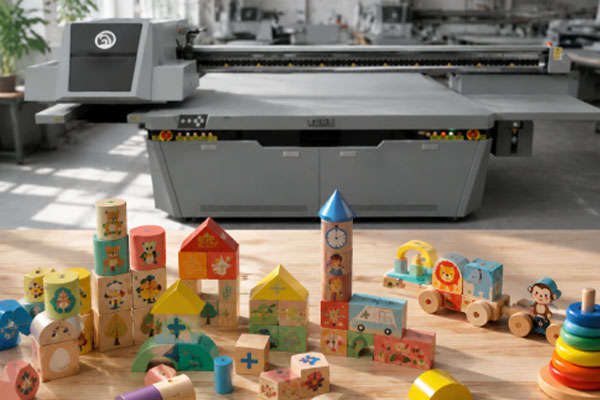
The emergence of UV printing technology provides a more flexible production method for the building block toy industry. Through industrial UV printers, text, patterns, LOGOs, textures, and colorful decorations can be directly printed on the surface of building blocks, enabling rapid conversion from single prototypes to mass production. Whether they are children’s building blocks, educational building blocks, themed building blocks, or collectible building block models, UV printing can enhance product value and give ordinary building blocks stronger visual appeal and brand characteristics.
Application Requirements of UV Printing Technology for Building Block Toys
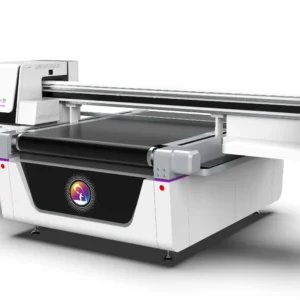
The UV printing solution for building block toys uses UV digital printing equipment to directly spray eco-friendly UV ink onto the surface of building blocks and instantly cure it with UV lamps, allowing the patterns to firmly adhere to different material surfaces such as plastic, acrylic, and wood. Compared with traditional printing methods, this process does not require plate making and can quickly change design content, making it more suitable for the small-batch and multi-product production model of the modern toy industry.
Meeting the Personalized Design Requirements of Building Block Toys
With the increasing consumer interest in customized toys, building block products have gradually developed from simply selling standard models into customized products that support personal names, special patterns, company LOGOs, and themed elements. For example, children’s birthday gifts can be printed with a child’s name and exclusive patterns, educational institutions can create building block sets with teaching symbols, and companies can customize branded building blocks as promotional gifts for events. UV printing can directly create high-definition patterns on the surface of building block parts without the need for additional decorative materials, giving designers more creative possibilities. Complex color transitions, small text, and fine lines can all be completed through high-precision printing equipment, making building block products more collectible and competitive in the market.
Suitable for the Production of Different Types of Building Block Products
Building block toys usually contain many parts with different sizes and shapes. Different products have different requirements for printing accuracy, positioning methods, and production efficiency. Industrial UV printers can adjust printing modes according to product characteristics to achieve pattern processing on flat surfaces, curved surfaces, and special structural parts.
Common applications include:
| Building Block Type | UV Printing Applications |
| Children’s Assembly Building Blocks | Printing cartoon patterns, numbers, and letters to enhance fun |
| Educational Building Blocks | Printing educational symbols, color indicators, and knowledge content |
| Architectural Model Building Blocks | Printing wall textures, window patterns, and decorative details |
| Brand Customized Building Blocks | Printing company LOGOs, promotional elements, and themed designs |
| Collectible Model Building Blocks | Printing high-precision textures to improve product quality |
Through UV printing technology, companies do not need to prepare a large number of fixed molds and can quickly launch different themed product series.
Enhancing the Visual Effect and Added Value of Building Block Products
Traditional building blocks mainly rely on color combinations to show design effects, while UV printing can further enrich product presentation. For example, printing wood textures, metal textures, character expressions, and mechanical structure details on the surface of building blocks can make simple parts appear more realistic. The details of high-end collectible building blocks determine the product value. High-definition UV printing can enhance the realism of models and improve consumers’ recognition of product quality. At the same time, unique printing effects also help establish brand recognition.
UV Printing Custom Production Process for Building Block Toys
The UV printing production of building block toys requires selecting suitable equipment configurations and production solutions based on product materials, sizes, and sales requirements to ensure stable printing results.
Product Design and Printing Solution Development
Before production begins, printing files need to be created according to the characteristics of building block products. Designers create corresponding templates based on building block dimensions and adjust pattern positions, color proportions, and printing accuracy. For building block products requiring mass production, standardized printing templates can be designed in advance to improve subsequent processing efficiency. For personalized orders, digital files can be quickly modified to achieve one design for each product. Compared with traditional processes, the biggest advantage of UV printing is reducing production preparation time. Companies do not need to recreate printing plates; they only need to replace the design files on the computer to produce different styles.
Intelligent Positioning Ensures Printing Accuracy
Building block parts are usually small in size. If they are placed manually, problems such as position deviation and pattern misalignment can easily occur. Therefore, industrial UV printing equipment is usually equipped with a visual positioning system. Through cameras, the system can identify product positions and automatically adjust printing areas. For example, when a batch contains building block parts of different sizes, the equipment can automatically match printing parameters according to recognition results, ensuring consistent results for every part. This intelligent positioning method is especially suitable for the toy industry because building block products often contain a large number of small components.
Multi-Color UV Printing Creates Rich Effects
Modern building block designs increasingly emphasize color performance. UV printers can achieve rich color changes through multi-color ink combinations while supporting white ink, color ink, and varnish effects.
Different printing effects include:
| Printing Effect | Actual Applications |
| Color Printing | Characters, scenes, brand patterns |
| White Ink Printing | Base coating for dark-colored building block materials |
| Varnish Effect | Enhancing surface gloss and three-dimensional appearance |
| Embossed Effect | Creating special touch sensations and visual layers |
This combination helps toy companies develop more distinctive products, such as limited-edition building blocks, themed collectible series, and IP co-branded products.
Equipment Advantages of Industrial UV Printers in the Building Block Industry
The requirements of the building block industry for production equipment are not only clear printing results but also long-term stable operation, convenient operation, and adaptability to different product changes. Industrial UV printers use automated designs to help companies establish more flexible production models.
Improving Small-Batch Customized Production Efficiency
In the past, when toy companies carried out customized production, they needed processes such as plate making and printing preparation, making small-batch orders relatively expensive. UV printing uses digital output methods, allowing rapid production preparation. Even dozens or hundreds of products can maintain good economic efficiency. This feature is highly suitable for current market trends. For example, holiday limited-edition building blocks, corporate gift building blocks, and personalized toys can all be quickly produced using UV printing.
Supporting Processing of Various Building Block Materials
In addition to common plastic materials, building block products may also use acrylic, wood, and metal decorative parts. Industrial UV printers can meet the adhesion requirements of different material surfaces through different ink formulas and printing parameter adjustments.
Common printable materials:
| Material | Printing Characteristics |
| ABS Plastic | Stable adhesion, suitable for ordinary building blocks |
| Acrylic | Smooth surface, suitable for high-definition patterns |
| Wooden Materials | Can present natural texture effects |
| Metal Decorative Parts | Can enhance product texture |
When developing new products, companies are no longer restricted by a single printing process and can explore more innovative designs.
Reducing Production Management Costs
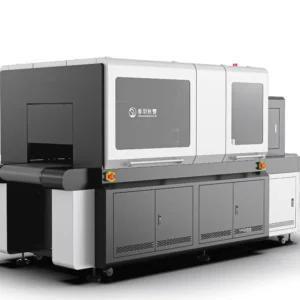
Industrial UV printing equipment can reduce manual operation steps and improve production stability. Through standardized templates and automated positioning functions, companies can reduce human errors while making it easier to manage different product orders. A stable UV printing machine can not only meet current order requirements but also support future new product development.
Frequently Asked Questions
Can UV printing be applied to all building block parts?
Most plastic building blocks, acrylic blocks, and wooden decorative parts can be UV printed. However, different materials have different surface smoothness and ink absorption capabilities. Therefore, printing tests are usually required before production to determine the best parameters.
Are UV printed patterns easy to fade?
Industrial UV printing uses specialized UV inks that are rapidly cured by ultraviolet light, allowing the ink layer to firmly adhere to the product surface. Under normal usage conditions, it can maintain good wear resistance and color stability.
Can small-sized building blocks achieve high-definition printing?
Yes. Industrial UV printers have high positioning accuracy and can process patterns on small-sized parts. Through visual positioning systems, errors caused by manual placement can also be reduced.
Is UV printing suitable for customizing dozens of building block sets?
Yes. UV printing does not require traditional plate making and is more suitable for small-batch and multi-style production. It provides high flexibility for companies launching test products, limited editions, or personalized gift building blocks.
Building block toys are continuously changing consumers’ expectations for toys. Simple assembly functions can no longer meet the needs of all users. More and more companies hope to make their products easier to remember by using unique designs, beautiful patterns, and personalized content. UV printing technology provides a more convenient production method for the building block industry. It helps companies quickly complete new product development while meeting different customers’ needs for exclusive designs. Whether it is ordinary children’s building blocks or high-end collectible models, UV printing can improve product presentation and visual appeal.
Choosing the right UV printing equipment is not only about adding a new processing method but also an important tool for improving product competitiveness. Stable equipment, simple operation processes, and flexible customization capabilities can help companies respond to market changes faster. Springyprinter has long been focused on the research and development of industrial UV printing equipment, providing reliable printing solutions for different companies. From equipment manufacturing to technical support, the company has extensive experience and can help customers solve practical printing problems during production. If you want to improve the appearance of building block toys and achieve more personalized product development, please contact Springyprinter to obtain a UV printing solution suitable for your product requirements.
Email: [email protected]
Phone:+86 183 1888 5593